Showing posts with label The Guardian. Show all posts

Saturday, January 29, 2022

INTERVIEW: ‘The Igbo Apprenticeship Scheme Could Be Repositioned To Help Nigeria’

BY CHIJIOKE J. IREMEKA

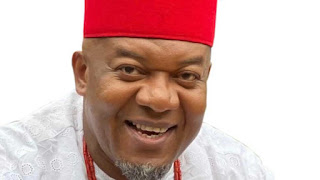
Uche Nworah


Chief Uche Nworah, the Managing Director/Chief Executive Officer, Anambra Broadcasting Service (ABS), Awka, Anambra State, is the convener, National Summit on Igbo Apprenticeship. In this interview with CHIJIOKE IREMEKA, he speaks on the Igbo apprenticeship scheme and how the scheme could be repositioned to help Nigeria as it battles various issues, including unemployment, banditry, and ethnic agitations among others.

Pondering on the Igbo apprenticeship, what is this scheme all about? Where and how did this culture come about?

The Igbo apprenticeship scheme is an entrepreneurial model where an entrepreneur takes an apprentice and teaches him or her the rudiments of a particular trade for an agreed period. On completion, the entrepreneur gives the apprentice seed capital to set up his own business.

Having said that, there is no recorded history of how long Ndigbo have been practicing the apprenticeship scheme. What is obvious is that it is majorly indigenous to Ndigbo and over time, has become part of their culture and tradition. It falls within the ‘self-help’ ideology, the ‘in-group’ philosophy, which found wider acceptance amongst Ndigbo after the Nigeria/Biafra civil war when Ndigbo were stripped of their savings and money in Nigerian banks and given only 20 pounds in exchange for whatever amount they may have in the bank, pre-civil war.

As the Igbo proverb goes, ‘Onye ajulu adiro aju onwe ya’ (if people reject and deny you, you should not deny and reject yourself) Ndigbo then set about rebuilding their businesses and communities, carrying friends, relatives and associates along. Individuals, age grade system, town unions, Iyom, Nze na Ozo and other traditional Igbo societies rallied round in this regard.

This determination to succeed with others also finds expression in the Igbo mantra of ‘Egbe bere ugo bere’- Live and let live, ‘Onye aghana nwanne ya’- leave no one behind along the journey of economic success or along the journey of life.

This meant that people that could already stand on their feet business-wise after the war had to recruit apprentices to serve them or to work with them in their businesses and trades, after which the apprentices (boi-bois) are settled (Idu uno) by their masters to start their own businesses. That way, the wheel of economic progress and development continued to grind in the South East and in other places where Ndigbo sojourn.

You recently conceived the National Summit on Igbo Apprenticeship under the theme: Repositioning The Igbo Apprenticeship Scheme for sustainable Economic Development. What does the event intend to achieve?

The objective of the organisers (Anambra Broadcasting Service in partnership with Awka Chamber of Commerce, Industry, Mines and Agriculture) is to bring to the fore at this time, the Igbo apprenticeship scheme. We believe that it could be repositioned to help Nigeria as it battles various issues including unemployment, banditry, and ethnic agitations among others.

There is a saying that the idle mind is the devil’s workshop. Adopting the Igbo apprenticeship scheme by both the federal, states and local councils will help provide economic opportunities for our young men and women.

We are also hoping to see how perhaps, as part of the repositioning of the scheme, the apprentices could get local higher institutions to validate their apprenticeship as is done in some parts of Europe. The apprentices could be awarded credit hours in areas like Marketing, Business Management, Customer Service, Leadership, Accounting etc for trade apprentices, or similar credit hours for those learning a skill such as mechanical, technical or other skills.

This is because on a daily basis in their masters’ shop, they are learning the practical aspects of these disciplines. We envisage a situation where perhaps, by the time they complete their apprenticeship; the apprentices will receive some certification, a diploma or so. This will greatly improve their self-esteem and encourage them further along their entrepreneurial journey, as against the situation where many of them go through life with the toga of being an illiterate. This is despite the life and practical lessons they have learnt as apprentices for several years.

We are imagining a situation where for example, there could be a national agency regulating such apprenticeship schemes. The agency will be responsible for a national database, and an apprenticeship exchange where aspiring ‘boi-bois’ will register their interest, and prospective ‘Ogas’ will register their willingness to absorb them. This will help in standardising the scheme. There will be guarantors etc.

An insurance scheme for ‘boi-bois’ could be introduced to enable them access start-up grants should their ‘Ogas’ fail to settle them when they complete their apprenticeship. The ‘Ogas’ will contribute towards such an insurance scheme and receive refund of the premium they have contributed if they fulfill the terms of the apprenticeship.

We have over time also noticed abuses in the Igbo apprenticeship scheme. There have been reported cases of apprentices overstaying the agreed period, or the ‘Oga’ refusing to settle the ‘boi-boi’ as agreed. These acts give the Igbo apprenticeship scheme a bad name. We are hoping that these and other associated issues will be discussed at the summit and solutions proffered.

What will be the focus of this event? Does it have to do with manpower development or wealth creation?

Both the keynote speaker, High Chief (Dr.) Obiora Okonkwo, Chairman of United Nigeria Airlines, and the high powered panel of discussants will X-ray the Igbo apprenticeship scheme, bring out the positives while also recommending areas that should be improved upon for the scheme to continue to be relevant in the 21st century.

We will also hear from successful individuals that have passed through the scheme and listen to their experiences etc. A more successful model of Igbo apprenticeship scheme will lead to human capital development and guarantee wealth creation.
 
Could you speak on the impact of the scheme on the young Anambrarian vis-a-vis the manpower development and wealth creation the system has attained over the years?

We may be having the summit in Anambra, but we are not only targeting Anambra youths. Our targets are the millions of Nigerian youths all over the country. The event will be streamed live and will also be uploaded on social media platforms for wider access and participation.

We hope to be able to encourage our youths to re-think and adopt this Igbo model of apprenticeship, learn a skill or trade under someone’s tutelage for an agreed period, and qualify to be given seed capital by the ‘Oga’ on completion. This is surely a better model than the present trend of our youths getting involved in all kinds of ‘get rich quick’ schemes to get rich.

Recently, ESUT Business School, Enugu, indicated interest to research on the Igbo apprenticeship scheme. What has necessitated discussions on this scheme in the recent times?

It’s not only ESUT Business School, some other business schools in the world, including Harvard, have also in the past done one study or the other on Igbo apprenticeship. People are coming to the realisation that the time has come for us to look inwards and re-discover economic and entrepreneurship promotion models such as the Igbo apprenticeship scheme that have continued to make the Igbo economy strong, and Igbo people stronger with little or no government support.

It is a fascinating model of enterprise development where an entrepreneur agrees to take under his or her tutelage potential competitors. He or she at the end of the apprenticeship also goes ahead to fund the start-up who almost immediately begins to compete with him or her within the same jurisdiction of business.

Such healthy competition should be studied and promoted. We want to re-start a national debate and discussions around it with a view to repositioning the scheme and making it better and stronger.

How has the Igbo apprenticeship system helped in the development of South East?

The scheme has not only helped in improving the economic fortunes of Anambra state, but those of several other states and countries where Ndigbo sojourn. Take Lagos State for example, if you go to Idumota, ASPANDA, Ladipo, Trade Fair, Orile and such other large markets, you will see Ndigbo working hard in their various shops; you will also see the ‘Ogas’ and their ‘Boi-Bois’- apprentices.

Those ‘boi-bois’ today are the ‘Ogas’ of tomorrow. By the time they complete their apprenticeship, they will be ‘settled’ by their ‘Ogas’ to start their own businesses. The cycle continues because when they start their own business, they will in-turn take under their wings another set of ‘boi-bois.’

They will build factories, rent or buy lands and properties, invest in the towns and states where they trade, and also at home as Ndigbo believe in the ‘Aku luo uno’ philosophy – taking part of their wealth home. That’s how Ndigbo collectively contribute to the socio-economic development or industrialisation of the towns, states and countries where they reside.

We are a sojourning race. Unlike what some people say, to create hatred against Ndigbo, we bring economic and other values wherever we go.

How would this scheme leapfrog the economy of South East to attract development in the region?

The Igbo apprenticeship scheme has helped in reducing unemployment in the region as it informally provides employment to thousands of youth in the region.

We believe that if we can make the government and other relevant stakeholders, including the higher institutions, development partners etc, to take more interest in the scheme with a view to adopting it and promoting it further, more successful entrepreneurs will be created and their economic activities will fast-track development not only in the region but also in the country.

Seeing the Igbo apprenticeship scheme as the soul of their businesses, how does it make business concerns owned by Igbo people more sustainable?

Sustainability is another discussion altogether and is not the focus of the summit. However, we believe that at the summit, some insights will be shared on that because we are beginning to see that Igbo businesses don’t usually continue after the founders pass on.

We can name many businesses, which were giants in the 70s, 80s and 90s owned by Igbo men of that era. Most of those businesses are no more. Several reasons have been advanced for that. However, we will focus mainly on Igbo apprenticeship at the summit.

------THE GUARDIAN

Tuesday, November 30, 2021

Failed State? Why Nigeria’s Fragile Democracy Is Facing An Uncertain Future

BY PETER BEUMONT


Dr Chike Akunyili, a prominent surgeon in Nigeria’s southern state of Anambra, was murdered along with his police guard last month


A series of overlapping security, political and economic crises has left Nigeria facing its worst instability since the end of the Biafran war in 1970.

With experts warning that large parts of the country are in effect becoming ungovernable, fears that the conflicts in Africa’s most populous state were bleeding over its borders were underlined last week by claims that armed Igbo secessionists in the country’s south-east were now cooperating with militants fighting for an independent state in the anglophone region of neighbouring Cameroon.


The mounting insecurity from banditry in the north-west, jihadist groups such as Boko Haram in the north-east, violent conflict between farmers and pastoralists across large swathes of Nigeria’s “middle belt”, and Igbo secessionists in the south-east calling for an independent Biafra once again, is driving a brain drain of young Nigerians. It has also seen the oil multinational Shell announce that it is planning to pull out of the country because of insecurity, theft and sabotage.

Among recent prominent victims of the lethal violence was Dr Chike Akunyili, a prominent physician in Nigeria’s southern state of Anambra, ambushed as he returned from a lecture to commemorate the life of his wife, Dora, who had been the head of the country’s national food and drug agency.

Who killed the widower and his police guard remains unclear. The Indigenous People of Biafra (IPOB), an Igbo secessionist movement whose militancy has grown increasingly violent and which has vowed to prevent November’s elections for governor in Anambra state, has denied involvement. So too has the security agency, the Department of State Services. Eyewitnesses reported that the attackers, who also killed his driver, were shouting that there would be no elections in Anambra.

What is clear, however, is that Akunyili’s murder is far from an isolated event in Africa’s second-largest economy – a country facing multiple and overlapping challenges that have plunged many areas into violence and lawlessness.

From Boko Haram’s jihadist insurgency in the north, to the escalating conflict between farmers and pastoralists, a growing piracy crisis in the Gulf of Guinea and the newly emboldened Igbo secessionists, Nigeria – under the presidency of the retired army general Muhammadu Buhari since 2015 – is facing a mounting sense of crisis as elections approach in 2023.

Those security issues are in addition to a series of other problems, including rising levels of poverty, violent crime and corruption amid an increasing sense that the central government, in many places, is struggling to govern.

All of which has prompted dire warnings from some observers about the state of Nigeria’s democracy.

One of the bleakest was the analysis delivered by Robert Rotberg and John Campbell, two prominent US academics – the latter a former ambassador to Nigeria – in an essay for Foreign Policy in May that attracted considerable debate.

“Nigeria has long teetered on the precipice of failure,” they argued. “Unable to keep its citizens safe and secure, Nigeria has become a fully failed state of critical geopolitical concern. Its failure matters because the peace and prosperity of Africa and preventing the spread of disorder and militancy around the globe depend on a stronger Nigeria.”

Even among those who dispute the labelling of Nigeria as a fully failed state accept that insecurity is rising.

Nigeria’s minister of information and culture, Lai Mohammed, accepts that insecurity exists but insists the country is winning the war against its various insurgents.

“I live in Nigeria, I work in Nigeria and I travel all around Nigeria and I can tell you Nigeria is not a failed state,” Mohammed told the BBC.

But if the murder of Chike Akunyili represents anything, it is the dangers facing Nigerians in many parts of the country. This has prompted some to argue that the country’s centralised federal model, a legacy of independence and the long years of military rule, is in need of reform.

While Nnamdi Obasi, who follows Nigeria for the International Crisis Group, would not yet brand Nigeria a failed state, he sees it as a fragile one with the potential for the situation to worsen without radical improvements in governance.

“I’d say the country is deeply challenged on several fronts,” he said from Abuja. “It’s challenged in terms of its economy and people’s livelihoods.

“There is a sense of disappointment in the fact that the country hasn’t developed as people had expected and has suffered reversals in poverty and youth unemployment. Then there’s the dearth of infrastructure and a generally very poor quality of services.

“On the security front there are several main areas of concern. The first is the north-east, which is where Boko Haram and Islamic State in West Africa (Iswap) are located.

“In the north-west there are armed groups who are generally referred to as bandits but who have, in a sense, grown beyond that definition of ‘bandit’. [Recently] they attacked a military camp in Sokoto state and killed 12 military personnel.

“Then there is the old problem in the Niger delta [Nigeria’s main oil-producing region], which remains unresolved.”

But the Niger delta’s bubbling disquiet has in recent years been eclipsed by other conflicts – particularly that between pastoral herders and farmers in Nigeria’s central belt, and the re-emergence of an armed Biafran nationalist movement in the Igbo south-east. This separatist activity is happening for the first time since the end of the Biafran war, from 1967 to 1970, which led to widespread starvation and left a million people dead.

For many Nigeria experts, the lesson is not to be found in the individual parts of the crisis but in the way they are beginning to bleed into one another.

As Obasi points out, the conflicts between nomadic herders and farmers have been in part driven by the displacement south of pastoralists from the north-east and north-west by the insecurity in those regions, while a widening sense of impunity across Nigeria has driven people to arm themselves.

“Insecurity seems almost nationwide,” said Obasi. “People have difficulty moving from one city to another, with kidnappings and danger on the highways.

“It is going from a largely governed country with a few ungoverned spaces to a place where there are a few governed spaces while in the rest of the country governance has retreated.”

It bodes ill for Nigeria’s democratic system of civilian government, adopted in 1999 after long years of military rule that began in 1966 apart from a brief four-year interregnum during President Shehu Shagari’s second Nigerian republic, which ended in 1983.

It was Buhari – who now calls himself a “converted democrat” – who succeeded him as head of state after he overthrew Shagari’s government in a military coup.

While the 2011 elections were seen by the US as being among the “most credible and transparent elections since the country’s independence”, Nigeria’s politics have long been complicated by an unwritten agreement among its elites that power should rotate between a figure from the Muslim-dominated north and the mainly Christian south every two terms. With Buhari’s two terms due to end in 2023, power will then – in theory at least – rotate to the south.

Leena Koni Hoffman, a research associate at the Chatham House thinktank and a member of the Nigerian diaspora, says ordinary Nigerians feel “vulnerable” and “grim”, suggesting that the rotational system of government may no longer be fit for purpose.

“The agreement negotiated by the elites is broken. It is not inclusive and the democratic dividend is not being distributed,” she said.

The consequence, she adds, has been that Nigeria’s politics has fractured, with “people exploiting ethnic and religious differences to give people answers that match questions in any part of Nigeria”.

“To give you an idea of the scale of the conflict happening in Nigeria, I could show you a map coloured pink for where violence is happening – it is pink all over.

“For a country that has not been at war since the Biafran war that ended in 1970 – and in the middle of the longest stretch of civilian democracy – to be experiencing this scale of intense violence should be alarming,” she said.

“We knew a long time ago that the country’s rural population had little security, but now we understand they are being exposed to violent non-state actors who have worked out that the security apparatus is hollowed out.

“My family comes from the middle belt. My father is a retired accountant who wants to farm but he can’t be in his home town because it has been decimated by violence. You hear of incidents where 30 people are killed here, a dozen there. Villages attacked.

“More and more communities are seeing that the government is not stepping in with its security forces and are forming their own vigilante groups.”

Aggravating the sense of a state being hollowed out is an under-resourced and overwhelmed judicial system that has left ordinary Nigerians with little expectation of access to justice.

Writing on Facebook after his death, Akunyili’s daughter described their last conversation the day before his killing, with questions that many Nigerians are asking.

“I asked him if he was being careful and he assured me that he was, going on to add that he never went out any more and was sure to be home by six. Convinced, I reminded him to be even more careful and to take care of himself.

“We can choose a different path,” she added, referring to ubuntu, a concept of humanity and community based on the idea: “I am because we are.”

“This current [path] leads to more senseless death and pain for one too many,” she said.


---------------------------THE LONDON GUARDIAN OCTOBER 25, 2021

The World Finally Has A Malaria Vaccine. Now It Must Invest In It

BY NGOZI OKONJO IWEALA

A health worker prepares a malaria vaccination at Yala hospital in western Kenya in October. A widespread rollout could save tens of thousands of children’s lives. Photograph: Brian Ongoro/AFP/Getty


As an economist I know it makes financial as well as ethical sense to get this world-first vaccine to the millions who need it

vividly remember the day I learned a harsh lesson in the tragic burden of malaria that too many of us from the African continent have endured. I was 15, living amid the chaos of Nigeria’s Biafran war, when my three-year-old sister fell sick. Her body burning with fever, I tied her on my back and carried her to a medical clinic, a six-mile trek from my home.

We arrived at the clinic to find a huge crowd trying to break through locked doors. I knew my sister’s condition could not wait. I dropped to the ground and crawled between legs, my sister propped listlessly on my back, until I reached an open window and climbed through. By the time I was inside, my sister was barely moving. The doctor worked rapidly, injecting antimalarial drugs and infusing her with fluids to rehydrate her body. In a few hours, she started to revive. If we had waited any longer, my sister might not have survived.

Thinking about that day, I consider how far we have traveled in the fight against malaria, with the recent historic announcement from the World Health Organization (WHO) recommending the world’s first malaria vaccine (RTS,S) to reduce illness and death across regions where children are at risk. As part of a package of interventions, tailored to local malaria conditions, the vaccine could save tens of thousands of young lives every year – especially among the most vulnerable, as my little sister was.

Since 2019, more than 800,000 African children have had at least one dose of the RTS,S vaccine as part of a pilot in Ghana, Kenya and Malawi. Now, with the right investment, millions more children could be immunised and grow up with less malaria, fewer hospitalisations and healthier lives.

Malaria is emotional – it strikes suddenly and kills our children. But I am an economist, so I put emotion aside to consider whether the vaccine is a good investment.

Malaria impoverishes countries. A 2001 study estimated per capita income levels in malaria-endemic countries to be 70% lower, and malaria results in $12bn (£9bn) in lost productivity around the world each year. Some countries spend up to 40% of their public health budget treating the disease. This is the stark divide that malaria creates every day in Africa and one that a malaria vaccine can help close. Analysis of data from 180 countries demonstrates a clear link between a reduction in the burden of malaria and faster economic growth.
I urge the global health community to invest on a robust scale so that we may reap the fruits of this breakthrough

Malaria disproportionately affects the poor and hampers the economic development of communities. Malaria has pushed many a working family into poverty. So yes, as an economist, I can say that investment in a malaria vaccine is money well spent – for economic development, for poverty reduction and to reduce inequities.

I applaud the governments, the WHO, its partners and the funders that have supported the pilots that have brought us to this point. I was honoured to chair the board of Gavi, the vaccine alliance, in 2019, when we made important decisions on efforts to bring this vaccine forward. Today, in a different capacity but with the same passion, I urge the global health community to again be bold and invest in the malaria vaccine on a robust scale, so that we may reap the fruits of this breakthrough for children’s health.

My sister is now a doctor, working to save the lives of others, and the mother of three children. Saving children from malaria is about protecting Africa’s future. Despite progress against the disease, millions of Africans have died from malaria since 2000, most of them about the same age as my sister when she became sick. They will not have a chance to become doctors, teachers, farmers, computer programmers or play any other role, or to have and care for their own families.

But with the introduction of the world’s first malaria vaccine, and continued investment, we can curb this terrible disease. The RTS,S vaccine is a cost-effective new tool, something concrete we can act on now to give millions of boys and girls the chance to contribute – and ensure Africa’s economic progress is no longer slowed by malaria.

As the world witnesses tremendous inequities in access to vaccines, and we explore ways to bring vaccine development knowhow and capacity home to Africa, it is our collective responsibility to invest in the malaria vaccine now in our hands, and ensure that it reaches those who need it.


Ngozi Okonjo-Iweala is the director-general of the World Trade Organization

----------------------THE LONDON GUARDIAN

Friday, May 15, 2020

Politics Of Kalu’s Inconclusive Polls, Graft Prosecution And Incarceration

Orji Uzor Kalu


BY LEO SOBECHI

The recent ruling by Nigeria’s Supreme Court upturning the incarceration of Senate Chief Whip, Orji Uzor Kalu, by Hon. Justice M. B. Idris of the Federal High Court, Abuja, underscores the country’s undulating national politics that began in 2015.

A quick rehash: With a lofty electioneering promise to change the way government business was carried out in Nigeria, notably fighting official corruption, defeating Boko Haram insurgents and diversifying the economy, the newly minted All Progressives Congress (APC) defeated erstwhile invincible political armada, the Peoples Democratic Party (PDP).

What made the 2015 presidential poll very momentous was not only because APC fielded a serial presidential aspirant and former military head of state, General Muhammadu Buhari (rtd), but also that the PDP had as its standard-bearer, an incumbent in Dr. Goodluck Jonathan.

While Nigerians looked forward to the promised change, despair quickly set in when the president found it hard to put together a federal cabinet of aides, even as the suspense left a debilitating impact on the economy.

In the absence of a federal cabinet, two huge national happenstances riled the citizenry: The man elected President of the 8th Senate, Dr. Bukola Saraki, was arraigned at the Code of Conduct Tribunal (CCT), for political reasons, but on the guise of some discrepancies in the Asset Declaration forms he filed 12 years prior when he served Kwara State as governor.

Secondly, the first election to be conducted by the Independent National Electoral Commission (INEC) after its well-received outing in 2015 presidential poll threw up what has settled in Nigeria’s political lexicon as inconclusive elections.

Kalu’s defection politics/defective trial

NOT long after the 2015 loss of the presidential power by PDP, Kalu, who served Abia State as its governor from 1999 through 2007, started singing a dirge about opposition politics. He lamented what he called former President Olusegun Obasanjo’s reprisal against him for standing alongside other ‘progressives’ to defeat a tenure elongation plan devised by the former president’s insiders.

Signs that the former Abia State governor had resolved to jump ship to APC emerged when he sent his mother, Chief (Mrs.) Eunice Kalu, and brother, Mascot Kalu, to 40 Balantyre Street, where they were received by the then APC national chairman, Chief John Odigie-Oyegun.

That was also despite the fact of his incomplete metamorphosis from his Peoples Progressives Alliance (PPA), upon which he contested the 2015 Abia North Senatorial seat poll to PDP, whose presidential candidate he supported.

By the time the various election petitions and re-runs were concluded, Kalu announced his membership of APC at his ward in Igbere. Not long after his eventual voyage to the party in power than words started making the rounds in Umuahia and Abuja that the former governor was seeking shelter for case No: FHC/ABJ/CR/56/07, a corruption criminal charge filed in 2007 shortly after he left office.

Having joined the governing party and buoyed by the much sought-after federal might that is a huge fillip to politics in the Southeast, Kalu regaled Nigerians through the media with sad tales of how he lost his major investments in banking, shipping and aviation to the highhanded vendetta machinations from former President Obasanjo.

While he accused PDP of being peopled by ingrates, especially given the quantum of financial support he rendered to build the party, Kalu did not spare the umbrella socio-cultural organization of Igbo, Ohanaeze Nd’Igbo, stressing that everybody should bear his burden even as he claimed that he was made by northern political actors in business and commerce.

Yet, as the restless former governor continued to stand in the gap for APC and the presidency, the perception grew that he was sure to bluff his way out of the corruption trial, particularly after he was honoured in Daura, President Buhari’s hometown, with a traditional title. But, while the maverick continued his political exuberance, the Economic and Financial Crimes Commission (EFCC) amended the charges against him, a developmental that stunned Kanu and his supporters.

Coming barely nine months to the 2019 general elections, for which he had expressed the intention to recontest Abia North Senatorial seat, observers claimed that the amended charges were proof that President Buhari’s anti-corruption battle was no respecter of persons.

Others, however, dismissed the development as part of the antics of EFCC to continue to pull the wool over the eyes of Nigerians, that the commission was not looking at graft cases through partisan binoculars.

As it turned out, the amended charges, which came after an adjourned sitting on May 11, 2018, brought the counts to 39, upon which the accused persons promptly filed no-case submissions and played up the air of suspense surrounding the former governor’s alleged N3.2 billion fraud alongside his former director of finance, Jones Udeogu and Slok Nigeria Limited.

Not long after the Federal High Court dismissed his no-case submission, Kalu traveled to Germany, where he was said to have undergone a surgical procedure for an undisclosed ailment. Although pictures of the embattled former governor in a hospital with a bandaged leg were circulated on social media platforms, it was widely speculated that the first accused person had escaped overseas pending Buhari’s loss of the 2019 presidential poll.

But putting a lie to the summations of conspiracy theorists, Kalu returned to Nigeria at a time posters announcing his presidential ambition adorned the entire stretch of Airport Road through Lugbe to Abuja city centre. As a political actor that craves headlines and controversies, Kalu made a song and dance of his denunciation of presidential aspiration, explaining that “President Buhari was doing well and deserves a second term” in office.

On June 26, 2018 the office of the President of Court of Appeal (PCA), Abuja, received an application from Kalu’s counsel, Gordy Uche, asking PCA that Justice Mohammed B. Idris, who had been elevated to the Court of Appeal, be allowed to conclude the trial of the criminal corruption case.

Titled, “Application for Hon. Justice M. B. Idris to conclude the part-heard trial in charge No: FHC/ABJ/CR/56/07, Federal Republic of Nigeria vs. Orji Uzor Kalu & 2 others,” the counsel to Kalu stated: “We are counsel to the 1st defendant (Orji Uzor Kalu, the former governor of Abia State) in the above corruption criminal charge, currently pending at the FHC, Lagos and which was being handled by His Lordship, Hon. Justice M. B. Idris, who was last week sworn-in as a Justice of the Court of Appeal…

“However, the above charge was filed since the year 2007, about 11 years ago, and is now almost at its concluding stages after a protracted trial in which the Prosecution filed 7 additional Proofs of Evidence, fielded 19 witnesses and had closed its case. The defence has since filed their respective No-Case-Submissions, which would have been ruled upon by His Lordship save for his recent elevation to the Court of Appeal.

“We are therefore constrained to humbly request that Hon. Justice M. B. Idris JCA be allowed to conclude the trial of the part-heard corruption trial at the Federal High Court, Lagos.

“Our application is hinged on the provisions of Section 396 (7) of the Administration of Criminal Justice Act 2015, which provides that: “Notwithstanding the provisions of any other law to the contrary, a Judge of the High Court, who has been elevated to the Court of Appeal, shall have dispensation to continue to sit as a High Court Judge only for the purpose of concluding any part-heard criminal matter pending before him at the time of his elevation and shall conclude the same within a reasonable time; provided that this subsection shall not prevent him from assuming duty as a Justice of the Court of Appeal.””

From Senate to prison

WITHIN the period of the prolonged trial, Kalu stood election on three consecutive times for the Abia North Senatorial District, only to be elected on the third attempt after his defection to the governing party.

One of his rivals in the senatorial contest, Senator Mao Ohuabunwa of PDP, cried foul over the return of Kalu as the winner of the February 23, 2019, National Assembly, complaining that the APC candidate employed soldiers and INEC officials to swing the votes in his favour.

Although the National Assembly Election Petition sitting in Umuahia invalidated the senatorial contest and Kalu’s victory, the Court of Appeal sitting in Owerri upheld the election, thereby rendering the order for a re-run unnecessary.

Meanwhile, as he battled with the election dispute, Kalu schemed his way to emerge as Senate Majority Whip, after stepping aside from his contrived aspiration for the post of Deputy President of Senate.

But, not long after he won his case against the tribunal ruling, which nullified his election into the senate at the Appeal Court, the application by his counsel to have Justice Idris, conclude action on the 12-year old corruption trial received positive response.

On December 12, 2019, Kalu and his fellow respondent, Udeogu, were handed 12 and 10 years jail terms apiece, just as the court ordered the winding down of Slok group owned by the former governor.

Nullification of judgment

FIVE months after the Senate Majority Whip took up residence, first in Ikoyi and later at Kuje prison, the apex court declared his incarceration null and void, explaining that Justice Idris lost the jurisdiction to jail the former Abia State governor.

The apex court, however, ordered a retrial of the accused persons. No matter which way the retrial ends, whenever it takes off, public perception would harbour doubts about justice and the merit of the outcome.

It would be recalled that barely two weeks before the committal of the Senate Whip to prison, the Chief Justice of Nigeria (CJN), Justice Tanko Muhammad, warned presiding judges of the nation’s courts of superior jurisdictions to ward against using technicalities to obfuscate justice delivery in the country.

The CJN, who spoke at the opening of 2019 All Nigeria’s judges’ conference of superior courts at the National Judicial Institute (NJI), regretted that reliance on technicalities in the dispensation of justice contributes to the delay of justice delivery.

Speaking on the theme of the conference, which was “Sustaining Democracy through Effective and Efficient Administration of Justice,” Justice Tanko stated: “In order to sustain public confidence in the judiciary, judges must continue to be proactive by not allowing technicalities to stand in the way of substantive justice.”

But against Friday, May 8, 2020, nullification of Kalu’s conviction and committal, it is open to conjecture whether the CJN’s position on technicalities received proper attention or was seen as a mere feel-good public relations message to the citizens.

In their unanimous judgment read by Justice Ejembi Eko, the seven-man panel of Justices ruled Justice Idris out of order, pointing out that the fiat he got from the PCA in line with the Administration of Criminal Justice Act (ACJA) did not give him the constitutional enablement to descend from the court above to deliver judgment on a matter in an inferior court, having become a Justice of the Court of Appeal (JCA).

The ruling has thrown up a lot of legal issues, but the entire weight of the pros and cons, merits and demerits of the inconclusive prosecution echoes the politics of the governing APC, which promise of change continues to engage public debate. Did the desire to make a statement about the efficacy of the anti-corruption fight prompt the judiciary under CJN Tanko to rush the defective ruling given that the matter had endured three electoral cycles?

Was there back-channel consultation to grant some reprieve to the Senate Whip so as to push back on the growing perception that the former Abia State governor was imprisoned to disable the Southeast’s contention for the 2023 presidency?

The Secretary-General, Movement for National Restructuring (MNR), Mr. Fred Nzeako, said the bulk of the blame for the disjointed judicial process should go to the electorate in Nigeria, who he said elected low-quality federal legislators bereft of intellectual depth for balanced legislation.

Nzeako, who is a lawyer and administrator, declared that even if Kalu’s lawyers do not brag to be the masters of the law, they could brag to be the masters of its loopholes.

According to him: “Who then can be blamed for what the society considers a judgmental loss? Was it the fault of the National Assembly, which made the laws and the Acts? No; they were eager to cure a very bad situation where hitherto cases had dragged for decades, including this one that lasted for over 11 years.

“The members of NASS, in their wisdom, gave what they felt was their best. Does one give what he has not? No. They gave what they had, based on the limits of their knowledge and intellectual capacities. After all, the constitution provides that they needed only attempted School Certificate or its equivalent to be in the Senate and House of Representatives.

“Blame the electorate for electing apex legislators with doubtful competencies.”


--------------THE GUARDIAN

Friday, March 13, 2020

The Unforgettable Stanley Macebuh

ARCHIVES

Stanley Macebuh (1942-2010)


I believe that I first encountered, not met, Dr. Stanley Macebuh, as he then was to me, somewhere in Enugu in 1977 or early 1978. He was yet a fresh name and as I read his column, the freshness of his distinct style intrigued me in equal measure with his peculiar surname. To me, here is a puzzle published weekly on the pages of the venerable, stodgy Daily Times, the old and unrepentant medium that I considered too old to bend or so harbour this kind of writer and his views. I had found that the man is supposedly sporting an Igbo heritage too. His reputation was budding and we spoke briefly. His accent was un-Nigerian and he had an aura which appeared natural and invited you to speak your mind. I did perhaps with sparks in my eyes, thrilled on meeting this revolutionary man then unknown to the Enugu crowd, in the flesh. We chatted about his recent writings, the military and their heavy-handed guide of our transition journey.

This must have been in relation to the no go areas of the 1977/78 Constituent Assembly. On reflection, this was no staple conversation for your typical undergraduate keen to impress our brand new intellectual and I guess it surprised him that I was not a Political Science major.

Our paths never crossed again but I recall that the week the Daily Times thundered one of its most famous editorials, “For the Avoidance of Doubt” in 1979, if my memory serves me well, my thought was on Dr. Stanley Macebuh (as he then was to me) for the cultured language and definitiveness of logic I speculated that he may have contributed to that piece of record. It was a stirring response to garrulous members of the ruling class masked as federal legislators. It must be 1983 when my own Eddie Iroh took me along to “some meeting in Ilupeju” where he is discussing a newspaper project and he endeavoured to convince me that he could leave his high profile career in national television to return to his print writing because the man talking to him is called Dr. Stanley Macebuh.

Months later, I, myself, was privileged to join history and write articles and analysis on both the only two business pages of the very maiden edition of The Guardian. Dr. Stanley Macebuh asked for me and I told him it would be difficult to leave my current employment to run the business desk and that I would only write with my inverted surname as nom de plume. He kept chuckling at the “Tony Attecann” byline and much later, “Joe Kadiri from Broad Street” It is a measure of the man that in an era when fax machines had not become standard, one had to handcarry his written contribution and travel, yes travel, from Broad Street and Victoria Island all the way to Rutam House in part homage to the unadulterated chutzpah Dr. Stanley Macebuh brought to the table.

As I looked around The Guardian those days, you could see and feel talent walking and working. I became a regular visitor also partly in solidarity with the several brilliant persons Stanley had brought under that roof some of whom are my dear friends till date. He would lead but make it appear easy and collegial. His impatience with cant was encapsulated in the seminal introduction of the simply Mr. Policy which rocked the Nigerian society for a year or so and the very tight language of the first Guardian years. By the time he was to leave The Guardian and move to his new office closer to me, he had become very close to me and emerged in my lexicon as the Bossman, a usage a few other friends of mine adopted. The Bossman could laugh at himself which I told him was one of his great strengths. I can still see him shaking at the shoulders in his peculiar laughter rhythm.

The others being an eye to talent, his fascinating intellect and his ability to restrain you with the most economical of words from proceeding on a course of action: “Leave it, I say, just leave it” to which he would add a grunt for effect. This pacificist trait has now gone all through his life and times and added to little regard for money as a store of wealth meant that the Bossman, ordinarily a man without guile, was unable to join any conspiracy or club by any other name, to look out for himself in several other ways in a malevolent world. I recall a true and bad example of this in a tripartite transaction for which I held an instrument which minutes before presentation was locked out at the entrance on the day BCCI was closed down in London. The Bossman was unperturbed and the funds never recouped.

Could he have been a sterner person and flourished such that the callow writers in the hours after his passing on would never have described the size of his bank account in the same breath as his towering achievement as a renaissance man? Perhaps, he could have compromised himself at the Obasanjo Presidency or struggled to remind President Yar’Adua that they shared a house and several meals and go way back in an earlier era? No, not the Bossman, a man woven by nature leaving out greed and envy, full of innate dignity without a bulk of ego. He remained true to himself, detached and stoic.

It is most likely the case that in the not too distant future there will be many who will be lost in search of Stanley Macebuh claim to fame. Quite easy to assist them: First, as the Latin would say, circumspice, look around you. Take a quick excursion on the practitioners of print journalism and in particular the purveyors of column and opinion writing today: You can separate them into the school that learnt directly from Stanley Macebuh, the others that successfully imitated him and the rest. He could be said to have been let down by this or that circumstance.

Many are known to have realised very belatedly that they could afford to offer the Good Lord a bottle of aerated bottled, chilled water if only they could decipher it was for the Lord and not just their irritating neighbour as the Good Book told us. That lesson will continue to ring in our ears. Stanley’s passing on is painful in a peculiar sense and but as himself, the Bossman would say in that pitched exception to his tone, “my friend… just leave it”. Fare thee well my friend, God grant you rest and may your kind increase.

First published May 2010.

Nnachetta, erstwhile commissioner for information and strategy Anambra State, served as a visiting member, The Guardian Editorial Board.

SOURCE: THE GUARDIAN

Saturday, February 8, 2020

INTERVIEW: ‘We Must Tinker With Our Political System To Tackle Our Challenges’

Chukwuemeka Ezeife, former governor of Anambra State


Former governor of Anambra State, Dr. Chukwuemeka Ezeife describes challenges bedeviling Nigeria as a creation of the present political system. In this interview with ONYEDIKA AGBEDO, Ezeife says returning the country to the system it operated between 1954 and 1965 can serve as the relaunching pad to reclaim the lost glory and enthrone it as a super power among nations. The octogenarian also airs his view on corruption in public service, local council administration and ongoing efforts to diversify the economy through agriculture.

What is your take on the inability of Nigeria’s political leaders finding lasting solutions to problems confronting the country since independence?

Well, I don’t know. We are talking about Nigeria, a gem of a country. There are not many countries like Nigeria. God gave us everything. From the climate that is very friendly to no earthquake, no tsunami and nothing so naturally devastating. But it has turned out that the politicians of Nigeria have become the tsunami of Nigeria. Politicians create problems; and the major problem they created is corruption; corruption in every direction. There is no exclusion.

So, why are our problems persisting? We are the problems to ourselves; politicians are the problem. And the wise thing to do in the circumstance is to go back to God in prayer because our country is so good. We should be proud of our country. Look at Nigeria; look at other countries and see why we should go back to God.

The first thing I want to emphasise is that there was a time Nigeria was working. There was a time the World Bank said that parts of Nigeria were growing faster than the rest of the world. And there was a time we were happy with ourselves. From 1954 to 1965, we did have small political problems that were not so bad. That was the season when the World Bank praised Nigeria.

What happened was that in 1966, there was a coup, which appeared to be the start of the problem. The coup was followed by a civil war. And the Nigerian government led by Gowon wanted to win that war very fast. In fact, they called it a three-month police action.

In order to win the war, they wanted to isolate the Igbo. Therefore, they created 12 states. That was the beginning of problem because our heroes past had chosen a federation based on regions as federating units. But Gowon created 12 states, which made the Igbo isolated, in order to win the war fast. But even after the war, more states were created to the extent that the number came to 36 plus Abuja, the Federal Capital Territory (FCT). Even with 36 states, what is important is the centre because the centre became more of unitary government. Too many things were exclusive to the Federal Government in the constitution. So, we started growing backward; we started taking giant steps backward and today you have seen where we are. It is unfortunate now that there is no direction in which we have not gone backward. The worst and most recent is the judiciary. And I thought it was said that the court is the friend of the poor. Today,

I think political justice is bought and sold.

Now, you asked me what the problems are. The problems are magnified. Formerly, we had more peace; we had no ethnicity problems. Yes, because of the prominence of Zik and Awolowo, Yoruba and Igbo were suspicious of each other. But if you ask me, I will tell you that the greatest problem Nigeria has is lack of integration.

Your narratives seem to agree with those who say that prolonged military rule laid the foundation for the deplorable state of the country today. But civilians have governed the country for over 20 years now yet the challenges remain, why?

I understand you. The military created 36 states plus Abuja and people occupy those states. Also, when the British left, they left some people in charge and those people felt God gave them Nigeria. They are very intelligent people, very good planners. But I think time has come for all stakeholders in the Nigeria project to renegotiate terms of living together as one Nigeria. I think this is the sole objective of the call for restructuring.

Some small groups are opposing the restructuring of Nigeria, which is what will save us from the problems we are facing now. Going back to what will save Nigeria; the 1954 to 1965 system worked. May be we should stop using the word restructure; some people misunderstand it. So, instead of calling it restructuring, we can say, ‘let’s go back to the system that worked for Nigeria; the system we operated from 1954 to 1965’.

Some people are opposing it because they don’t understand that there is a solution to their problem. When you talk about restructuring, they think of resource control; they think you are saying let the oil producers enjoy the oil while revenue dries up for those who are not producing oil. That is what comes to the mind of some people when you say restructuring. This is not true.

We have brains; we are politicians. The restructuring can be done without too much emphasis on resource control. We can find ways of building up Internally Generated Revenue (IGR) for every local council and every state. We can guarantee to every state and local council that the same money they were getting under the present system will continue for at least five to 10 years by which time effort is being made to develop alternative sources of revenue. This can be easily agreed and we grow. That is one.

There is also the ethnic problem. The Nigerian people are putting the Igbo down politically. And for as long as long as the Igbo are put down politically, for so long will Nigeria be down economically. If we organise and let the Igbo play effective role in the system Nigeria will take off. The Igbo man wants his child to be superior to him; he wants his child to achieve more than him. The Igbo man wants his apprentice to become bigger than him. Therefore, egalitarianism is a trademark of Igbo system. Under Igbo system, we will grow; everybody will grow. There will be no almajiri; there will be no talakawa. People will be what God made them. Maybe some people are opposing Igbo because of this egalitarianism but everybody will gain and Nigeria will become a world leader, a super power among nations.

I will tell you again that on religion, we are on the same page. God of Abraham is the God of the Christian and God of the Muslim. Only small, small human errors in the holy books lead us to major disagreements.

How can the problem of national integration be addressed especially now that it appears as if the North-South dichotomy is getting worse?

I can say without any doubt that the problem of Nigeria is caused by the Igbo and Yoruba. If the Yoruba and the Igbo were to integrate a bit, the problem of Nigeria will disappear. But when they disagree and one part will try to support Hausa/Fulani while the other suffers for not supporting, that’s a major source of problem.

But I think things are changing too slowly. Understanding ourselves is increasing. In fact, there was a time we were in Lagos at a meeting and many of us cried when we realised the harm we have done to ourselves and to the country. I used to boast among Yorubas that no Yoruba man could claim to have done more for Abiola than myself, Chukwuemeka Ezeife. I make that strong claim. I think if we are to understand ourselves better, things will be all right.

Let me tell you another story. When a former governor of Akwa Ibom State, the person who was there when I was also governor of Anambra State died, I went for the funeral. I was given the microphone to pay tribute to him on behalf of Nigerian governors. I took the microphone and said that I brought no tribute but a bomb and there was a kind of uneasiness in the place. I said that I was going to detonate the bomb immediately. Then I said that for as long as the South-south and the Southeast play lone rangers in Nigerian polity, for so long will they eat their frustration. But should the South-south and Southeast integrate properly, what they ask Nigeria is what they get from Nigeria. People were really touched.

The good thing was that the moment we came back to Abuja, we went to Chief Edwin Clarke where we held a meeting and integrated the regions. It didn’t take long before the West saw it and then we formed Southern Nigeria People’s Assembly. And it didn’t take long either before the Middle Belt saw it and they joined. Now we have the Southern and Middle Belt Forum. Gradually, I think people will do things that will lead to the collapse of the ethnic problem in Nigeria.

So, I thank God for the effort we have made so far and for the leadership qualities of Chief Edwin Clark who is supported very much by Chief Ayo Adebanjo. I believe that the integration problem will solve itself especially when others that are yet to join look into the future and find reason to come down from the mountain and integrate with the rest of the people.

Your explanation here points to the fact that Nigerians are going back to their enclaves instead of building bridges with the Southern and Middle Belt Forum leading the pack. How would that help in national integration?

We formed the Southern and Middle Belt Forum; that is not everybody going back to his enclave. In fact, the Southern and Middle Belt Forum is Gideon Orka’s Nigeria. He removed five states mostly dominated by Hausa/Fulani from Nigeria and called the other one the real Nigeria.

In fact, we don’t want to divide Nigeria. For me, I believe in the permanence of one Nigeria but not at all cost. I’m Igbo but the present government has been pushing the Igbo out of Nigeria by all kinds of actions. And young Igbo people are taking offence. The Indigenous People of Biafra (IPOB) is not reacting to nothing; it is reacting to actions of the Federal Government pushing the Igbo out of Nigeria. We the elderly ones are just hoping that time can bring common sense into system and the country may still remain one and we enjoy the large market of one Nigeria.

So you support rotational presidency as a vehicle for national cohesion?

Look, rotational presidency is already into practice. And in this rotational presidency, the North has dominated it. The West has got a fair share and South-south has also got. But Southeast has not got elected president of Nigeria ever. Therefore, if there is justice, equity and fairness, then it’s automatic for the Igbo to produce the president in 2023. But I can tell you now that I’m looking at a new Nigeria coming. Because of the things I say in the press, I am receiving messages from every part of Nigeria supporting Southeast for president in 2023. In fact, the Middle Belt people have gone beyond everybody; they have even selected a person. They made about eight people to compete and one of them won the election by wide margin. So, they now have a candidate for Nigerian president in 2023.

Then there is a group headed by an Oyo man who came to me and gave me strategies to follow. They are working on their own. There is also a group called Justice Now, which is also talking the same language.

I was shocked when some young people comprising a Fulani, a Yoruba and somebody from the South-south came to me telling me how we must go about Igbo presidency in 2023. I can see a new Nigeria coming. God has seen the problems and it seems He wants to join us to solve these problems.

Among all the problems facing Nigeria today, insecurity has taken the driver’s seat. What are your thoughts towards curtailing the spate of insecurity in the country?

Well, insecurity is not on its own. Insecurity derives from the political system, from the way things are. How do we solve this insecurity? We should go back to regional government, regional police, regional control of things and insecurity will disappear. So, I can say that it is a creation of the unitary government, which we have now.

Look, we are just building bombs to detonate across Nigeria. We know what is wrong and when you say the truth they try to look for you. I am 81. During the Abacha era, I was listed for killing but God didn’t allow it. So, I will tell the truth – the Nigeria we have now is wrong. How can one group control all the security outfits in the country? And our constitution makes it clear that Federal Character should reflect in the appointment of positions in Nigeria. So, what are we talking about? We know what our problems are. The present government is doing very badly. The problem of Nigeria is the present government.

From 1999 till date, high cost of governance has been a major concern with the politicians earning huge sums to the detriment of capital development. What is the way out of the situation?
You are right. It is not just their salaries and allowances that is the problem but the ones they steal are more than the ones they earn. The main problem is stealing. When people get to office, they ask the question, ‘how do I gain from this office’ and then they begin to steal from the office.

I think we should reshuffle our government somehow. We should restructure our government. For example, we can go back to parliamentary system and prune down all the allowances.

But what I want us to do, which many people would think is because of my position, is to make sure that for each position there is appropriate pension so that people do not go stealing money to use when they leave office. If you have enough to keep you and your family alive through pension, at least that will ensure that if you are not a thief, you will not be tempted.

I remember when I was leaving office; we had money to be called a lot in those days in the system. And a person who likes me so much called me on the telephone saying he wanted to see me to tell me something.

He rushed and said I should take at least N20 million from the system to make sure that I can eat for the next few years. I looked at him and said, ‘thank you for liking me. Thank you for thinking about my future but my future is in the hands of God. And God will never make me suffer. So, I won’t touch the money. Let it be for the government; it belongs to them.’

I was a federal permanent secretary; I was governor. When you are out of office and you have difficulty taking care of your family and dependents that will come to you to get help, it is not good. Therefore, there must be adequate provision for pension so that nobody has any reason to give for stealing government money.

You earlier talked about increasing the IGR at the local council and state levels. How do you think the current efforts at diversifying the economy with special focus on agriculture can be better pursued?
You answered the question by yourself because when you go back to basis – agriculture – you find that it reaches all levels of government. The federal, state and local governments can promote agriculture. First of all, we are sure of food. Then from the income of farmers, they pay tax and you begin to generate internal revenue. From the farm produce, you go for industries and the manufacturing industries will pay tax. They will export things and you get tax from it. So, indeed it is not going to be left to the local councils and states to develop internal revenue. We will, at the federal level, create zonal offices for encouraging IGR. Why? It is because each zone may have different agricultural endowments. So, we can from the federal level control it and make sure that every state and local council is developing according to the endowments it has, according to everything that helps in its development. So, if any local council can at least pay salaries and do what it is expected to do, then we have won; and that should apply to states. And then the oil revenue may not go only to the oil producing states. It has to be shared; we are one country but of course the oil producing states will get more than others. But it should be shared fairly enough that people will not suffer.

What then is your recommendation for better functioning of the local councils?

The new National Assembly has done something good. They have allowed the local councils to have their own account and not to share with the states because what happens is that the states just cash them enough for salaries and a few things. So, the National Assembly has started to do what requires to be done.

But to recognise the third tier of government as independent of the second tier of government is what we need to do. When you restructure, you have regional government and local government and they will have the power, as given by the constitution, to organise their own things their own way. I hope you know that not even the election of chairman and councillors helps a lot because when you come to Anambra and there is chairmanship election, you will find that all the chairmen are from the same party, all the councillors are from the same party. If you are governor, you select all the chairmen, you select all the councillors and whatever you say is the law in the place. There is no integrity in the system. We are cheating ourselves thinking that we are doing the right thing. So, if you give fair independence to the local councils, they can do something. But as it is now, the states do what they like and the governors are the power houses.


SOURCE: THE GUARDIAN

Monday, January 20, 2020

Imo Guber Verdict, Blame The System


BY LUKE ONYEKAKEYAH


The verdict by the Supreme Court on January 13, 2020, which nullified the election of Governor Emeka Ihedioha of the opposition Peoples Democratic Party (PDP), and declared Senator Hope Uzodinma of the ruling All Progressives Congress (APC), as winner of the March 9, 2019 governorship election has, expectedly, attracted much vituperations from different quarters.

By the INEC results in the 2019 guber election, Ihedioha polled 273,404 ahead of his closest rival and candidate of the Action Alliance, Uche Nwosu, who the electoral body said scored 190,364 votes. The candidate of the All Progressives Grand Alliance (APGA), Ifeanyi Ararume, came third with 114,676 while Senator Hope Uzodinma of the APC, polled 96,458. A total of 70 candidates representing various political parties took part in the election. People are asking how the Supreme Court declared Uzodinma who was 4th as winner of the election in place of the Ihedioha who was first.

There is shock and anger in many quarters. The overturning of the election was least expected. Legal pundits I spoke with expressed dismay saying they could not understand why the apex court reversed the decision of the Independent National Electoral Commission (INEC) over the discounted votes from the contentious 388 polling units, as well as the decision of the Election tribunal and Court of Appeal. They argued that the Supreme Court hardly overturns the decision of the two subordinate courts except there is manifest injustice to the contrary.

Blames are being thrown to the right, left and centre. Protests have been staged in Owerri, Abia and Abuja against the Supreme Court decision. The Supreme Court that gave the verdict has been put on the front burner for blame. The PDP has asked the Chief Justice of Nigeria (CJN), Tanko Muhammad to resign, saying that the court under his watch is heavily compromised.

Some are blaming INEC for not countenancing the rejected votes from the controversial 388 polling units. INEC, reports say, rejected the votes because they were falsified. Others are blaming the ruling APC for being out to capture Imo State at all cost. There are still others who blame the legal team of Ihedioha for failing to file a counter motion to nullify the 388 polling units that are the bone of contention.

The role played by Rev. Fr. Ejike Mbaka of the Adoration Ministry, Enugu is not left out. Mbaka is blamed for making a contentious prophesy many thought was part of the plot to sack Ihedioha. Where do we stop in this blame game after the milk has been spilt? I don’t blame any of the above sub-entities for whatever they did that might have led to the verdict.

My blame goes, unequivocally, to the corrupt Nigerian system. Once the system is corrupt, all the sub-entities of it are affected. It is the corrupt system that gives leeway to individuals and entities to do whatever they like, whether good or bad, knowing that “nothing will happen” as is often expressed.

The judiciary of which the Supreme Court is part cannot afford not to be clean in a corrupt system. The pervasive systemic corruption affects every fabric of our society, indeed, every thread. That is the reality we face.

A Chinese adage says an honest mind needs honest time to survive. It is hard to be a lone honest man in the midst of corrupt people. Once the system is tainted, it permeates deep in such that there is little or nothing any individual or entity could do.

If, for whatever reason, you choose not to be corrupt, you are seen as a fool (mugu, mumu). The system, more or less, forces everybody, entities, to conform to the prevalent culture. Consequently, there is no part of the Nigerian system that is not tainted.

In an attempt to raise the bar, INEC, along the line, decided to engage university Vice Chancellors as returning officers to make a difference. It was as if to say that these men and women are saints from heaven. But the 2011 elections disproved the general perception after allegations of compromise by some of the Vice Chancellors rent the air. The integrity of the academics was put to question.

I have mentioned representatives of the academic system in part because of the involvement of some Vice Chancellors as returning officers. Whatever the Vice Chancellors did still boils down to the corrupt system. INEC as an institution manages the electoral subsystem. Nigeria’s flawed electoral system is to blame for whatever happens at the polls.

For instance, blame an electoral system that permits politicians to move from one political party to the other without sanction. Senator Hope Uzodimma, the new Governor of Imo State was a staunch member of the Peoples Democratic Party (PDP), and was indeed a member of the board of trustees of the party until he decamped to the All Progressives Congress (APC) in the wake of the 2019 general elections to contest for governorship under the party. His sudden switch over to the APC pitched him against Governor Rochas Okorocha, who wanted his son in-law, Uche Nwosu, to be the APC flag bearer in the election. Uzodinma snatched that position from Uche Nwosu and the rest is now history.

Blame the corrupt electoral system that cannot freely elect leaders at the poll except by the courts. If statistics were taken of governors, senators and lawmakers at the federal and state Houses of Assemblies, who are there based purely on electoral poll win, it would be discovered that more than 80 per cent of our leaders are there by judicial virdict. The courts have replaced the voice of the people. Even President Muhammadu Buhari is occupying the seat by Supreme Court judgment.

The courts would have no business in election matters if the system were good. Once the courts are involved, there is no guarantee, anymore, that the peoples’ will would be respected. The few judges use their power to decide the outcome the way they want. The will of millions of voters is thwarted. The wicked system deliberately created the gaps in the electoral system so that poll outcome could be manipulated to suite the whims and caprices of politicians.

Blame the corrupt electoral system that knows what to do to make things work but refused to do it. This system has refused to institute proper enumeration and voting system. Nobody knows how many eligible voters are there. An attempt to give Nigerians national ID cards that could serve as voters’ card has been frustrated by the system. An attempt to institute electronic voting that would completely remove thuggery, ballot box snatching, fictitious vote counting and other forms of electoral malpractices was overturned by President Buhari who refused to sign into law the 2018 revised electoral bill that could have saved us from these troubles.

Blame a corrupt electoral system that more or less recognises political thugs that perpetrate violence on Election Day, intimidate and harass voters, snatch ballot boxes, thumb-print ballot papers and write fictitious results to favour their paymasters. During the last elections, the offices of the Social Democratic Party (SDP) in Kogi State were set ablaze by political thugs. Natasha Akpoti, the party’s governorship candidate was harassed and intimidates by the same thugs.

Blame the system that compromises security personnel – army, police, civil dense, etc, who are engaged on Election Day to maintain law and order. Allegations of army and police being compromised in many states abound. Governor Nysome Wike of Rivers State and Henry Dickson of Bayelsa State accused the army of being compromised in the election in their states.

Blame a system that accommodates greedy and selfish politicians who seek power by all means. Blame a system that makes elections a do or die affair instead of a civil contest to elect responsible leaders to govern the people.

Blame the wicked system that “captures” votes instead of wining them. This corrupt system has no place for the people. The elections merely throw up greedy political oppressors who lord it over the helpless masses. Unfortunately, the corrupt wicked system cannot be changed by those fueling and benefitting from it. They have no love for the father land. They are not patriots but political hit men and women.

President Buhari should, without further delay, sign the 2018 revised electoral bill into law to save the country’s democracy.

SOURCE: THE GUARDIAN

Sunday, January 19, 2020

NEWSROOM: WIC Expresses Concern Over Nigeria’s Political Development


The World Igbo Congress (WIC) has said it is watching with grave concern the political development in Nigeria, following the Supreme Court “judicial coup” that overturned the electoral mandate given to Rt Hon Emeka Ihedioha of the Peoples Democratic Party (PDP) and handed victory to the ruling All Progressives Congress (APC), candidate, Hope Uzodinma, who came a distant fourth position.

In a statement by its Public Relations Officer, Hon. Basil Onwukwe, WIC said: “We call on all stakeholders in Igboland to remain vigilant with the utmost decorum in the face of these developments. We thank Ihedioha for taking a bold step, in his call for total submission to peace and unity of Imolites.

“The protection of life and property of our people is of great importance. We advise Hope Uzodima to ensure that peace and tranquility is maintained in our homeland.”

It maintained that any institution or individual that is being used by external incursions, aimed at destabilising the culture and traditions of the people will not be tolerated by WIC.


----------------THE GUARDIAN


Friday, January 17, 2020

Blame INEC for Imo Supreme Court verdict, says Esele


BENIN (THE GUARDIAN)--A Chieftain of the All Progressives Congress (APC), Mr. Peter Esele, yesterday, said the Independent National Electoral Commission (INEC) should take all the blames for the verdict of the Supreme Court on the Imo State governorship election.

Esele, a former president of the Trade Union Congress (TUC), speaking with the News Agency of Nigeria (NAN) in Benin, argued that Nigerians should look beyond the controversy of the judgment and appraise its foundation, saying the judgment underscored the inefficiency and ineptitude of INEC.

According to him, the results of the governorship election, held on March 9, last year, should not have been upheld in the first place, because so many irregularities were reported during the exercise.

He stated that in view of the reported irregularities, one would have expected INEC to have cancelled the election and have a proper exercise conducted, adding: “INEC did not do its job properly, that is why Supreme Court Justices are intervening.”

Esele stressed that for the Supreme Court to have a unanimous decision over a matter or election means that the election was badly conducted, noting: “So, what has happened in Imo State is enough for the INEC chairman to resign, if Nigeria is a sane clime where things are done properly.

“Whoever is aggrieved has to accept it, because the Supreme Court is the highest court in the land.”

Tuesday, January 7, 2020

INTERVIEW: We Killed True Federalism In 1979 Constitution, Says Ahamba

Mike Ahamba. Image: SAN


BY COLLINS OSUJI

Chief Mike Ahamba is a maverick lawyer and Senior Advocate of Nigeria (SAN). He was also a governorship aspirant on the platform of Peoples Democratic Party (PDP) in 2015 general elections. In this interview with COLLINS OSUJI, the legal luminary speaks on several pressing issues, including the controversial local government autonomy bill, border closure as well as the Hate Speech Bill.

Sir, there has been a consistent clamour for local government autonomy. What is your view about the recent passage of a bill seeking to grant local government autonomy as well as empowering INEC to conduct local government elections?

Has INEC done well in the ones it has conducted so far? There is something we do in this country that hurts me. First, we believe that the change of name will change attitude. So, if electricity is not stable, you change the relevant agency’s name from ECN to NEPA and when NEPA fails, you change the name to PHNC. If that fails too, you change it to EDDC. But who has changed the attitude of those operating it under whatever name it is called? What then is the difference in the names? What has happened to the internal organization? I am saying because that I don’t feel we still have a federation because federal institutions should take care of state affairs. We cannot be talking about true federalism and at the same time, operating unitary system. It is because those doing this don’t understand the meaning of federalism. If they do, they shouldn’t have created a federation with one constitution in 1979. We killed true federation in the 1979 Constitution, and that was done by the public. Nobody should accuse the military of that because we had a constituent assembly that passed the law, which brought the local government into federal affairs, contrary to every known definition of what a federation is

Do we consider why our local governments are failing? I have written memo to the National Assembly about it. All we need do is just change one section of the constitution. The section that states that “the constitution created a democratically elected local government” and that “the state assembly has powers to make laws over the structure, management and establishment of local government.” That is the law they are misusing. All we need do is amend that section to say that so long that the law does not include undemocratic provisions like the appointment of sole administrators, interim management committee and all that. If that is proscribed, except where there is an internal crisis in the state, the governor can be given authority to do this. But my concern is that we have taken the local government into the federal structure when every known definition of a federation I have seen puts local affairs under the state government. So, all we need to do is to introduce a new system of the federation. We are free to do that; at least, let us give something new to the world which has three tiers. Every other federation in the world has only two tiers, the national and the state governments.

Now, we have a local government but the worst thing we can do is to tamper with those local governments because people like them. So what do we do? We have to ensure that state governments don’t take over local governments and everything will start to move smoothly.

But I don’t know the level of publicity given to that bill. You said there was a one-day public hearing. How can they hold one-day public hearing towards constitution amendment? In any case, who gave the National Assembly power to amend the constitution? The National Assembly has the power to alter provisions of the constitution. There is nowhere in the constitution where the National Assembly is empowered to amend the constitution. They are only empowered to alter provisions of the constitution. If you give me the power to tamper with just a part of a thing, that doesn’t give me the power to tamper with the whole. You tamper with the whole when you start putting things that can change the structure of the whole. So, since we are sure that what is on now is not satisfying us, when shall we think about a constituent assembly established with the laws of the Federal Government where we can look at all these anomalies and correct them for the peace, order and good government of Nigeria?

What is your take on the closure of Nigerian borders with neighbouring countries by the Federal Government?

The first responsibility of every government is to ensure the safety and wellbeing of citizens. There are certain things that ought to have been done for a long time but are yet to be done, and if you impose them suddenly, they will create traumatic effects on the people. I believe that the closure of Nigerian borders is targeted at rice and a few other products. But such policy will not affect the elite because they can afford the products irrespective of the cost. But others may no longer have enough to give to the poor. Those who used to give rice out to their people may begin to avoid them now because they cannot afford a bag for N35, 000. I have always advocated that we should try to look inwards and fend for ourselves but when you are talking about agricultural produce, it is a thing of years. You cannot plant palm tree today and it begins to yield tomorrow. If you want to base an economy on palm oil, you have to give a time of five years. Talking about rice, you think of about two or three farming seasons to do what you want to do. But what bothers me most in this country is that when we want to solve a problem, we don’t look at the source. Closing the border is a vote of no confidence on our border security. I have not heard that any official in that segment of our society has been reprimanded or even reposted or retired so that a new person can try. You don’t have to close the border completely because you have put the wrong people to be in charge. This is exactly what is happening. If you have an honest immigration, an honest custom and other security agencies there and if Mr. President will also be honest to himself, to know whether they are the right people to be there or not, the first thing would have been to readjust personnel at the borders and see whether a new set of personnel would be able to block the porous borders.

We have been shouting for a long time that our borders, particularly at the northern side, are porous. There are so many illegal immigrants roaming in this country. There was a time even the Federal Government said that those who were killing farmers were immigrants from Libya and other West African countries. So, if that was the case, was anybody put in charge of that place sanctioned? No. So, the people who will now take the punishment are the poor masses. And that is not the objective of governance.

Even though the hate speech bill appears to have suffered a setback, do you subscribe to the bill?
Well, in a democracy, you don’t have unsolicited comments because I have a right to talk foolishly and you have a right to refuse to accept my foolish talk. But what you don’t have a right to do is to stop me from saying my foolish talk. Now, who determines what hate speech is? Is it the one directed from the government to the people or the one directed from the people at a failing official? So, the way it is, it looks like gagging. All they could have done would have been to reinforce the existing laws. If you say anything I don’t like, I sue you. But if you are supposed to stop a particular type of comment like somebody comes up to accuse Mike Ahamba of committing murder when you know I did not commit murder, send it viral on social media and people are shouting about it, if you get that kind of person, he will face some punishment because it is destabilizing the society. But the punishment for such a thing should not be as harsh as it is being done right now. I understand they have removed the death penalty. The way it is being done, it appears it is aimed at self- protectionism. Like EFCC is also self-protectionist. It is obvious that PDP members constitute 90 per cent of EFCC customers. Are we saying that those who moved from PDP to APC committed no offences? These are some of the things I am talking about, the right thing is done the wrong way. I worked for Buhari for eight years and I firmly believed that if there was a way to get Buhari back to power at the federal level, corruption would be substantially reduced. And to be candid, I was allowed to address a group then on behalf of Buhari and I convinced them that they had a duty to support Buhari because all of them agreed with me that the biggest challenge confronting Nigeria was corruption and the candidate likely to address the situation was Buhari. But unfortunately, the way things are done under Buhari is disappointing to me.

What if the bill is to stop a person or group of persons inciting a particular tribe against another through the social media with their hate speech?

I think something should be done to stop that. I have seen false things on the mass media – fake pictures where people are being slaughtered in order to invite people from a part of the country against another. Such deceits should be seen as incitement against society. But when you use the word speech, which one is hateful? How do you define hate? If I speak against you, that doesn’t mean I hate you. I might even be speaking to you when I hate you. Which one is hateful? Is it the one you don’t like or the one the society doesn’t like? Who determines which one is hateful? It is a difficult situation that can only give a particular set of people the opportunity to exploit the other. And in any case, it is unconstitutional. You see, the National Assembly is the biggest democratic institution in Nigeria, even though the judiciary is the most important because it controls both the executive and the legislature. They must know that their power is not large. It is circumscribed to making of laws for peace, order and good government, which laws must be consistent with provisions of the constitution. Any law made by the National Assembly which is not consistent with the provision of the constitution is dead on arrival. So, if you enact a law that makes any individual judge whether I speak well or not, has that not affected my right to freedom of speech under the constitution? If what I say is seditious, the punishment is there. If it is defamatory, the individual defamed has every right to take legal steps. So, why do we want to make a law that will lock up people for making speeches that favour the whole country except one person? As it is now, we are back to where we were in 1962.

I was in secondary school then. In fact, that was in my class three but I was interested in national affairs. I knew when the parliament at that time tried to bring in what they called Preventive Detention Act and people raised their voices against it. Students also went on demonstrations. They were trying to copy Kwame Nkruma of Ghana by creating laws that will make government detain people they suspect are likely to cause trouble.

The argument was that when they said it could be used as it was being used in Ghana, the protagonist of that act said that Alhaji Tarfawa Belewa was a gentleman and would not misuse it. Correct, everybody knew that he was a gentleman but he was a human being who could go to bed in the night and not wake up in the morning. Then another person who may not be a gentleman will take over. When you make law, you don’t consider the fact that the present incumbent may not misuse it, you think about the possibility of subsequent incumbents misusing it because a law is not for one person, it is for ages. I hope Nigerians are listening to the impeachment proceedings in America. That is where civilization works; where they relate their actions to laws made 178 years ago in their constitution. So, the National Assembly should be looking at that rather than take actions that are beyond their powers.

You said you regretted supporting the emergence of President Muhammadu Buhari given the fact that he failed on your expectations. Do you still hold that view?

Well it has continued to be so. I believe that a victim of what is wrong should be the first solution if that person has the opportunity of solving the problem. Unfortunately, Mr. President who suffered greatly from the negative system in the country when I was working with him has allowed the system to continue.

Are you saying that President Buhari has not provided solutions to Nigeria’s problems?
No, he has not. Although he still has time to do something, he is yet to provide any solution.

What is your assessment of Governor Emeka Ihedioha-led administration in Imo State? How would you compare it with that of Rochas Okorocha?

There is no comparison because while one aimed at destruction, the other aimed at rebuilding and it is foolhardy to assess the extent of rebuilding six months of coming to power when the destruction took eight years. It is not possible. But one thing I like about Ihedioha is that his approach is peculiar to him and he is very progressive. You can see him moving objectively. The result is yet to come fully but just like I told former Governor Ikedi Ohakim then, I won’t tell you that you are doing well in six months. I will only tell you that you are likely to do well with the way you are moving. I want to say that with what Ihedioha has done so far, my assessment at this stage is that he is in all probability going to do well because he is moving systematically. First, he has realized that the first thing is to save the human beings over whom you are going to preside. You know that some people call him the alert governor because pensioners stay in their homes, in their villages and receive alerts of payment of their pension on their telephones. No longer come and assemble in one field without protection. Ihedioha also showed that when you assemble elders, you take care of them.

At the time they were doing verification exercise, canopies were provided to protect these old people from the weather. He has shown that there is need to let the people know that the government cares for them and to let those coming behind to know that the state will care for them and the state is appreciative of the services rendered by them. I want to tell you that this will encourage those coming behind to work harder for the state. However, Ihedioha has been a victim of the general ignorance of the people. Most people don’t know that Owerri/Umuahia road, Owerri/Okigwe road, Owerri/Aba road and Owerri/Port-Harcourt road are all federal roads. None is his responsibility directly. So, when I hear people say that Ihedioah has not built these roads, I wonder their level of ignorance. But even though they are federal roads, he started working on them during the rain and most of us advised him to stop because the rains were likely to wash off everything. Now that the rains have stopped, go on these roads now and see how far they have gone. Also, with the Federal Government’s statement that they would not refund money, state governments are now very circumspect in investing too much money on federal roads. But at least, Ihedioha is now doing palliatives. Some roads that were impassable before are now passable. I told some people who took me on this argument to wait till February to see whether you will still have complaints. Ihedioha is not engaged in propaganda-driven leadership in Imo State. He is an action-driven leader of Imo State and I believe that this year when he must have about three or four months of no rain, those who are talking now will find another thing to say.

Just recently, Governor Ihedioha appealed to his opponents to sheathe their swords and join him in rebuilding the state rather than continued litigations. What is your reaction to that?

I have also made that calls on them even on the pages of newspapers. After the judgments, I said: “Look, you people know that Imo State has a peculiar problem. It is in a serious state of disaster. Now that we have gone through two tiers of court, why don’t we as patriotic citizens of this state, let the rest go and come together for us to rebuild the state because if we fail to rebuild, we will all suffer for it. I believe that Ihedioha would have done more but for these distractions. They should reconsider going further to the Supreme Court because speaking as a lawyer, I don’t see what they can achieve there.