Thursday, December 30, 2021

One Of Calgary's Top Lawyers Charles Osuji Recipient Of Prestigious Awards in 2021

PRESS RELEASE

Charles Osuji. Image courtesy of Charles Osuji


CALGARY, AB, CANADA, DECEMBER 30, 2021 (24-7 PRESS RELEASE) — Osuji’s acclaim began in 2016 when he was nominated as the 2016 Professional of the Year by Obsidian, Alberta. The next year, he was rated one of the Top 3 Employment Lawyers in Calgary, Alberta for 2017 – an award he’s won every year since then.

2021 Awards & Recognition for Charles Osuji

This winning trend continues today. In 2021, Osuji added many awards and recognitions to his already lengthy list of accomplishments, including being named “one of the best lawyers in Canada.”

Lexpert Rising Star: 2021 Leading Lawyers Under 40, Canada

Every year, Lexpert selects lawyers who are “at the top of their professional game while still dedicated to giving back.” This year, Lexpert named Charles Osuji a 2021 Rising Star in Canada’s Leading Lawyers Under 40 category.

Osuji has risen in the Canadian legal community “fast and furiously” while maintaining his humility, kindness, and generosity with his time and professional talent. “His unique combination of high intellect, tireless work ethic and business acumen fuels this rising star, but Osuji remains grounded by his role as a model citizen for all young professionals.”

Best Lawyers: Ones to Watch in Canada, 2022

Charles Osuji was recognized and chosen by peer review as a Best Lawyers: Ones to Watch in Canada, 2022, for his outstanding professional excellence in private practice. For Osuji, this award is “yet another confirmation that there’s a place for you at the table if you consistently put in the work and keep a good name while surrounded by a tribe of supporters…There are no limits!”

2021 Avenue Calgary Top 40 Under 40

Avenue Calgary recognized Osuji as a Top 40 Under 40 this year for his ability to “champion diversity at his law firm and mentor other immigrants to succeed in business. Osuji says, “Excellence in diversity – that’s the story I want to tell.” And he tells it well by inspiring, hiring, and mentoring locally and internationally trained lawyers from a range of cultural heritages.

2021 Power of Inclusion Community Award

The Council of Nigerian Professionals, an organization that empowers people to enrich our community with a focus on Canada’s socio-economic and political needs, recognized Osuji’s contributions to the community with the Power of Inclusion Community Award.

The Power of Inclusion Award is given to “individuals, leaders and community members working tirelessly within their sphere of influence to be inclusive of others irrespective of culture, creed, beliefs, social class, sexual orientation and more.”

2021 Top 25 DEI Persons of the Year Award

The Canadian Multicultural Group named Charles Osuji one of the Top 25 DEI Persons of the Year in 2021. The Group recognized Osuji’s unique approach to law and leadership, and highlighted the prominence of diversity in his practice.

Evidence of this diversity is in the multilingual staff at Osuji & Smith, who speak English, Igbo, Bengali, Edo, Spanish, Arabic, Japanese, Korean, Arabic, French, Hindi, Punjabi, Gujarati, Marathi, and Urdu.

Top 3 Lawyers in Calgary, Alberta

Besides all this national recognition, Osuji was recognized as one of the Top 3 Employment Lawyers in Calgary, Alberta by ThreeBestRated for the fifth year in a row. He was also named one of the Top 3 Business Lawyers in Calgary, Alberta for the third year in a row, and one of the Top 3 Divorce Lawyers in Calgary, Top 3 Estate Planning Lawyers in Calgary, and Top 3 Civil Litigation Lawyers in Calgary, Alberta for the second year in a row.

2021 Nominations

The accolades don’t end there for Charles Osuji in 2021. In addition to the awards, he was nominated for the Black Excellence Award by Calgary Black Chambers, the 2021 Les Prix Canie Awards’ Black Entrepreneur Award, and the 2021 Torch Awards by Better Business Bureau.

Ongoing Nominations & Awards for Charles Osuji

The acclamation of 2021 followed increasing recognition in 2020, including being named a Young Influencer by Canadian Magazine in their list of Canada’s Top 25 Most Influential Lawyers, and the 2020 Immigrant of Distinction (Achievement Under 35) Award by Immigrant Services Calgary.

Osuji was also nominated for the 2020 Employer Awards for Newcomer Employment by Immigration, Refugees and Citizenship Canada and the 2020 Canadian Bar Association’s Douglas Miller Rising Star Award.

Awards Osuji won in 2019 included the 2019 Hope Awards by Aspen Family and Community Network Society, the 2019 Entrepreneur of the Year (Afro Canadians) Award by Diversity Magazine, and the 2019 CY Ekwulugo Award for Volunteering and Community Service, courtesy of the Igbo Cultural Association of Calgary, Alberta.

Influential & Award-Winning Lawyer Charles Osuji

Despite all this attention, Osuji remains dedicated to giving back to the community in various ways while leading his own law firm with excellence. His entrepreneurial, multicultural, and holistic approach to the practice of law makes him a role model for diversity and the legal profession in general.

Besides running a free legal clinic primarily for Calgary’s newcomer population, and mentoring Canadian immigrants through the Calgary Catholic Immigration Society, Osuji continues to offer his expertise with:

– Alberta Legal Aid,
– the Alberta Law Society Lawyer Referral Service,
– Igbo Cultural Association of Calgary,
– the Mustard Seed,
– Habitat for Humanity, and
– his church, where he plays piano.

Osuji’s law firm Osuji & Smith Lawyers has won awards and recognitions as well, including:

Top Choice of Business Law Services of 2021 in Calgary
– 2021 Best Business in Canada by Canadian Business Review Board
– Best Employment Lawyers in Calgary
– Best Real Estate Lawyers in Calgary
– Best Family Lawyers in Calgary
– Best Divorce Lawyers in Calgary

Osuji & Smith Lawyers provides services in various areas of law including employment and labour law, family, real estate, wills and estate, corporate commercial and business, personal injury, civil litigation, and immigration law.

Contact Lawyer Charles Osuji, one of Calgary’s top lawyers, at 403-283-8018 or by email at info@osujismith.ca.

Founded in 1980, Osuji & Smith: Calgary Employment, Business & Family Lawyers is a diverse, fast-growing, award-winning Calgary full-service law firm with a focus on Employment Law, Civil Litigation, Real Estate, Family & Divorce, Personal Injury, Immigration, Business and Corporate, Wills and Estate.


Wednesday, December 29, 2021

Hero Lager Supports Igbo Apprentices With N50m Grants


The grand finale of the IgbaBoi Hero campaign from Hero Lager in promotion of Igbo apprenticeship scheme popularly called, Igba Boi, has been held in Lagos. The IgbaBoi Hero initiative of Hero Lager, a premium beer by International Breweries Plc, a proud part of the world’s largest brewer with over 400 beer brands, AB InBev, culminated in the award of certificates and financial grants totaling N50 million to graduates of the scheme.

The Initiative was launched to reinforce its Ahagiefula (Legacy) Campaign message – May Your Name Never Be Forgotten. This campaign was built upon the insight that the Igbo people’s biggest ambition is to leave a legacy that makes their names renowned. The Igbo Apprenticeship (Igba Boi) system is the longest existing communal legacy of the Igbo People.

Igba Boi was activated in six markets across the South East and Lagos, including Ogbaru Main Market, Onitsha, Nkwo Nnewi Market, Awka, Coal Camp Market, Enugu, Alaba International Market, Owerri, Ariaria International Market, Aba, and Alaba International Market, Lagos. The campaign reached a total of 12,290,487 million people, 4680 apprentices applied to the programme and 300 apprentices were eventually shortlisted. These 300, got a total 1.4 million + votes of confidence from consumers who were asked to vote in support of their ambition.

Giants Now: Osi Growing Football In Nigeria

BY MATT CITAK
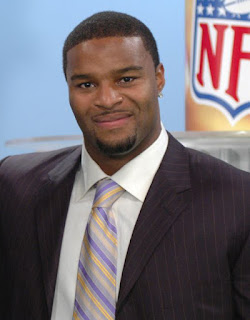
Osi Umenyiora


Osi Umenyiora growing football in Nigeria with The Uprise

Osi Umenyiora put together a dominant career with the Giants.

In 129 games from 2003 to 2012, the defensive end amassed 75.0 sacks, good for the sixth-most in franchise history. Additionally, his 32 forced fumbles ranks No. 1 all-time among Giants legends, while his 70 tackles for loss comes in at No. 4. Umenyiora was a two-time All-Pro, two-time Pro Bowler and of course, a two-time Super Bowl Champion during his years with Big Blue. He was inducted into the Giants Ring of Honor back in 2015.

As impressive as he was on the field, Umenyiora has made a tremendous impact off the field as well. While he was born in London, Umenyiora's parents are both originally from Nigeria. He has quietly been donating resources to Nigeria for two decades now, but he recently decided he wanted to do more for his homeland.

Umenyiora's latest humanitarian effort is called The Uprise, a football program established in Nigeria by the former Giant and Ejike Ugboaja, a former Nigerian professional basketball player.

Through this program, three young men earned the opportunity to travel to the International Combine in London.

"We had some of the guys come over to the UK combine, and the people who saw them were wowed," Umenyiora said. "They were amazed by the level of size, strength and athleticism these guys have, and I was just telling them there's so many more of them there who just need that opportunity, right? And the mentality and the work ethic that they all have, it's not just, 'Oh, I need to make it the NFL.' They want to go to school, they just want a chance to do something better with their lives, and American football is pretty much a sport that gives them that opportunity."

Check out the video below to view Umenyiora's inspiring effort to help grow football in Nigeria through The Uprise.

 In the latest edition of Papa's Perspective, Bob Papa and John Schmeelk look back at some of the most memorable matchups between the Giants and Bears, which can be found in the audio below.


Monday, December 27, 2021

Ckay Tells The Story Behind His Viral TikTok Hit 'Love Nwantiti'

Ckay


Ckay is opening up about his career.

The 26-year-old performer stopped by the Spout podcast to discuss the incredible year he’s had, as well as the success of his viral song “Love Nwantiti.”

Host Erik Zachary began by bringing up Ckay‘s recent performance at the O2 Arena in London, which the musician called “surreal.”

“Like that was so… It was like, it was my first time performing at the O2, you know, and yeah, it was crazy to see the love, man,” he said, adding: “A big shout out to Wizkid for having me on there. Big shout-outs.”

He then shared the story behind his hit track “Love Nwantiti,” which had already been a commercial success in Nigeria in 2019 before blowing up on TikTok this year.

“Yeah, I was literally freestyling,” he explained. “So I make my beats most of the time. I was literally in my living room, I didn’t even make ‘Love Nwantiti,’ in a studio like I would usually do.”

He continued, “The funny thing is, so I made this around midnight, and I was supposed to put words to the chorus the following morning. So, you know, after I slept, I woke up and I listened to the song again, I’m like, yo, this is fire as it is but I was just like, you know, let me just try to put some words in it. So I tried to put some words in it, and it just wasn’t [as good.] So I left it like that and, you know, we put it on.”

Ckay added that the version of the song that ultimately got released was the first take he did in his living room.

“Wow, that is… You didn’t recut it or anything. So this is like what you recorded in your living room,” Erik said.

“Exactly. That’s what you’re hearing right now,” he replied.

-------------------JUST JARED

Wednesday, December 22, 2021

Recognized For International Human Rights Work, UWindsor Prof Receiving Prestigious U.S. Law Award

Judge Chile Eboe-Osuji, president of the International Criminal Court, has served as Judge of the organization since March 2012. He's also served as legal advisor to the UN High Commissioner for Human Rights. (International Criminal Court)

ONTARIO, CANADA (CBC)--A professor at the University of Windsor will be accepting a prestigious award in Washington this April.

Chile Eboe-Osuji is accepting an award for his work to further international human rights and accountability — as a jurist, teacher, scholar, prosecutor and international official.

The award is called the Goler T. Butcher Medal, and it's presented by the American Society of International Law. It also came as a bit of a surprise.

"I feel greatly elated by it. It was not something I expected," said Eboe-Osuji. "When it came I was here in Toronto preparing my course for my students at the University of Windsor and I got this email from the American Society and it was a letter and I was greatly, greatly elated by it."

Eboe-Osuji said it was his family that initially pushed him in the direction of law.

"You have parents who encourage you into a certain direction ... my father was very instrumental in nudging me in the direction of the law and I accepted it, I did not rebel. I was not the rebellious kind," he said.

Born during the Nigerian Civil War, Eboe-Osuji said it left a "lasting impression on his mind," but that his work in international law was "happenstance."

In 1997, while practising law in Toronto, Eboe-Osuji said a colleague asked him to be part of the United Nations International Criminal Tribunal for Rwanda.

From there, his extensive resume continued; He is the president of the international criminal court and has served as a judge for the organization for nearly 10 years, and he was the legal advisor to the United Nations high commissioner for human rights — all while he is teaching law and political science at the University of Windsor and Lancer University.

Despite this work, Eboe-Osuji is quick to point out the work that still needs to be done abroad and at home in Canada.

"There has been some progress made, in fact progress came about amid a horrid global experience in the Second World War," he said, referring to the formation of the UN and recognition that "human beings have a role in international human rights."

But genocide continues, he said, and it's almost like 1945 was forgotten.

"Canada has come a long way this country has done important things some on a global stage," said Eboe-Osuji.

"The reconciliation project is important to pursue it and ensure there is confidence that lessons of that experience have been learned," he said.

"And Canada also, I do believe, can come back to what it used to be known for during the eras of Lester B. Pearson and Pierre Trudeau, as that middle power that was the voice of conscience amongst nations."

One positive step, is seeing more non-white Canadian judges, he said.

Eboe-Osuji will be presented this award on April 7 in Washington, D.C.

For more stories about the experiences of Black Canadians — from anti-Black racism to success stories within the Black community — check out Being Black in Canada, a CBC project Black Canadians can be proud of.

Tuesday, December 21, 2021

Camouflage: Best Of Contemporary Writing In Nigeria

BY TOYIN FALOLA


Many critics have categorized the different periods of the Nigerian literary scene in different nodes from means, methods, and concerns. No matter the generation, worldviews are shaped by the problems facing them at that period. The literary and national consciousness of the first and second generation of Nigerian writers was predominantly dominated by the notion of instant Nigerian dream and gradual process of the views and moral standing of ethnic conscious Nigeria.

These two generations sought to carry out their intentions with different methods in a bid to reconstruct, adjust, refute and even restructure Nigeria’s history and European standards. As a result, most of their works were laced with complex language, obscure linguistic, and sophisticated writings, creating the notion that the average Nigerian writing across genres should have specific tenets or features.

Post-independence Nigerian writings are particularly rich in language, content, phases, trends, and even structure across all genres. The emergence and inclusion of migrant writers, considered contemporary cosmopolitan writers and domiciled outside their natal matrix but are still very involved in Nigerian affairs, is the game-changer in Nigerian literature.

Adesanmi and Dunton (2005), in a narrow but relevant scope, opine, “Third generation writers prominent among whom are Chimamanda Adichie, Sefi Atta, Helon Habila, Chris Abani, Chika Unigwe, Helen Oyeyemi, Teju Cole, Unoma Azuah, Biyi Bandele, Maik Nwosu, Okey Ndibe, Chuma Nwokolo, Segun Afolabi, Uwen Akpan and Uzodinma Iweala, were born after or around 1960 and were, therefore, temporally severed from the colonial event.” Though limited to Nigerian authors, their assertion reveals that migrant literature and writers constitute a significant generation in the periodization of African literature.

Furthermore, Adesanmi and Dunton highlight the defining characteristics of third-generation writers thus, “Third generation writers’ works are decentralized and not subject to conventionally erect structures or ideologies. They maintain that fluid plot, faster-paced narrative and language shorn of the domestication impulse of the first and second generation of writers with setting almost always urban and Euromodernist”. Still ascribing defining characteristics to third-generation writers, Olaniyan (2012) describes their literary productions as “an overall healthy development of cultural creativity, the type that continually breaches accepted boundaries and invents new forms and suggests new meanings.”

This anthology under review, Camouflage, edited by Nduka Otiono and Odoh Diego Okenyodo, assembles a new generation of writers in Nigeria and the diaspora ranging from the age of 24, which is the youngest, and the oldest about 46. Most of these authors are well known in various capacities, from writers’ forums to winning international awards. The features and ideologies of this new generation of writers in the Nigerian literary scene are in line with the notion of Nduka Otiono’s Introduction in this collection. Otiono established in “Of Chameleons and Gods: A Generation in Search of New Idioms” that there is a total disconnect “between learned critics and academics in the ivory tower and the creative activities of new Nigerian writers,” which has affected the outlook of the writers in the Nigerian literary scene.

Also, based on the criticism of the new generation of writings in Nigeria, Otiono shows how Niyi Osundare, Olu Obafemi, and Charles Nnnolim identify that pale work, ideological sterility, and lack of proper idioms are the significant problems associated with the works of these new writers. However, it is pertinent to state that this critical collection aims to delegitimize and reconstruct the notion that a generation is better than another generation ideologically, stylistically, or aesthetically. Following T. S. Eliot’s goal of his famous essay, “Tradition and Individual Talent,” which hinges on the idea of innovation and expressionism, the contemporary, evolving, and complex ways of living have inspired much of the new writing socially and politically. Even from the title, which shows borrowing and intertextuality, a modern technique by these new writers, from a giant from the African literary scene, Jack Mapanje, Otiono concludes “Camouflage, to the various guises and voices which our contemporaries deploy to speak to the Nigerian condition and to overcome censorship—be it under military adventurers in politics or under pretentious “democrats” in the new dispensation.”

Through the critical reading of the poems and short stories in the collection, the authors adopt the concept of realism as there is a sign of a tremendous pursuant and continuance in the idea of realism by early writers in Nigeria. Currently, most of these new authors take on the transitional role of realism, in which they use descriptive images and inventive idioms to represent the disillusionment and dystopia of the Nigerian space as it is. They are also observant writers, documenting everyday life in straightforward prose and accessible poems, with the skilful description of characters from all levels of the society, accurately detailing their manners and speeches.

In the interaction of the literary with the notable developments in Nigerian literature in different climates such as philosophical, social, or cultural, the various works of the individual authors in the collection shows the movement to a self-conscious trend which is unique and overtly contributes to the idea of generic instability which, even though is problematized, produced an array of resistance for older generations and also to the function of the contemporary Nigerian literary scene.

Following Nduka Otiono’s categorization of the authors in the collection and their specificity, ranging from “David Nwamadi’s “Boom-Time for Grave Diggers;” Angela Nwosu’s “The Final Tea;” Chiedu Ezeanah’s engagement of national tragedies; the unorthodox pidgin poetry of Victor Eboigbe, “Gari don pass Naira;” to the bold, feminist erotic offerings of some of the female poets featured, especially Victoria Sylvia Kankara, Lola Shoneyin, Nonye Bethel and Nkechi Nwosu-Igbo,” it is significant to point out that these instabilities and troubled canon convention by these new authors can be considered as a form of symbolic and metaphorical action that has further shaped our understanding of the Nigerian world and reinvented the Nigerian literary scene. These generic trends and conventional discourses confirm or answer what Okey Ndibe suggests on the idea that we need a new way of telling our stories.

As a result, these new writers have reinvented, reconstructed, and reimagined new languages and devices that justly adapt to the new Nigerian complexity. More importantly, to answer the older critics and how they harshly berate these new writings, I claim that these stories and new writings may seem to be “poisoning” the Nigerian literature, but it is also an antidote for the disillusioned and new Nigerian complexities. These authors’ reshaping and evident rewriting in the collection shows a performative aesthetics that offers and creates new ways of perceiving the new Nigerian reality.

Overall, the analyses of Camouflage’s poems and short stories address and open up many questions and interrogations, particularly in the Nigerian literary scene and space. One of such is the threshold of boom, prosperity and utopia, and postcolonial conditions that the typical Nigerian writer is opened to and its sustainability and continuance by the new crop of writers. In addition, the concerns and subject matter that permeate most of the literary works in the collection seek to continue in the vigorous pursuit of holding leaders accountable for the unpleasable, nervous, and traumatic conditions the average Nigerian citizen faces daily.

It is pertinent to state that these established writers in the diaspora tend to explore cultural diversity in their works. Each of the literary works in the collection is an authentic and apt representation of the numerous phases and chains of events that reeks of disillusionment, which has overridden Nigerians from the period of independence until contemporary times. They seem unchanged, and, obviously, these conversations and topics are what early writers dwelled on and what the new writers are seeking to pursue in different patterns. However, these literary works’ conversations include nodes of community sharing, a different or strange identity, and headstrong resistant literature that are significant stylistic deviations from the old generation of writers. More importantly, they are still relevant in the discussions about the dysfunctionality in the sociocultural and sociopolitical spaces of the country. Excitingly, this collection opens up new dialogues concerning genre, language, and idioms and draws attention to the disillusionment of Nigerian society. It is coming urgently when readers home and abroad are introduced or fed wrong notions about the Nigerian state. These works are a sort of re-representation of the Nigerian consciousness, contributing significantly to the postcolonial conditions of scholarship in Nigerian literature.

This book is about the Nigerian post-independence conditions and new Nigerian realities, and it is also effective in problematizing and dramatizing the relationship between ideology and aesthetics that tends to reshape the Nigerian experience. Interestingly, the anthology litters the individual works of the contributors alphabetically rather than thematically, which gives the reader a memorable and fascinating surreal experience of encountering the unknown and navigating different styles and ideologies while digesting the collection.

Finally, the collection will contribute to the existent, vibrant scholarly discussions and materials on the Literature of Nigeria and the Diaspora literature. It will contribute to new trends and generic structure in this aspect of literature and will be helpful to sociologists, psychologists, policymakers, and other categories of people. This is because it will give exposés on the intricacies of the Nigerian daily experiences and image, which as Nduka Otiono rightly put, “Nigerian writers and intellectuals more positively project the country’s image internationally than the billions of naira spent on foreign missions and image laundering.” Thus, the array of writers portrayed in the anthology, Camouflage, confirms that literature and liberal arts in Nigeria are significant exports that should be seriously considered.


SOURCE: TRIBUNE

The Need For Cooperation Among Igbo Leaders

BY CHIEDU UCHE OKOYE 


The fallout of Lord Lugard’s yoking together of disparate ethnic nationalities to make up the political entity called Nigeria without getting the concurrence of ethnic leaders is the incessant threats of secession, which are being mouthed by Nigeria’s ethnic champions. The chequered history of Nigeria is replete with morbid tales about how some ethnic groups tried to secede from Nigeria at different periods since she came into being. But Nigeria, a heterogenous country, has not disintegrated, as feared by many people. Some other countries ,which have ethnic heterogeneity as Nigeria has, have, however, split into many different countries. For example, think about Ethiopia and Sudan. The two countries, which have the common feature of ethnic heterogeneity , had broken up, causing other countries to emerge from them.

Is Nigeria not a cat with nine lives? It is a cat with nine lives in the sense that the fratricidal Biafra -Nigeria civil war and other bloody political conflicts, which occurred in Nigeria, had failed to cause her dismemberment. Had the Igbo people won the civil war, the map of Nigeria would have been re-drawn, excising the sovereign state of Biafra, and perhaps other areas, from Nigeria.

Before the outbreak of the Nigerian civil war, Isaac Adaka Boro had declared the Niger-delta republic. The metaphoric reference to it as a candle in the wind aptly illustrates and encapsulates its brevity. Again, we have not forgotten that the northern people threatened to pull out of Nigeria in their nine point programme over some national issues. Nigeria overcame that threat to her existence and continued to exist as one indivisible political entity.

More so, over the years, Nigeria has been wracked by ethno-religious crises , which had the potential of causing her dismemberment. The north, which is the hotbed of religious crisis, has been erupting in religious conflicts with its disastrous consequences. The maitatsine religious crisis, which occurred in the 1980s, is still fresh in our minds. Again, when Abuja was slated to host the 2002 Miss World Beauty Pageant, Moslem faithful kicked against it, throwing Nigeria into a religious crisis. In fact, a fatwa was placed on a journalist , who wrote that Prophet Mohammed would have been a spectator at a Miss World Beauty were he alive. Sectarian violence , which has characterized Nigeria since her inception, has not caused her disintegration. More so, the annulment of the June 12, 1993 presidential election, which was presumably won by Chief MKO Abiola, polarized Nigeria. It threw Nigeria into a political cul-de-sac, and caused the deaths of some notable NADECO members, who were agitating for the revalidation of MKO Abiola’s stolen political mandate. It took the deaths of key political actors during that period such as Chief MKO Abiola and Sani Abacha for Nigeria to return to political stability. Their deaths paved the way for the birthing of the fourth republic in Nigeria.

Although Nigeria has practised representative government for more than two-twenty years, her successive leaders( both political leaders and military rulers) have failed abysmally to make Nigeria a truly united and egalitarian nation-state. Consequently, the issues that caused the Nigeria -Biafra civil war have continued to rear their ugly heads up in our political polity. The Igbo people have continued to allege that injustices are being meted out to them in the country. For example, they always point to the fact that no Igbo person is deemed qualified to occupy a top position in our country’s security architecture. Again, admission into unity schools in the country is designed to favour northern school pupils at the expense of those from the southeast. That discriminatory school admission policy is a proof that Nigeria has not become an egalitarian nation-state. The maltreatment of the Igbo people in Nigeria has caused the resurgence of the pro-Biafra separatist rhetoric and sentiments. So, when Nnamdi Kanu , the leader of the proscribed IPOB, launched into a ceaseless tirade against the ruling Fulani political oligarchy, it resonated with millions of Igbo people. They idolise, eugolize, and lionize him, exalting him to the status of a god. And they have acquiesced into his teachings and ideologies. It is believed that his regular radio programme radicalized his followers. His radio programme,which was always broadcast on the pirate Biafra radio, would demonize the ruling political elites.

In fact, the violent agitation for the creation of the sovereign state of Biafra is linked to Nnamdi Kanu’s incendiary comments on the radio Biafra. The militant wing of the proscribed IPOB is accused of executing homicidal deeds in the southeast. But the leaders of IPOB have continually denied that their members were perpetrators of those murderous deeds. So the atrocious murders committed in the southeast are blamed on unknown gunmen. But who are the unknown gunmen? Today, the spectre of the dreaded unknown gunmen attacking innocent people creates a climate of fear among the southeast people.

That is the chief reason why people abide by the weekly sit-at-home order declared by the secessionists to show solidarity with the detained Nnamdi Kanu. Nnamdi Kanu, who jumped bail and went abroad, was brought back to Nigeria through extraordinary rendition. He is , now, standing trial for treasonous offences. His detention and ongoing trial at the federal high court, Abuja, has incensed his followers to no end. Consequently, in response to his continued detention at the DSS facility in Abuja, the IPOB group has declared a weekly sit-at-home on Mondays to compel the federal government to release him , unconditionally. However, the IPOB leadership said that it has suspended the weekly sit-at-home order. For a while now, the southeast is shut down on every Monday. The observation of sit-at-home on Mondays, and on other days, which IPOB leaders will ask people to sit-at-home, depending on their whims and caprices, have caused problems for the people of the southeast area. The shutdown of the southeast on every Monday and on some other days have caused economic losses to the southeast governments and the downtrodden. People whose survival depends on their daily earnings are deprived of the opportunity to either ply their trade or open their shops for businesses on Mondays so as to earn money. As a result, they go to bed on empty stomachs on those days . Again, it has negatively affected school children in the area because their teachers have not taught all the topics in their schools’ curricula. Can ill-prepared pupils and students pass competitive external examinations by themselves?

While IPOB leaders have repeatedly said that the group has suspended the observation of the sit-at-home on every Monday , it is still observed as the people in the area have mortal fear for the enforcers of the sit-at-home order. But one pertinent question has cropped up: Are the IPOB leaders and the enforcers of the sit-at-home working at cross-purposes? My extrapolation from the IPOB leaders’ narratives is that the falcon cannot hear the falconer , anymore. Has the IPOB supreme leader created a Frankenstein monster, which he and his leadership team cannot control? Now , at this critical juncture of Nnamdi Kanu versus the federal government of Nigeria , it is pertinent that Igbo leaders and the IPOB leadership should reach a common ground and tease out a concurrence on their stand regarding the detention of Nnamdi Kanu and the IPOB’s agitation for the creation of the sovereign state of Biafra.

Both groups should , also, know that the strident calls for the emergence of a Nigerian president of Igbo extraction will not become a reality if the Igbo people fail to put their house in order and achieve unity. Releasing Nnamdi Kanu, unconditionally, and ceding the presidential seat to the southeast geopolitical zone are steps that should be taken to douse the rising political tension in the area. They will address the issues of marginalization and political ostracization, which the Igbo people alleged that they are experiencing.

Okoye writes from Uruowulu-Obosi

Monday, December 20, 2021

INTERVIEW: LARRY GAGA: 2Face Encouraged Me To Go Into Music

BY GBENGA BADA 


Larry Gaga Ndianefo does not like granting interviews and this, he said, is because he’s the shy type. Unknown to many of his fans, Larry holds two different degrees and three chieftaincy titles. With a name that evokes admiration and respect in the music industry, this hitmaking singer-songwriter takes ASSISTANT ENTERTAINMENT EDITOR, GBENGA BADA on his journey into creating music and how it takes him half a year or more to perfect a hit song.

So, where in Nigeria is Larry Gaga from?

I am from Anambra state.

Many people feel you just came into the music industry from nowhere, tell us the story?

Well, you need to correct yourself, I have been there for a long time. I have been in the music industry but maybe behind the scenes.

So, what have you been doing behind the scenes?

Well, there’s a record label, I don’t know if you guys remember, YSG, and had an artist then called Vector. So, I have been there for some time.

Being behind the scene, was that deliberate?

No, it wasn’t but you know this music thing started for me officially because a whole lot of artists used to meet me and request I listen to their album to choose the right songs and it was those qualities that made 2face give me the idea to do my own thing since I know how to think of exact beats that will fit a song as well as the right music act on the song and with that, I tried Gaga Shuffle with 2face and that was it. We released the song after seven months.

Why did it take that long to release a song?

That was because it wasn’t something I do. I am into oil and gas and I play big but I just like music.

So, when did you discover your love for music?

I would say from my childhood days. I have always loved music but I would say officially when I started rolling with 2face, like early 2000s.

So, how actually did you meet 2face because you speak so fondly of him?

Okay, so, I used to live like a few houses away from the Plantashun boiz in those days. I met Blackface first and we all became friends but it happened that I got closer to 2face and we have since remained that close.

So, you mentioned being a player in the oil and gas sector, has that part of you now taken the back seat?

No, it’s still there. I still do my business in the oil and gas sector.

But the music seems to be taking the centre stage?

Well, I would say it’s the passion that I have for music that makes it look like it’s taking the front seat but now, I think I am getting deep in the music.

So, for you, does music pay as much as oil and gas?

No, definitely not.

But the general belief is that entertainment – music and films – pays as we have seen with top music acts?

Well, yes but I don’t climb the stage to perform and collect the kind of money they collect. I only make and create good songs.

So, would you like to climb the stage to get such pay?

No, I am not into that but I might be giving it a shot soon because of several requests.

Egedege is a big song currently…

I have always had big songs (laughs)

Well but this is catching like wildfire, how do you feel about it?

Thank you and I appreciate the compliment but you know this song is just catching on like a wildfire truly I might have to be performing the song on stage because I have been receiving a lot of calls from the East and South South because they just want me to be on the stage and perform the song.

What inspired the song Egedege? tell us the back story

Okay, I actually went for a burial and I was sitting with my friends with kids around and they were shouting Larry Gaga then this lady walks in and I remember this same lady, Theresa Onuorah, very well growing up. My dad used to have this turntable and we listen to her songs so I saw kids shouting her name and I was surprised she was still alive and I just said it randomly to my friends that I would do something with this woman, the next thing, she called me and said she heard I wanted to do something with her and I said it’s true. So, I told her I would go back to one of her favourite songs that I used to listen to while growing up – which by the way, I was always scared of because of her voice and that was it.

Why the choice of Flavour and Phyno on the song?

I guess that’s just the Larry Gaga in me. When I listen to a beat or song, I know exactly who to put on the song and for Egedege, it was just Phyno and Flavour that could do it for me, nobody else.

Can you expatiate on that a little further?

When I listen to a song or a beat, I can tell exactly, who would do justice to the beat or the song, I just know. I think it’s innate, it comes naturally to me.

Are there other living legends that bring such memory to you?

They are all gone. People like Osita Osadebe, Oliver De Coque, so, they are all dead.

From your point of view, how big is Egedege?

I know it’s big, you know, I am used to hits. I have not felt it deep down in me as to how I should but in the East, I think it is very big due to the messages I get from there.

Are there other training you got to make you create music?

It just came to me. I listened to a lot of songs growing up, I like music, I listen to all genre of music, old music, international sounds, Nigerian music, highlife, a whole lot.

So, tell me, how did you come about the personae you have created for yourself in the music industry?

I have been like this from time immemorial. Everything I do or I set myself to do, I do it well. From my secondary schooling to university, I have always excelled at whatever I do, so I have always had that in me.

What happened with what you did with Vector and YSG?

Well, he didn’t do well. I know you guys want to ask me raw questions and I know where you are going to but basically, nobody is above mistake. I had a partner and they didn’t get along but I am neutral and cool with Vector, so we are very good friends till now.

You have these significant silver teeth, is this part of the art?

I have had this since 2005/2006. I used to do boxing and karate and one small boy finished my denture but that was by the way. I used to do boxing but my mum never liked it, she always complained so after the incident, I just quit then I traveled to Dubai to fix my teeth and that’s why I have two silver teeth.

You are have deliberately stayed on a low profile and in the background despite your huge achievements in the music industry, what’s the reason for that?

I am shy. I am a shy person. This interview is just because I felt like, let me just do it.

You said something about taking your time to get the music right like a perfectionist…

Yeah, for all my songs, I take my time to create a song. If you notice, before Egedege, I haven’t released a song for like one year. If you follow me very well, you would notice this and this new song is something I have been working on for over seven months, traveling back and forth because madam Theresa Onuorah isn’t based in Lagos, although she has been coming in and out of Lagos to perform the song with me at occasions.

Would it be right to say you take such a long time to create songs that eventually become hits because you have other sources of income?

Definitely, because I have other businesses that I do. I am also a hustler, if you bring other businesses for me you know I am an Igbo man, so basically, that’s it.

There’s an increase in the popularity of musicians from southeast Nigeria doing highlife, can you speak on that?

I think it’s just the time and we just follow the trend now that people like Flavour, and Phyno paved the way. We are just following the trend and people are enjoying the trend.

What’s the next musical conquest for you?

Just keep your fingers crossed.

Ichoku Academy On The Window Way

BY AMALUWA BENITA CHIDUBEM


It is December, the last month of the year 2021, but some events cannot be forgotten. One of such events was held in Unizik at the Awka Window on America. The Window positioned beautifully at the school of Post Graduate Studies in Nnamdi Azikiwe University offers educational resources, services and programs at no cost at all. According to the US Public Affairs Officer, Mr. Stephen Ibelli, “The Awka Window on America is a welcoming, collaborative, technology-driven centre where young people can share ideas, develop skills and grow capabilities.”

“The Window way”, hosted by Ichoku Academy was an entertainment and enlightenment program for secondary school students in Awka . It was held on the second of September,2021. The event was organized to bring children together to the Awka window on America at Unizik and engage them with music that they can relate with, ultimately educating them through music.

Ichoku Academy comprises mentors in different musical aspects. As a voice coach in the Academy, I engage pupils and students on voice training and stage performance. The Academy also has mentors in other aspects of music like music theory and indigenous Igbo music. The Ichoku Academy also has an ensemble troupe made up of children and teenagers, and their duty is to entertain and educate people in society.

The Ichoku Mission is to bring children to the realities of opportunities around them in order to maximize these opportunities as they grow in society. Indeed young people sometimes do not attain their potentials because they are not aware of an opportunity that is just at their doorstep.

My experience at The Window Way was a rather splendid one. The seminar kicked off with a simple prayer and opening speech by the founder of Ichoku Academy, Gerald Eze. He mildly introduced himself and then went on it introduce “The Incognitos”, a band consisting of some mentors of the Ichoku Academy. I couldn’t help but notice the expectations on the faces of the pupils and students as well as their parents and teachers.

I introduced myself and my bandmates made a brief speech about the seminar and went on to sing ‘Autumn Leaves’ by Nat King Cole, a cool and icebreaking song. The ambience it imbued on the environment was enough to know that the choice of song was apt. Next was Whitney Houston’s “One Moment in Time”. I saw some parents mouthing the words and even singing along. This was truly an instantly blissful moment for me and my bandmates.

While the audience was still relishing the imports of the songs they had listened to, two guys interrupted the event in a surprising manner, and right there was a drama performance that was going to take the audience around the happenings in the Nigerian society (with a focus on Awka). They linked all these happenings with how the Awka window on America was going to be of great benefit for the Nigerian child and youth.

The actors stormed the arena with hunter outfits and as if that wasn’t enough, they fought over a wife and nearly killed each other only to tell the audience at some point that they were only rehearsing. The experience was captivating and highly engaging. Eventually, when the audience was totally fixated on them, they were on to converse with themselves about the Awka Window and its benefits. Such creative minimalist performance which employs tragic-comedy to educate is indeed a special experience to behold. It was pure genius to say the least.

After the Drama, the event went on with a speech by the deputy director of The Awka Window On America, Dr. Martha Egenti. She spoke extensively on the program and activities of the window. Some students of the Ichoku Academy also had a chance to showcase their talents. The spectacular Oluoma Odimegwu, who for a while has been learning the Ubo-Aka and keyboard came up to play her Ubo and sing some folk songs with the accompaniment of Gerald Eze who played the Oja and Flute, and Nwabuogu Odimegwu who played the Ubo-aka. Oluoma played the keyboard and sang “Let It Go” from Frozen with commendable expertise.

Michael-Salem Ezenwuba strutted to the stage with confidence. The 14-year-old stunned the audience with his rib-cracking folktales, and like a master minstrel sang the accompanying folk songs while playing the Ubo-Aka.

The event ended with a round of questions from the audience about the centre and the answers were supplied by Dr Martha Egenti. To close the show, Dr Martha Egenti asked the audience to supply the answers to the questions: “What is the capital of America?” and “Who is the Vice President of America?” The answers were gotten by the 13-year-old Ikechukwu Mbagwu and he was gifted a brand new Ubo-Aka by the Ichoku Academy.

Duet performance of “A Whole New World” from Aladdin ended the event as the attendees gradually exited the seminar. A round of pictures and handshakes were taken. It was indeed amazing.

This day was a very remarkable one for me.

*Benita Amaluwa is a 200 level student of music at Nnamdi Azikiwe University, Awka.

Father Omega: Reverend Father Of Revolutionary Music

BY UZOR MAXIM UZOATU


It makes for history when a reverend father appears in bowler hat and offers revolutionary music that rivals Bob Marley’s offerings for class. Reverend Father Emmanuel C. Umezinwa, aka Fada Omega, is indeed a class act. A Professor of Music at Nnamdi Azikiwe University, Awka, Father Umezinwa wowed the audience with his accomplished performance in the forecourt of Testimony Place, near Arroma Junction, Awka, in the evening of Sunday, December 5.

“A Cry for Nigeria” was the first number dished out by Fada Omega. In his brief introduction of the song, Father Omega narrated that he was inspired initially by the riffs of Bruce Springsteen. Even as reggae is the underlying beat of his music, Fada Omega is quite eclectic.

The ace music prelate followed up with “Undertakers”, a no-holds-barred rendition of the state of a nation being buried in installments by the leaders.

Fada Omega upped his ante with the pulsating number “Stop Fooling Yourself” that got the audience singing along with gusto.

His rendering of the fourth number, “Revolution”, laid bare the revolutionary ethos of the priest who would not sit idly by while the underclass suffered.

There was a short interlude of a conversation between Father Umezinwa and the managing director of Anambra Newspapers and Printing Corporation (ANPC), Sir Chuka Nnabuife.

Sir Nnabuife started out wanting to know whether Father Umezinwa preferred Fada Omega or Fada Emma as his stage name. Fada Omega took the prize.

The personable reverend father revealed that he was not restricted to reggae or country music but could put to application a wide range of musical genres.

Fada Omega is not one to fall for easy labels, but insists that music helps to foster change in society, arguing that “Jesus Christ was a revolutionary.”

He informed the audience that, back in 2005, he went for voice training in a studio in the United States only for the studio manager to wonder at the Nigerian being able to sing excellently through all the ranges.

Fada Omega is a natural baritone who does not believe in the existence of falsetto or false voice in the music get-go.

He had been composing and playing music for the past 30 years or so, and in 2003 recorded highlife tunes for his age grade in his native Akpo town in Aguata LGA of Anambra State.

He had over the years been producing classical music on radio. He hardly uses notes when composing the songs. He is quite open to his music being recorded for keeps.

The Fada Omega concert was engineered remarkably by a First Class student of his in the Music Department, Gerald Eze, a winner of the coveted Christopher Kolade Music Award and the singular exponent of the Igbo musical instruments Oja and Ubo-aka. Gerald Eze talked of his intent to immortalize the musical genius of Fada Omega.

The generous hosts, Dr. Patrick and Barrister (Mrs.) Amaka Ezeno, offered to keep to the testimony of hosting the performances as ever. A sage like Fada Omega would always find a home here, Mrs. Amaka Ezeno asserted.

In a lighter mood, Igwe Chidi Onuigbo said he was very afraid that Fada Omega, without the restraining clothing of the soutane, could go on a rampage!

For Hon. Ikem Uzoezie, a former member of the Anambra State House of Assembly, “Fada Omega’s music is timeless and will go a long way in assisting the social revival needed in Nigeria.”

Rev. Father Chika Okpalike of the Ekwulobia Diocese marveled at the abiding relevance of Fada Omega’s songs, having been composed three or two decades earlier.

The evening’s performance was rounded off with the number “We Shall Overcome.” It was music that throbbed with the hope inspirited on mankind by Nelson Mandela.

Fada Omega represents a phenomenon whose time has come. Given the great influence of prelates on the people, Fada Omega carries remarkable charisma into the turf of changing the society for the better. He stands up for his beliefs, daring all dictators and the conservative types. He has built up a good following, and it aids the progress of the society that he is working with the Department of Theatre Arts of Nnamdi Azikiwe University for the release of his musical videos. A professional to the core, Fada Omega is intent on going to the last detail to see that everything is done well.

It was indeed an evening to cherish, complete with a two-man theatrical performance.

Necessary lessons were learnt from all Fada Omega’s songs, notably “A Cry for Nigeria”, “Undertakers”, “Stop Fooling Yourself”, “Revolution” and “We Shall Overcome.”

Fada Omega is a voice destined to rule the waves. Nobody who encounters him in song is ever bound to forget him in a hurry. He makes sound and meaning with an assurance that uplifts the soul. In this day and age of meaningless songs by ill-assorted youths calling themselves musicians, Fada Omega is the way to go.

Ikpeazu: ‘Bakin Zuwo’ Of The East

BY LEO SOBECHI

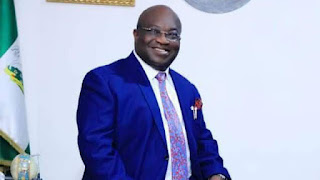
Okezie Ikpeazu image via The Guardian


UMUAHIA, ABIA (THE GUARDIAN)--Governor Victor Okezie Ikpeazu, has been trending on social media for some time now. The record shows that the governor, who until March 2014, was in charge of sanitation and urban planning in Abia, holds a doctorate in Biochemical Pharmacology from the University of Calabar.

But, before the doctorate, Ikpeazu graduated from the University of Maiduguri, where he studied Clinical Biochemistry in 1984. He was in love with Maiduguri because it was reported that he went back to the university for his Master of Science (M.Sc) degree in Biochemical Toxicology in 1990.

For the length of time he spent in Maiduguri, especially in his formative years, Ikpeazu qualifies to be called, Aboki na (my friend, in Hausa tongue), because apart from his days in UNICAL for his doctorate, and during his youth service programme at the Rivers State University of Science and Technology (RSUST), the North got the better of youth.

From the foregoing, it could be rightly said that the governor of Abia State is a learned man. He is not an itibolibo (numskull).

However, as he trended on various media platforms for the greater part of the last two months, the 57-year-old was made up as a reincarnation of a former Kano State governor, Aliyu Sabo Bakin Zuwo, who was born 30 years before Ikpeazu was born in 1964.

Although Zuwo’s roots could be traced to the Kanem Bornu Empire in the present day Borno State, he grew up in Kano. But, there is nothing to show that Ikpeazu’s similarity with Zuwo is based on the fact that both men have had much to do with Bornu State.

Those who knew Zuwo could attest to the fact that there is a slight facial resemblance between him and Ikpeazu. However, while Zuwo did not have any formal education until age 16 when he decided to help himself, Ikpeazu reached the apogee of academic work, having attained a doctorate.

Nonetheless, another striking resemblance between Zuwo and Ikpeazu is both men’s love for radio and television. It is on record that to defeat the charismatic Abubakar Rimi in the 1983 governorship election in Kano, Zuwo made effective use of the radio as a campaign tool.

On the part of Governor Ikpeazu, two spectacular video clips, which made the rounds as his name trended, were excerpts from his participation in two programmes on Channels Television.

One was when he featured on Seun Okinbaloye’s Politics Today, while the other was a Day Break interaction with Maupe Ogun-Yusuf.

In the conversation with Okinbaloye, when told that a lot of people have complained that his government has failed to deliver the goods in the last six years, especially in Aba, Governor Ikpeazu queried: “Who said Aba is not working? Today in Aba, you have Dominos, Chicken Republic, er er er Market Place (Supermarket). You have everything in Aba, you even have a cinema in Aba!”

Those who know Kano State from October 1, 1983, would remember how closely Ikpeazu sounded like the then Governor Zuwo, who listed Mirinda, Fanta and Coke as some of the mineral deposits in his state.

Maybe Ikpeazu is saving Abia State’s money in the Government House, just as Zuwo claimed when his administration was toppled by the military junta on December 31, 1983, when N3.4m was discovered in his lodge. That also came to mind when Ogun-Yusuf took Ikpeazu up on the issue of maternal care in Abia State.

Governor Ikpeazu stated, to the amusement of Nigerians, that his administration gives N500 to nursing mothers immediately after their safe delivery, in addition to backpacks, which contents he did not disclose.

Ever since his serial appearances on national television, most commentators have been wondering how Ikpeazu, with his doctorate degree, differs from Bakin Zuwo, who struggled in his adolescent years to acquire western education.

It should be noted that before his being drafted into politics by his benefactor, Chief Theodore. A. Orji, Ikpeazu lectured in some tertiary institutions. But, it is as if his stay in Maiduguri did not avail him the opportunity to know much about his state.

However, some Abia State indigenes insist that nobody should blame Ikpeazu, but the political circumstances that threw him up as an accidental leader. They alleged that the offices he has occupied in public service, that is, after leaving the classroom may have affected his comportment and governance style.

The Guardian learnt that Ikpeazu was local government chairman of Obingwa Local Council from 2007 through 2009, from where he went on to become General Manager, Abia State Passenger Integrated Manifest Scheme (ASPIMS) from 2010 to May 29, 2011.

Senator Orji perhaps knew that Ikpeazu would succeed him as governor upon the completion of his tenure. That perhaps explained why the former governor appointed Ikpeazu as Chairman, Governing Council of Abia State College of Health Technology. From there, he served as the first Deputy General Manager of the state Environmental Protection Agency, from May 5, 2013 to October 10, 2014.

While some supporters of Governor Ikpeazu still allege that former governor Orji and his allies do not allow Ikpeazu the freedom to exhibit his governance style, many worried indigenes of the state citizens insist that just as success does not demand an explanation, failure should not admit alibis.

Ikpeazu’s efforts at promoting made-in-Aba products helped him to win a second term in office, but Aba people, especially those from Oha Ngwa said they are troubled that their brother is yet to truly deliver the goods as governor.

Without talking about the backlog of pension and salary arrears, Ngwa people point to the governor’s failure to do the following roads in Aba as evidence of absentee leadership: Port Court Road, Obohia, Ohanku, Ngwa, Azikiwe, East By Ngwa and Faulks Roads.

As if the complaints of his people were not enough facts to contradict Ikpeazu’s offering on Channels Television, his former Commissioner for Justice and Attorney General of the state, Ume Kalu (SAN) penned, what he titled, “State of Abia: Wake Up Call on Okezie Ikpeazu (Part 1).”

Part of the 13-page epistle read: “I have been under intense pressure to share my thoughts with you on the real and general public perception of the poor state of affairs in our state, and, possibly proffer solutions towards ameliorating the situation.

“I am aware that most of the sordid and unfavourable things trending in public discourse about our state do not get to your knowledge, as those whose duty it is to draw your attention to them will, for fear or inability to handle the backlash, keep that information away from you…

“Since I left office as Attorney – General of our state in May 2019, I have variously been confronted in both private and public, with the poor and pitiable state of affairs in our state. Attempts to put up some defence often fail as I come out of the exercise looking stupid due to want of justification for the parlous/pitiable state of affairs in our state.

“As one who had been in government before your emergence as Governor in May 2015, I can attest to the fact that you inherited a state that was in distress and dire need of emergency attention.

“Those who are objective and truthful know too well that you did not originate the prevalent rot, but accepted it gleefully, and, instead of halting the drift, you have sustained it. This in a nutshell is the true state of affairs in our state at the moment.

“The rain started to beat us torrentially somewhere within the eight (8) years of your immediate predecessor’s tenure. Each time I ponder over your reluctance and/or refusal to make the expected positive impact on the governance of our state.”

Apart from verbal reproofs, infrastructure developments in their two neighbouring states –Ebonyi and Rivers-continue to challenge Abians to ask, in the voice of Mr. Peter Obi: “Are we cursed or are we the cause?”

Governor Nyesom Wike, in what many considered as poetic irony, invited Ikpeazu to Port Harcourt to commission a portion of that strategic road that connects Rivers to Abia State.

Also, while explaining the cost of many flyover bridges he constructed in Ebonyi State, Governor Dave Umahi stated that it was fair enough to spend N1.2b on each compared to the humongous N4b that some states post as cost of never-ending projects of similar magnitude.

Legendary Igbo Ogene music exponent, the late Oliver De Coque, in one of his songs noted that it is that which a man desires that he asks God. So, for those who blame Ikpeazu for mentioning the siting of Domino Pizza and cinema as part of his government’s achievement, how would you know if those are his signature projects? After all, Abia State is God’s Own State, and everything is vanity upon vanity.

Expanding The Conversation About Sustainability

Senior Stacy Godfreey-Igwe seeks to make marginalized communities more visible in the fight against climate change.

MIT NEWS

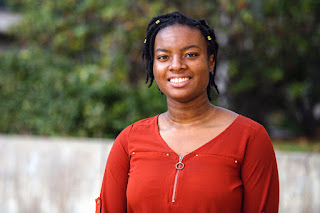
Stacy Godfreey-Igwe. Image: Ian MacLellan via MIT


Stacy Godfreey-Igwe sat in her dorm room at MIT, staring frantically at her phone. An unprecedented snowstorm had hit her hometown of Richardson, Texas, and she was having difficulty contacting her family. She felt worried and frustrated, aware that nearby neighborhoods hadn’t lost power during the storm but that her family home had suffered significant damage. She finally got a hold of her parents, who had taken refuge in a nearby office building, but the experience left her shaken and more determined than ever to devote herself to addressing climate injustice.

Godfreey-Igwe, the daughter of Nigerian immigrants, has long been concerned about how marginalized communities can shoulder a disproportionately heavy environmental burden. At MIT, she chose a double major in mechanical engineering with a concentration in global and sustainable development, and in African and African diaspora studies, a major she helped establish and became the first student to declare. Initially seeing the two fields as separate, she now embraces their intersectionality in her work in and out of the classroom.

Through an Undergraduate Research Opportunity Program (UROP) project with Amah Edoh, the Homer A. Burnell Assistant Professor of Anthropology and African Studies at MIT, Godfreey-Igwe has learned more about her Igbo cultural heritage and hopes to understand what the future of climate change poses for the culture’s sustainability. Godfreey-Igwe herself is the “Ada” – or eldest child – in her family, a role that carries a responsibility for keeping her family’s culture alive. That sense of responsibility, to her community and to future generations, has stayed with her at MIT.

For Independent Activities Period during her first year at the Institute, Godfreey-Igwe traveled to Kazakhstan through MIT’s Global Teaching Labs. As a student teacher, she taught Kazakh high school chemistry students about polymers and the impact plastic materials can have on the Earth’s climate. She was also an MIT International Science and Technology Initiatives (MISTI) Identity X Ambassador during her time there, blogging about her experiences as a Black woman in the country. She saw the role as an opportunity to shed light on the challenges of navigating her identity abroad, with hopes of fostering community through her posts.

The following summer, Godfreey-Igwe interned for the Saathi Biodegradable Sanitary Napkins Startup in Ahmedabad, India. During her time there, she researched and wrote articles focused on educating the public about the benefits eco-friendly sanitary pads posed to public health and the environment. She also interviewed a director for the city’s Center for Environmental Education, about the importance of uplifting and supporting marginalized communities hit hardest by climate change. The conversation was eye-opening for Godfreey-Igwe; she saw not only how complex the process of mitigating climate change was, but also how diverse the solutions needed to be.

She has also pursued her interest in plastics and sustainability through summer research projects. In of the summer of 2020, Godfreey-Igwe worked under a lab in Stanford University’s civil and environmental engineering department to create and design models maximizing the efficiency of bacterial processes leading to the creation of bioplastics. The project’s goal was to find a sustainable form of plastic breakdown for future applications in the environment. She presented her research at the Harvard National Collegiate Research Conference and received a presentation award during the MIT Mechanical Engineering Research Exhibition. This past summer, she was awarded a grant through the NSF Center for Sustainable Polymers at the University of Minnesota to work on a research project seeking to understand microplastic generation.

Ultimately, Godfreey-Igwe recognizes that to propose thoughtful solutions to climate issues, the people hit hardest must be a part of the conversation. For her, a key way to bring more people into conversations about sustainability and inclusion is through mentorship. This role is especially meaningful to Godfreey-Igwe because she knows firsthand how important for members of underrepresented groups to feel supported at a place like MIT. “The experience of coming to an institution like MIT, as someone who is low-income or of color, can be isolating. Especially if you feel like there are people who can’t relate to your background,” she says.

Godfreey-Igwe is a member of Active Community Engagement FPOP (ACE), a social action group on campus that engages with local communities through public service work. Initially joining as a participant, Godfreey-Igwe became a counselor and then coordinator; she facilitates social action workshops and introduces students to service opportunities both at MIT and around Boston. She says her time in ACE has helped build her confidence in her abilities as a leader, mentor, and cultivator of inclusionary spaces. She is also a member of iHouse (International Development House), where she served for three years as the housing and service co-chair.

Godfreey-Igwe also tutors one-on-one for Tutoring Plus in Cambridge, where since her first year she has provided mentorship and STEM tutoring to a low-income, high school student of color. Last spring, she was awarded the Tutoring Plus of Cambridge Unwavering Service Award for her service and commitment to the program.

Looking ahead, Godfreey-Igwe hopes to use the skills learned from her mentorship and leadership roles to establish greater structures for collaboration on climate mitigation technologies, ideas, and practices. Focusing on mentoring young scientists of color, she wants to build up underprivileged groups and institutions for sustainable climate change research, ensuring everyone has a voice in the ongoing conversation.

“In all this work, I’m hoping to make sure that globally marginalized communities are more visible in climate-related spaces, both in terms of who is doing the engineering and who the engineering works for,” she says.

INTERVIEW: No President From North’ll Champion Restructuring — Chekwas Okorie

BY CHIOMA GABRIEL
VANGUARD INTERVIEW

Chekwas Okorie


Chief Chekwas Okorie, the founder of All Progressive Grand Alliance, APGA, and the United Progressive Party, UPP, is now a chieftain of the ruling All progressives Congress, APC.

In this interview, he speaks on why the Igbo are having issues with producing a Nigerian President. He also speaks on why it will be difficult for the ruling APC, and main opposition Peoples Democratic Party, PDP, to project a president from the south, saying both parties will pick their candidates from the North.

The quest for the Presidency of Igbo extraction is attracting all manner of criticisms. Many perceive having a president of Igbo extraction as having Biafra. What is the problem with the Igbo?

We are our own problem to a very large extent because to run for the office of the president, you have to, first of all, make sure you have a candidate, and to have a candidate, that person must emerge through a political party. But the way Nigeria is structured it is easier for a camel to pass through the eye of a needle than for an Igbo man no matter how qualified he is to emerge as a candidate of the PDP or APC.

However, there are many factors that will help an Igbo to brighten his prospects of being the President of Nigeria. There are so many minorities, ethnic groups in Nigeria that feel the way Igbo people feel about alienation and lack of inclusion in governance. And when you have all of these groups come together in a political party for the purpose of electing a president, there are chances that such a person will win. In the 90s, Dr. Alex Ekwueme was edged out as the presidential candidate of the PDP at the Jos Convention, and this was a man that was promised by so many of the northern allies who were with him in NPN to pay back the loyalty he gave to President Shehu Shagari. He was promised that he would be compensated through their support.

Instead, they conspired and used their number and brought out General Olusegun Obasanjo, who was in prison, was not there at the formation of the party, and threw him up as the presidential candidate of PDP just to stop the Igbo man. Obasanjo was released from prison for the purpose of foisting him on the Nigerian people and the northerners severally boasted about how they determined who will become Nigerian president.

So, that was why I went out and led other people to form our own party and that was how APGA was born.

The first thing we did was to zone APGA’s ticket to the South-East and Dim Chukwuemeka Odumegwu Ojukwu emerged as its presidential candidate. Without APGA, there was no way Odumegwu-Ojukwu would have emerged as the presidential candidate of a party in his entire lifetime in Nigeria, if Dr. Ekwueme couldn’t be. That aroused tremendous trepidation among the ruling class who had this fear about the Igbo emerging.

The rigging of the 1999 election was so massive. It was premeditated because President Obasanjo told me after the election when we had a meeting at the Villa, he invited me specifically. They had the authentic result with them and they also knew what they did. Obasanjo said I committed a political sin in Nigeria by promoting Odumegwu-Ojukwu, who fought a civil war and wanted to break up the country. That was when I knew what transpired. In fact, he said the moment we brought out Odumegwu-Ojukwu as a candidate, our party APGA became a national security issue.

What happened to APGA was a matter of state policy and so, I became more conscious of the challenges of the Igbo man in Nigeria but I also know these are challenges that can be surmounted through proper political strategy.

After that rigging, the destabilization of the party was a matter of state policy. What happened in APGA was hatched in the Villa. That was why people would not know why a treasurer in a political party could be announced by the electoral commission as the chairman of the party without a convention. It has never happened anywhere in the world and may never happen again even in Nigeria.

In fact, they saw to it that this party did not see the light of the day. You can imagine, next year will be 20 years of APGA and it has never gone beyond Anambra State. So, the Igbo people generally got completely disillusioned and their morale failed generally. Many assumed that it is not necessary for the Igbo to come together and assert themselves politically because the votes will never count.

That was why since 2012, I began the agitation for electronic voting. I did a lot about it through the National Assembly and through a memorandum to the presidency but the PDP never cared and worked against it. It was when they became a victim of election manipulation that they began to champion the issue of electronic voting. You now begin to hear former President Jonathan on every occasion he spoke after he left office, saying that electronic voting was the answer to election manipulations in Nigeria.

So, here were are, getting again to where votes will begin to count in Nigeria and the main problem we have is being able to sensitize the Igbo man again to be prepared to participate. So, that’s why I said that the problem is entirely our own. Nobody placed the order for power. There are many ethnic groups in Nigeria because Nigeria is still based on ethnic nationalities. There is nothing like Nigeria is a country far more divided along religious lines. People of the same religion still display sentiments to their ethnic nationalities rather than their religion. That is their position.

We are marching again towards another election year. A non-Igbo would wonder what the Igbo want; whether it is Presidency, Biafra, or restructuring. Are the Igbo speaking from both sides of the mouth?

Any person advancing that logic is simply being mischievous. That person is being intelligent by half.

Boko Haram has been there for years, about 12 years before the emergence of President Buhari. Boko Haram even appointed him to be their negotiator. Not only that, their objective which has not changed is to Islamise Nigeria and set up what they called the Caliphate Republic. And they were able to occupy about 14 local government areas. They had their flags in those areas. Nigeria did not blackmail the North with that and Buhari still emerged as President.

Before Jonathan eventually came up, the Niger-Delta militants were at work. They were also talking about the Niger-Delta Republic and brought the economy of Nigeria to its knees. It was said that allowing the Niger-Delta to produce the President would douse tension and it did douse tension.

Before Obasanjo became President, NADECO and OPC were holding sway in the South-West because of the issue of M.K.O Abiola. The likes of General Alani Akinrinade had set up a shadow government in the Diaspora and OPC and others launched what they called Oodua Republic in Ibadan, complete with a flag and the Oodua national anthem. The Nigerian ruling class did not for the fear of possible Oodua Republic deny Obasanjo or the South-West Presidency of Nigeria. What happened instead was that the outgoing military compelled the political parties to get their Presidential candidates from the South-West. They went further to force Alliance for Democracy, AD, and All Peoples Party, APP, into an unholy alliance, unholy in the sense that APP had nine states and the AD had six states all in the South-West, and the military government compelled APP to accept its presidential candidate from the South-West and that was Chief Olu Falae.

It has never happened anywhere in the world that a junior partner in a political alliance will be the one to produce a presidential candidate in such an alliance. But it happened in Nigeria just to calm the Yoruba people down. This is part of our recent history and not our First Republic history.

And somebody is saying that some people are agitating and rightly so, that the Igbo people have been so marginalized and don’t feel they have a place in Nigeria anymore, why won’t Nigeria do for them what they did for others and prove to our younger ones that the Igbo are still part of this country? It’s just sheer blackmail and mischief to hold Biafra agitations against the Igbo wanting to be president. It has nothing to do with reality.

And talking about restructuring, everybody wants Nigeria restructured but producing a President from the South will facilitate that restructuring. Producing a president from the South after having one from the North for eight years is restructuring. The 2014 National Conference recommended restructuring. Buhari made it clear when he was sworn in that he would not touch the 2014 national conference recommendations. And if you watched Atiku Abubakar during his campaigns, he only talked about restructuring when he came to campaign in the South. Check the records. Each time he campaigned in the North, he never mentioned it. This means that to him, it is expedient to mention restructuring in the South, and perhaps he didn’t mean it. All these things were in our records.

So, anybody talking about restructuring and saying restructure first before talking about the presidency may not understand. To me, Presidency comes first before restructuring and it depends on where that Presidency comes from. No northern president will champion restructuring. You cannot engineer restructuring from outside the government. I was part of PRONACO that tried it and everybody agreed. Professor Wole Soyinka is still alive, but when it came to funding the project, we found it was impossible to do so except with state resources and facilitation. So, that one ended there.

Talking about Presidency, when you come to the South-West, Tinubu is formidable and you don’t get to hear about several others. However, in the South-East, there appears to be many interested candidates. Won’t this work against the South-East when it comes to projecting one candidate?

Well, bringing out one individual is not the best way to go about it. It doesn’t happen anywhere in the world except a president that wants to go for a second term and even that, the party will give him a chance of first refusal.

That is often seen in the presidential system like that of the United States. But other than that, when somebody is going for the very first time, aspirants emerge. It is only the party convention that throws up the candidate. So, in the case of the South-East, there’s nothing unusual that more people are indicating interest to contest the presidency. Before now, the impression was that no one in the South-East is showing interest in running for the presidency; but now that they are indicating interest, nobody should complain about too many of them coming to run. Eventually, it is the party that decides. But I want to say that neither Tinubu from the South-West nor any of these aspirants from the South-East will emerge as candidates of APC or PDP. It will never happen. There is nobody in PDP from the South-East who has the outreach and goodwill; and the capacity and qualification of Dr. Alex Ekweme. None of them and yet they treated him the way they did in Jos.

In the case of Tinubu, I don’t even know where his optimism is coming from because when you think of it, Nigeria cannot escape the sentiment of religion. How can a Muslim want to replace another Muslim? How can that fly? A party that throws up Tinubu has planned to fail right from the very beginning not because his name is Tinubu but because of the factors and circumstances around him. It also means that if he emerges, although he is a Muslim, he should know that Northern Muslims will not consider him a Muslim. If he emerges, he will have to take a Christian from the North who may not be able to garner the kind of votes that a Muslim candidate will make.

That is the practical thing playing out. Anybody can argue it but at the end of the day, we shall see. The PDP is going to pick its candidate from the North-East because they believe the North-West has had its full time and the North-East has not had an opportunity. And APC is not going to allow the northern political space to be occupied by the PDP. So, APC is also looking in the direction of the North-East. Already, PDP has gone to the North-Central to take a chairman. Watch that APC is also taking its chairman from the North-Central.

So, be rest assured that North-East presidential candidates of either Fulani or Kanuri in that area will fly the flags of these two parties. So, the recommendation I make to the Igbo, and that is without any anger as to the injustice done to me in the party I founded, but with every sense of patriotism is that the Igbo must come together, especially now that Professor Chukwuma Soludo is coming in as governor of Anambra State, and being a man who has tested his political trouble, a man who has been around from the time he served as CBN governor and having served in other capacities; he will be serious about the Igbo question. Now that he is coming in as governor, he should be passionate about developing APGA outside the South-East. He should see to it that APGA is relaunched and returned to its original vision. Once that is done, the political equation of Nigeria will change because APGA will be the only party that will throw up a Christian Presidential candidate that will have a national appeal. The 2023 election must be based on some balance that will throw the arrogant northern political class back to the drawing board.

I can also tell you that the Hausas are coalescing right now around the Peoples Redemption Party, PRP. They will soon emerge strong. They have just discovered that the late Aminu Kano is not just the leader of the Talakawas and street urchins but he was one person determined to assert the Hausa political identity in the North, instead of being subsumed under the Fulani hegemony. So now, they have realized what Aminu Kano was fighting for, that he was not the leader of the Talakawas or street urchins as branded by northern elites. The Hausa who are far more educated than other ethnic groups from that part now have come to that realization and you discovered that gradually, they are throwing up Professor Attahiru Jega as their arrowhead. When the time comes, don’t be surprised to see Prof Attahiru Jega as the flag-bearer of the PRP.

The late Balarabe Musa who won in old Kaduna which included Katsina was a Hausa man. In Kano, there was Abubakar Rimi, another Hausa man. So, there would be a realignment of political forces.

Indeed, 2023 will be an interesting year and that includes the introduction and deepening of electoral technology. You will see a strong force emerging among the Hausa and their friends. Then, if my recommendations are accepted, APGA will rebound and that’s the only platform that an Igbo man can fly.

If you notice, after Odumegwu-Ojukwu, no Igboman has been the candidate for APGA. After Ojukwu, those who hijacked APGA felt it was better for them to adopt Jonathan. So, they adopted Jonathan in 2011 and adopted Jonathan again in 2015, publicly.

And what happened in 2019? They went to Tiv and brought one General Gbor that we have never heard his name in politics. General Gbor was not a combatant soldier but a classroom teacher in the army.

After using him, he has gone back to where they brought him from but you can never see him anywhere around APGA. They have wrecked that party from its original vision but I know an opportunity is calling and the mood is right and Professor Soludo has a date with history.

So, you still expected APGA to be what it used to be when you founded it?

It will even be greater. There is this adage that the Igbo man doesn’t start running from the rain until he is fully drenched. Another truth is that the Igbo man has been drenched in his underwear. So, what we were preaching is that with proper sensitization, the Igbo will make a mark in 2023 if they go into a coalition with a stronger party. The Igbo people have done it before in the First and Second Republics and they were very relevant. If my advice is heeded to, APGA would rebound and go into an alliance for the Igbo to remain relevant in the scheme of things.

Ohanaeze Ndigbo should organize a political summit of the Igbo to work out how to push the people ahead in 2023.

It is not by begging. When I heard Dr Chukwuemeka Ezeife being quoted to have said Igbo are willing to bow to get the Presidency, I was surprised. I was even expecting him to say he was misquoted. Igbo have what it takes to aggregate all the ethnic minorities across the country to form a formidable coalition. It is not about begging but about give and take. It is not the culture of the Igbo to beg.