Showing posts with label Sun News. Show all posts

Monday, June 27, 2022

Escalating Assault On The Church

Rev. Father Vitus Bogoro killed on his farm in Kaduna State, Nigeria

BY ANDY EZEANI

In the face of numerous killings of Christians and attack on churches in Nigeria under the watch of Muhammadu Buhari as President, officials of his government have had to deny at various points that the configuration and policies of his government are anti-Christian. Indeed, the government mounted a strenuous defence before the international community some months back when the same allegation gained loud refrain at the United States Congress. Among the evidence it held up as defence, the state presented Vice-President Yemi Osinbajo, who is a pastor, as Exhibit A, to prove that the government is religiously plural and, therefore, not anti-Christian.

The truth, of course, is that Nigeria has been taken over by terrorists, bandits, jihadists and criminals of all forms who now visit hapless Nigerians with terror and violence. The government has stopped short of raising its hands in surrender in the face of these ferocious acts of terrorism. Every person in Nigeria at the moment is literally on his own, with kidnappers and killers having a field day, attacking where ever their evil spirit leads them.

Killing has become too common in Nigeria in recent times, to the extent that any report of ten or twenty people killed on any particular day or instance, is no more news. Indeed, what will be news will be a day that passes by without dozens and scores being killed in the country. There are, in addition, many unrecorded and unreported cases.

In this reign of terror, the point made by government officials, that there is equal danger and threat to all lives in Nigeria, irrespective of creed or faith can be understood.

Beyond official state policy however, within the prevailing orgy of killings, kidnapping and sundry violence across the land, the incontrovertible fact is that Christianity is passing through an unprecedented horror in Nigeria, the type neither it nor any other religion has gone through under any dispensation since Nigeria came into being. To the Church in Nigeria, this is a time to watch, pray and now defend itself.

There may be terror and violence all over the place, quite alright, but there are bases to believe that there is method and purpose in the madness. The picking and killing of Christians and Christian clergymen in Kaduna and in various parts of the country, have become too pointed and regular to pass as random handiwork of rogues.

The Catholic church in particular has become the prime target in recent times. In a matter of about 24 hours last weekend, the church lost two priests, killed in their prime, in separate locations, by the euphemistically-tagged bandits. By whatever name the terrorists and murderers come, they are, without doubt, anti-Christ.

Catholic clergymen have never been known for being rich in material possession. Under normal circumstances, you will not expect to find up to N10,000 in the pocket or residence of a Reverend Father. They do not keep earthly valuables either. Over time, some of them, courtesy of their communities, have upgraded to driving SUVs, a practice that has not gone without reproof by some among the faithful. In other words, priests cannot be said to be attractive target for anyone robbing for material gain. So what else, but a drive to emasculate the Church accounts for the escalating violence and attack on Christian clergymen all over the country?

On Saturday, June 25,2022 in Kaduna, which has become the undisputed pre-eminent killing field in Nigeria, Rev.fr. Vitus Bogoro 50, chaplain of the Catholic Community of the Kaduna State Polytechnic and chairman of the Nigerian Catholic Diocesan Priests Association, Kaduna was murdered at Prison Farm, kajama, along Kaduna – Kachia Road, Kaduna. His offence? Nothing else but that he was a priest.

Fr. Bogoro’s killing followed on the heels of the murder of Rev. Joseph Bako Aketeh, killed eight weeks after he was abducted on May 8 2022 from his pastoral residence at St. John’s Catholic Church, Kudenda, Chikun LGA of Kaduna State by the same anti-Christianity elements. The terrorists who took Fr. Bello Aketeh away before killing him first killed Mr. Luka, the security guard at the priory.

Sunday June 26 2022, a day after the killing of the priest in Kaduna, Rev.Fr. Christopher Odia 41, Administrator of St. Michael’s Catholic Church, Ikabigbo of the Catholic Diocese of Auchi was murdered early in the morning as he was preparing for Mass on Sunday morning. How better else can any group of people guaranty their place in hell? Fr. Odia also served as Principal, St. Philip Catholic Secondary School, Jattu.

These individual killing of the priests came barely twenty days after the horrendous mid-morning attack at St. Francis Xavier Catholic Church in Owo, Ondo State. The Pentecost Sunday massacre left 38 innocent worshippers dead inside the church. Federal Government’s quick pinning of the attack on elements of the Islamic State, West African Province (ISWAP) as against Fulani terrorists that were initially fingered, was scoffed at by both the Ondo State Governor, Rotimi Akeredolu and many others. Reports give the impression that Amotekun, the South West security outfit, has been left to solve the problem.

A week before the St. Francis Xavier Owo tragedy,32 worshippers were killed in an Evangelical Church Winning All (ECWA) church in Kajuru, Kaduna State. All these within barely one month. And what is presented here is just a highlight.

It may be nice to have Pastor Yemi Osinbajo around the corridors of power, but it is obvious that much more is required to prove that Christians are safe in the country. While the reality may be that government has lost substantial control of security, it must still strive to take extra measures to combat the escalating attack on Christians, priests and churches. The frequency and flow of such attacks have a way, not only of creating a bad impression about the government, but also of indicating that the attacks on churches and Christian clergymen are premeditated.

READ ORIGINAL ARTICLE HERE

Saturday, April 2, 2022

The Changing Face Of Burial Culture In Igbo Land

Burial rituals in Igboland. Image: Youtube
BY CHUKS OSUJI

One thing that is certain about a generational change is that nobody takes immediate notice of its occurrence until things come to a head, and far from what we used to know or do. For example, in Igbo culture, many changes have taken place in our society. But nobody can place his or her hand on when such change began. In every aspect of our culture – social, political, religion, business, etc – there had been a lot of generational changes. If we begin to enumerate them, there will be no end in sight.

In the past, I have tried to discuss many aspects of our culture. It is not because I know more than others. It is simply because I am a core Igbo man who appreciates, admires and cherishes the Igbo cultural heritage. I will like it to be preserved like others are preserving theirs.


Now to the subject at hand. When I came back from the United States in 1979, I attended the burial in my community. It was characterised with a lot of wailing. At the end of the burial, people were served with biscuits and soft drinks. Many years later, I attended another burial in a neighbouring community. When I got there, I saw a large number of mourners. There were many canopies punctuated with countless number of seats decorated with covers. When it was time to go for the church service, many people went to the church along with the coffin for the service. But a good number waited behind for the coffin to come back from the church.

During the church service, as the coffin was being brought in, it was followed by close relations, all clothed in beautiful uniforms. It was supposed to be a solemn moment. Copies of brochures were shared and everybody struggled to get a copy. But indeed it was not enough. At the end of the church service, the number of people that accompanied the coffin to the man’s family house was larger than the number that accompanied it to the church.

By the time we got to his house, the place was jampacked. To many, they wanted the burial rites performed fast in order to begin entertainment. One interesting aspect was that close members of the family were invited to dance. And they danced and danced. Naira currency notes of different denominations, including pounds and dollars were ‘sprayed’. Of course, the currencies splashed on the dancing family members made some impact as younger ones could be seen struggling to outdo one another in picking the notes. It became a melodrama.

Unlike what obtained in the past, the whole pattern of burial ceremonies have changed. Today, announcements are made on the radio, television and newspapers. Posters and banners are mounted and pasted all over the community. Different types of drummers, musical groups and singers are invited to perform. Canopies are mounted, and having under them several number of seats. During the entertainment, different types of groups are singled out and giving different types of entertainment. In some cases, lists are drawn up with items to be presented to ensure that requirements are met. Coolers upon coolers of different foods – jellof rice with or without chicken, white rice with different types of sauces and other delicacies are served.

From close observation, in every celebrated burial ceremony, a pyramid of drinks of different brands are made available to invited and uninvited guests. Today, it has become fashionable for young men in towns and villages to wander about looking for places where burials are taking place in order to attend to their own version of stomach infrastructure. These were not the case in time past, but today, things are changing, and changing very fast to the extent that one can say without fear of contradiction, that a new culture of burial is already here with us. But, please, let’s watch it so that we don’t replace the good with the bad.

-----------SUN NEWS

Tuesday, March 22, 2022

Enugu 2023: Problem With Zoning Is Ekweremadu’s Reason For Attacking It

Ike Ekweremadu

BY FELIX OGUEJIOFOR ABUGU

Distinguished Senator Ike Ekweremadu has a right to aspire to be governor of Enugu State – no doubt about that. It is his inalienable democratic right to so aspire as it is, indeed, that of any other Nigerian or, for that matter, any Enugu State indigene. A legal and legislative heavyweight, the distinguished Senator knows, as we all do actually, that not even the National Assembly can legislate against any Nigerian aspiring to any political position in the land, zoning or not. So, there is ordinarily nothing wrong with his decision to throw his hat in the ring and run for governor of Enugu State come 2023.

What is wrong, in my view, is his attempt to discredit the existing leadership recruitment process in Enugu as a means of driving his own ambition. There is something inelegant about his disavowal of zoning, for instance. I think it is wrong for the distinguished senator to deploy a latter-day anti-zoning sentiment as a convenient excuse for his governorship aspiration, being that he comes from the ‘wrong part of town’ in the context of Enugu 2023.

Yes, there is zoning in Enugu State and it doesn’t matter when or how it started. That it was never formally agreed upon by Enugu stakeholders is neither here nor there. The distinguished Senator knows, perhaps better than anyone else, that not all agreements are formally written down, signed and sealed – some just exist by convention or practice. Even the British Constitution isn’t a formal document, come to think of it. The truth about Enugu in this political dispensation is that at the end of his two terms of eight years, Dr. Chimaroke Nnamani of the People’s Democratic Party (PDP), as the first governor of the state in the Fourth Republic, handed over to Barrister Sullivan Chime who, in turn, handed over to Rt. Hon. Ifeanyi Ugwuanyi who, all things being equal, will complete his two terms by next year and also hand over to a successor, who will also be chosen through the same relay fashion that has come to define Enugu’s leadership recruitment process.

That is Enugu’s truth, irrespective of what former Governor Nnamani had in mind when he chose to hand over to Enugu West instead of Enugu North. Nor do I accept, , going by Prof. Ekweremadu’s argument, that the decision to hand over to Enugu North (Nsukka) by Chime in 2015 was dictated more by the spirit of equity and fairness (compassion, if you will) than by the imperative of zoning. No, I think the handover to Enugu North was simply inevitable, not least because it was also the right thing to do at that time – for the good of Enugu. Pray, would Chime have handed power back to an Enugu-East person or to a fellow Enugu-Westerner at the end of his eight years in office in 2015? I hold the view that while the immediate past handover to Enugu-North was pragmatic, even a noble act, it was no favour; it was politics of realism at play.

Now, enough of the stereotyping already! When Senator Ekweremadu argued that what Chime did in 2007 by handing over to Ugwuanyi was not based on zoning but was an action taken in the spirit of equity and fairness (read pity for Nsukka), was he still referring to the same Enugu North zone that had produced the first executive governor of Enugu State? If Nsukka had produced, way back in 1992, the first governor of the newly created Enugu State (when Abakaliki zone was still part of Enugu State), did the zone actually need the pity of the rest of Enugu to be able to produce, again, the governor of the state in 2015? Of course not. It means, in essence, that zoning or rotation of governorship in Enugu State didn’t start in 2015 when Chime handed over to Ugwuanyi; it started in 1999 with the combustive Nnamani who set the ball rolling in his own uncanny way, and Nsukka was a beneficiary of zoning already in full bloom in the Coal-City State in 2015.


Even then, it is as if Ekweremadu isn’t exactly sure how to frame his anti-zoning narrative. In one breath, he says zoning did not start in Enugu in 1999, so there has been no zoning in the State. In another he says going by zoning, Enugu-West (his zone) has produced only one governor (Chime) while East has produced Nwobodo, Onoh and Nnamani, while Enugu North (Nsukka) has produced Nwodo and now Ugwuanyi. Therefore, the next governor come next year should (must?) come from the West and must be micro-zoned to Greater Awgu. Now, is there zoning or no zoning?

It is contradictory still that while Ekweremadu discredits zoning on the basis of senatorial districts (which are constitutional creations), he is all for zoning on the basis of cultural zones (which do not exist in the eyes of the law). That is to say that the principle is the respected senator’s own creation, conveniently engineered to justify his quest for Enugu governorship at a time and in a season such a quest is unlikely to fly, for the simple reason that he comes from the ‘wrong part of town’ in the context of Enugu 2023.

It is a different matter altogether whether rotation has served Ndi Enugu well or not. Which is not even the argument Ekweremadu is advancing to make a case for his governorship! But as Christ was to say as evidence of His presence in the midst of the people (the blind see, the lame walk, etc), isn’t the fact that Enugu is peacefully progressive and no one is feeling cheated, enough evidence that zoning has served the state well?

The pain Ekweremadu feels at his Greater Awgu not having produced the governor of the state is understandable – one can even sympathise with him. But that is an internal problem of Enugu-West to resolve; it cannot be an Enugu State problem, come to think of it. If anything, it would, in point of fact, be highly impolitic, even foolish, for Enugu to jettison zoning by senatorial district basis which has served it well over time, for that based on linguistic sub-groups just to pander to the political interest of distinguished Senator Ekweremadu. In any case, and without meaning to play the devil’s advocate, I note that while Agbaja produced the governor for only eight years, Greater Awgu has been senator for 20 years and counting! And you ask, who is actually marginalizing whom in this dispensation – between Enugu-West and Greater Awgu?

I had actually expected Ike Ekweremadu to interrogate the Enugu zoning principle in relation to its ‘re-entry’ zone after the completion of the first cycle. For me, it would have been more principled for the distinguished Senator to argue that the second round of zoning could start from any senatorial zone. He might have had more people buy into his argument. He would still not have swayed the political establishment which, as the Igbo would say, has both the knife and the head of the chewing stick in matters like this, to tow his line of argument (Ifeanyi Ugwuanyi is systems, due process man who will give back as he was given). But, it would have sounded more credible and less selfish.

But to disavow zoning by senatorial districts and settle for zoning by sub-linguistic groups (cultural zones), as Ekweremadu has advocated, speaks to an unhealthy promotion of self-interest in a polity that can do a lot more with altruism.

Abugu, a veteran journalist and publisher, lives in Lagos

SOURCE: SUN NEWS

Saturday, March 12, 2022

Mindless killings In The Southeast

SUN NEWS EDITORIAL

The recent spate of killings in the South East, especially in Anambra State, demands urgent and drastic action. These killings have no pattern. The other day, for instance, a group of gunmen suspected to be cultists invaded a funeral ceremony at Ebenebe in Awka North Local Government Area of Anambra. They not only killed at least 20 mourners, they also desecrated the corpse inside a coffin by shooting at it several times. This is insane.

Nigerians were yet to come to terms with this absurdity when reports came that Chief Gab Ofoma, the billionaire Chairman/Chief Executive Officer of Ofoma Associates Limited, an estate surveying firm with headquarters in Port Harcourt, was gunned down while returning to his base in Port Harcourt from his home town, Nnewi. The incident took place at Ukpor-Lilu-Orsumoghu-Azia, Mbosi Road which connects Anambra and Imo State.

Besides, a professor of Economics and former permanent secretary in the old Anambra State, Professor I.O. Onyemelukwe (88) was also killed recently at Oko in Orumba North LGA of Anambra State. Onyemelukwe was the father of the winner of the Nigeria NLNG Prize for Literature 2021, Dr. Cheluchi Onyemelukwe. In Abia State, some gunmen also invaded a new cattle market at Omumauzor in Ukwa West Local Government Area recently and killed at least eight people.

The danger zones in the South East include Orlu, Orsu, Oru-East local governments in Imo State; Ihiala axis of Anambra State such as Isekke, Lilu, Orsumoghu, Azia, and Mbosi; Aguata and Orumba Local Government Areas of Anambra with Oko, Ekwulobia and Isuofia as major flashpoints.

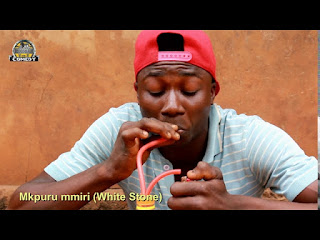
Poverty and unemployment have helped to trigger the security crisis. The current rate of unemployment in Nigeria is 33.3 per cent. What this means is that a great number of youths are idle and have become willing tools for crime.They take all sorts of hard drugs which make them lose value for human life. A few weeks ago, the South East was designated as a haven for drugs. The reigning one now is called ‘mkpuru mmiri’ in local parlance. It is obvious that drugs and crime go together. Youths who take them can go to any length to commit evil.

Proliferation of small arms in the region has also helped to fuel the problem. Last year, some so-called unknown gunmen went on a killing spree of security agents. After killing them, they dispossessed them of their weapons. Security agents were killed in such places as Nkpologwu, Omogho, Neni, Awkuzu all in Anambra State. In different other parts of the South East, police stations and vehicles were destroyed and scores of policemen killed. In 2020, the EndSARS protests against police brutality had led to the killing of over 60 policemen and burning of over 200 police stations across the country. These actions significantly weakened the Nigeria Police Force as an institution. Now, criminals are having a field day and operating without much hindrance.

Consequently, the South East has become a cemetery of some sort as people become more careful of their movements. Driving a good car is now a crime in the region. If you are seen to be wealthy in any way, you are a target. The region is not too far from what happened in places like Afghanistan, Iraq, Libya, Somalia, and Syria where gangsters rule.

The South East is noted for entrepreneurship and high economic activities. Nnewi alone can account for half of what we have in some other parts of Nigeria economically. But now, people are already finding it difficult to invest in the region. What will happen in the next few years will shock people and this will have a spiral effect on the economy of Nigeria.

We can’t continue this way. Major stakeholders in Igbo land should meet and decide on how to contain the spate of insecurity in the region. Political leadership in the region should also sit up. We seem to have lost our humanity. It appears our youths are no longer abreast of our cultural and ethical values. Some of them do dirty jobs for politicians. With the general election coming up in 2023, we should exercise extreme caution to avoid witnessing severe violence. This calls for a reorientation of the youths.

It is pertinent to warn youths who are behind this criminality to desist from it. One day, nemesis will catch up with them. Non-state actors cannot be allowed to dictate the security pace. It is government that has the monopoly of violence.

Unfortunately, the problem has gone beyond the South East governors. It is time the Federal Government stepped in. There is need for a special security operation in the region to mop up illegal arms in circulation and flush out these bad elements.

Security agents should also intensify efforts to eliminate cultism and the use of hard drugs in the country. They should collaborate with local vigilance groups in different communities for the purpose of sharing intelligence. The hideouts of some of these criminals are known. Security agents must take the war to them and flush them out of the zone. Enough of these mindless killings!

Anambra: How We Got Soludo To Run For Gov - Kate Azuike

SUN NEWS INTERVIEW


Mrs. Kate Ifeoma Azuike, a former manager with the Niger Insurance Plc, is the women leader of Ndi-Igbo Amaka, a socio-cultural organisation, President/Founder Ada-Ife, and leader of the women wing of Soludo Support Group, Lagos State chapter. In this interview with VERA WISDOM-BASSEY, she spoke about how she and others convinced Prof. Chukwuma Charles Soludo, former Governor, Central Bank of Nigeria to run for the governorship election and how they mobilised Anambra people to vote for him.

What is Ndi-Igbo Amaka association?

It is the umbrella body that oversees the supervision of all the markets in Lagos. We have about 58 markets; all the heads of markets leaders in Lagos belong to this group. It foresees all issues in the markets in the state. As a result of this, for a long time now, there has not been any closure of markets in the state.

Is the association meant only for the Igbo or is its membership open to everyone?

It includes Yoruba, Hausa, Igbo, as long as you are trading in the markets. Our activities cover you, not that you partake in the meetings. It covers everyone in the markets, and we collaborate with the government in running the affairs of the markets. We also have our executives in the government. They inform us on what the government wants and does not want from our markets. So, we are the forerunners of the government.

What do you hope to see in the 58 markets you made mention of?

You know sometimes, last year, the military men went to Ladipo market and killed one person. But immediately that thing happened, we went there to calm the situation. We discussed and came to a conclusion. Even the army men involved saw what they did as wrong. After the incident, with the way we handled it, such an incident can never happen again. At times, we set out a programme whereby leaders would visit markets to create awareness for the traders on how to live peacefully with others and do their businesses. We teach them how to avoid trouble and keep the law so that nobody will harass them, at any time.

How do you handle disturbance from touts and area boys?

When you visit Trade Fair to purchase goods, nobody will disturb you today because everyone has their boundaries. They have laws guiding them. So, the executives make sure that they obey. But where the association cannot handle them, they turn to us in Ndi-Igbo Amaka Association, which happens to be a bigger umbrella.

I understand that you are also the leader of the women wing of Soludo Support Group?

Yes. It was from being the woman leader of these other associations that I became the women leader for Soludo Support Group (SSG) in Lagos State. We started the group in Lagos before we moved to the East. Those in Anambra followed us and mobilised others during the election. But we in Lagos worked hard to make sure we informed and mobilised people about the governor-elect. We talked to people about the suitability of his candidacy. We said if he becomes the governor things will become better for the state. He will do what he did at the Central Bank by turning the banking system around. We started two years before he declared an interest as a governorship candidate. We as a group went to him and asked him to vie for the governorship election. We told him how his election would affect the state including children unborn because we know what he can do if he eventually wins. We also compelled people to go down to the state and cast their votes, and many of them did.

At what time did you convince him to run?

He said he wanted to think over it when we told him. He had run in 2015 but did not win. But this time around he wanted to take his time and think about it. But later he called us to say that he was ready. He wondered if APGA (All Progressives Grand Alliance) would allow him to run. We visited the APGA chairman and they accepted him to run for the party. We were so happy when APGA declared him their candidate. Then all of us in Lagos went down to the East and started grassroots campaigns, going from village to village.

We noticed that the election in Anambra was generally peaceful. Why was it so?

It shows that Anambrarians love Soludo; it will happen again in the presidential election. If God gives us the right person that the people want, you will see that the election will be very easy.

On March 17, Soludo will be sworn in as Anambra State governor. What is the way forward for him?

As soon as he won the election, he quickly went to work. He inaugurated an 80-man committee and put in place: Call for expansion of interests, the Anambra Talent Data Bank. Soludo wants his administration to be open, and not based on man-know-man. That is if you know what you can do for Anambra State, send it into the box, and tell us what you can voluntarily do for the state. When they go through it, so many people have been filling out the form, and if you can prove what you said you can do, that person will be called. I know that after he leaves office, many people will emulate him on how he developed their state. Things will be done on merit and not man-know-man

What do you see Anambra State becoming under his leadership?

We want the state to become the second Dubai; we want that wherever an Anambrarian is, he will be agitating to go home. What our people built in Lagos and Abuja, we want it replicated in the state. But this time around, things will be well-structured and it will work with plans, not just anyhow. The data box is open to everybody from Anambra, Enugu, Imo, Delta and other states in Nigeria, so that what you learn you carry back to your state. This brings development. And people who see what he has done will say:” ah, I never knew that this thing can be done.”

What’s your advice for women who aspire to be in a leadership position like you are?

First of all, they should know their God, have a cordial relationship at home with their husbands and be open to them, so that they can advise them when they are going wrong. They should believe in themselves, and leave out fear of the unknown and move forward and aim high. And, by God’s grace, they will get to their goals.

Saturday, January 8, 2022

INTERVIEW: A Survivor’s Tale: How I Ran Mad After Taking Mkpuru Mmiri

By Chioma Okezie-Okeh

Image: Youtube


A 23-year-old young man named Okechukwu Nnorom, and a lucky survivor of the devastating effect of methamphetamine, otherwise known as Mkpuru mmiri in Igbo language, has revealed how he got hooked with the drug. He stated also how he got knocked out in the process, owing to his ignorance and innocence.

It was meant to be a bet worth N10, 000, and he decided to give it a try, he told Saturday Sun. The bet was all about who could take three cubes of the substance and still remain stable. But in less than five minutes after consuming it, Nnorom became restless and began to sweat profusely. The spectators and other competitors advised him to try and vomit out the substance. But he insisted on hanging on despite the dangerous sign, adding that he wanted the N10, 000 bet for keeps.

Twenty minutes after he refused to heed the advice, he switched personality and started exhibiting the traits of an insane person. According to eyewitnesses, it took the efforts of six able-bodied men to hold him down and to tie him up. When they saw that there was no improvement in his condition, after pouring several sachets of water on him, they alerted his family, who came over to pick him up in the football field where he lay helpless after being tied up. Quickly, they rushed him to a private mental rehab facility in Aba, Abia State. There he spent three months getting well.

How I got hooked

When Saturday Sun met him, Nnorom, who is fully back to his senses said that his greatest wish now is to serve God as a pastor. Recalling what he passed through, the much he could remember before he lost his senses, the young man claimed that he was deceived into believing that the Mkpuru Mmiri of a thing was just a regular ice laced with hot drinks.

His account: “I am from Abia State and the first child of my parents. I have four siblings. My uncle and master sells curtain materials. I was asked to live with him after I lost my father in 2019. In fact, he was the one who insisted that I should relocate. That was sometime in October of that year.

“To be sincere, he took good care of me and all his apprentices with whom I lived together in his house. As a young man, I had few friends with whom I used to go to a football field in Aba to play. The little money we got from hustling in the market was used mostly to buy drinks to entertain ourselves especially on Sunday evenings when we did not go to market.

“Among us boys there were always hot drinks, both sachet and small-bottled ones flying about. I refused to take marijuana because I feared that my uncle, who is a Christian, might notice through my mouth or body odour. He had warned me that if I misbehaved, he would send me packing. I don’t have a father and my mother is a petty trader. I had no better option.”

Nnorom said that he continued to keep to this principle till sometime in August when he was challenged to lick a cube of ice and earn some money. “Normally after playing ball, we would be thirsty. One man that sells all sorts of hot drinks was the one who brought this Mkpuru mmiri thing. He told us that he iced some of the hot drinks for those who were thirsty. Initially, I was not moved to join them to have a taste. He shared it among some of the boys. They took it but I did not see them react to the effect.

“It was the following Sunday when the man who we knew and addressed as “Chief” placed a bet that I became interested. The first set took two cubes and the winner won N5000. I saw that as easy. I decided to give it a try when the man increased the bet price to N10, 000.

“But I found out that after taking it, I started sweating very much as my head began to spin as if it didn’t belong to me anymore. They asked me to force myself to vomit. But thinking that it was just a side effect of what I took, I refused to heed their advice. I had hoped that the effect would clear soon and I would win the bet. But as the impact of the hangover continued to increase, I totally lost it. From that point on, I could not recall what happened until I found myself in the hospital. But my mother told me that I was later admitted in the hospital. I am so ashamed of myself. But right now, I am ok. I believe and pray that I will be able to serve God for the rest of my life.”

Excited mother thanks God for son’s ‘deliverance’

His mother could not hide her excitement when she spoke to Saturday Sun. She called her son’s recovery something of a miracle.

“Just like he explained, he left Kaduna to live with his uncle in Aba after the death of his father in 2019. I also relocated to Umuahia because of the increase in insecurity around the area where we lived in Kaduna. The second reason was that my business was no longer booming. All was well until I received a call in August from his uncle that my son has run mad. He said they were able to grab and drag him to the hospital where he was chained. I thank God that he was discovered on time, allowing the doctors the time to battle and save his life. He spent three months at the rehabilitation centre till he was fully recovered. I thank God for his uncle who did not abandon us for all those three months.”

Nnorom’s story is a tip of the iceberg, as regards the incalculable mental havoc that methamphetamine, or Mkpuru mmiri, the mind-bending drug, is causing among Igbo youths. Determined to bring an end to the spread, Saturday Sun learnt that the National Drug Law Enforcement Agency (NDLEA), is aggressively clamping down on the barons said to be mainly Igbo businessmen. This has led to several arrests, including the recent one at Enugu airport. The suspect, who was en route to Dubai, was found with a large quantity of Meth.

NDLEA reveals brains behind drugs, vows to stamp it out

So far the NDLEA has succeeded in shutting down some of the conduit pipes and frustrating some of the producers. But at the same time, their efforts have driven many of the patrons and barons underground from where they continue to manufacture and market the product to interested buyers, mainly youths.

In an interview with Saturday Sun, the agency’s Director of Intelligence, Sunday Zirangey, revealed that the drug barons started producing Meth in Nigeria in 2009. Investigations, he noted, revealed that it was South Americans, Colombians and their partners in Nigeria that brought them into the country. They were not only producing the meth in Nigeria, setting up clandestine laboratories, they were also training some Nigerians.

“Criminals, you know, always have foresight,” he said. “They want to make money; they want to be in charge. So, they partner with the South Americans to come and produce meth in Nigeria because they know that millions of dollars are involved. They also, in their own ingenuity, didn’t want to be dependent on the South Americans. They said to Nigerian barons, ‘Okay, we can partner with you. They said: ‘You are producing for us today. Can you train some of our people to be doing it?’ And the first Colombian that came, said: ‘if you can pay me what I will charge you, I will do it.’ And how much was it? – $38,000 per week training seven people for a certain period of time, and they were doing it in their hotel, in Ikeja, in Lekki, Lagos. After some time, those people got trained, that is the locals, Nigerians. They were not even pharmacists; they were not trained chemists. But, by combining one chemical with the other, they were able to get meth. They didn’t know the implication of what they were doing. Some of the locals died in the course of trying to learn the meth production because it involved very hazardous chemicals. If you inhale the chemicals, you develop a lot of organ diseases like kidney, heart, and all that.

“Anyway, when we saw this trend, we started working with our counterparts, the Americans. They showed interest, and through intelligence provided by them we uncovered and seized the first Nigerian lab in 2011. Between 2011 and 2019, the agency was to seize 18 methamphetamine laboratories. We’re not looking only at foreigners. In fact, we usually get intelligence when the foreigners are coming in, right from their take-off to arrival.

We follow them till when they set up the labs and begin to produce. Right from scratch, we started from when they came into the country; we followed them. They went to Enugu, went to Anambra and finally settled in Asaba. This was for a period of 13 months. We followed them without them knowing that they were being monitored. This job is intelligence-driven and takes a lot of painstaking investigation. Our aim is to make sure that the agency is positioned to be able to really rise to the challenge of this time, because the drug traffickers will not stop at anything to make their money; all that matters to them is money.”

Wednesday, December 29, 2021

Hero Lager Supports Igbo Apprentices With N50m Grants


The grand finale of the IgbaBoi Hero campaign from Hero Lager in promotion of Igbo apprenticeship scheme popularly called, Igba Boi, has been held in Lagos. The IgbaBoi Hero initiative of Hero Lager, a premium beer by International Breweries Plc, a proud part of the world’s largest brewer with over 400 beer brands, AB InBev, culminated in the award of certificates and financial grants totaling N50 million to graduates of the scheme.

The Initiative was launched to reinforce its Ahagiefula (Legacy) Campaign message – May Your Name Never Be Forgotten. This campaign was built upon the insight that the Igbo people’s biggest ambition is to leave a legacy that makes their names renowned. The Igbo Apprenticeship (Igba Boi) system is the longest existing communal legacy of the Igbo People.

Igba Boi was activated in six markets across the South East and Lagos, including Ogbaru Main Market, Onitsha, Nkwo Nnewi Market, Awka, Coal Camp Market, Enugu, Alaba International Market, Owerri, Ariaria International Market, Aba, and Alaba International Market, Lagos. The campaign reached a total of 12,290,487 million people, 4680 apprentices applied to the programme and 300 apprentices were eventually shortlisted. These 300, got a total 1.4 million + votes of confidence from consumers who were asked to vote in support of their ambition.

Thursday, December 16, 2021

Owerri (Owere), Where Three Is A Crowd

BY FRANK MEKE 


OWERRI (SUN NEWS ONLINE) There’s something magical about Owerri, capital city of landlocked Imo State. This magical expression is about the people, so simplistic, accommodating and loving.

Ofe owere, the most expensive culinary identity and hospitality offering of the people, is the most popular soup in Igboland. Yes, there are other Igbo soups, ofe owere, a soup named after the gregarious indigenous people of owere, ranks number one within the town and outside.

In this town, which could be likened to Las Vegas, hotels and hospitality outfits abound. It is indeed an economy and industry.

Sadly, regulation and enabling environment for its sustainability are hugely lacking, coupled with poor penetration to the rural areas, where culture of the people hold sway.

From ngba (traditional wrestling), football competitions, traditional marriage, women, youths and men meeting (umunna, ndi Ada, ndi nne na nna), it is usually a coalition of colours and tongues, celebrating the return of sons and daughters who left home to greener pastures, and came back home to rejoice with expectant relations.

Over the years, that is how we roll across the East. Most us born outside this clime, take time to mingle. The love of relations, aunties and uncles were worth looking forward to.

I love the pounded yam of my mother’s people, with the oha soup delicacy. The village to village masquerade dance, the football games and the entertaining umu ada dances and xtmas choir.

Oh dear, Owerri, the soul of Igbo nation appears buried. The politicians have destroyed the heritage and culture of the people. The good old days of holidaying and visiting Owerri is gone and is like a dream.

We watch the known and unknown gun men steal our peace. An average owere man or woman, hates violence. It is taboo, to speak or generate violence in Owerri land.

It is a sacrilege to fight on days of celebration, it offensive not to love your neighbors and relations. To disturb the peace of palm wine and ogba mingled with stock fish, loving Owerri man, is to offend the gods. To frustrate the sharing and expression of hospitality to visitors, is to get the owerri man, to report you to Amadioha.

There no peace in owerri land today. It is not the making of the people. We went to bed and allowed the enemies to invade our once peaceful land.

We are like conquered people. Harassed daily by strange faces, both known and unknown. It’s even more painful that supposed known gun men, the security agents are now at behest of making the poor and innocent uncomfortable.

The fearless and outspoken but hospitable owerri person cannot move around the city without daily encounter with strange men in and out of uniform. Check points turned to points of untimely death now stir the people in the face.

Heavily hooded security agents now replace our masquerades. Police stations now turned village squares where the innocent and simplistic are put on judgement seat.

It is an offense to ride with friends and family around owerri. Three is a dangerous number and a crowd. No mercy for the tradition and culture loving owerri man.

There are now boundaries everywhere, some local areas, are profiled and if you dare, reveal your affinity, it is God that can save you.

Daily, strange and disturbing news of harassment of indigenes and their visitors abound. As much as one acknowledges that this is not best of time security wise across the country, it is benumbing to hear of tales of strange blanket condemnation of the innocent.

I recall an encounter of Borno state governor, Professor zulum with security agencies who he upbraided for subjecting innocent travellers on Maiduguri road to hardship

No doubt the lives of our security persons Matter and their sacrifices appreciated, it’s however unacceptable to chase innocent out of their homestead or to generate unbridled bitterness, inimical to return of peace to a land and its hospitable people, traumatized by senseless unknown gun men.

Can two people do anything meaningful except they agree? Do you secure a place without the people? In other places where there security challenges, it is apt and desirable to woo the people, unfortunately the reverse is the case in Nigeria.

To most of our security operatives, the road blocks are opportunities to drive the people away, label the innocent and punish those who ordinarily if well treated as fellow citizens deserving of dignity, would have assisted with information and tips to nab the nefarious in our midst.

The situation across the once peaceful eastern states not just Owerri alone, is sad. The fearful militarization, portend return to anarchy.

The people are not safe not because there are no presence of security persons but because between the unknown and known gun men, there exists a huge deep blue sea divide.

Significantly, the government of Hope uzodinma, seems unmoved by the overzealousness on the part of the security agencies. And for a government that depends more on diaspora investment, to allow imolites to go through this molestation, won’t help the hunt for the unknown gun men.

I should think that the Igbo nation has enough traditional engagement processes and platforms that can arrest the violence and help the speedy restoration of peace in Imo state.

Like many other Owerri persons, the village is no longer attractive as a destination for physical and spiritual reinvigoration. From covid 19 pandemic, now to a security lockdown, Owerri is a hard sell for holidays and recreation.

And for the love of Ofe Owere, it is wise to save your life, family and friends and watch your movements if you must visit owerri during the festive season and after.

Let me advice, if you must visit. Don’t argue with any man with a gun, respect security agents if accosted, no shouting, no finger pointing. If you are drunk, stay home. Hold seriously to your temper, bear the humiliation and walk away if allowed to go.

Don’t go grandstanding with your” mint car” and naira notes. The security agents are human and not all are free from the temptation of the flesh.

Don’t turn the check points to lecture room on English language, speak Igbo if the officer understands, and if he is not Igbo speaking, dialogue in low voice in pidgin English. Avoid night movements and parties. Sleep wherever the night meets you.

Don’t push your luck for a dead man is a dead man. If you allow yourself to be killed, there are still thousands of unresolved accidental killings across the country.

If you ask me, please stay away. There are many xtmas celebrations ahead. Is someone out there, reading this? It is no dream, at least you can wake up safely from a dream but you cannot wake up if you are shot dead simply because you cannot read or interpret the signs of the season.

Wednesday, December 15, 2021

INTERVIEW: Cheluchi Onyemelukwe, Winner, Nigeria Prize For Literature


Cheluchi Onyemelukwe functions as a writer, lawyer, law lecturer at Babcock University and gender advocate, but it’s her literary genius that is making waves at the moment. Early this November, she was announced as the winner of the Nigeria Prize for Literature, sponsored by Nigeria LNG, with her novel, The Son of the House. Also the winner of the 2019 Sharjah International Book Fair prize, and the SprinNG Women Authors Prize, her novel was equally nominated for the Giller Prize in 2021. HENRY AKUBUIRO chatted with her on her latest feat and her flourishing writing career.

It has been a wave of validations, rave reviews and publishing contracts from across the globe for your book, The Son of the House. Did you see all this coming?

(laughs) How can anybody see this coming, especially when you had experienced years of rejections? You probably hoped there would be people who would read the book and enjoy it. But the kind of back-to-back good things that have happened to this book, I wouldn’t say I was expecting them, though I had a feeling it was a good book. Maybe if it had been published when I wrote it, it wouldn’t have attracted the same attention.

When did you write it?

I wrote the first draft in 2013. I sent it out for four years before it was accepted for publication. But it wasn’t until in 2019 that it came out, followed with rave reviews and other good things back to back. It has been very exciting.

What encounters —physical, spiritual or scribal —that aided your journey as a writer?

I was raised in an environment where books and stories surrounded me. Those were my first encounters. My parents —my dad in particular —really enjoyed books. He would give me books. We had a lot of books to read. So that made me think I could be a writer. Then I would write short stories when I was in secondary school, and people would enjoy them. But when I went to study law, it kind of diverted me, though I knew I would always come back.

In those early days you were penning short stories, did you ever think you were going to be a consummate creative writer? When did you start taking writing seriously?

I have always taken writing seriously. I have now written a law text, articles, and all that, but my primary goal of being a writer was writing fiction. I have always written fiction. I wrote some poems in university, but my main genre has always been prose.

How close to reality is your award winning novel, The Son of the House, in the Igbo and Nigerian societies? Are there specific social contexts that inspired this novel?

I wanted the novel to be a realistic depiction of the context in which I grew up, whether you are looking at people having health issues in their homes, sometimes not being treated well; whether you are looking in terms of the different plot lines I have in my book, which are imaginatively created from a genuine background. Igbo communities are different in terms of how they approach certain things. But what I describe in my book I have heard people say to me was what happened to somebody that they knew, and things like that. I wanted it to be deliberately rooted. It was very brave for it to be rooted in the cultures of certain communities in Igboland and their understanding of the dynamics of living in those areas.

Which of the characters in the novel gave you the most challenge, and at what time did you finally say, “Yes, this is it? I got it.”

(laughs) I honestly think I have different challenges with different challenges with different characters. With Nwabulu, for example, having lived the life she did, one of challenges I had was depicting her realistically without making her too much of a pitiful character, realising she still has elements of urgency. So finding that balance of not being so melodramatic while still invoking feelings in the reader that I wanted was something I had to find. I remember sending the manuscript to an agent who said he felt that sense of place and really wanted to feel more of that character, and I understood what he was saying, because that was a struggle that I had to present to her in a full-fledged form. You see her and you see a human being who’s struggling but still has some power.

With Julie, it was more of getting away from Nwabulu really. I had to take a little break to put on my thinking cap. Her character is interesting and in a sense rootless. She invokes some kind of sympathy in the reader. She makes some choices, and you look at her and say, “How do we look at her? Maybe if I were in her shoes, I would have done the same.”

Did you at any point feel like stopping the story out of frustration or distraction?

I didn’t at any time feel like stopping the book. The reason was that I already had books that I stopped before then (laughs). So I was determined to get till the end, even if it never went anywhere. There were parts of the story that were easy and other parts that were difficult, but I was determined to get till the very end. And when I did, I was very happy. It still had to undergo a lot of changes from the first draft till the time it finished.

How long cumulatively did it take you to write the book?

It took me maybe 18 months to write. Initially, it took me about a year to write and I took some time off and did some significant rewriting over a period of six months.

What was at the back of your mind the night before the Nigeria Prize for Literature?

(laughs) As a person of faith, I had prayed about it. I was also well aware that the other competitors that I was up against were good, and it could go either way. So I needed to come to a place of peace where, regardless of how it went, life would go on and my writing would go on. I exercise every evening, so the night before, I exercised and did a bit of what we call prayer walk. I actually felt good. Incidentally, the following day, the day of the announcement, one of the first alerts I saw on my phone was the Sharjah prize that I won some time ago. I strongly felt it was an omen, for it was given exactly the same day two years ago — you know how Google Photos brings up your memories, and I said, “Wow, this is going to be interesting!” (laughs).

You have won the Nigeria Prize for Literature, joining a long list of winners, and we all know 100,000 dollars doesn’t come cheap anywhere in the world. What do you consider the most important thing NLNG has done with this annual prize?

One of the most important things it has done is providing support for writers. I know people like to talk figuratively, but maybe because I am a lawyer, I say it as it is. Practically, many of us have made little or nothing from writing in terms of money. So giving that support, even if one never gets anything, is something to be appreciative of. Beyond that, the validation the prize gives is something to relish, because other good writers have submitted their entries, and you have been chosen as a winner, there is a certain validation that it gives to you. I don’t know any writer who writes primarily for a prize, for it can go anywhere. You may even keep coming second each year without winning it, and everybody knows you are good. I can see the prize even doing more for writers if we continue to push it.

Are you thinking of giving back to society? How do you intend to spend this money? Hope it’s not going to be the case of winner-takes-all?

(laughs) How does one answer that question? I have mentioned it before, but I will repeat it for this audience: I am really thinking of doing something for younger writers from 18 to early 30s. At that age bracket, you would like to encourage people and tell them that there is a place to go. I haven’t fleshed out the ideas, but, in the coming months, I will do that, whether it is a small grant, something that encourages one to keep thriving.

In your writings, are you always guided by feminism, because there is a criticism which has gained currency over time that many female Nigerian writers always write from that perspective, even with the passage of time? If you look at the trials of Nwabulu and Julie in the hands of a wicked, male controlled society, we get a déjà vu.

(laughs) I can imagine while many people say that —that female writers tend to write from that perspective. I think there is still a lot that needs to improve in the crusade for gender equality in Nigeria. So you can’t leave your constituency and start talking about every other thing. From many female writers, they come from personal experiences —what they see around them. When I was younger, I was thinking I was going to succeed from the same platform as boys. I think I have tried to do that in my various fields. But we can’t get out of the fact that there are some things we need to address from the experiences you have had as a woman in Nigeria. So that comes out in your writings.

So which brand of feminism do you subscribe to —we have those who believe in womanism, motherism, complementary, gender equality, and what not? Where do you fall?

I try not to attach a label to myself. All of them, however you look at them, whether you are coming from a feminist perspective or womanism perspective or humanist perspective, bring something to the conversation that’s ongoing, regardless of people’s aversion to different strands of it —all kinds of things have been written about social media feminism and feminism that doesnt actually do anything, and things like that. What we are all saying is that there is an issue we need to create an environment that is much more equal, that recognises the humanity in all of us: men and women. That’s what all of that is all about.

As a writer setting out, which writers inspired you? Which one do you have the best connection with?

I really enjoyed Chinua Achebe’s novels as did most people. I enjoyed them on a different level. I found him, and which was even when he was here, to be like a forefather, especially for Igbo people: you can actually translate everything you are reading into Igbo. I think it takes you to a whole level of kinship: the way he infused his politics into his writings, and his politics not being what you consider as government. So there is definitely that bond. Beyond that, I enjoyed reading all the early female writers, including Buchi Emecheta whom I read as a young person, which shaped my thinking. But I read very widely, all over the world. But these are people you look at and consider them almost like people you know from your family, as it were.

Buchi Emecheta, especially, has been lampooned by many critics for demonising his male characters. Do you have a different view from hers, because the male characters in her novels come across as useless, wicked husbands?

(laughs) Sometimes those people make good fictional characters; you don’t have a character that’s good all round, and you will sense it’s easier to write about them. But I can understand why people may feel about how those characters can be caricatures of real men. For me, I want to portray everything, both the good man and the bad man, and I think I do that in my book. There are terrible men and there are terrible women, and I think we are all capable of growth, but privilege gives men more opportunities than women.

Post-Chimamanda’s debut as a novelist in 2003/4 and an award winning writer, so many women have found their voices, hogging the limelight as writers. Is there anything her personality did for female writers like you?

I think Chimamanda Adichie and her success did what successful people do. It’s like what Venus and Theresa Williams did for tennis. It just tells you what’s possible — that this is possible —It inspires you. If you ever have a drive, it tells you, “This can be me”. We can look at it as small, but this is not small. You can tell yourself and say, “This is doable.”

How did you handle the time flux in the novel, because the narrative spans across four decades as regards Nwabulu and Julie?

It wasn’t really difficult for me, because that was what I set out to do. I tried to sort of imagine the story,, when we think about some of the stories we tell each other —about maybe we see a family that’s not doing well, and we say maybe somebody died during the war, and actually that’s when their troubles began, and then something else happened, and so on. By the time you talk about this, you have gone through a period of time. That was how I conceived this book— that people would read it and find themselves in different chunks of time without feeling, at any point, nothing changed. So I let the story drive the time.

What’s your connection with Nwabulu, because she seems to be your most favourite character?

(laughs) I wouldn’t say that. It’s funny, because people have asked me if I am Julie, which could be interesting. However, I would say Nwabulu was a character I have been dreaming of writing about since I was a child. The questions I created around her have always been questions I have always asked: how do we manage poverty? How much harder is it for women to live in society?

How do you feel as a writer an idea suddenly comes to you and there is no time to put it together?

As a writer, that can be tough. I have learnt that, if you don’t take hold of it, you’ll lose it. You wake up the next day and remember that you had an idea, but the idea is gone. It hurts. My phone has been of good help in that aspect. I always text things to myself, email and Whatsapp things to myself (laughs). That’s what I do. If I don’t have my phone handy, I try to continue thinking of that idea so that my brain registers it.

You are a lawyer and a writer, how do you combine these endeavours without letting one suffer?

It’s very hard. I haven’t mastered it all. Right now, my writing suffers from my legal profession, because I devote more time to law and teaching than I do to writing. I am trying to feel at peace with that, because these are things I think, at this time in life, I must do.

Winning the Nigeria Prize for Literature comes with high expectations, where do you go from here?

We all have different callings in life. As a lawyer, there is a kind of law you would practise and you would make more money than you would get with any prize. But that’s beside it. I am working on another book already. Writing is something I desired to do before ever before I became a lawyer. I imagined that, one way or another, it would take time, but a new book must surely surface.

Now you are writing another novel, do you want your book to stand on its own or are you trying to build a body of work with connections between each book?

That’s an interesting question. But I think, by inclination, I would like to write books that would stand on their own. But you find that, if you have themes that resonate deeply with you, they are most likely to come out in other books.

Professor Akachi Ezeigbo, for instance, did it with her Umuga trilogy, are you not thinking along that line?

I want my next book to be totally different. People have asked me about a sequel, and I said, well, I won’t like to shut the door on it; but it’s not what I am thinking at this moment.

If you could tell your younger writing self something, what would that be?

I would say, “Keep pushing; please, create time for writing as you push for other things.”

What have you learnt from this novel, especially the writing process?

I have learnt you need to be patient. Sometimes you need to be patient with the writing process itself. Sometimes you need to be patient with the story. Sometimes you need to be patient with the publishing process. Every aspect of writing requires patience —I don’t necessarily mean 10 or 12 years. Sometimes you need to spend more time thinking more deeply about your story and come back to it with a different perspective. With all that I went through with this book, I would say patience is a virtue every writer must cultivate.

There is so much importance attached to having a son in the Igbo, and when it happens to be the only son, the importance grows. How do we rewrite this story in our society?

I would even think we are rewriting it as we speak. But we have a long way to go. Honestly, I don’t know how we can solve it, because it’s one that is connected to our history and culture. When we think of the Umunna system, it’s all part of it. If we are talking about changing it, we must talk about individuals, about women and what we want, who have three or four girls, should that be the end of the world?

What does literary success look like to you?

Literary success is people reading you, finding resonance in your story, being able to reflect on different issues and find something to take away. As a reader myself, that’s what we consider a successful writer. Then you think of people who have done that all over the years —that’s what we all want.


Finally, how would this prize shape your craft? Is it going to make you a more cautious writer, a fearful writer or a prolific scribbler?

(laughs) This is the question of the hour. I am trying very hard for it not to be any of those things. As I am working on my new book, I just tell myself, “Just focus on the story”. If you don’t do so, it puts pressure on you and you begin to ask yourself, “What did I do with the other story that works?” It’s normal human behaviour. But I think one has to remember that this is one’s passion, whether it wins a prize or not, whether people love it or not.

-----------------------SUN NEWS INTERVIEW

Monday, December 6, 2021

Obiara Kara… He That Must Dominate


BY TONY IWUOHA

SUN NEWS ONLINE 


I have a grouse against Ndigbo. I am Igbo, so I have a grouse against myself too. We are fools, by choice.

There is this wild plant, which my limited knowledge of botany fails me to identify properly. However, my people call it Awolowo (I don’t know why) or obiara kara. It grows too fast and speedily occupies any expanse of land where it sprouts. Obiara kara means the one that comes to dominate.

That is where the Igbo foolishness begins. They are obiara kara, who come into other people’s land and begin to dominate. They assume a sense of worth and become overlords in a strange land, expanding to the left and to the right; front and back. They leave their father’s land in tatters and build up other people’s lands.

Strangely, their hosts never invest in anything in Igbo land. They make their money there and go home to invest in their own lands. But not so for the foolish Igbo. He feels at home anywhere he goes, not minding that Nigeria is not home for him. I’m not talking about nebulous Biafra, mind you; I am just saying east or west, home is the best. I am saying nowhere is a man safer than in his father’s house or community.

However, the Igbo go offshore to places like Lagos which they stupidly believe is no-man’s land. They buy up swamps, even rivers, fill them up and build mansions. They maintain their own roads, as deliberately ignored by the host governments . They feel they have arrived and even begin to have weird political aspirations, dictating who rules the area. And, as witnessed in the last election in Lagos, they are given brutal lessons on how not to behave in another man’s land.

There was an outcry in Lagos recently when the Federal Housing Authority, FHA, demolished some property belonging to the Igbo. The reason given is that the buildings were built on unapproved sites or not approved at all.

On the face of it, the demolishers are right. Nobody should build on unauthorised locations. However, the question is where these authorities were when the buildings were being constructed. Where were they when the builders were paying certain bills as regards the building, such as tenement rate?

It would be interesting to know how shops and business places built by government, local or state, and sold to the Igbo are also often demolished as illegal structures. This is not the first time this is happening to Igbo property. Sadly, the foolish Igbo would still pay for the cyclic demolitions, even if they shift to another place.

We need to properly situate one thing. The Igbo are Nigerians, no doubt, but they need to apply common sense like other Nigerians. Part of the argument against the Biafra quest is that the Igbo would lose their humongous investments offshore. This fear is not unfounded even though it is not enough to enslave a people for life. However, the question is if the Igbo really need Biafra to survive and whether Bifara would heal their foolishness, as further evidenced in the destruction of the Biafra economy by locking it down. There is definitely much to think about, as there is no wisdom in burning down the Biafra space they want to enthrone. Is there really no better way to Igbo renaissance than confronting the hyena with bare hands?

The non-discerning spirit of the Igbo makes them vulnerable. They invest heavily in property outside their homeland but are envied by those who sell to them, later lamenting that the Igbo are taking over their land. Thereafter, under different guises, the Igbo are dispossessed of the properties but never willing to learn from history, they keep on buying and losing to the unofficial Nigerian policy to checkmate them economically.

It makes sense to encourage Ndigbo to invest in their lands. The reasons they are not doing so are justifiable fears but regardless of those fears, it is still safer to invest at home.

Contributing to the contentious debate, Chief Pascal Egerue, an insurance guru and president of Nsu Elite Congress, a think tank for Nsu town in Ehime Mbano Local Government Area of Imo State weighed into the matter.

According to him: “Where aku (wealth) resides depends on return on investment and entry and exit purpose. We didn’t take wealth to these cities but just our brains and skills. For those that have made money, exit strategy is important but should never be a total exit as long as you still have reasonable returns. Convertibility is more important.”

On the clamour for Igbo people to invest at home, Egerue said “it is a risk that has to also be properly evaluated so that you don’t on the altar of uneconomic altruistic consideration lose the little you have.”

He itemised some of the “obvious and hidden risks in investing at home, which need dispassionate discussion as:

The Omonile system whereby the traditional rulers look the other way while the youths in their domain chase away investors through all manners of illegal taxes; property devolution problems and issues and cost of acquisition of property in the South-east, which is far higher than acquiring the same in some places in Lagos, Abuja and Port Harcourt where the appreciation is higher.

He identified the reason cost of land is high to the effects of ‘Ego mbute ‘ (proceeds of frauds) and Diaspora money as well politicians that want to create illusions of industrialisation and employment generation and have the fund to buy off any land in town at irresistibly high cost, among many others.

Egerue also noted some of the hidden risks, most of which we must bear in mind, including urban status of some communities; unfortunate lack of skilled and honest labour in the rural communities; lack of patience and staying power by the youths, who would rather plot their exit from day one by being dishonest in whatsoever assignment you give them because of the notion that the investor has too much money and the opportunity has come for them to take their own; dangerous gossips in the village about any person they consider affluent, heaping everything on the person’s head, such as labeling him a ritualist and cultist or that he has blood money and all manners of idiotic things.

He pointed out that all these would likely get worse, as mkpurummiri (crystal meth) enters the stage, with its attendant disruptions and restlessness, which has laid a siege to Igbo land and unfathomable carnage.

I do not agree any less with Egerue when he said: “We Igbo are most times victims of our attitude. FHA allocated buildings in Festac and made specifications. Our Igbo young men bought up all the buildings and spaces and turned them into eye popping mansions. Why won’t jealousy and vindictive attitude set in to antagonize them?

“The question we need to ask ourselves is this, with all their billions of Naira and dollars, where are the mansions owned by the Indians, Lebanese and Chinese in this country? Most of the time, we Igbo invite what comes to us. It is important that we begin to order very well our priorities. We also need to recover our culture of prudence and humility so that our enemies will look away from us while we burrow into the economy, get much of it and invest in saner climates where ever it is.”

The most plausible thing for the Igbo to do is to soberly reflect on their lot in this country and shorn themselves of all proclivities to loquacious acts that expose them to hate and targeted malice. They should cut down on their investments offshore while we the South-east governors should collaborate on a regional level and in concert with state lawmakers, evolve policies that would make the region investment-friendly.

The security challenge must be addressed frontally and those claiming to be fighting for Biafra must not drive away investors through self-atrophying campaigns. No reasonable person sets fire to the roof of his father’s house and expects his enemy to help him to put it out. Rather than do that, the elated enemy would rather seize the opportunity to pour gasoline on the raging inferno. That is why the Igbo is fast becoming a scorched earth and inclement for investment whether by sons of the soil or outsiders.


Saturday, February 15, 2020

INTERVIEW: I Never Knew I'd Be Alive To Celebrate 60 Years On Stage

Emeka Morocco Maduka image via Ambassador Magazine


King of Ekpili music, Emeka Morocco Maduka, is in celebratory mood. On March 6, 2020, a historic event to mark his 60 years on stage will kick off in Awka and climax the following day with a concert in Onitsha, Anambra State.

Organized by Morocco Maduka Global Fans Club, under the leadership of Godwin Isebor, a London-based promoter, the event is themed: ‘60 Years of Chief Morocco Maduka on Stage’.

In this chat, Morocco narrates the untold story of his life as well as opens up on his forthcoming 60th anniversary. Enjoy it.


What message do you have for your fans this New Year?

I pray God to give my fans good health this year and that they fulfill their plans in Jesus name.

Do you have any plan to go on retirement soon?

I will retire when I clock 80. I am now 76 years old, so when I clock 80, I will celebrate my birthday and then retire. That’s one of the plans I have.

Are you working to release an album this year?
Yes, for weeks now, we have been working in the studios, recording some songs, and when the works are completed, the album will be released. But we have not chosen titles for the songs neither have we fixed date for the album release.

Another programme that we have is that on March 6 and 7, 2020, my friends all over the world, under the umbrella of Chief (Dr.) Morocco Maduka Global Fans Club, with head office in London, UK and under the leadership of Chief Godwin Isebor, will be holding a two-day event here in Nigeria to celebrate my 60 years on stage.

What’s the theme of the event and are you the one sponsoring it?

The theme is “60 Years of Chief Morocco Maduka on Stage,” and I am not the one sponsoring it. What I did was that, when they approached me, I agreed to their ideas and gave them my blessing. For now, they are seeking sponsors, and from what I learnt, many companies and individuals have indicated interest to be part of the event, the same thing with many notable musicians in Nigeria.

Where will the event take place?

The event will take place on March 6. There will be a public lecture in Awka, the Anambra State capital. Then on March 7, all roads will lead to Onitsha for the historic musical concert. In fact, many great musicians have promised to support me on the event.

By March this year, you will be marking your 60 years on stage. It’s like you started playing music so early in life?

Yes, I started playing music at the age of 12. I mean serious music, and since that time, I have not relented. I thank God who made it to be like that. I am 76-years- old now. What a blessing from God! Remember that our highlife music king, Chief Stephen Osita Osadebe died at the age of 72; Chief Oliver De Coque died at 60 something so, I thank God for the grace he has given me, keeping me alive and strong till now. In fact, it’s a miracle because I never knew I would still be alive today.

Tell us the most challenging moment in your life?
One of the most challenging moments in my life was in 1960 when I made up my mind to go into full-time music. I mean taking music as a career. My father discovered what I was about to do and he was against it. In fact, he came up with all manner of fight to thwart my plans to become a musician. I think he even went spiritual to stop me, but all was in vain. So, one day, he pounced on me and gave me the beating of my life. He nearly killed me that day, but with people’s intervention, I was saved. That’s how I ran away from home.

I cannot blame my dad because in those days, musicians were nothing to write home about, hooliganism was their way of life. I mean majority of them spent their life with harlots. But I swore that my life would not be like that if I eventually became a musician. I promised my father the same thing when he later granted me permission to become a musician. Today, my secret pain is that my father didn’t live long to see how successful I have become as a musician. He never lived long to see my music career booming and see me making good money from it. When he was alive, I was singing but was not making money. In fact, I was very poor then. I was so poor that I couldn’t afford to drink beer but local gin. But still I never allowed my state of poverty to discourage me from performing with my band.

But you promised your father never to go the way of other musicians, so what happened?
At a point, people were going to my father to ask how come that he allowed me to go into music after he had spent so much money to educate me. They said: “he’s not even making money from music, he’s a poor musician for that matter.” That time, I was nearly a drunk.

Was that before the civil war?

Yes, that was before the war broke out. But when God remembered me and said my time has come, I made up my mind to stop drinking local gin, and I took to beer and wine. But now, I don’t drink those stuff again, even soft drinks I no longer take. Now I drink only water before going on stage (laughs). But in those days, I must drink and drink to get high before going on stage. Today, I can perform for hours without taking alcohol.

What’s the title of your first album?

It was titled Aya Nigeria (Nigerian War). It was released in 1971, but in 1974, I recorded another one, which was released under Tabansi Records.

How many albums do you have in the market?

I have up to 120 albums.

Many musicians have wives, concubines and several children outside wedlock but you have only one wife. By the way, do you have kids from other women?

(Laughter) Right from my childhood, I never liked the idea of a man having more than one wife. I vowed that I would never marry more than one wife. I don’t see the reason for a man to marry two wives. Already, I have four male children and four female children, am I not blessed by God?

How many wives did your father have?

He married only my mother and my mother died early.

Do you have children outside wedlock?

Why should I have children outside wedlock? Like I told you earlier, long before I became popular as a musician, I had sworn to marry only one wife.

When did you get married?

I got married after the civil war; that was in 1971.How were you able to cope because at that period, you were not making enough money from music?It’s because of the love we have for each other that made it possible for my wife and I to stay together till date. 

How were you able to overcome competition in the music industry?

In fact, God ordained everything that I passed through in life. God made it possible for me to overcome all. God created me and he’s given me the grace to overcome all the challenges that I encountered. In fact, with God everything is possible and I know that he has created me especially for a purpose.


SOURCE: SUN NEWS ONLINE

Thursday, February 6, 2020

Why Your Judgment Is Fraud, Ihedioha Tells Supreme Court

Emeka Ihedioha


BY GODWIN TSA


The sacked governor of Imo State, Emeka Ihedioha, has predicated his motion urging the Supreme Court to set aside its January 14, 2020 judgment that ousted him from office on the ground that it was fraudulently obtained by the incumbent governor, Senator Hope Uzodinma.

The apex court had in a unanimous judgment delivered by Justice Kudirat Kekere-Ekun removed Iheadioha from office and ordered that Uzodinma of the All Progressive Congress (APC) be sworn in as the validly elected governor of Imo State.

But in a motion on notice filed pursuant to section 6(6) of the 1999 constitution, section 22 of the Supreme Court Act, 2004, and the inherent jurisdiction of the court, the former governor has asked the court to review it’s judgment on the ground that it was obtained by fraud.

The motion which was filed by the legal team of the former governor headed by Chief Kanu Agabi (SAN) was in respect of appeals Nos: SC. 1462/2019; SC/1470/2019; CA/OW/GOV/05/2019and petition No: EPT/GOV/IM/08/2019, between Senator Hope Uzodinma, All Progressive Congress (APC) and Rt. Hon. Emeka Ihedioha, Peoples Democratic Party (PDP) and Independent National Electoral Commission (INEC).

It is the contention of Ihedioha that the judgment is a nulity as it was obtained by fraud.

On this ground, Ihedioha submitted that “the Appellants/Respondents (Uzodinma), fraudulently misled this court into holding that a total of 213,495 votes were unlawfully excluded from the votes scored by the 1st Appellant/Respondent in the election.

He further submitted that “the 1st Appellant/Respondent admitted under cross-examination that he was the person (and not the 3rd Respondent [INEC] or any of its officials) who computed the result that gave him the 213,495 votes alleged to have been excluded from his total votes in the election.

“The fraudulent nature of the additional votes was demonstrated by the fact that the total votes cast as shown in the 1st Appellant/ Respondent’s computation was more than the total number of voters accredited for the election and in some polling units more than the total number of registered voters.

“The fraud was also demonstrated by the fact that the result computed by the 1st Appellant/Respondent showed only the votes of the 1st Applicant and the 1st Appellant/Respondent without specifying the votes scored by the other 68 candidates who participated in the election.”

He told the apex court that the fraud was further demonstrated by Exhibits 63RD1 to 63RD19 (INEC Forms EC40G) which show that there were no valid elections in the 388 polling units where the additional 213,495 votes claimed by the 1st Appellant/Respondent were allegedly generated.

Another reason to set aside of the judgment is that it was given per incuriam.

He stated that by Exhibit A1 (Form EC8D) the total number of voters accredited for the election was 823,743 while the total valid votes cast was 731,485.

The applicant contended that “with the inclusion of 213,695 votes for the 1st Appellant/Respondent and 1,903 to the votes of the 1st Applicant, as ordered by this court, the total number of votes cast at the election now stands at 953,083 (i.e. 731,485 + 213,695 + 1,903) making the total number of votes far in excess of the total number of voters accredited for the election, 129,340.

He submitted that it is unlawful for the total number of votes cast in an election to exceed the number of accredited voters and that illegality rendered the judgment sought to be set aside null and void.

The applicant argued that the Appellants/Respondents pleaded in paragraph 39 of their petition that a supplementary election should be conducted in the 388 polling units where the additional votes that created the illegality were alleged to have been cast and that pleading was binding on the Appellants/Respondents and the court.


SOURCE: SUN NEWS

Friday, January 31, 2020

POLICE BRUTALITY: Chima Ikwunado’s Death Must Not Go Unpunished

Chima Ikwunado


BY BOLAJI TUNJI

Late last year, a mechanic, Chima Ikwunado and four of his apprentice mechanics were arrested by Policemen in Port Harcourt. Their offence was that they drove against traffic. They were all taken to Mile 1 Police Station by one Superintendent Benson Adetuyi believed to be the commander of E-Crack team. Of course they committed an offence by driving against traffic while test driving two vehicles. While not condoning this particular traffic offence due to the danger it constitutes to other road users, one expects the police to overlook such an offence which is usually the case especially once money changes hands, that was not the case in this instance.

Suddenly, a charge of armed robbery and cultism was preferred against them and they were charged to court accordingly. The case gets curiouser when Chima died in police custody after 10 days. The police claimed that he died of high blood sugar after conducting an autopsy. The police story seems far fetched. As Nigerians, the police have not given enough confidence for us to believe any claims they make. They twist cases against you most of the time especially if they know you are from the lower social strata. Mind you, I have some fine upright police officers whose integrity could be banked. They are just few in the whole basket of rotten apples. Thus, I will simply say the police lied in this matter as they usually do when a case turns awry. Accidents have happened in this country caused by policemen on road blocks where they simply disappear from the scene. Instances of people being shot by the police are rife especially when they have a large cache of money in their possession. Thankfully such instances are becoming fewer with the self-regulatory policies embarked upon by the hierarchy in recent years.

Back to Chima. What happened to him is still a reflection of the rot that has pervaded our society not only among our security operatives but in all other social strata. Looking at the case dispassionately. This man was arrested for an offence, I am not a lawyer but in most cases once you are arrested like that, you may be cautioned and if not, you are booked for the offence. Traffic offence is a bailable offence. But in this instance, the traffic offence has suddenly graduated into a robbery and cultism charge.

How come? Was he arrested for robbery or caught stealing somewhere? That is not the case. One Chinedu Ezenwanli, has come out to lay claim to the ownership of the vehicle Chima was accused of stealing. He said his vehicle was not snatched at gunpoint as contained in the police charge. “ I gave my Toyota Camry with registration number… to one Chima Ikwunado to fix…Chima was my mechanic and I have known him for more than two years” He said he got worried after calling Chima several times and he was not picking. “I got worried as to what must have happened because he was my trusted mechanic”. Ezenwanli’s ownership of the vehicle has not been in dispute and I gathered that he has even retrieved the said vehicle from the police custody.

So where did the case of robbery emanate? The police obviously came up with a trumped up charge to cover their track. This man died after 10 days in police custody, how come he was not granted bail? We all know Chima did not “settle” probably because he felt a righteous indignation over the action of the police. Why then pay your way out of that situation. As it is always the case, I am sure he must have offered something which was rejected. In any case this is a minor crime that should be the forte of traffic policemen or road safety officials. Only if he had known.


Let us even look at the defense offered as the cause of death; high blood sugar. What the police is saying here is that he was diabetic. You do not suddenly die of diabetic. Medical investigation reveals that death only occurs when the blood sugar gets very high and this happens over time and it comes with increased thirst and frequent need to urinate, headache and tiredness. The person so afflicted would know. In the case of Chima, did he not complain to his custodians that he was feeling unwell? He probably did, but he was ignored until he died, that is if he was not also being battered to force a confession out of him.

A sad development, Chima was said to have just been married about six months earlier and was an expectant father at the time of his death. His wife has become a widow overnight while his unborn child has been deprived of a father. Chima needs justice. The case should be investigated thoroughly. The perpetrators should be punished to serve as a deterrent to others. It is the inability to ensure justice for victims that leads to these extra judicial crimes still continuing. The family should equally go to court to seek for damages. Investigating this “crime” should not be left to the police alone in order to avoid cover up. It should include human rights activist and upstanding members of the society. The Rivers State government should also take interest in the matter, if there would not be official complicity. Chima was a tax-paying citizen and he has a right to life and the protection of the government of his State. It is only when we take steps like this that we can then start to sanitise our society.

As noted earlier, it is not only among security operatives that we have issues like this. The health sector is also in bad shape. Many avoidable deaths occur in most of our hospitals be it public or private due to negligence by health workers. People have been left unattended to in hospitals till they died. Accident victims that could be saved are allowed to die because a nurse or a doctor could not be bothered. Most practice their Hippocratic oath in the breach.

I recall a particular incident a few years back. A colleague had been involved in an accident along the Airport road, Lagos. He was rushed to the Accident and Emergency section of the Lagos State University Teaching Hospital (LASUTH). The Doctors were on duty to take care of him in their halfhearted attempt of not being accused of not doing their work. He eventually died after more than 24 hours. He had internal bleeding. Because I was there, I had earlier asked them to check whether he was not bleeding internally, they could not be bothered. Imagine the sorrow, that someone died due to something that could have been prevented if someone had been a bit more diligent.

In better climes, you cannot be involved in an accident, be alive for over 24 hours and succumb to your injuries. These are areas of our society that we should look into. We should wield the big stick when these infractions are discovered. That is the only way we can prevent recurrence. This is the only way we can have that society we all desire.


SOURCE: SUN NEWS