Tuesday, May 31, 2022

MIGRATION: Human Movement

 BY KRISTINA GARCIA
Chinaza Okonkwo, who majored in both philosophy and history, conducted an oral history project on pre-colonial Igbo philosophy. Image: Penn Today


The Wolf Undergraduate Humanities forum takes on the topic of migration, with individual research projects ranging from slavery debates within the Jewish Orthodox community to Southeast Asian refugee youth.

Migration has shaped the modern world, changing language and settlement patterns, along with art and governance. The Wolf Humanities Center, a hub for interdisciplinary humanities research and public programming, took migration as the theme for the 2021-22 academic year.

The Center took a broad approach, hosting events and supporting research about refugees and legality and how these concerns affect memory, identity, and a sense of self. Events took the form of films, lectures, and symposiums; a poetry reading; an exhibition; and a recital, on populations ranging from the Nordic Sámi to the Deaf community.

“When you start doing this sort of big interdisciplinary work, you should be doing it around issues that are demonstrably important,” says Jamal Elias, director of the Wolf Humanities Center, the Walter H. Annenberg Professor of the Humanities, and professor of religious studies.

The Center’s formal programming consists of three parts, the most well known of which is its public events. The Center also offers funding for manuscript development for assistant professors and project development for tenured associate professors, as well as fellowships promoting graduate and undergraduate study.

For the 2021-22 academic year, the Wolf Undergraduate Humanities Forum welcomed eight fellows. Their projects included exploration on Southeast Asian refugee youth from 1975 to 2000, slavery debates within the Jewish Orthodox community on the cusp of the Civil War, and Pakistan’s Bangla/Urdu divide in the mid-20th century.

While all students’ research topics must be connected to the annual theme, the fellowship can enable students to build off a project started elsewhere, says David Spafford, undergraduate humanities forum director and associate professor of pre-modern Japanese history. “Students come in with their own research projects, and the hope is that the fellowship will expand or enrich it,” he says. Fellows tend to be self-directed, instructors serve to facilitate dialogue rather than lead students to an expected outcome, he said.

As members of the Wolf Undergraduate Humanities Forum, fellows attend two-hour, biweekly meetings and private receptions with the Center’s guest speakers. This year, speakers included Pulitzer Prize-winning author and University of California Professor Viet Thanh Nyugen, who gave a public talk in March and also met with the undergraduate fellows to discuss migration, refugees, and literature.

Nguyen won the Pulitzer Prize in 2016 for his novel “The Sympathizer,” which follows an unnamed French/Vietnamese double agent during and after the Vietnam War. Nguyen also has a personal relationship to the topic; he and his family were refugees during the conflict.

At an event that was co-sponsored by the Department of English and the Asian American Studies Program, Nguyen described the United States as a contradictory country—one of beauty and brutality. He said dialogue is essential to span the divides. “It is so crucial that we do find the common points, in order to initiate the conversation,” Nguyen said.

During the Q&A, fellow Brendan Lui had an opportunity to ask Nguyen “Have you ever wanted to write about a place but questioned whether or not you could?”

Lui, whose work included a focus on labor migration in Europe, doesn’t have a connection to the continent. Instead, the political science major from Potomac, Maryland, became interested in the topic through his involvement with Philadelphia-based unions. He questioned why there was so much tension between established union members and newcomers and found that the more democratic-based unions in the E.U. facilitated the inclusion of migrant workers.

“You should do what you want to do,” Nguyen advised, noting that he had met a lot of non-Vietnamese people in Vietnamese studies.

What Lui was feeling was imposter syndrome, Nguyen said, “a normal set of feelings that shouldn’t prevent you from doing this kind of work.”

Lui and fellow May graduates Nico Fonseca and Chinaza Ruth Okonkwo presented their work at a research conference, “Migrant Subjects Across and Within.” Fonesca addressed the nomad in Latin American film, Lui spoke on trade unions and migrant workers, and Okonkwo presented on the Igbo diaspora and migration.

The students build off each other, challenging each other’s thinking and methodology. It’s “a productive tension,” says Fonseca, a double major in comparative literature and Latin American and Latinx Studies from Fort Lauderdale, Florida.

Learning about these different projects helps Okonkwo to absorb knowledge, she says. (Okonkwo uses she/they pronouns.) “Everyone’s unique and interesting take on migration is influential with me and my own intellectual journey.”

Like Nguyen, Okonkwo’s father was also a refugee, they said. Okonkwo, who majored in both philosophy and history, did an oral history project on pre-colonial Igbo philosophy, in part to foster a stronger connection to an ancestral way of life. “I should have a more tangible culture to hold on to,” says Okonkwo, who is from Los Angeles.

For Fonseca, who is interested in global indigeneity, Okonkwo’s project was “a really good example of how various relationships to the land were upended by colonialism, not just in the Americas, which is an easy way to think about it, but also across the African continent.”

Fonseca looked at indigenous philosophies in Latin American film, establishing a through line between the radical, Marxist-influenced cinema of the mid-20th century to contemporary, indigenous experimental documentary, finding that the “nomad” character was often a catalyst for social change.

The figure of the nomad is a metaphorical one, he says. The nomad is not only the lone wanderer but also conveys a sense of loss for his work and for the lack of a homeland for indigenous populations.

In all three projects, “we saw that migrants are trying to break through and find equal footing and belonging,” says Lui. This struggle became the common thread in their work.

Many of the undergraduate fellows are interested in pursuing subsequent advance degrees, including Okonkwo, who submatriculated into philosophy program at Penn while completing their undergraduate degree this semester.

Time spent as a Wolf Humanities Fellow, she says, will lay the foundation for her academic writing and thought. “This is something that I would consider future work,” says Okonkwo of her project.

Atiku’s Emergence Formally Ends The So-Called Rotational Presidency Principle...

BY ALFRED OBIORA UZOKWE
Former Nigeria Vice President Atiku Abubakar adresses the People's Democratic Party delegates during the Special convention in Abuja, Nigeria May 28, 2022 [Afolabi Sotunde/ Reuters]

Yesterday, at the PDP convention, a northerner in the person of Atiku, once again emerged as the presidential flag bearer. This is a party that once acceded to the principle of rotational presidency but still skimmed out other regions with interest in the top spot. Atiku has very strong odds of eventually becoming the president because depending on who the APC fields, the north will vote as a block. With this development, it is now official that Nigeria is a government of the people for the people by ONE region.

Unfortunately, the regions being marginalized lack the political cohesiveness that is necessary to break this hegemonic proclivity of the north. They bicker amongst themselves, gladly play the Brutus from within, readily accept crumbs in exchange for loyalty. But was it not honest Abe that said that a house divided never stands. If we keep doing what we have always done, we will keep getting the same result. Factionalization and infighting has made the south east unable to present a solid political block with a formidable common front.

In the end what is left in the south east? A people with no real say in affairs that govern every facet of their being for the past 50 years. Second Niger bridge, a project that is not only THE eastern gateway, but of national commercial import, is being done at the whims and caprices of those at the helm. The snail speed of work tells the story. Federal roads in the east are all but abandoned, only done at the whims of the helmsman. The people at the helm do projects in the south east with the mindset that they are doing them a favor, not that it is their right as part of the major tribe in Nigeria. Yet, the helmsmanship never gets to that part of Nigeria.

Now, my question is, since the idea of rotational presidency has been jettisoned, will Nigeria also do same to the quota systems in university admissions where candidates from certain regions are admitted with scores so low that one wonders how they will cope in the tertiary institutions? Will the quota system latently practiced in the employment of folks into the army, police and other parastatals now go away? No, it will not. The dominant region has become a master at having things both ways and they are not bashful about it.

While the south easterners spend most of their time pontificating in various outlets(nothing wrong with that); while we verbally joust on platforms like WhatsApp and Facebook; while we engage in the practice of “I can get to my potentials as an individual but will never get along with other south easterners for a better and bigger achievement”; while south easterners play the politics of self-immolation where those elected as governors fall our hand by leaving the states more desolate than they met them, the north has succeeded in perpetual rule of the so called giant of Africa. They have been doing it for 50 or more years and will continue. They know that he who holds power is like a piper that dictates the tune in an ensemble.

Ndi Igbo, as my mother’s people from Asaba would say, loanu ilolo – think deep. You can have all the commerce in Nigeria but without periodic political power and influence, those things that aid commerce like constant electricity to power industries, good roads to ferry goods, enabling environment like loans, etc, will continue to elude the southeast and we will never get to our full potential.

The beat goes on.

IGBO POLITICS: 2023: This House Has Fallen; To Rebuild It, We Must Break From Our Past


For Immediate Release May 30, 2023

By Kingsley Moghalu, ADC Presidential Aspirant

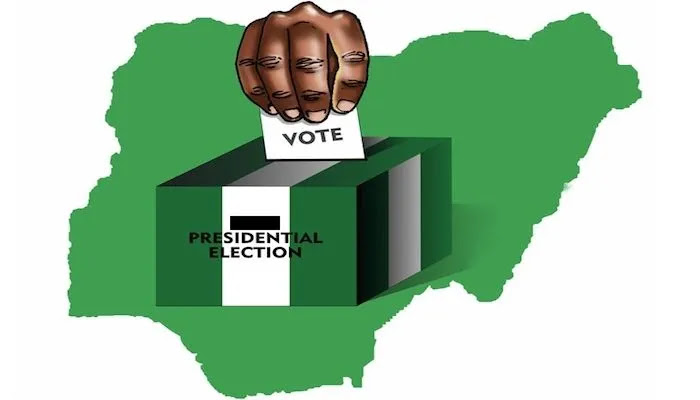
The desperation of politicians in the 2023 presidential election cycle gives cause for alarm. From N100 million presidential nomination forms to $35,000 delegate bribes and INEC’s shifting of the deadline for primaries, seemingly to accommodate the political party in power today, there are dangerous omens. 

It is up to us as Nigerians to decide if we will be fooled again in 2023. To make real progress, we must break from the past. We must now elect leaders who offer us a clear, coherent vision, competence, and a plan. 

As an aspirant for the responsibility of President of Nigeria in 2023 on the platform of the African Democratic Democratic Congress (ADC), I offer our country a clear vision and plan, articulated in my book Build, Innovate and Grow (BIG). The high Office of President of Nigeria is a job, not an entitlement based on the number of years a candidate has spent in politics or merely on personal ambition. In 2023 Nigerians should elect a candidate who has the competences, experience and performance track record that is directly relevant to the job. The core functions of the President of Nigeria are (1) Nation-building (managing diversity, building a united nation, and building strong institutions); (2) National Security; (3) Economy; and (4) Foreign Affairs and International Diplomacy.

Based on these requirements, I am the man for the job. A modern, 21st century President of Nigeria. As a United Nations official for 17 years in which I rose by dint of hard work and competence from entry level Officer to the highest career bracket of Director and served on special assignment at the political level of Under-Secretary-General, in New York, Cambodia, Croatia, Rwanda, and Switzerland, I led teams that achieved lasting results in rebuilding failed states such as our country has become today, in international security operations, and in traditional international diplomacy. 

I led resource mobilization and the building of global partnerships for the Geneva-based, $20billion Global Fund to Fight AIDS, Tuberculosis and Malaria that has made social investments to support health systems and save lives in 140 countries including Nigeria. And as the founder and CEO of a global investment advisory firm in the private sector, I have advised and guided major foreign investors into Nigeria and other African countries. 

As a Deputy Governor of the Central Bank of Nigeria (CBN) from 2009 to 2014, I led the execution of extensive reforms that saved the Nigerian financial system from collapse after the global financial crisis of 2008. Our work remains the stabilizing foundation of our financial system today. 

I also led the team that developed and introduced the Bank Verification Number (BVN) which now serves nearly 50 million Nigerians in the banking system. My team and I facilitated the introduction of Non-Interest (Islamic) Banking that advanced financial inclusion, as well as the digitalization of the payment system that made it possible for nearly 100 million Nigerians to make and receive payments on their mobile phones. As a member of the Monetary Policy Committee of the CBN, I played an active leadership role, with other colleagues, in economic policy making that successfully crashed inflation from double digits to a single digit 8% by 2014. We managed foreign exchange policy successfully, with the Naira exchanging to the dollar at a rate in the range of N150-N165 to $1 during our tenure in office. These are transformative achievements in which one played a direct, leadership role. The impact of my life’s work so far has been deep, international, national, and local, empowering millions in Nigeria and around the world. 

Having been a traditional politician in and of itself, say as a state Governor or Senator, without the knowledge of or exposure to managing complex diversity, sophisticated security operations, national economic management, or foreign affairs, does not prepare such an individual to be an effective president of Nigeria. Our failure to understand this is why we tend to make the wrong leadership choices. This is the lesson we should learn from Nigeria today as the failed state our country has become. The presidency is a unique job, not a mere political promotion or an entitlement. 

In 2023, our present national crisis needs us to elect a President of Nigeria that will fix our economy, unite our diverse peoples, secure our territory and our people, and restore our standing in the world. I pledge to build and unify our country into One Nation with a common national ambition on which we all agree. We will proactively secure our country and its people in all of our geopolitical zones. We will build an economy that creates jobs and prosperity for our youth through innovation, manufacturing and skills through education reform that ends ASUU strikes permanently in Nigeria, and access to capital to start new businesses through a state-sponsored venture capital fund that will be managed efficiently by the private sector. 

With my knowledge, experience and networks in international relations, my Government will make Nigeria influential and powerful abroad once again, based into the stability and prosperity we will create at home. 

Fellow Nigerians, this house has fallen. Together, we will rebuild it to become stronger than it has ever been. 

Igbo Fight

BY EMEKA UGWUONYE


It is true that the Igbos fight among themselves more than any other ethnic group in Nigeria. That is judging from my own observations. When the Igbos fight among themselves, they don't know where to draw the line. Every fight among the Igbos is an existential fight - that is, they seek to permanently destroy each other. That is why it becomes impossible for them to reconcile after a fight.

For over 20 years as a lawyer in America, I saw a lot of that. Even a divorce between an Igbo woman and an Igbo husband will, on the average, be more bitter than a divorce between non-Igbos or between an Igbo spouse and a non-Igbo spouse. They don't know how to narrow a fight. They expand every fight into a total war. That is why a divorce case involving two Igbos in America will cost them more than if it were a divorce between two non-Igbos.

It is usually in Igbo-versus-Igbo divorce that one of the spouses will go as far as informing the immigration that the other spouse lied 20 years ago when he filed for his immigration papers. It is usually in Igbo-versus-Igbo divorce that one spouse will seek the deportation of the other spouse. It is usually in Igbo-versus-Igbo cases that one party informs the authorities about some distant crime the other party committed, which nobody else knew about.

I happened to intervene in a lot of Nigerian-versus-Nigerian disputes in America. I knew that it was worse among the Igbos. For instance, it was very difficult for an Igbo union or Association to hand over power from one administration to another peacefully without going to court. Very rarely! Usually, the new administration will sue the outgoing executive and accuse them of stealing and embezzlement (or any worse offense possible). They can do this over $2000 dispute. The Igbos hardly like mediation. They want their opponent to be dead. And he is willing to lose even his own life to achieve that.

It was in one of such cases that the leader of a new Igbo union administration testified in court against the leader of the outgoing administration. In his testimony in court he said:

"We contributed and contributed and contributed and he ate the money totaling $16,538". He had to repeat the word 'contributed' three times in order to show the judge that they made the contributions on more than one occasion. He was not educated enough to use a word that would have avoided repeating the word. Despite his lack of education, he was the most confident and loudest in court. Typical Igbo man.

The judge was so shocked to hear that a human being ate money. So the judge asked: "Do you mean he ate the money?". The man replied: "Yes, your Honor". The judge continued: "Even the change, the 38 cents?". He replied: "He ate every penny of the money we contributted". The judge winced and the jury were visibly confused.

At that point, I asked to approach the bench. The judge was happy. I explained to the judge that the man only meant that the other party embezzled the money, not that he ingested the money. Only then was the tension doused.

You know in Igbo language, the statement: "He ate rice" will be: "Orili rice" or "Orie rice". Also, in Igbo language, the statement: "He embezzled money" is "Orili ego" or "Orie ego". When an uneducated Igbo person wants to say that somebody embezzled money in English, he will likely say: "He ate the money".

Look at the World Igbo Congress! What happened? After the founding executive, there was so much infighting that they had 10 lawsuits in American courts and they were still looking for lawyers to file more suits pro bono. That was a terrible experience. The World Igbo Congress would have been the pan Igbo movement that would have advanced the Igbo interest worldwide and bring the Igbos together. But the moment one Igbo Governor gave them a donation of $15,000, some members wanted to overthrow their executive. And because every Igbo fight is war, they spread the fight as far and wide as possible. They challenged the legitimacy of their constitution. They challenged the ethnicity of some of the executive members and claimed they were no longer Igbos, that some of them were from Benue State. It was so bitter that it was impossible to reconcile them. The World Igbo Congress had to die. But Zumunta (the Nothern union) never had such problem. The Yoruba unions did not have anything like that.

When I say these things, some young Igbo men get upset. But I don't care. Many of them are too young to know history. Many of them are too uneducated to understand what is happening. Many of them lack practical experience they can refer to. For instance, I can refer to World Igbo Congress. One of the Founding leaders of World Igbo Congress is my friend. He is here on DPA and will probably read this. So, am I supposed to worry about what some uninformed Igbo brothers say? Not at all. The Igbos need serious reorientation to be able to make it. If the Federal Government of Nigeria was smart, they would simply have recruited some Igbos and set them against IPOB and watch them destroy themselves. Just get some Igbos. Give them their own radio and tell them to counter Radio Biafra, and they would do it perfectly well.

So, if you are a social scientist and they ask you to evaluate the readiness of the Igbos for anything serious, you will come back and report that they lack cohesion. They lack organizational discipline. An Anambra man will fight an Enugu man any day. Just tell him that Enugu people are backward and Wawa bush men that drink their tea with Okpa, instead of bread. He will fight him. And tell the Enugu man that the Anambra man is an Ijekebee man. (You see: The Igbo people did not invent tea. They did not invent bread. But they will abuse a fellow Igbo for drinking tea with Okpa instead of bread).

So, stop kidding yourselves, guys. You are not ready for anything yet. We need a lot of underground work to prepare our society if that is the direction we want to go. And the first thing we need to do is to be honest to ourselves. We are not the geniuses we think we are. We are actually behind. It is not what you do as an individual that will count, but what you can do as a group. Even the ants are better organized than the Igbos. Ask Nnia Nwodo. Ask Chimaroke and Jim Nwobod. Ask Jim Nwodo and CC Onoh. (Yes, I am aware of Awolowo and Akintola, Tinubu and Funsho Williams. Don't worry, I am well informed).

Wednesday, May 4, 2022

Nigerian Exorcist Preserves Traditional Artifacts To Keep Heritage

Father Paul Obayi. Image: Facebook

BY VALENTINE IWENWANNE

NSUKKA, NIGERIA (CNS)
— A Catholic priest and designated exorcist is preserving traditional religious artifacts in a museum, to keep the local cultural heritage.

But in doing so, Father Father Paul Obayi is opposing a trend by Pentecostal preachers, who say the artifacts are symbols of idolatry and represent “evil spirits that bring bad luck.”

The artifacts are central to the traditional religions practiced by the region’s Igbo people, who see them as sacred and possessing supernatural powers. They include carvings of pagan deities and masks, said Father Obayi.

“I preserve them for future purposes, so that future generations will know what their fathers regarded as gods,” he told Catholic News Service. “They are mere artifacts and should not be regarded as gods; we need to preserve and watch them in the museum, there is no need to be afraid of them.”

Some of the artifacts are in the Deities Museum, a three-room museum located in the compound of St. Theresa Catholic Cathedral, which boasts of hundreds of totems, masks, a stuffed lion, and carvings of Igbo deities. Some of the remaining artifacts are stashed in an uncompleted building outside the cathedral.

Bishop Godfrey Igwebuike Onah of Nsukka appointed Father Obayi as chief exorcist, and the artifacts and other items are from the “deliverance services” the priest has conducted in towns and villages across Nigeria’s southeast.

“People voluntarily write letters inviting my ministry to come and remove the idols that are disturbing them; they write through a traditional leader in the community or eldest in the family,” he told CNS. “They sign it and send it over to the bishop through their parish priest, asking me to come and remove it for them.”

“Sometimes it comes from the bishop of my diocese, who must have been informed by the bishop of that diocese; he’ll then ask the parish priest to support and work with me, thus paving the way for support from the priest of the parish in local community or village where the exorcism will take place,” he told CNS.

The traditional Igbo society consists of clusters of individual families living in local autonomous communities. The ancient belief system of Odinala was practiced before the arrival of Christianity and colonialism and has a strong influence among the rural and village populations of the Igbo.

Odinala, the traditional cultural beliefs and practices of the Igbo people of southeast Nigeria, is a polytheistic faith that has a strong central deity at its head. It is a form of paganism where people pray to a spirit — represented by a statue — who intercedes on their behalf from a supreme being, or Chukwu.

Only a few believers of these ancient religions remain, and they endure persecution from the Christian majority.

Emmanuel Inyama, a professor of sociology of religion at Imo State University in Owerri, said when Africa was colonized, missionaries often attacked traditional religions in an effort to introduce Christianity.

Inyama said the loss of Igbo artifacts is a calamity that cuts off the old generation from the new ones.

“Those artifacts are reputed for having supernatural powers. So, what happened is that they were desecrated … So, when the spirits leave the artifacts or the items, it does not mean that the spirit is destroyed or is dead. What happened is that the gods have move away from the symbol.”

Father Obayi said people now believe that “we Catholic priests have power and authority over deities, unlike before, when they used to run to native doctors to come and remove the artifacts that are causing them spiritual and physical discomforts in their families.”

He said when he exorcises artifacts, people’s belief in God increases.

His museum is not yet fully functional. The artifacts are caked in dust, and some have been ravaged by termites. Father Obayi say he is still looking for helpers, and “that’s why they (artifacts) are laying scattered here while some of them are at the cathedral, and not well kept.”

“We need helpers to come to our aid to make these things standard and get chemicals and experts to preserve them, because they are made of wood and termite is eating them up,” he told CNS.

Tuesday, May 3, 2022

Lucky Were The Bodies


Armed soldiers were stationed here and there. Grannies wondered why we remained in the north. We should come home.


I want to remember. No. I don’t want to keep remembering. But shouldn’t I? His face keeps popping up here and there, in my dreams, in my wakefulness, inciting me with his smile to come and play, as if he were here.

I want to ask him if he is fine, as we were when dawn fed us chants of cockerels, muezzins, and preachers. When our shadows grew shorter, like dots under our feet as the bright lone eye of the cloudless sky moved to the center, inviting our stomachs to cry for food. When the lone eye went to sleep, its mild colleague crept in to usher our game-tired bodies home.

On weekends we were fed with Indian films. We crowded a tiny parlor belonging to the only owner of a twelve-inch black-and-white screen. Or we huddled outside and struggled for space to look through a glint in the window. Or we passed broomsticks through the open window to part the curtains for our yearning eyes to see.

We fought wars, reenacting the Indian films we watched. Our regalia were green leaves from mango trees. Our swords — maize stalks — were sharp with playfulness. Our guns shot bullets of sound, torrents of our shrieks. We killed. We died and were resurrected with laughter.

Then we couldn’t leave our rooms. Or dream with closed eyes. For the next couple of days, the most popular phrase was “Sharia law.” Why should we stay at home because of some law? Clouds of smoke wrapped up neighboring communities, as if in reply. All of our men — fathers and boys armed with machetes, bows and arrows, sticks and spears — spread out in groups to defend the town, their faces darkened with soot. Some, including Tema, went off to the border. Mama wouldn’t allow me to go. But I had no liter of courage either. And then the army came.

Tema’s catapult always hung around his neck. When we went hunting for tswi-tswi in the fields, he was accurate with his target. I was never his match. Once, I struck and missed, scaring the bird away; despite the fury boiling in Tema’s eyes, a stream of chuckles cracked his face. They say he had a smiling face.

I saw him. He saw me. He smiled. I smiled back. The group marched away.

In February 2000, Kaduna was awakening from the rubble of religious crisis. Malali, one of its towns, was a swelling of people who had run away like an endangered species — from burnings, from lynchings common as air, escaping, if luck embraced you, from attacks by the burners and killers lusting over our end.

Everybody now belonged to a body of tribal consciousness — of identities as Christians and Muslims, southerners and northerners, natives and non-natives, pagans and believers. Words were tied like nooses around our necks.

People died. Friends, relatives, fathers, mothers, babies — dead. Families were charred to black ash. Bodies were lost. The dead were buried in graves, real or imaginary. Lucky were the bodies recovered and recognized, luckier still if given burial.

Fear hung in the air like a bad omen. Movement was regulated with a dusk-to-dawn curfew. Armed soldiers were stationed here and there. Trespassers didn’t wake up at dawn. The order was: gun them down. Vengeance for this, vengeance for that, was mused. Paranoid was the air we breathed. Relatives and friends in other parts of the country kept asking us to leave the state. Grannies wondered why we remained in the north. We should come home.

No more street play, hide-and-seek, card games, moonlight tales, aimless scampering about. No more Tema?

Like most families from the southern part of the country, we succumbed. The red sand and soft green trees of Nsukka welcomed us to the southeast. We stayed at our grandparents’ place, with a twelve-inch black-and-white TV. The wall clock still ticked, ageless. Framed photos hung on the walls. One of Grandpa’s large faces stared like it was daring you to do something silly. Seats were set around the spacious parlor — a door that led into Grandpa’s room inches away. It was always ajar. On windy days, the house howled through its roof.

Everything seemed as familiar as when I lived there years back. We had traveled home for Christmas. Grandma had requested that I be brought to stay with them. Three or four years old, I was driven in a Volkswagen by their neighbor from my own father’s house. Grandpa was lying down in a camp bed in front of the house, reading a newspaper — or was it a book? He didn’t move or say a word to me, though I was still crying.

Now, having spent much of my life growing up in the north, my Hausa was fluent. Better than my Igbo. Though we spoke Igbo at home, it was an exclusive preserve of communication with my parents, especially Papa, who would never want me to speak anything else. Igbo was my mother tongue; Hausa was not. He thought I should be a master of my mother tongue. He wanted me to be good at English too.

In the village, there was only Igbo, which limited me to just a few utterances. The words felt heavy on my lips. They sounded like I was learning the language anew. I listened more than I spoke. I didn’t want to be laughed at, let alone rebuked by Grandma, when I pronounced the words wrong. When I didn’t know which Igbo words to use — the appropriate words — I’d utter the Hausa or English equivalents. They came easily.

Once or twice, I went to Grandma for soap to wash the plates. The word had skipped me. I didn’t say ncha. Instead, I said sabulu. She said she didn’t understand. She continued stitching our torn clothes. My cousin told Grandma what I needed. I was relieved but disappointed. Grandma’s knowing smile stirred a growing feeling that had crept into me — that the whole world was staring at me, at my every deed, expecting me to be flawless, and I responded by coiling back into myself. I heard it said that I was quiet and shy.

The room I occupied was Grandpa’s. He had passed away a few years back after complaining of chest pain. There was a cupboard of books, a table by the window. From the window I could see flowers at the entrance to the front door and the wide path that met our colonial heritage, the market road whose asphalt surface had thinned away into patches here and there. One end led to the University of Nigeria, and the major town of Nsukka, while the other led to Nkwo market. On market days, Nkwo especially, the road was busy with people avoiding police checkpoints on other roads.

Across the road was the primary school where Grandpa had taught. As a teacher, he was nicknamed Masquerade. His moral strength, they said, scared away its offhand neighbor. If Grandpa had been loose, his mud house would have been a mansion, and his family would be living off the cake of his millions by now, but his pupils wouldn’t have grown into credible men and women. Mama said she was his pupil at some point. She made a face to indicate that the privilege hadn’t spared her anything. My last encounter with him was a hard thrashing I received for not feeding the goats. The night whined of their hunger.

The cupboard of books in Grandpa’s room was made of redwood. It was taller and bigger and housed more books than my father’s. If my appreciation for books and reading had so far been a hidden trait, the books in Grandpa’s cupboard baited it out. The meeting was irresistible. And the books were good company. I took solace in them. They saved me the discomfort of facing people, speaking to them, speaking Igbo to them, or being accused of avoiding them.

Some books I read willingly. Others, I felt, were very deep. I left these to read later. When I read Gilbert Ryle’s The Concept of Mind, I didn’t understand anything. But I read it anyway. When I became a philosophy major at the University of Nigeria years later, I was intrigued by his famous “ghost in the machine” metaphor — a critique of Cartesian dualism. But I liked Descartes’s dualism, not so much because of his subtle approval of modern science but because of his style of writing. And the famous “cogito, ergo sum” was a dictum I personalized in other ways. I sleep, therefore I am. I read, therefore I am. I write, therefore I am.

The cupboard was dusty for lack of use since its owner had gone. I would take out the books and beat off the dust or blow it away. I liked the smell — their musty perfume. When I flipped through their pages, the buzzing rustle tickled my ears. Sometimes I would hold a book in my hand just to enjoy the feel of its weight.

The ones that tickled me were The River Between and Weep Not, Child by Ngũgĩ wa Thiong’o, Mission to Kala by Mongo Beti, The White Man of God by Kenjo Jumbam, Chike and the River by Chinua Achebe, The African Child by Camara Laye, Zambia Shall Be Free by Kenneth Kaunda, The Beautyful Ones Are Not Yet Born by Ayi Kwe Armah, Toads for Supper by Chukwuemeka Ike, A Fresh Start by Helen Ovbiagele, Sammy Going South by W. H. Canaway, Wuthering Heights by Emily Brontë, The Dignity of Man by Russell W. Davenport, Murder in the Cathedral by T. S. Eliot, and Remove the Heart of Stone by Donal Dorr. Most of the books presented me with a world similar to the one I lived in — dirt roads, cornrowed hair, black skins, and straw beds.

I was hungry for more books. I would strip the cupboard of all the books just to find something new to read. Some books had lost pages or even covers. I read them like that. A copy of Achebe’s Things Fall Apart was falling apart. There was James Hadley Chase’s Tiger by the Tail and, under the pen name Raymond Marshall, You Find Him, I’ll Fix Him. I read Grandpa’s lesson notes and letters and marveled at his handwriting, at the old black-and-white photos of his not-quite-younger years.

I learned new words and expressions, which I wrote down on sheets of paper and later transferred into a notebook. I became obsessed with the dictionary. An old Oxford Advanced Learner’s Dictionary was handy. I wanted to know every word. I thought I could. But there was always something new. One new word. Two more. A dozen more. In senior secondary, my classmates would call me Dictionary. I was at ease with words and their meanings, and it was an honor to be looked up to in class or approached to explain the meanings of new or unfamiliar words.

Chores kept me briefly away from reading. Every day after morning prayers, I swept the compound with a broom made of palm fronds and washed the plates before and after meals. We went to the farm on Saturdays. It was a new experience: tilling the soil, weeding, making ridges. Afterward, we gathered firewood and brought it home.

In the fields, I looked forward to reading, so much that I remained locked up within myself, digesting words, sounds, and voices, replaying them in my mind, rolling over new words — Igbo words too — in quiet dialogue with myself.

While Grandpa’s books fed me, the news from Kaduna was that life was getting back to normal. Business was beginning to bubble. People who had left now returned, Christians among Christians, Muslims among Muslims. But I was excited. I hoped Tema had returned — from wherever. I wanted to go back, to be with my friend, to laugh, to play on the streets, to hold hands, to behold the city again, to bask under her sky without fear. We would make traps. We would go hunting. My trap would catch nothing. His would catch a dozen bush rats. We would make kites and fly them. They would take our dreams to the sky. His would fly higher than mine. We would slice empty tins and make miniatures of our dream cars.

And I would tell him of the books I had read, of the new words I had learned. I would show him my notebook with many words. He would nod at my accomplishment.

I wondered what he could have been up to. Reading like me, perhaps, or going to the farm. Hunting? When our teacher, Mr. John, had asked us what we wanted to be in the future, Tema had always said he wanted to play. I didn’t know what I wanted either. Playing seemed the most feasible thing to do.

“Happy birthday,” Mama said. It was November 23.

But it was immaterial. Tema didn’t return. He was never found.

ABOUT IFEANYICHUKWU EZE:
Ifeanyichukwu Eze studied philosophy at the University of Nigeria, Nsukka. He explores survival as it reveals layers of being, the utopia of place, and the intersections between faith, identity, mental health, and death. His work has appeared in Adda, The Offing, The Temz, The Dark, Agbowo, Akuko, and a few other places. A fellow of the Ebedi International Writers Residency, Eze was longlisted for the 2020 Commonwealth Short Story Prize and won second prize in the inaugural Akuko Writers’ Prize, 2020.

READ ORIGINAL ARTICLE HERE