Showing posts with label Nd'Igbo. Show all posts

Sunday, March 20, 2022

Declining Glory Of Igbo Apprenticeship System That Bred Billionaire Bizmen

Apprentices and traders at the Ariaria Market in Aba is popular for Nigerian-made products, some of which are exported. Image: Getty

BY TITUS ELEWEKE

The Igbo apprenticeship system also known as Igba Boyi has produced many billionaires in the Southeast. But the initiative is now on the brinks...

The Igbo apprenticeship system also known as Igba Boyi has produced many billionaires in the Southeast. But the initiative is now on the brinks of extinction because the youth are no longer interested in it due to their crave for white collar jobs and get-rich-quick syndrome and other factors, Daily Trust on Sunday reports.

The system is an unpaid business apprenticeship/incubator model that offers young boys opportunities to learn business under the tutelage of a master for a certain number of years. It could be five to eight years. At the end of the apprenticeship, they are settled by their masters who empower them with reasonable amounts of money to start their own businesses.

The initiative has produced numerous Igbo multi-billionaires such as the chairman of Innoson Motors, Chief Innocent Chukwuma, the CEO of Coscharis, Cosmas Maduka, the CEO of Ibeto Group of Company, Cletus Madubugwu Ibeto, the CEO of Chikason Group, Chief Alexander Chika Okafor, Senator Ifeanyi Ubah and others.

Findings by Daily Trust on Sunday indicate that Igba Boyi has been in practice for centuries. It helped the Igbo to quickly bounce back to the nation’s economic system after the Civil War.

The system was so popular and widespread that Harvard Business Review defined it as a stakeholder capitalism.

But worried by the decline, the CEO of the United Nigeria Airlines Company Limited, Dr Obiora Okonkwo, in 2020, instituted a N15 million research grant at the UNIZIK Business School (UBS) to do a research with a view to investigating the factors responsible for the decline and make recommendations for revival.

The research was titled: “Reinvigorating Igbo Entrepreneurial Behaviour through Enhanced Apprenticeship Scheme in Onitsha Markets, Anambra State.”

In 2021, UNIZIK Business School came up with some research findings and made a presentation.

While presenting the research findings, the Principal Investigator, Prof Nkemdili Nnonyelu, who decried the decline, said devaluation of family values and unbridled quest for materialism were responsible.

He recommended that the system should be reconceptualised to eliminate any form of stigma attached to the ‘Igba Boyi’ syndrome to make it attractive.

The research also found out that the name ‘Igba Boyi’ makes young boys in the trade feel humiliated.

Nnonyelu said Igba Boyi should be replaced with ‘Nkwado Ogalanya’ or ‘apprenticepreneurship.’

“We also found that the devaluation of family values and the new orientation of get-rich-quick mentality were some of the causative factors that have affected the state of Igbo apprenticeship,” he said.

Nnonyelu noted that apprenticeship had helped to inculcate values and advance entrepreneurs as co-creators of wealth and employers of labour.

He stressed the need to restore the loss of glory of the apprenticeship practice in Igboland.

During the presentation of the research findings, Okonkwo said he took the decision to offer the research grant after observing that the situation was no longer the same when he had a stint as an apprentice before jetting out to Russia for studies.

He applauded the research that it had fulfilled its purpose.

The Vice President, Professor Yemi Osibanjo, described the apprenticeship system as the most popular indigenous business initiative in Nigeria’s economic institution and recognized as the world largest business incubator.

The vice president stated this recently in Awka, Anambra State during the National Summit on Igbo Apprenticeship on the theme: “Repositioning the Igbo Apprenticeship Scheme for Sustainable Economic Development.”

Osinbajo said the initiative would add values to the already existing economic growth of the country.

Osibanjo who joined virtually said the scheme has the full potential to achieve for the Nigeria’s economy what similar apprenticeship schemes had achieved globally, especially in Germany and India.

As a Keynote speaker at the summit, Dr Obiora Okonkwo blamed the near extinction of ‘Igba Boyi’ on moral and ethical decay in the society.

He added that erosion of some fundamental values like honesty, discipline, diligence and hard work were responsible for get-rich- quick syndrome and the lack of patience to learn requisite skills that are pervasive among today’s youths.

“The apprenticeship system in Igboland began to suffer when apprentices, even in their very first weeks, began to aspire to become bigger than their masters,” he said.

“This has also led to situations where some apprentices go to lengths to seek to ‘control’ their bosses by diabolical means with the intention to take over their wealth,” he added.

He attributed the current upsurge in drug abuse and ritual killings among the youth to their quest for quick money as well as decline in moral and cultural values so much so that they have lost interest in learning skills to better their lots.

Okonkwo expressed delight that the older generation of Igbo businessmen, most of who were products of the apprenticeship system, became wealthy because they were guided by the values and ethics they were brought up with during their apprenticeship years.

“We must reinvent the apprenticeship system to be responsive to the business and industrial needs of today, along with the skills acquisition and value chain that such new processes require,” he said.

Retired Anglican Bishop of Isiukwuato/Umuneochi, Abia State, Reverend Samuel Chukwuka, attributed the decline in the apprenticeship system to misleading preachings by some men of God.

According to him, some of the men of God who are supposed to be moral compass of the society have disappointed the young ones in their preaching of gospel of God who preach that one can get rich through praying and fasting. This, he said, discourages the youth from learning skills to make a living.

“The church is seriously contributing to the moral decay and get-rich-quick syndrome in the society. Today, we talk about church in terms of building while the church is not about building, but the body of Christ. The so-called men of God are preaching riches, enemies must die and they are making money from the people,” Reverend Chukwuma said.

“People are going to prayer houses, seeking wealth. At the prayer houses they would tell people that God would prosper them even without work. They would tell you that after fasting and praying, God would prosper you. Why would people not rush there to be rich instead of learning skills that can bring the prosperity? Many youths are now resorting to deities having discovered that the churches are no longer preaching the truth,” the cleric stressed.

A-76-year-old tailor, Elder Joel Anichebe said: “The youths of today want to be rich by all means or die in the process. It was not like that in our days. Owing to quest for quick money the younger generation does not want to learn any skill. They want to get everything without working.”

“Parents, too, are also contributing to the moral decay in the society because they encourage their children to do evil if only that would fetch them money. The value system has died in Igbo land because both parents and children are looking for money at all cost,“ he added.

It’s difficult to go back to the apprenticeship values where there was respect for hard work. The quest for quick money has destroy the system. If you get anybody by chance who wants to learn a skill, he would drop out after six months, claiming that he had learnt the trade,” Anichebe said.

“Most youths today preferred riding motorcycle to get easy money to learning any skill that would sustain them in life. I learnt tailoring for four years and six months. Nobody will be hungry in life if he learns any hand work. If you don’t have any skill, you would be tempted to go into crime to survive,” he said.

“Parents should stop glorifying their children who display wealth without reasonable sources of income. We must encourage our children to learn trade and also be patient in learning skills,” added.

Sunday Onurgbo, a spare parts dealer in Nnewi said: “I think the way government has opened the eyes of the youths to money is discouraging them from learning skills. Government officials spend money carelessly and the boys are watching them. The way they display wealth publicly can discourage them from being patient to serve their masters for six to eight years,” he said.

“Some maters are also parts of the problem. When they open a store for their apprentice, they give him a target of the amount of money he will be paying every month. If the boy can not meet the target, he would do extraordinary things to meet up. This discourages some young ones from going into apprenticeship,” Onurgbo added.

Daily Trust on Sunday’s findings also indicated that some master’s failure not to ‘settle’ their apprentices, is another factor that account for the failure of the apprenticeship system.

Mr Martins Metuh, another spare part dealer at Nnewi New Motor Spare Parts, said:

“Owing to exposure to drugs and civilization, the youth of this generation are not ready to learn how to grow in life under the tutelage of a master. It is no longer lucrative to have ‘boyi’ again in your store because they are for destruction and not for building any more,” Metuh said.

“It is no longer safe to have apprentices. It is better to have sales girls or boys and you must open eyes to monitor them,” he added.

Metuh also attributed the failure of the apprenticeship system to parental failure.

“ One day, I went to a man and I asked him about his son who was supposed to be in the university and he said he was in Lagos doing clearing and forwarding. This is a boy he sent to university to study. But he did not spend up more than three years when he came back home with an expensive. But his father did not ask him, “my son, where did you get money to buy this car since you are still in school? How then can his mates go and learn a trade when they feel they can make money through any means?”

“You can not ask a boy to spend eight to nine years with you as an apprentice when his mates are making quick money without minding the consequences,” he added.

Metuh, however, said that being a graduate did not stop one from going for apprenticeship. He urged them, especially the unemployed, to go and learn trades and skills to earn a living.

“We must not allow buying and selling to die in Igbo land to die because it is God’s gift to us,’ he said.

Michael Nwaoba, another artisan, said that it was not easy for a graduate to go and learn a trade for years again after four or five years in the university.

He argued that all the trainings they received in the university were enough for them to do something for themselves.

He said that a typical Igboman had passed the level where he would stay for eight years under somebody as an apprentice, cleaning his house, and stores and even doing other domestic work for a man and his family after a university education.

“Government should put a measure to take care of the teaming youths who are not employed. One does not need to go for apprenticeship to be successful in life after serious training and learning in schools.

Why should a graduate go for five or eight years serving somebody and his family as an apprentice after becoming a university graduate? It is not just possible again, “he stressed.

A psychologist at Nnamdi Azikwe University, Awka, Dr (Mrs) Amaka Okafor, said that due to preference for riches to good name, the young ones are no longer interested in doing anything that would stress them. They prefer doing anything to get money quick instead of serving somebody for four or five years.

“Anchoring on this established fact as seen in our society today, our youths’ mindset and spontaneous actions only centere around how to make quick money and become the praise of the society. Thus, our youths see it as a Herculean ordeal to engage in the long process of lgbo apprenticeship, which, by virtue of patience, helped our older generation to build empires,” Okafor said.

She added: “The result of this mindset is epitomized in the glaring societal decay as seen or demonstrated in such actions and practices like ritual killings, kidnappings, Yahoo boys syndicate, cultism and others.

We should motivate our young ones and empower them at homes, schools, churches and the society at large. They must be encouraged to learn things for a living,’ she added.

Okafor said that Igbo apprenticeship would continue to decline until it goes into extinction if nothing urgent is done about it.

Monday, November 29, 2021

Ndigbo And Fallacy Of Power Not Served A La Carte

BY IKECHUKWU AMAECHI

VANGUARD

NIGERIANS love clichés to bits. But if there is anything they love more than clichés, it is their penchant to determine the fate of Ndigbo based on pre-conceived notions. As the curtain is slowly but inexorably being drawn on the Muhammadu Buhari presidency and the political silly season is, once again, upon us, those two tendencies are manifest.

As 2023 beckons, the buzz phrase these days is the fallacy that power is not served a la carte. Interestingly, that banality is only voiced in reference to the legitimate clamour for a Nigerian President of Igbo extraction.

You often hear people speaking tongue-in-cheek that “power is taken and not given”, ostensibly latching onto Gloria Steinem’s phrase that “nobody gives you power; you have to grab it,” without putting it in context as Steinem, an American feminist journalist and social political activist, did.

For instance, fielding questions on Arise Television on August 4, 2020, elder statesman, Alhaji Tanko Yakasai, former Liaison Officer to former President Shehu Shagari, said: “Igbos should not expect power to be served on them, they should build bridges if they want a president of Southeast extraction.” Yakasai insisted that “power is taken and not given.”

While the nature of power in itself involves contestation, the idea that it must always be taken and not given is not true. In Nigeria, power has always been served a la carte since independence in 1960.

When Shehu Shagari became president on October 1, 1979, he did not take power, it was given to him because his ambition was to become a senator before he was handed the presidential ticket of the National Party of Nigeria, NPN, at the party’s national convention held at the Casino Cinema, Yaba, on December 12, 1978.

Having been adopted by the Northern political establishment, he easily defeated other more flamboyant, wealthier and politically-astute aspirants like Maitama Sule, Adamu Ciroma, Dr. Olusola Saraki, Joseph Tarka and Professor Muhammed Iyi Abubakar in the primaries. He became Nigeria’s first executive president on a platter of group endorsement, and in spite of himself, having been served power a la carte.

Olusegun Obasanjo was in prison when the Peoples Democratic Party, PDP, was founded in August 1998 by former Vice President, Dr. Alex Ekwueme, and other members of the G-34. Yet, in deciding who the party’s presidential candidate would be, Ekwueme, who rallied round the most potent opposition against General Sani Abacha’s transmutation agenda was by-passed for a reluctant Obasanjo. He was served power a la carte.

Having been adopted by the Northern political establishment, he easily defeated other more flamboyant, wealthier and politically-astute aspirants like Maitama Sule, Adamu Ciroma, Dr. Olusola Saraki, Joseph Tarka and Professor Muhammed Iyi Abubakar in the primaries. He became Nigeria’s first executive president on a platter of group endorsement, and in spite of himself, having been served power a la carte.

The late President Umaru Yar’Adua wanted to return to Ahmadu Bello University as a lecturer after his eight-year tour of duty in Katsina State as governor. He neither had the gumption, war-chest nor even the national name recognition to propel him to Aso Rock. Yet, he became president without any struggle. Simply put, he was handed the presidency on a platter of Obasanjo’s whims.

President Muhammadu Buhari, who had run on his own steam three times, only made it to Aso Rock when most Northerners felt that President Goodluck Jonathan’s quest for a second term was not only greed for power taken too far but an unpardonable breach of the rotation principle which favoured the North at the time.

Even members of the PDP from the North, including the then National Chairman, Adamu Mu`azu, worked against Jonathan. In Bauchi State, where Mu’azu was governor for eight years, PDP lost the 2015 presidential election to APC, scoring only 86,085 votes, a paltry 8.4 per cent as against 931,598 polled by APC.

Even during the military era, power was served a la carte to Yakubu Gowon after the bloody July 29, 1966 counter-coup by Northern military officers. He didn’t struggle to become Head of State.

The junior officers who overthrew Gowon in a palace coup d’état on July 29, 1975 handed power over to General Murtala Muhammed. General Joseph Garba, one of the architects of the coup who later became Minister of External Affairs, narrated how Murtala even gave them conditions for accepting the offer.

When Murtala was assassinated on February 13, 1976, reports had it that General Olusegun Obasanjo, his second in command, was reluctant stepping into his shoes. Rather than struggle for power, he was persuaded. So, why will it be different now simply because there is clamour for a Nigerian president of Igbo extraction?

Yakasai talked about Ndigbo building bridges. Isn’t that what they have been doing even before the idea of Nigeria became a reality? There is hardly any Igbo leader of the old generation that was born in the South-East.

Both Dr. Nnamdi Azikiwe and Chukwuemeka Odumegwu Ojukwu were born in Zungeru, a town in Niger State, which was the capital of the British protectorate of Northern Nigeria from 1902 until 1916.

Presently, there is no community in Nigeria’s 774 local governments, no matter how remote, that you won’t find a resident Igbo. So, why is the bar being raised so high simply because Ndigbo are laying a claim to the national political diadem?

Before now, the question has been: where are the Igbo candidates? Now that some Igbo aspirants, including Mazi Sam Ohuabunwa, a renowned pharmacist, founder and former CEO of Neimeth Pharmaceutical, former president of the Pharmaceutical Society of Nigeria, foundation president of the West African Pharmaceutical Manufacturers Association, former Chairman of the Nigerian Economic Summit Group and Manufacturers Association of Nigeria; and Senator Anyim Pius Anyim, a lawyer, who became Senate president at the young age of 39, and also served as Secretary to the Government of the Federation, SGF, have raised their hands to be counted, the story is changing.

Suddenly, zoning of political offices has become a taboo to some political actors. Former Vice President Atiku Abubakar, who obviously wants to run again for the presidency in 2023, is now repudiating the PDP zoning principle.

Speaking at the 94th National Executive Committee, NEC, meeting of the PDP on Thursday, October 7, Atiku urged the party to be guided by the spirit of fairness and equity rather than zoning in determining the presidential candidate.

“Where the President comes from has never been the problem of Nigeria. It will not be the solution to the problems of Nigeria. There is no such thing as a president from Southern Nigeria or a president from Northern Nigeria.

There is only one president, a President of Nigeria, for Nigeria and by Nigerians,” he said. On the face value, there is nothing wrong with his position. But juxtapose it with his stance on the same issue at the 2011 PDP Convention when he squared against Jonathan, the hypocrisy jumps out.

Hear him then: “The founders of this party, in their wisdom, devised rules for the rotation of power between North and South in response to cries of marginalisation and domination. We wanted peace and justice to reign. And we put it in our Constitution (Section 7.2.c), and we all know what a Constitution means.

“That provision has not been altered. In 2002, an expanded caucus of our great party met and reaffirmed that policy…. I have always put Nigeria first before my personal interests and ambitions.”

So, what has changed? If rotation of power between North and South was desirable in 2011, what makes it undesirable in 2023? Truth be told, equity, fairness and social justice demands a Nigerian president of South-East extraction in 2023.

In which case, after eight years of a Muhammadu Buhari presidency, power should gravitate to the South. And it will be unconscionable for the South-West that has held the presidency and vice presidency for 16 solid years in a period of 24 years or the South-South that was there for five years to deny Ndigbo the opportunity.

But even if the only criterion for determining who becomes president in 2023 is competence, South-East has a glut of competent people. Fortunately, all those who have declared interest so far are not running because they are Igbo, but because they are competent, knowledgeable and proficient Nigerians, who possess the requisite skill sets to save their beloved country from implosion.


Monday, February 10, 2020

ND'IGBO: Insecurity - South-East To Name Joint Security Outfit Soon

Dave Umahi, Chairman of SEG Forum and Governor of Ebonyi State. Image: Facebook


BY ANNAYO OKOLI, DENNIS AGBO, CHINEDU ADONU

With the various regions of the country forming their security outfits as a result of rising insecurity, the South East governors, yesterday, disclosed that they would soon name their region's security outfit which was proposed last year.

They also disclosed that the state houses of assembly in the zone were on the verge of passing laws that will give the outfit legal backing.

The governors disclosed this on a day Ohanaeze Ndigbo warned that due to the worsening insecurity situation in the country, Ndigbo will henceforth embark on self-defence.

The apex pan-Igbo organization said Ndigbo could no longer fold their arms and watch their citizens slaughtered helplessly as though the country was in a hopeless state.

S/East to name joint security outfit soon
Rising from a meeting in Enugu last light, the Governors said they had notified the Federal Government about their plans and would follow it up with details of the mandate of the security outfit.

In a communique read by Chairman of South East Governors Forum and Governor of Ebonyi State, Chief Dave Umahi, the governors' said the forum had been inundated with questions on the region's plans after the South West unveiled Amotokun, stating that the South East was not in competition with other regions.

Umahi, however, recalled: "The South East Governors had formed their South East joint security on July 28, 2019, and inaugurated her committee on joint security on August 31, 2019.

"Forum took briefing from chairman of the South East joint security committee and is satisfied with all the arrangement that will lead to South East State Houses of Assembly to enact a law to back up the South East Security programme with a name to the outfit."

The governors also reiterated March 31, 2020, as date for reopening of Akanu Ibaim International Airport, Enugu to commercial activities.

They expressed satisfaction and commended President Muhammadu Buhari for his attention and release of funds for the airport rehabilitation, Second Niger bridge construction and rehabilitation of other federal highways in the zone.

The South-East governors also agreed to commence construction of a ring road to connect South East and South South zones, in view of the progress being made in Enyimba Economic City.

Ndigbo 'll embark on self defence --Ohanaeze
Meanwhile, Ohanaeze Ndigbo, rising from its Imeobi meeting of the year, in Enugu, yesterday, said it exhaustively considered and deliberated on the lone agenda of the meeting, which was security, and with deep trepidation, noted the deteriorating security situation in the South East and Nigeria in general, saying Ndigbo would henceforth embark on self-defence.

Among those in attendance at the meeting were the President-General, Nnia Nwodo; Peter Obi, Jim Nwobodo, Emmanuel Iwuanyanwu, Mbazulike Amaechi, Achike Udenwa, Enyinnaya Abaribe, Adolphous Wabara, Anyim Udeh, Frank Ogbuewu, Azu Agboti, among many others.

In a communique by the President-General of Ohanaeze Ndigbo, Chief Nnia Nwodo, the group said: "Ohanaeze, hereby, states categorically that Ndigbo will not stand by and watch their people slaughtered and that Ohanaeze will defend every soul in Igbo land.

"Ohanaeze, hereby nominates, activates and directs the council of elders, made up of reputable Igbo personalities and leaders, to engage Ohanaeze and state governors immediately on prevailing security challenges.

"Finally, Ohanaeze reminds Ndigbo that there have been difficulties in security in our history in Nigeria. In all these, our determination to protect our homeland and families against aggressors has never wavered and we have always relied on our ingenuity and vigilance to ensure our survival. Let nobody take us for granted."

The meeting dispersed to join the South East Governors Forum meeting held at Government House, Enugu.


SOURCE: VANGUARD

Thursday, January 30, 2020

Nigeria And Nd'Igbo: 50 Years After The Civil War

President Goodluck Jonathan speaks to the media on the situation in Chibok and the success of the World Economic Forum in Abuja May 9, 2014. Image: Afolabi Sotunde/Reuters


It is difficult to believe that it is over 50 years since the end of Nigeria Civil War, what with the scars and the wounds that seem to fester and become more malignant and the ensuing cold war that has refused to abate.

Although the war ended on a no-victor-no-vanquished note and a promise of reconstruction, rehabilitation and reconciliation as pronounced by the Gowon-led federal government, yet the real war continued in a more insidious and sinister manner.

Apart from the initial punitive measures immediately after the war there has been series of obnoxious measures to stymie development in the Southeast.

There is no visible federal government presence in Igbo heartland. Every successive government follows the same repressive pattern except for the brief periods when IBB and GEJ were in power.

Thus, ndi-Igbo have continued to experience insufferable marginalization. Every geopolitical zone in the country has at least six states, only Southeast, the Igbo strong hold has five.

The Southeast has the fewest number of local government areas and is least represented in the National Assembly and in the government.

Over 70% of travelers and over 70% of importers in the country are Igbo yet the seaports in the Southeast and the geographically contiguous South-south region are made not to function.

There is no international airport in the Southeast. The only one built by GEJ has been tactically closed down for almost one year now.

They are made very vulnerable by their ubiquity in every city and every nook and cranny of the country; a clandestine design by those in power since the end of the war.

Apart from the government sphere, the war also continued in the most unusual place—in the press—that is supposed to be the bastion of truth.

The Nigerian Press in particular has been most unfair to ndi-Igbo in its reportage, analysis and interpretation of events and in gate-keeping functions.

Igbo are not in power yet they are blamed for all the woes of the nation. Hard work is mischievously misinterpreted to mean love for money. It is fashionable to attack the Igbo man and many revel in doing it.

Ndi-Igbo have continued to live like endangered species in Nigeria. They bear the brunt of every religious and politically instigated disturbance in the country.

It is disheartening that in the post-civil war Nigeria ndi-Igbo have continued to lose thousands of its own through organized and systemic riots, sometimes for inane reasons like the February 2006 attack over a cartoon in a Danish newspaper and the November 2002 Kaduna riot over Miss World Beauty pageant in Abuja. No one was arrested or tried for any of these.

The exact cause of the war has been misinterpreted and manipulated by the obscurantist and suppressionists to justify the pogrom committed and to justify the continued obnoxious policies against ndi-Igbo in Nigeria.

The popular opinion is that ndi-Igbo planned coup against Nigeria and took up arms against Nigeria. But the truth suppressed is that Ndi-Igbo did not fight Nigeria.

They acted in self defence. The coup of January 1966 was the misdemeanor of a few ideologically misguided young military officers who were goaded by false notion of patriotism.

They were influenced by the ideology of the Eastern Bloc that was the rave of the 60s and incited by the press that were in sympathy with the Action Group (AG) and its leaders jailed for plotting to overthrow the Tafawa Belewa government.

Although the bulk of the officers that planned the coup were of Igbo extraction, yet officers from other ethnic groups were also involved.

The leader of the coup, Major Chukwuma Nzeogwu, was born and bred in Kaduna. His middle name was Kaduna. He was more Hausa than Igbo. He came from Okpanam, a place he rarely visited when he was alive, in present day Delta State.

The obscurantist would not tell us that those who frustrated the-said Igbo coup were Igbo officers. General Ironsi quelled the mutiny in Lagos while Lt. Col. Ojukwu who was the garrison commander in Kano stopped the revolt in the North.

Lt. Col. Arthur Unegbe an Igbo officer who was the Quartermaster-General of the Army then was killed by the mutineers for refusing to hand in the key to the armoury. Zik of Africa was out of the country on medical treatment as at the time of the coup and could not have been killed in absentia.

The mutineers did not operate in Enugu because apparently they did not want create diplomatic row as Okpara was hosting the Prime Minister of Seychelles Island in Enugu.

Chief Ladoke Akintola was killed because he resisted the coup plotters when they came for him. The same people that killed Akintola spared Remi Fani-Kayode, drove him to Lagos and released him.

The misinterpretation of the January 1966 Coup was what led to the counter coup of July 1966 and the consequent pogrom in the North.

At four different occasions: in May 29th, July 29th, September 29th and October 29th, 1966, over 50,000 Igbo were butchered and hundreds of thousands of others raped, maimed, robbed, displaced and dehumanized in the most horrendous circumstances and till date no person or group has been held to account for that.

It is also worthy to note that the organized attack on Igbo predates the January 1966 coup. In 1945, there was attack on Ndi-Igbo in Jos and in May 1953 there was attack on Igbo in Kano over a harmless motion for self-rule moved by Enahoro on the floor of the Federal House.

Thus, the federal government refusal to protect ndi-Igbo during the genocide of 1966 and 1967 and the flagrant refusal to implement the Aburi Accord was what led the civil war.

The problem of Nigeria today is poverty, corruption and bad leadership and none of these is the making of the Igbo man. Igbo man has not been at helm of affairs since 1966 to date and yet when their traducers want to pass blame they call the Igbo man. Why would Nigerians spare the buttocks that fart and give knock to the head that has done nothing wrong?

Why are Nigerians venting their frustration on the hapless Igbo man when those who brought us to this sorry state of affairs are prancing around? Since the end of the war, they have not been in government meaning they are not the cause of the problem ravaging the land.

In fact, among the few people that have acquitted themselves creditably in public office since the current democratic dispensation are people of Igbo extraction: Dora Akunyili, Obiageli Ezekwesili, Ngozi Okonjo-Iweala, Charles Soludo, and Peter Obi.

Nigerians should know that the injustice that led to the civil war is still staring us menacingly in the face today. Fifty years after the fratricidal war, there is no glimmer of hope of unity and national cohesion. There is no sense of nationhood.

When Martin Luther King (Jr.) said in his famous speech that he had a dream, there were discrimination, racism and white supremacists in America but he was optimistic because those who rule America were intelligent statesmen, nationalists and patriots. Nobody can say that in the present day Nigeria except hypocrites and those suffering from self-delusion.

Nigeria will benefit more from integration yet the drones that control the state affairs want the status quo sustained for parochial reasons.

Nigeria should restructure along the recommendations of the Aburi Accord or split peacefully. Other nations have done so in the past. Our so-called unity is not cast on stone. It is indeed negotiable!


SOURCE: THE NATION

Saturday, December 28, 2019

Igbo Group Bans Chieftaincy Titles In Germany

Ndigbo Germany. Image: Facebook


Ndi-Igbo Germany (N.I.G.), the apex body of all Igbo unions in Germany has placed a ban on the conferment of traditional Igbo titles on its members of the group in Germany.

This is contained in a statement jointly signed by Engr. Oge Ozofor and Mazi Tony Dominic, the coordinator and the general secretary of the group respectively.

The statement which described the practice as an aberration reads: “As custodians of our culture in foreign land, N.I.G from inception has strived to maintain the purity and the essence of our culture. To this end, we have successfully banned all forms of falsification, commercialization or impersonation of Igbo traditional titles of Ozo, Nze, Eze, Onowu or such similar titles here in Germany.

“The conferment of such titles is the prerogative of specific Igbo communities/kingdoms in Igbo land. Such conferment is a celebration and recognition of consistent contributions of positive influence and development made to the specific community or the larger society by the recipient. Chieftaincy or title taking is a personal issue which is based and hinged on particular autonomous communities who could, after the title-taking, address the recipient as Chief, Eze, Ogbuefi, etc of that community.

“In clear text, we want to bring to the notice of the public, all the embassies of the Federal Republic of Nigeria, the state governments of all the South-East states, their Ministries of Culture and Chieftaincy Affairs, their State Council of Chiefs and Traditional Rulers that any person, persons parading himself/herself as Ozo, Nze, Ogbuefi, Onowu (XY name) OF GERMANY or such similar tittles are nothing but imposters and impersonators and should be treated as such.

“Ndi-Igbo Germany (N.I.G.) the only authentic apex body of all Igbo unions in Germany does not confer and does not recognize such traditional titles. They are non-existent in Germany.

“Ndi-Igbo Germany is calling on all Ndi-Igbo, both home and abroad to join hands with us and halt this cultural aberration which erodes, cheapens and bastardizes our value system of hard work, honesty, benefits and reward system. We call on all Igbo diaspora groups in the world to join us and take similar stand.’


SOURCE: SUN NEWS ONLINE

Sunday, December 8, 2019

OPINION: For Ndigbo It Is Raining!


Ralph Egbu. Image: Facebook


These are not the best of times for Ndigbo. Everything seems stacked against them. The government at the centre is against them and the people from the other tribes don’t seem to be happy with Ndigbo. The Nigerian environment is becoming too hot for this very industrious group of people called Ndigbo. Those who know the history of the country are likely to say what is this guy talking about, afterall, the Igbo have not had it good since the country became independent in 1960. Anybody that takes this line of thought would be correct to the extent that, yes, the path of Ndigbo has been rough all this while, but he would be wrong from the standpoint that the affliction of the Igbo has assumed a new and very dangerous dimension, far worse than anything that has happened to them before now.

There seems to be a new agenda by a group of Nigerians to undo the Igbo by means that has never been applied in our country before. Igbo have been killed before and someone is likely to ask what could be greater than death. Straight application of the death solution is far better than introduction of systematic terror, dehumanization and then emasculation of a people. Ask any felon to choose between outright death and slow death which begins with cutting the nails, the fingers, the hands and the limbs, plucking out the eyes before eventual termination of life, the idiot is likely to choose outright death. The current fate of the Igbo is like the latter part of the above story: their enemies have not come frontally, they have chosen to come in from the back door and extermination is taking place in a way that nobody is conscious of what is happening. Before I go into specific examples, it is important to state that the new agenda against Ndigbo tallies with the contents of a leaked television conversation between a former Northern governor and his South West counterpart.

In that leaked conversation, there was this intension to suppress businesses in which Ndigbo have comparative advantage. Specific mention was made of drug business and commerce in general. There was intension to close up pharmaceutical shops. True to that discussion, Kano and Kaduna have taken actions in that direction. There was also the plan to make the Igbo’s stay in Lagos tenuous, that plan has also witnessed some degree of implementation. The Constitution grants citizens right to political choices but in Lagos, Nigerians heard the Oba of Lagos threaten publicly to drown all the Igbo if they dared exercise that right in a direction different from those of the indigenous people. That outburst was definitely sacrilegious, yet everybody kept quiet as if it was not serious enough. Because we kept quiet, the affront magnified in the 2019 elections with hired thugs storming predominantly Igbo areas during the polls, carting away electoral materials, beating and maiming innocent citizens alongside. Igbo traders in that state today live in perpetual fear of eviction from their traditional trading points to other areas not yet developed. It has become the lot of Ndigbo to be used by some states to develop their undeveloped areas.

The other day, the head of the Customs revealed to the country that there were months in recent times the agency raked in trillions of naira from Custom duties. It was good news to the ear and the impression created was that of a new Customs department that had woken up from slumber and now effectively and creatively discharging her functions to the benefits of the country. What he did not tell Nigerians was that what was happening was make believe, a façade; that the income was at the expense of the well being and life of a targeted section of Nigeria. He did not tell Nigerians that Customs now leave the borders and go after supposed contraband goods in shops in towns and stalls in market places. He hid from Nigerians the fact that Lagos-Shagamu-Benin-Onitsha-Aba expressway has the highest numbers of checkpoints one can find anywhere in the world. As a military man heading Customs, Col Ali failed to tell Nigerians that forensic analysis of checkpoint has shown that checkpoints do not only stifle businesses, they kill them. They make the atmosphere very unconducive for business initiatives.

Igbo are the champions in commerce and they use our national borders more frequently than others and now the land borders are closed because our leaders say they want to improve local rice production. Closing national borders in the 21st century as a solution for economic productivity; you can laugh if you like. Now look at the fate of Igbo giant businessmen, they are being systematically confronted and made to surrender. Ibeto is a cement merchant and he desired to crash the high price of cement in the country. Instead of commendation and encouragement, enemies of Ndigbo went for him using the Federal Government, powerful individuals and even the courts to harass him. Today no one is sure whether he is still in business or whether he has ran away to save his life. Innocent Chukwuma is proving that the Blackman can build his vehicles. Again, instead of applause and encouragement he is being hunted by government, security agencies and Economic and Financial Crimes Commission for no plausible reason just that he has service charges disagreement with his bank.

Ifeanyi Uba had a business deal with the Nigeria National Petroleum Corporation. They owed him and them, a disagreement that should be resolved on a table was turned to financial crimes against the nation and this is in spite of the fact that Mr. Uba was owed more money than he owed NNPC. Few days ago he was again charged to court. Orji Kalu is down and before him Rochas Okorocha, a man who helped build up a ruling party was dragged to the market place, flogged and shoved aside with ignominy. Chima the founder of Air Peace is having his own baptism of fire. We have not been told he stole anybody’s money but they are harassing him for wrongly transferring money for the purchase of his aircraft. The way they are going he may go down together with his thriving business, employing thousands of Nigerians. The roads in South East are in terrible state and the only airport with the fake status of an international airport is closed down. As we talk not one Igbo is heading any security agency in this country. If this is not systematic genocide somebody should please educate us. In these days of “Hate Speech” do not say I told you but you heard it.


SOURCE: SUN NEWS

Friday, October 18, 2019

Govs, Igbo Leaders Ask Buhari To Declare State Of Emergency In South-East

President Muhammadu Buhari (R) welcoming, Imo State Governor, Emeka Ihedioha(L) to a meeting at the Presidential Villa, while Bayelsa State Governor, Seriake Dickson watches with delight. Image: This Day


BY OMOLOLU OGUNMADE

ABUJA (THIS DAY LIVE)
-- South-east governors and Igbo leaders yesterday in Abuja urged President Muhammadu Buhari to declare a state of emergency on decayed infrastructure in the region.

This is coming as the president has approved N10 billion for the take-off of the expansion and rehabilitation work in Akanu Ibiam International Airport in Enugu.

Rising from a closed-door meeting with Buhari in the State House, the governors, accompanied by Igbo leaders, said there is a disconnect between the region and infrastructure, citing the deplorable state of roads in the zone as an illustration.

Briefing journalists at the end of the meeting, Chairman of the South-east Governors’ Forum and governor of Ebonyi State, Chief David Umahi, said the delegation drew the attention of the president to the deplorable state of South-east roads as well as the plights of the people of the region, which he said had been worsened by the closure of Enugu Airport.

Umahi said the situation needed immediate intervention in view of the industrious nature of the people of the South-east whom he said had to move from one place to the other as traders and businessmen.

However, the governor added that the president noted the complaints of the delegation and promised to act on them.
He also said the Minister of Aviation, Senator Hadi Sirika, told the meeting that the hitherto impediment against the take-off of the expansion work in Enugu Airport had been addressed and hence, the project would take off without any further delay.

According to Umahi, the necessity to start and complete the Enugu Airport project had become compelling because “what Kaduna is to the North is what Enugu is to the South-east,” adding that the rail projects in the region would also soon take-off.

“The good take-aways from the meeting is that we are happy because Enugu Airport will be alive again. We are happy with the hardworking Aviation Minister,” Umahi said.

Following the complaints of the Igbo leaders, the president approved N10 billion for the take-off of the expansion and rehabilitation work in Akanu Ibiam International Airport with a remark that he had the assurance from Sirika that the project would be expeditiously executed. The president, who announced the approval on his Twitter handle, @MBuhari, said:

“I have approved the sum of N10 billion for an intervention fund for the upgrade of the Akanu Ibiam International Airport, Enugu. I have the assurance of the Minister of Aviation that the work will be done speedily and to the highest standards.

“Even as we have many items competing for our limited resources, we will continue to prioritise infrastructure investments in every part of the country. It is our responsibility to ensure Nigeria’s infrastructure is fixed; we will keep doing this.”

Umahi also said the attention of the president was drawn to the state of Sam Mbakwe Airport in Owerri, stating that there is a need to expand the runway of the airport and simultaneously carry out an extensive work on the tarmac.

Attendance at the meeting comprised serving governors, former governors, ministers from the region, federal lawmakers and leaders of Ohanaeze Ndigbo, the Igbo socio-cultural organisation.

Other governors present at the meeting aside Umahi were Okezie Ikpeazu (Abia), Emeka Ihedioha (Imo), Ifeanyi Ugwuanyi (Enugu), and David Umahi (Ebonyi).

The governor of Anambra, Willie Obiano was represented by his deputy.
Also present were the President-General of Ohanaeze Ndigbo, Chief John Nwodo; former Secretary to the Government of the Federation, Anyim Pius Anyim; Senator Sam Egwu, Senator Enyinnaya Abaribe; former Ebonyi State governor, Chief Martin Elechi; former governors of Imo State, Achike Udenwa; and Ikedi Ohakim, former Enugu State governor, Sulivan Chime, serving ministers, among others.

Also yesterday, the South-south governors and leaders of nine states that conglomerate the Niger Delta met with the president in the State House.

Briefing reporters after the meeting, Chairman of South-south Governors’ Forum, Mr. Seriake Dickson, listed the states as Rivers, Akwa Ibom, Delta, Edo, Cross River, Bayelsa, Abia, Imo and Ondo.

Dickson who failed to disclose categorically the purpose of the meeting, stated that they were in the State House to hold talks with the president on issues of concern in the Niger Delta.

The governor who said the meeting was propelled by recent events in the Niger Delta Development Commission (NDDC), added that they briefed the president on challenges and issues brewing in NDDC, and the president promised to look into situation.

Asked to state specifically the challenges in NDDC as well as the issues of concern in Niger Delta region, Dickson still evaded the question, saying the visit had to do with the stability and development of the Niger Delta. He also said the president was in full grasp of the situation.

“Our concern has to do with the stability and development of the Niger Delta. We had a robust discussion with Mr. President who fully understands the challenges that come with development, and he promised to look into the challenges which he’s aware of and we all agreed to work together,” he said.

Present at the meeting were Governors Ifeanyi Okowa (Delta), Nyesom Wike (Rivers), Dickson (Bayelsa); deputy governor of Edo State, Philip Shaibu, Minister of Niger Delta, Godswill Akpabio; Minister of State for Niger Delta, Tayo Alasoadura, among others.

Thursday, August 22, 2019

Reasons Igbo Should Produce Next President –Ogbonna

Solomon Ogbonna, President, Oganaeze Nd'Igbo, Lagos. Image via Sun News

BY GILBERT EZE

Chief Solomon Ogbonna, President, Ohanaeze Ndigbo, Lagos, has adduced reasons the Igbo nation should produce the next president in 2023. Aguene who is also chairman, Board of Trustees (BoT), Agauene Art Foundation, in this interview spoke on this and other national issues.
What are the unique selling points of Igbo aspirants for presidency?

It is perhaps only in Igbo land that you see people live above tribalism, ethnic sentiments and nepotism. That is the reason you see Ndigbo all over Nigeria and they develop their host communities to the highest level. Ndigbo talk and even celebrate the good deeds of their enemies and ultra-competitors. Ndigbo protect their dignity, pride and great values, and therefore like fulfilling their promises because they do not want embarrassment.

Ndigbo offer assistance to people of other tribes more than their own people. They try to let other tribes know that they are not only friendly but, kind and generous. They see others as brothers and sisters in progress. This is the reason for the statement that “Igbo is the only tribe that wants more for Nigeria.” This is one of the reasons Dr Nnamdi Azikiwe, the Owelle of Onitsha, was said to have pursued a Nigeria that will transcend tribal affiliations. This explains why Ndigbo in their itinerant characteristics mix up easily and fully in any place they go. This is one secret Ndigbo have been using to succeed in several other lands where they travel to and where others find it difficult even to survive. The Igbo are people whose words are their bonds.

Are you advising Nigerians to give Igbo chance for the presidency?

It is not an advice, but information based on my observations. In this millennium, serious people know that the flow of vital information is the palm oil with which development is achieved and eaten and can come from anybody. In the Western world, everybody is a security operative when viewed from information gathering and reporting to the appropriate authority. And people in those places accept information, no matter the source, provided it is in the interest of the nation. But in Nigeria, some people value information when it comes from the privileged sources like an oil magnate, high profile government officials, or wealthy people. We deny ourselves very important information by this selective idea of information acquisition and we have been paying dearly for it, as far as the world is concerned.

Do you think the Yoruba will support Igbo for Presidency?

Why not! Yoruba are no enemies of Igbo, and will support every good course of Ndigbo including the Presidency of Nigeria. They are not our enemies, but our ultra-competitors.

The competition between the two great tribes is equally highlighted in the lives and vocations of their prominent personalities in the likes of Chief Obafemi Awolowo vs Dr. Nnamdi Azikiwe (political leaders), Art Legend Ben Enweonwu vs Theatre Icon Hubert Ogunde, Literary giants Prof. Wole Soyinka (Nobel laureate) vs Chinua Achebe (Prof. Emeritus), music icons Chief Osita Osadebe vs irreplaceable Ebenezer Obey.

You can see, it is not enmity, but who could outwit the other— and many other examples. In no distance time, the Almighty God will liberate the two tribes from the divide and rule tactics of those who want to exploit our differences for their selfish interests. One important area that Ndigbo is not competing strongly with the Yoruba is media and we are paying dearly for it.

We will come together as good friends as we used to be from time immemorial. For example, we have not forgotten the killing of Adekunle Fajuyi with Aguiyi Ironsi in 1966 before the civil war, which explains the adage that says “A good friend is better than a bad brother.” Today, the increase in marriage between the two tribes has been significantly more than any other tribe in Nigeria.

Don’t you think the infighting among Ndigbo will deepen if given the opportunity to produce the next president?
Are the Igbo not managing their families, businesses even with foreigners, and many other great achievements? We are talking of infighting at Ohanaeze, not Ndigbo in general. Let Igbo produce the President and I assure Nigerians will be happier for it.

What distinguishes Ndigbo from other tribes in Nigeria?

The Igbo is a national citizen. She has no boundaries and her ubiquitous attitude and her latitude are the stock in trade of ‘her’ being like the mother of Nigeria — ‘breast-feeding’ the entire nation of development. You can see the nourishment of that breast-feeding in the level of development after the magic wands of Ndigbo have touched their host communities. They develop bushes, forests and even clear grasslands of other people wherever they go and foster the development of such a place without minding whether it is their own place or not. They turn swamps into shopping malls. They erect mansions in the thick impregnable forests.

Just 40 years after the civil war, Ndigbo whose houses and properties were seized in some parts of Nigeria, and left with nothing, individually and collectively, have rebuilt Igbo land to be more developed than some of the places where their properties were seized. It is only in Igbo land that we give our houses to visitors to take care of, completely and totally free of charge. We mean, without asking for a farthing or a cent or a kobo.

We heard the division in your branch because of the endorsement of Sanwo-Olu; what is the situation now?.
Some members of my executive are angry that I endorsed Sanwo-Olu for governorship, so they are bent on thwarting and derailing even the most laudable of my programmes and projects. These people allege that I the secretary and treasurer of Ohanaeze, collected hundreds of millions of naira for endorsing Sanwo-Olu, and vow to destroy the structures of Ohanaeze, so that my administration will not achieve our set goals.

As the President of Ohanaeze Ndigbo and leader of all Igbo in Lagos, I use this opportunity to appeal to Lagos state administration not to deny Ndigbo their share of dividends of democracy, because of the activities of these few individuals. We all know that wherever there are twelve, there is always a Judas.


SOURCE: DAILY SUN

Thursday, July 11, 2019

The Descendants Of Slaves In Nigeria Fight For Equality

Slavery existed among the Igbo long before colonization, and accelerated with the transatlantic trade. Today, slave descendants still retain the stigma of their ancestors. Illustration by Ojima Abalaka

BY ADAOBI TRICIA NWABUANI


On a sunny morning in November, 2018, twelve men and two women gathered in a lavishly furnished living room in Oguta, a town in southeastern Nigeria, with the air-conditioning at full blast. They had come to discuss the caste system that persists among the Igbo people in the region. The group’s host, Ignatius Uchechukwu Okororie, a short, sixty-two-year-old retired civil servant, split open a kola nut with his fingernails and ate its flesh; he then passed a metal tray of nuts around the room, for the others to taste. “He who brings kola nut brings life,” he said. The breaking of kola nut, known as iwa oji,is an important Igbo ritual traditionally performed to welcome guests to a gathering. The group in Okororie’s living room were members of a caste called ohu: descendants of slaves who, almost a century ago, were owned by townspeople. They are typically restricted from presiding over such ceremonies. In Okororie’s house, the iwa oji was a small rebellion.

Slavery existed among the Igbo long before colonization, but it accelerated in the sixteenth century, when the transatlantic trade began and demand for slaves increased. Under slavery, Igbo society was divided into three main categories: diala, ohu, and osu. The diala were the freeborn, and enjoyed full status as members of the human race. The ohu were taken as captives from distant communities or else enslaved in payment of debts or as punishment for crimes; the diala kept them as domestic servants, sold them to white merchants, and occasionally sacrificed them in religious ceremonies or buried them alive at their masters’ funerals. (A popular Igbo proverb goes, “A slave who looks on while a fellow-slave is tied up and thrown into the grave should realize that it could also be his turn someday.”) The osu were slaves owned by traditional deities. A diala who wanted a blessing, such as a male child, or who was trying to avoid tribulation, such as a poor harvest or an epidemic, could give a slave or a family member to a shrine as an offering; a criminal could also seek refuge from punishment by offering himself to a deity. This person then became osu, and lived near the shrine, tending to its grounds and rarely mingling with the larger community. “He was a person dedicated to a god, a thing set apart—a taboo forever, and his children after him,” Chinua Achebe wrote of the osu, in “Things Fall Apart.” (The ume, a fourth caste, was comprised of the slaves who were dedicated to the most vicious deities.)

In the nineteenth century, the abolition of slavery in the West inadvertently led to a glut of slaves in the Igbo markets, causing the number of ohu and osu to skyrocket. “Those families which were really rich competed with one another in the number of slaves each killed for its dead or used to placate the gods,” Adiele Afigbo, an Igbo historian, wrote in “The Abolition of the Slave Trade in Southeastern Nigeria, 1885–1950.” The British formally abolished slavery in Nigeria in the early twentieth century, and finally eradicated it in the late nineteen-forties, but the descendants of slaves—who are also called ohu and osu—retained the stigma of their ancestors. They are often forbidden from speaking during community meetings and are not allowed to intermarry with the freeborn. In Oguta, they can’t take traditional titles, such as Ogbuagu, which is conferred upon the most accomplished men, and they can’t join the Oriri Nzere, an important social organization.

Westerners trying to understand the Igbo system often reach for its similarities with the oppression of black Americans. This analogy is helpful but imperfect. Igbo discrimination is not based on race, and there are no visual markers to differentiate slave descendants from freeborn. Instead, it trades on cultural beliefs about lineage and spirituality. The ohu were originally brought to their towns from distant villages. Community ties are very important in Igbo culture, and so, while the descendants of, say, American immigrants are encouraged to assimilate, the ohu have never lost their outsider status. With the osu, the dialaoriginally believed that mixing with a deity’s slaves would earn them divine punishment. (In its spiritual aspect, the plight of the osu is similar to that of dalits in India or of burakumin in Japan, whose ancestors are believed to have done “polluting” work as butchers or tanners, and who are therefore thought to be impure.) With Christianization, the conscious aspect of this belief dissipated, but not without leaving traces. “The fear people have is: before long, our children and children’s children will be bastardized,” Okoro Ijoma, a professor of Igbo history at the University of Nigeria, Nsukka, told me. “It is about keeping their lineage pure.”

Perhaps the most important difference is that, though abolition in the West was preceded by centuries of activism that slowly (and imperfectly) changed popular attitudes, abolition in southeastern Nigeria was accomplished by colonial fiat—and only after the British no longer had an economic stake in the trade. It therefore seemed to many diala to be as arbitrary and self-serving as when the British pushed the Igbo, in the nineteenth century, to abandon subsistence farming in favor of cultivating cash crops, such as palm oil. The institution of slavery ended, but the underlying prejudices remained. In 1956, the legislaturein southeastern Nigeria passed a statute outlawing the caste system, which then simply went underground. “Legal proscriptions are not enough to abolish certain primordial customs,” Anthony Obinna, a Catholic archbishop who advocates for the end of the system, told me. “You need more grassroots engagement.”

No data exist on the number of slave descendants in southeastern Nigeria today; it is rarely studied, and the stigma often compels people to keep silent about their status. (Ugo Nwokeji, a professor at Berkeley who studies the issue, estimates that five to ten per cent of Igbos, which would mean millions of people in Nigeria, are osu, and likely an equivalent number are ohu.) Recently, slave descendants have begun agitating for equality, staging protests and pressuring politicians. In 2017, the governor of Enugu State spoke out against the discrimination, saying that it violated the country’s constitution. In Oguta, ohu have distributed pamphlets and sued diala family members who tried to block them from receiving what they considered to be their inheritances, including access to communal farm land. Two years ago, when an elderly ohuman was snubbed for a seat on the village council, the ohu held a parallel ceremony to install him in the position. The ceremony was invaded by diala, who caused a brawl that the police had to break up. “Their population is much higher than ours,” Okororie said. “That is our only handicap.”

The ohu in Okororie’s living room were there to meet with Ogechukwu Maduagwu, the founder of the Initiative for the Eradication of Traditional and Cultural Stigmatisation in Our Society, or Ifetacsious. “It’s a divine calling,” Maduagwu, who is diala, told me. “We are not blaming or judging our ancestors as evil, but we must accept our new world of freedom and equality.” Maduagwu is forty-three, with thick braids held up in a pompadour. Since August, she had been travelling to each of the five Igbo states to sit down with slave descendants and traditional rulers for “reorientation and reconciliation” meetings. In Nigeria, traditional rulers (such as Igwes and Ezes) form a parallel system of government; though they have no formal role in the state, they have considerable political and economic influence, and preside over aspects of traditional culture, including matters of caste. Maduagwu was hoping to convince the rulers to abolish the system in their regions, a strategy she thought would be more effective than legislation. “It is the responsibility of the traditional rulers and their people to come together and say, ‘We don’t want to continue with this,’ ” she said.

She urged the ohu to avoid violent protest, which she felt was counterproductive. “I plead and implore everyone to rid his heart of vengeance,” she said. At the mention of reconciliation, several ohu smiled skeptically, and, when she finished, almost everyone raised his hand to comment. Afam Oririeze, a retired teacher, pointed out the difficulty of changing not just policy but people’s beliefs. “What is important is us being accepted as human beings,” he said. Okororie commended Maduagwu’s vision but expressed doubt about how much of an impact she could have. “The situation in Oguta is so bad that children in primary schools know and talk about who is ohu and who is not,” he said. “Can you imagine that even children as young as five years old see me and call me ohu?”

The stigmas of the Igbo caste system exist all over southeastern Nigeria, but they are especially salient within small rural communities, where a family’s lineage is impossible to hide. Joseph Agbo, a fifty-two-year-old philosophy professor, grew up in the outermost of the eight or nine wards that make up the town of Isi Enu. Everyone in the ward, which is called Isi Enu-Isi, is ohu; their ancestors, being slaves, were allocated the territory on the town’s outskirts, so that they would bear the brunt of raids from neighboring villages. Growing up, Agbo was often ridiculed by other children. “When we go to the disco, or when we go to fetch water in the stream, they’ll just call you ohu, and there will be fights,” he told me. “We would fight at the stream, fight at the disco hall. . . . It was a battle all year round.”

A year before Agbo was born, his village held a funeral for one of its oldest men. Traditionally, when a respected man in Isi Enu dies, the townspeople honor him by playing an igede—a percussion instrument made from wood and animal skin. The people of Isi Enu-Isi made an igede for the man’s funeral, which infuriated their neighbors, who felt that the ohu could never be distinguished enough to deserve the instrument’s music. On the day of the funeral, men from the other four villages stormed Isi Enu-Isi, destroyed the igede, and razed the buildings and farms. Agbo’s father, a soldier, was away on duty when his village was destroyed. When he returned home after his service—emboldened by his battlefield experience and by the possession of a gun—he made another igede and kept armed watch as another ohu man played it on the hill. This was the first act of open defiance in the community. In the nineteen-eighties, Agbo’s aunt, Margaret Nnaji, got a grant to set up a vocational center in Isi Enu, where women could learn skills like hairdressing and tailoring. Townspeople protested that a major municipal project shouldn’t be spearheaded by an ohu. “They started one propaganda, saying, ‘How can the heel go ahead of the toes?’ ” Agbo told me. Officials shut down the center and took away its equipment.

Agbo was the first ohu from his town to marry a diala woman. In 2016, on the fiftieth anniversary of the attack on Isi Enu-Isi, he campaigned, unsuccessfully, for the other four villages to issue an apology. Agbo typically responds with humor when people call him a slave, asking them to show him their proof of purchase. “If you go to buy a car, before you leave the place, you should come out with a receipt,” he told me, laughing. “If anyone says they bought me, that I’m a slave, I am not disputing it—just produce a receipt.” He went on a popular radio show with a friend, a traditional ruler from another community, to raise awareness of his campaign, and was alarmed by the responses from listeners. “People were calling and abusing us, and saying that we were going against Igbo culture and tradition,” he said. “I shuddered.”

One of the main complaints among the ohu in Isi Enu is that they have no representatives on the town’s council of elders. Some towns have set up separate municipalities where the ohu have their own governments. In 2016, violence broke out in Alor Uno, a village in Enugu State, when descendants of the local deity’s slaves (known as ugbene, instead of osu) took to the streets, demanding their own autonomous community; protests turned into riots, and a young man died in the chaos. Aloysius Agbo, an Anglican bishop who worked to end the crisis (and who is unrelated to Joseph Agbo), supported the osu, but worried that segregation would only reinforce the enmity. “If they did that, the division would be there eternally,” he told me. Last year, Joseph Agbo wrote a petition to have ohu included on his town’s council, the result of which is still pending. “Sometimes, ohu take issues to court, and you can tell that the judge is a supporter of the discrimination, so the case ends up being ‘Come today, come tomorrow’—it drags on for so long that you grow tired or run out of money, then withdraw,” Agbo said. “If you ask them, they may not admit that it is the ohu thing. But we know.”

Maduagwu, the founder of Ifetacsious, was not always conscious of caste discrimination. She grew up in a diala family in Oguta; her father worked in a health center and her mother traded goods in the market. As a child, she observed that a woman who lived on a farm belonging to the family, and whom she called Auntie Maria, always spoke meekly with her parents and brought gifts of fresh fruit and vegetables whenever she visited. Her mother told her that it was because of Maria’s caste. “Her father bought Auntie Maria’s father, and so both the father and daughter are ohu,” Maduagwu told me. She learned that her family had owned slaves for generations; in the early twentieth century, her paternal great-great-grandfather had murdered his most prosperous slave and her children, fearing that they would outshine his children and someday take over leadership of the family. “The freeborn people always discussed them behind their backs, and referred to them as ‘bushmeat,’ ” Maduagwu said. Her mother warned her that she was “not allowed to date or marry any of them, because it was forbidden.”

Two years ago, Maduagwu was working as a makeup artist in Lagos. A friend of hers had been engaged for two years; then her friend’s family found out that her fiancé was osu, and forced her to break it off. This friend spent two weeks in Maduagwu’s apartment, inconsolable. Maduagwu decided she would work to end the caste system. “The humanity and activism in me came alive,” she said. She started sending out group messages on WhatsApp, urging people to stop discriminating. She argued that the taboo of mixing with the osu had already been breached. “Today, we are tenants in their houses. We are on their payroll. We go to borrow money from them. You walk into a restaurant and you eat and you don’t know who made the food,” she said, in a video that she posted on YouTube. “Since we all have broken the rules and there was no disaster, it means that the gods are innocent and we are ignorant.” She received threatening messages from other Igbos; one told her that if she set foot in his village she wouldn’t go home alive. “I told them that I understand, because I was once in their position,” she said.

In April, 2017, she started Ifetacsious, which now has ten workers and meets in Lagos. Getting funding has been difficult: most international aid groups are aware of discrimination based on race, gender, or sexuality, but the situation among the Igbo is hard to explain. One of Maduagwu’s goals is to end the taboo of intermarriage, which will prove challenging. Anthony Obinna, a Catholic archbishop in the city of Owerri, first officiated a mixed wedding—between a diala man and an osu woman, without the consent of their parents—a decade ago, and has handled about eleven more in the years since. “Families usually don’t attend,” he told me. “Only friends and well-wishers.” He is currently facing a lawsuit from the family of a mixed couple that he married in 2017. “In some ways it is even worse than the black-white divide in America,” he told me. “We speak the same language, eat the same food. There is no facial or cultural difference—but this is happening.”

Maduagwu also hopes to convince traditional governments to include ohu. “It is not possible,” Dennis Nnamani, who works in the cabinet of the Igwe, or traditional ruler, in Apaugo, told me. “This is not a question of fundamental human rights.” Two years ago, Apaugo’s Igwe died, and, since then, the community has been searching for a new ruler. Candidates usually make their interest known through their families; a kingmakers’ committee, composed of members of the Igwe’s cabinet, chooses finalists, and the state governor makes the final selection. In 2017, some ohu put their names forward for the position. But Nnamani believes that, because the ohu came to the community as slaves, and therefore were not originally from the town, it would be inappropriate to select one as the Igwe. He likened it to choosing a recent immigrant to the U.K. as the next King of England. “Those who settled much later . . . they don’t have the right to ask for certain positions,” he said.

Maduagwu has gained the support of the Obi of Onitsha, the head of the council of traditional rulers in Anambra State. After meeting with Maduagwu in October, he said publicly that he believed it was time to abolish the caste system in Igboland. A local newspaper erroneously reported that the Obi was “abolishing” the caste system, and the news went viral. In December, a Nollywood actor, collaborating with a traditional ruler in Nri, organized a ceremony to abolish the system, during which a few osu shook hands with the traditional leaders present. The event was widely publicized on social media. Activists worry that this might create an impression that the issue is resolved. “It’s not a Facebook thing,” Jedidiah Onuoha, a member of Ifetacsious, told me. “It requires hard work, engaging communities one by one, not accumulating likes. . . . There won’t be any instant results.”

For slave descendants who live in Nigeria’s cosmopolitan centers, or who grew up abroad, the stigma is not a daily reality, but it can arise unexpectedly. In November, I visited Ogadinma, a former government official who is in her seventies, at her mansion in one of Nigeria’s major cities. (Ogadinma asked to be identified by one of her middle names, to shield her family from caste stigma.) Her house is decorated with photographs of her with dignitaries from around the world. Ogadinma’s father, who was osu, grew up in a small village near Owerri. His brilliance in school earned him a scholarship to the University of London. When he returned to his village, in 1949, the townspeople composed songs to welcome him, despite his caste. “They respected him because of his success, his education,” Ogadinma told me. He held prominent positions in the regional government. “We lived in a big house, with stewards, cooks,” she added, “so there was no room to feel inferior to anybody. At all.”

Centuries ago, Ogadinma’s great-great-great-grandmother fell out with her brothers, stormed out of their home in anger, and took refuge with osu in another village, becoming one of them. One of Ogadinma’s sisters was believed to have been the reincarnation of that great-great-great-grandmother, and, each time she threw a tantrum, their mother warned her to be careful of her temper, which had, in her past life, led the family to become osu. It wasn’t until the issue came up in preparations for family weddings that Ogadinma realized the importance of this bit of family lore. Before a marriage takes place, Igbo families embark on iju ajuju, or “asking questions,” during which they send emissaries to investigate whether the families are related, or whether one has a history of mental illness that would jeopardize the lineage. Ogadinma was one of more than twenty children in her family’s home, and she saw some of her siblings’ marriage prospects ruined because of their caste. “That’s when I became conscious of osu,” she said. In 1970, she avoided this fate by marrying a successful businessman who is also osu.

Ogadinma followed her father into a career in public service, holding several appointed positions. In 2007, she ran for political office, and petitions poured in from local politicians arguing that she was “not suitable” for election. They didn’t say why, but it was obvious to Ogadinma, and she lost the primaries. “When people want to have an edge over you, they rake up those issues,” she said. During a meeting of key members of a national political party, in 2016, she got into an argument with a senator, and he brought up her osu status. “He said that, under normal circumstances, he wouldn’t have any business with me,” Ogadinma said. “I told him that his grandparents would not have been able to get jobs as servants in my father’s house, even if they had applied, because they were uneducated.”

Charity Obilor, a fifty-eight-year-old osu businesswoman, was outraged by some of the remarks that she heard each time an osu campaigned for elections. In 2007, she co-founded a regional osu association, called Nneji—or “people from the same womb”—which now has more than three thousand members. The group has lawyers who represent osu in court cases about caste discrimination, and it whips up support for osu running for political office. In 2004, Obilor was elected to local government in Owerri. Members also encourage romantic relationships between their children, and Obilor is aware of several such marriages that have taken place. “That’s my specialty, and, so far, I haven’t received any disappointment,” she told me.

Two days after meeting with the ohu in Oguta, Maduagwu returned to meet with the town’s Eze. He sat in a large parlor, before a tray of broken kola nuts and half-empty glasses of alcohol, surrounded by the Okpara—the oldest men from Oguta’s twenty-seven villages. Local custom forbids a woman from standing in the presence of the Eze in his parlor, so Maduagwu sat to address her audience. She argued that it was unfitting, in the modern world, to judge people by their birth, and urged the rulers not to feel bound by tradition. “Men sat down to make these rules,” she said. “We can also sit down and remake the rules.”

One by one, the Okpara stood to respond. They seemed baffled by the recent agitation among the ohu. They felt that they had always welcomed them, and considered it a betrayal; one compared the situation to unknowingly cuddling a bomb. “There has never been any difference between us and the ohu in Oguta,” Samuel Uzoma, the chairman of the Okpara, said. “We treat them like brothers and sisters. They eat with us, we drink from the same water, our children mix—we do everything together.” One man, who appeared younger than the rest, stood up to express his sympathy for Maduagwu’s cause. “We may have been living in peace with the ohu, but there was always something that they were being deprived of,” he said. “They bottled up their bitterness, and it has exploded.” The men agreed to hold meetings with the ohu to discuss possible changes they could make—a partial victory. “You don’t pull out a bad tooth with great force. Otherwise, blood will spill everywhere,” Uzoma said. “You tug at it slowly, slowly, until it finally comes out.”

Later that week, Maduagwu attended a meeting with eight of the twelve Igwes of Ogbaru, a nearby town. The Igwes sat in grand armchairs and dressed in traditional Igbo dress—loose tops patterned with the head of a lion, ankle-length cloth tied at the waist, and coral beads around the neck. Again, she laid out her case. Afterward, the men told her in a mix of English and Igbo that they had deliberated and agreed that it was time to abolish the ohu caste in their domains. (There are no osu in Ogbaru.) They would meet with the ohu and the families that had owned slaves to work out the more contentious details of the transition. They proposed, for example, that the ohu pay a token sum to the families that bought their ancestors, to symbolically buy back their freedom. (There is a grim precedent for such a payment: in 1833, when slavery was abolished in the British colonies, the Crown paid the equivalent of more than sixteen billion pounds to former slaveholders, as reparation for their lost property.) In this case, the diala would likely donate the money they receive to the church. Some ohu are keen for anything that would bring an end to the discrimination, but others feel that it would be ridiculous for them to pay for something—equality—that should be rightfully theirs. “Nobody owns me,” Okororie, who hosted the meeting of ohu in Oguta, in November, told me. “How can I pay money to people who don’t accept me?”

Maduagwu thought that it made sense to use the same principle of exchange that led to the ohu’s enslavement to “rewind the process.” “Money changed hands when the slaves were bought,” she said. “Money also needs to change hands for abolition to take place.” This kind of transaction is important in local custom. She likened it to the fact that, when an Igbo couple gets married, the bride’s family receives a “bride price” from the groom’s family—in money or gifts—and, if the marriage ends, they must refund it before she can remarry. (Until then, any children resulting from a new union are considered to belong to the previous husband.) After the slave payment changes hands, the dialafamilies would publicly apologize on behalf of their ancestors, and the ohuwould accept the apology. Then the head of each slave-owning family would strike his ofo—a staff that represents authority—and declare the ohu free. The Igwes would write a joint declaration abolishing the caste system in their town, and, Maduagwu suggested, announce “a curse on anyone who will afterwards practice it at any level.” This would be followed by a celebratory feast. The Igwes hoped to accomplish all of this within a year.

There were still hundreds of towns across southeastern Nigeria to visit, but Maduagwu was excited about the Igwes’ decision. “No traditional ruler has the power to impose on another,” she said. “It has to be done community by community.” She had begun to imagine a future in which the result in Ogbaru was replicated across the region. “It’s going to be a homecoming and historic event, whereby the chairmen of the traditional rulers’ council of the five southeastern states, with the approval of all other traditional rulers of the five southeastern states, will come together and abolish osu, ohu, ume, and diala,” she said. “All the other traditional rulers will simultaneously abolish it in their communities, and there will be merriment and celebration all over Igboland. How glorious that will be!”

Adaobi Tricia Nwaubani’s second novel, "BURIED BENEATH THE BAOBAB TREE," was published this year.
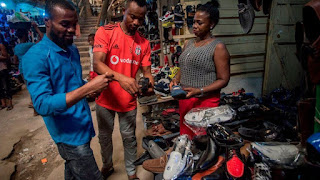
SOURCE: THE NEW YORKER

Thursday, July 4, 2019

Ruga: Nwodo Reacts To Northern Group’s Threat, Asks Igbo To Defend Themselves

President of Ohanaeze Nd'Igbo Nnia Nwodo. Image via Youtube

BY RAPHAEL EDE

ENUGU (PUNCH)
-- The President-General of Ohanaeze Ndigbo, Chief Nnia Nwodo, on Thursday described as irresponsible the 30-day ultimatum, a Coalition of Northern group gave the Federal Government to rescind its decision to suspend the RUGA policy.

Nwodo called on the Igbo to be ready to defend themselves against any threat from any quarter.

Nwodo in a statement said, “My attention has been drawn to a broadcast by Abdul Azeez Suleman, speaking for a coalition of northern groups in which he had the audacity to give the Federal Government an ultimatum of 30 days to rescind its decision on the suspension of its RUGA settlements policy.

“Abdul went further to threaten the expulsion of southerners resident in the North at the expiration of his ultimatum if the Federal Government does not rescind its suspension decision.

“This irresponsible, unlawful and provocative outburst reminds me of the northern youths’ notice to quit the North to southerners two years ago.”

While describing the RUGA policy as an Islamisation and a Fulanisation policy, Nwodo said that Ohanaeze would resist it.

He added, “The threat to evict law-abiding Nigerians from their places of abode in northern Nigeria is treasonable and obviously like the gun-trotting herdsmen will go unnoticed by our federally-controlled law enforcement agencies.

“Let Abdul, the Federal Government and others like them, take notice that Ohanaeze has no objections to all Igbo in the North returning home so long as all northerners in the South-East would leave the South-East and we dismantle the federal structure imposed on us by the military and return to autonomous federating units.

“The nepotism exhibited by this Federal Government, her duplicity of standards in law enforcement, her undisguised Fulanisation policy is repugnant to the rule of law and good governance. We will no longer tolerate any further threats from these northern war mongers.

“After all, who should be the aggrieved under the circumstance? The millipede that has been marched is whimpering, but the person that marched it is complaining that his foot has been soiled.

“The southern Nigerian people that are bearing the yoke of oppression from cattle herders are trying their best to co-exist with their aggressors, yet it is the aggressors that are threatening further mayhem. This cannot be.

“I call on all Igbo to be ready to defend themselves. Enough of these threats!”

Copyright PUNCH.
All rights reserved. This material, and other digital content on this website, may not be reproduced, published, broadcast, rewritten or redistributed in whole or in part without prior express written permission from PUNCH.

Saturday, May 4, 2019

Okorocha Lied On Inauguration Of Joint Transition Committee In Imo – Ihedioha

Imo State Governor-Elect Emeka Ihedioha. Image via Daily Post


BY CHIJIOKE JANNAH

OWERRI (DAILY POST)
-- Imo State Governor-elect, Hon. Emeka Ihedioha, has disagreed with Governor Rochas Okorocha that a 52-man Joint Transition Committee drawn from his side and that of the government has been constituted.

According to a statement by Chibuike Onyeukwu, media aide to the Ihedioha, the press release issued by Governor Okorocha’s Chief Press Secretary, Sam Onwuemedo, that a Joint Committee was inaugurated for the handover was false and misleading.

Onwuemeodo had claimed the inauguration took place at Government House in Owerri. He quoted the Secretary to the State Government, Mark Uchendu, who represented the governor, as urging the joint committee to work harmoniously in the best interest of the state.

Rebutting the statement by Okorocha’s spokesman, Ihedioha said: “We consider as needless, the deliberate misrepresentation of facts, aimed at provoking unnecessary altercation between both committees at a time the smooth transition should be our utmost priority

“We wish to state clearly that what took place at the Government House on May 3, 2019 was only a meeting of the 31 member committee, headed by Mr. Ernest Ebi, drawn from the Committees earlier inaugurated by His Excellency, Rt Hon. Emeka Ihedioha CON, Governor elect, Imo State and the 21 member transition Committee of His Excellency, Governor Rochas Okorochas of Imo State.”

He pointed out that there was no fresh Inauguration of “52 member joint transition Committee” by the Governor or his representative as claimed in the said release.

“The team to the Government House led by Barr. Chris Okewulonu, had been previously inaugurated by the Governor elect, while Governor Okorocha had also inaugurated his team the previous day, all in a bid to ensure a hitch free transition

“It was therefore inappropriate for the said press statement to convey the erroneous impression that there was a fresh Inauguration when the two teams interfaced.

“It is important that correct information on the activities of the two committees is, at all times, fed the public to ensure a seamless and smooth transition by May 29, 2019,” the statement concluded.