Thursday, October 10, 2019

Chimamanda Ngozi Adichie's Advice To Young Women: "Don't Apologize"

Chimamanda Ngozi Adichie. Image: Facebook


Author Chimamanda Ngozi Adichie has an important piece of advice for young women: "Don’t apologize." In the interview below, she explains why that advice is so necessary.


The interview with Adichie is an excerpt from Women: The National Geographic Image Collection, out later this month, which contains 400 glorious photographs, some dating as far back as the 19th century, as well as interviews with famous women, like primatologist Jane Goodall and Women's World Cup champion Alex Morgan. The book also tracks how depictions of women in the pages of National Geographic have changed since the magazine's founding in 1888. Women also features profiles on 17 of the female photographers behind the famed magazine's portraits of women.

The book is part of National Geographic's yearlong focus on women — a move that anticipates the 100th anniversary of the 19th Amendment, which gave white women the right to vote in 1920 — Women will be accompanied by the release of a documentary profiling many of the personalities featured within it.

Women: The National Geographic Image Collection is out on Oct. 15 and is available for pre-order now. Below, read an exclusive preview from the book — an interview with Chimamanda Ngozi Adichie:

In Conversation With Chimamanda Ngozi Adichie

"Unflinching, unswerving, fierce intellectual determination... to define the real truth of our lives": That’s the high bar that playwright Harold Pinter set for writers in his 2005 Nobel acceptance speech. They are also the criteria for awarding the annual PEN Pinter Prize, which in 2018 went to Chimamanda Ngozi Adichie. The Nigerian novelist and essayist — whose books include Purple Hibiscus, Half of a Yellow Sun, Americanah, and Dear Ijeawele — has received honors such as the National Book Critics Circle Award and a MacArthur Foundation “genius grant.” She’s a star to TED audiences; her 2012 TED Talk, "We Should All Be Feminists," was made into a book. In accepting the Pinter prize, Adichie noted that she’s been criticized for her stances: championing women’s rights, decrying Nigeria’s criminalization of homosexuality. A journalist advised Adichie that her fans might prefer that she “shut up and write.” To date, she shows no sign of doing the former, and every intention of continuing the latter.

National Geographic: What do you think is the most important challenge facing women today?

Chimamanda Ngozi Adichie: It’s really difficult to narrow it down to just one. I would say women’s autonomy over their bodies — and by this I mean a broad range of things. Not just reproductive rights, but including the scourge of domestic violence and also the lack of proper legal protection for women globally.

And what do you think is the most import­ant thing that needs to change for women in the next few years?

We need to have more women in positions of decision-making — politically, eco­nomically, in every way. More women’s repre­sentation will result in more diverse decisions, decisions that incorporate women’s experi­ences. I don’t think having women in positions of power means that the world is going to be perfect or that conflict will be eradicated. It just means that the concerns of half of the world’s population will finally be center stage.
"The world is not simple, so if you are familiar with things that are not simple, you’re more likely to deal with the world in a constructive way."

What do you think is your own greatest strength?

I think it’s maybe my ability to deal with complexity. That I am comfortable with gray, I don’t need for things to be white or black. I believe in nuance. I look at the world and know that it’s complex, and that things don’t have to be simple to be understood. And that I am not uncomfortable with things being complex and difficult. I think part of that is because of my socialization as a woman.

Could you say more about that?

Women are socialized to be caregivers, to find ways to solve conflicts. Women are socialized to be many different things — and, in some ways, to pretend to be different things for different people. Women are socialized to protect male egos. Women are socialized to care for family members. Women are socialized to have a certain kind of emotional intelligence. I really don’t think these things are inborn in women; I think that it’s because of the way that women are socialized. In some ways, this is bad for women in that they’re socialized to hold themselves back and not be too ambitious. But I think that there are ways in which it is good, because it teaches women to be able to deal with complexity and not to be mentally simple. The world is not simple, so if you are familiar with things that are not simple, you’re more likely to deal with the world in a constructive way.

When you look back through your life, is there something that you would consider a breakthrough moment?
I think it was when I was nine years old, in the third grade, and I remember this very clearly. My teacher had said that the child with the best results on the test that she gave would be the prefect. So I got the best result — and then she said, “Oh, I forgot to mention, it has to be a boy.” I just thought, “Why?” It would make sense to have said the class prefect has to be the child with the best grades or the child with some sort of useful skill. But the idea that this position of prestige and power in the classroom was reserved for some­body by an accident of being born a partic­ular sex — that was just strange. So my sense of righteous indignation flared up and I said to my teacher, “That makes no sense.”

You actually spoke up and said that?
Oh, yeah.

And what happened?

Well, the boy still was prefect, and I was made the assistant prefect, which was not necessarily the solution I wanted. But for me it was really crystallizing: That was the first time that I spoke up about sexism. It didn’t work, but it was the moment for me that I don’t think I’ll ever forget.

I guess that leads to my next question: What do you think are the greatest hurdles that you’ve had to overcome?

I think maybe the fear of failure; not wanting to try because I was afraid I would fail.

Do you consider yourself a feminist?

Yes, I do very much, because I believe that men and women are equal as human beings, and I believe that sex should not be a reason to hold people back. We live in a world that has consistently held women back because they are women, and I feel very strongly that this needs to change. That’s what feminism means to me.

What living person do you most admire?
My father, because he is the best exam­ple that I have seen of a certain kind of integ­rity and decency. He is gentle and kind and he raised his children — the six of us, three boys and three girls — to believe that we could be or do anything. The confidence with which I occupy my space in the world is partly because I was raised by a man like him.
"Performing likability makes women diminish themselves; it means that you’re often not able to reach your potential because you’re not letting yourself really be yourself."

And is there a historical figure — some­body who is not living — that you might iden­tify with?

There are people that I admire; I don’t know about identifying with them, necessar­ily. I’m also deeply suspicious of stories of people, deeply suspicious of biographies, because I just think that we don’t really know people in the end. But I suppose I could say that I admire Winnie Mandela [anti-apartheid activist and ex-wife of South African president Nelson Mandela] for her resilience, for the way that she managed to hold her own despite a lot of unkindness that she had to deal with. I also admire writers like Rebecca West [born Cicily Fairfield] and Elizabeth Hardwick.

What advice would you give to young women today?

Don’t apologize. Again, back to that idea of socialization: I think women are social­ized to be apologetic just for existing, in many ways. And also, don’t perform likability. All humans like to be liked, because we are human — but girls are socialized to think that they need to be liked, and it makes them pretend to be what they’re not. Performing likability makes women diminish themselves; it means that you’re often not able to reach your potential because you’re not letting yourself really be yourself. I would say to young women, Don’t do it, because it’s not worth it. Young women should just be them­selves. It sounds simplistic, but I think it’s quite difficult, considering all the messages that society gives young women.

Last question: Where are you most at peace?

In my ancestral hometown in eastern Nigeria surrounded by family.


SOURCE: BUSTLE

Wednesday, October 9, 2019

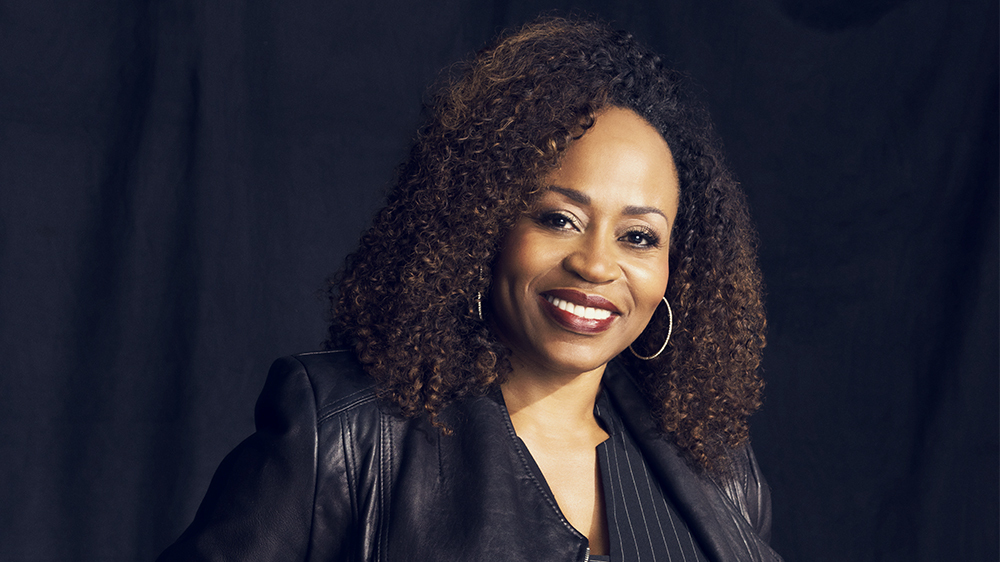
Inside Pearlena Igbokwe’s Journey To Hollywood And Universal TV

Pearlena Igbokwe. Image: Dan Doperalski/Variety


BY CYNTHIA LITTLETON


Pearlena Igbokwe was an English major at Yale, so it’s no surprise that she loves the process of reading and analyzing a literary work, breaking down the text and identifying its major themes and conclusions. In grade school, she was the type of kid who didn’t groan when a book report was assigned.

These instincts have served Igbokwe well in her nearly 30 years as a creative executive in television. But the Showtime and NBC alum, who has headed Universal Television since 2016, didn’t know what work lay ahead in the spring of 1985, as her sophomore year at the Ivy League college was coming to an end. She only knew she needed to hurry up and find a summer job. While scouring the listings and fliers tacked up on the walls of the career services center at Yale, she was immediately intrigued by a notice described as a “summer associate” position at NBC in New York.

Igbokwe, now 54, had felt a special connection to television ever since her family emigrated to New Jersey from Nigeria in 1971, when she was 6. The Igbokwes left behind the terror of living through a civil war and arrived in the land of “I Love Lucy,” “The Love Boat” and Bugs Bunny. Young Pearlena couldn’t get enough TV. The family’s small black-and-white television was her babysitter, her companion and her primary instructor in the language of her adopted home.

“I thought TV was this amazing thing,” she recalls. “It was my best friend.”

During her undergrad years at Yale, Igbokwe spent two summers working for NBC in research, first for the sales department and later for NBC News. As she ran around 30 Rock completing assignments and other chores, she had to pinch herself that she was being paid to kinda, sorta work in television.

“It just opened up everything for me,” Igbokwe says. “That feeling of loving TV and movies for all those years and now being even remotely attached to that world just felt incredible.”

Igbokwe’s path after college took a circuitous route through working in the financial services industry (she had to pay off loans) to business school at Columbia University. After earning her graduate degree, she landed a temporary job at HBO. Within a few months, she had offers for entry-level posts at HBO and Showtime. She opted for Showtime, where she would spend the next 20 years, first in New York and later in Los Angeles when she joined the programming team.

In 2012, when former Showtime chief Robert Greenblatt recruited her to become head of drama development for NBC, she was ready for a new chapter. “I felt like NBC was where I started,” she says. “I knew I would love to be here.”

After four years in drama, working on such series as “The Blacklist” and “This Is Us,” Igbokwe was promoted to president of Universal Television. The studio is riding the Peak TV wave, with some 40 shows in active production for NBC as well as outside buyers, notably Netflix (“Russian Doll,” “Master of None”), HBO (“The Gilded Age”), CBS (“FBI”), Hulu (“Four Weddings and a Funeral”), Amazon (“Forever”) and Freeform (“The Bold Type”). On her watch, Universal TV has upped its volume of output and gained traction on the prestige front. The production arm had two shows in the running for best comedy series at the Emmy Awards last month (“Russian Doll” and NBC’s “The Good Place”).

For most of her career, Igbokwe worked on the buying side of TV, hearing pitches from studio executives and showrunners. The move to being a seller, at a time when Universal TV has been encouraged to shop its wares outside NBC, has put her English major’s love of analyzing stories to good use.

“Pearlena is the kind of collaborator who asks the question that makes all of us step back and look at the piece in a new way,” says Amy Poehler, who has a production pact with Universal TV and was a driving force behind Natasha Lyonne’s “Russian Doll.”

Igbokwe has a natural warmth and a level of optimism that makes a difference. She’s quick to let loose a distinctive throaty laugh that puts others at ease.

“She’s real. In a town where a lot of people have masks on and a lot of pretense, Pearlena is real, down-to-earth good people,” says producer Debra Martin Chase, who has known Igbokwe for years and recently signed a first-look deal with Universal TV.

Poehler pays Igbokwe the ultimate compliment as a leader: “Pearlena’s got a little bit of Leslie Knope in her, that’s for sure,” she says, referring to the earnest city employee she played on the NBC/Universal TV comedy series “Parks and Recreation.”

Igbokwe has reached a point in her career and in her life where she’s reflecting on the arc of her story. For years she didn’t share much with friends and colleagues about her experiences growing up in Lagos during the 1967-70 period of Nigeria’s civil war with Biafra. But of late, she has opened up about how she was shaped by her family’s struggles during those formative years. “Sometimes you need some distance from a story to understand it,” she says. “I saw a lot of things.”

Igbokwe vividly recalls the horror of running into the woods with her mother and younger brother to escape aerial bombing raids above their village. She remembers the sound of helicopters that dropped food and humanitarian aid supplies out of the sky for the villagers. Also seared in her memory is the day when she was about 4 when she became determined to grab a sack of salt for her mother from an aid drop. She positioned herself in the perfect spot and dove on the ground as soon as the drop hit. She didn’t count on getting trampled by dozens of adults doing the same thing.

“They all just piled on me until finally someone was yelling, ‘There’s a kid under there!’” Igbokwe says. “When I got up, I was covered in salt from head to toe. I walked back through my village looking like one of the White Walkers from ‘Game of Thrones.’”

The visceral memories of war and violence and scrambling for food have given Igbokwe perspective on the life she has made for herself as a respected figure in entertainment. As the mother of two teenagers — a 17-year-old daughter and a 14-year-old son — she can only imagine the fear that her mother faced in Nigeria, trying to protect two young kids while also working to secure the promise of a new life in America.

Igbokwe’s father, a teacher, was the first to leave for the U.S. with the help of an American couple that had befriended the family. Pearlena, her mother and her brother followed two years later. It was an emotional roller coaster for a 6-year-old, between the reunion with her father and the culture shock of leaving Africa to settle in Montclair, N.J.

“I remember having the sense that we finally made it,” Igbokwe says. “I remember the feeling that people thought we were lucky. I was going to America.”

Most of Igbokwe’s relatives still live in Nigeria. She often wonders why fate determined that her family would be in a position to leave for a safer environment offering greater opportunities. “I’m the most grateful person in the world,” she says. “I don’t take for granted anything that’s happened in my life. From the world that I came from to work in the entertainment business — none of it was supposed to happen.”

Igbokwe broke ground for the industry in becoming the first black woman to run a major television studio. She earned her way to that shot by naturally demonstrating the mix of business savvy, creativity and empathy that makes for a strong leader in entertainment, in producer Martin Chase’s view.

“It’s so lovely to have a woman in charge who is very giving and very gracious and smart as a whip and a great manager,” says Martin Chase. “There’s no ego with Pearlena. It’s about the work. It’s important to her that everybody around here feels good about what they’re doing.”


SOURCE: VARIETY

Tuesday, October 8, 2019

Class And Experimental Narration Define ‘An Orchestra Of Minorities’

Chigozie Obioma. Image: Facebook


When is empathy evil? Appreciating others’ experiences carves out the space for solidarity in which people with privilege take action. But imagining others’ experiences implies the possibility of understanding their trauma. “Stepping into the shoes of others” requires one to assume they know what trauma is happening and how others would react.

People’s pain is often situated across boundaries of race and class. To empathize across those lines, one must squint to make out a fuzzy image of what is happening to others. They must further distort their own experience, alter their assumption of how the victims should react. On top of this, advocacy through publicizing others’ trauma can erase and paper over the reality of others’ experiences.

But then, what’s the alternative? Not empathizing whatsoever means victims’ stories aren’t heard. Could literature help create a more innocuous empathy?

Obioma’s “An Orchestra of Minorities” gracefully sheds light on how class and race affect the effability of another’s pain. At heart, it’s a charming love story. Chinonso is a Nigerian peasant farmer who meets Ndali, an upper-class woman. Obioma shows his mastery of class-based symbolism right off the bat: The two meet as Chinonso saves the upper-class woman from an attempted suicide.

Despite their differences in status, the two fall in love after a chance meeting following the incident. Naturally, Ndali’s upper-class family disapproves of their relationship, and the novel focuses on Chinonso’s attempts to win the affection of her family.

Here, the author begins to hint towards his mastery of remixing classic English stories (“Romeo and Juliet,” in this case) with tales of contemporary race and class. Chinonso’s journey to redefine his ascribed status is defined by humiliation at every turn. In a particularly difficult chapter, he’s made to valet a party that Ndali’s brother invited him to.

Eventually, though, Chinonso makes a journey to Cyprus to obtain an education and better match Ndali’s class (she plans to become a pharmacist). If the story in Nigeria highlights his class identity, his time in Cyprus showcases his racial identity. Obioma shows how Africans must continuously be aware of their ethnicity, with people confusing him with Black celebrities or asking to touch his hair.

The story is explained through the narration of Chinonso’s “guardian spirit” or “chi.” This spirit must recount and justify his actions in a “trial” to Nigerian Igbo deities. Through his narrator's omniscience and bias toward the protagonist, Obioma subtly parodies and pokes fun at usual Western storytelling. The trial is also a brilliant symbol for society’s judgment of Chinonso while showing the shortcomings of empathy. This is reflected in the plot, as even Chinonso’s love, Ndali, doesn’t truly understand his struggles.

Obioma offers a page spread of complex charts, graphs and lists at the start of the book to help explain the Igbo Cosmology. Heaven is broken down into domains, and the composition of man is conveniently summed up in a venn diagram. Both the universe and the process of reincarnation share their chart: The life cycle circulates the Earth and Spirit worlds.

Although initially intimidating, the spread’s significance becomes apparent over the course of the novel. This is less to do with appeasing Western Promethean impulses to box and map the Igbo Cosmology conveniently and more to help the reader navigate the book and its contents. The Cosmology is overwhelming at first like Chinosmo is overwhelmed in Cyprus.

But, as with any novel, this empathy crafted by Obioma has shortcomings. A privileged reader can simply close the book. Chinosmo is trapped in his situation.

Throughout the novel, Obioma masterfully balances the reader’s empathy and their realization of the fruitlessness of the relating. The story’s similarity to “The Odyssey” and “Romeo and Juliet” allows the narrative to be tangible and understood for Western audiences. Obioma’s brilliant prose and descriptions reinforce this.

Still, the deities’ trial reminds the Western reader of their inevitable shortcomings of real understanding. The meta-commentary of the trial does a great job of making readers acutely aware that Obioma sees them as an agent in this story.

Moreover, the fragility of pure empathy is reflected in the story: Throughout the story, Chinonso finds it difficult to communicate his situation to Ndali fully. This is most apparent through their correspondences while Obioma is in Cyprus and at the story’s conclusion. This empathy compels readers, giving them a glimpse of a (well done) perspective they haven’t experienced.

As a whole, Obioma’s book showcases the complex interactions involved in empathy. Communicating one’s genuine experience is difficult even to omniscient deities or the ones people love the most. It must be even more complicated between people one has never met.

The book’s prose, groundbreaking commentary and experimental narration style more than earn its place in the 2019 Booker Prize Shortlist. Whether or not it takes the prize, “An Orchestra of Minorities” is a gripping read. The book leaves a lasting effect on the reader’s perception of how race and class affect every aspect of one’s lives — even something as pure as love.


SOURCE: MICHIGAN DAILY

52 Years Later, Why Restitution For The Asaba Massacre Cannot Be Monetary

Combo of Murtala Mohammed and Ibrahim Taiwo. Image: Ilorin


There is an Igbo saying about when you wake up being your morning. It simply means that it is never too late to start. This, could be a good thing, as it engenders a resilient attitude that is not tapered by time. However, sometimes when someone wakes up late, the reasons may be more cynical, as in this story I’m about to tell.

The town of Evwreni is located 150km away from the capital of Delta State, and unlike Asaba which is consistently derided as a non-Delta town (the people of Asaba are of the Igbo ethnic group), there is no doubt that Evwreni is an oil producing Niger Delta town. In August 1999, the Evwreni Youths Association wrote a letter to the Shell Petroleum Development Company giving them an ultimatum to build a hospital, community centre, a borehole for the town, and tar the two roads in town – the Warri-Patani Road, and Palace Road. At the time, there were two major landmarks in Evwerni, the Girls Model Secondary School, which sat along the Warri-Patani Road, and the Ovie’s Palace, which was on Palace Road. In addition to these four demands, the EYA asked that Shell build a fence around the Ovie’s Palace, and install a telephone line for him. The Ovie at the time was Ovie Owin Kumani.

In response, Shell offered to pay homage and royalties to the Ovie in cash, and also offered some jobs and scholarships to the EYA. This last bit of information was kept from the majority of EYA members.

Eventually, the EYA found out, and went on what was initially a peaceful protest to the Ovie’s Palace. Unfortunately, armed palace guards, paid for by the Delta State government, shot at the protesters and killed one of them. Nine others were alleged to have sustained bullet wounds.

Following this incident, Evwreni elders called for the dethronement of Ovie Kumani, and eventually the situation boiled over on 20 January 2000 when the youths stormed the palace, and murdered Kumani, and another elder, Chief James Fashe. This story, illustrates the danger of monetary compensation in the system such as we have in Nigeria where systems of accountability are weak, and where because of a culture of impunity, the incentive to just take cash and make for the hills is strong.

A few days ago, I read an article about the Asaba Development Union, which claimed to be speaking for the people of Asaba with respect to engagement with the government of Nigeria. The group is demanding an apology and compensation. This coincides with the 52nd anniversary of the 7 October, 1967 massacre in which at least 800 men and boys from Asaba were killed by the Nigerian Army on suspicion of being sympathetic to the secessionist cause during the Biafran War.

The reason this deserves some commentary is because two years ago during the organisation of the half century of the event, various groups of Asaba indigenes were approached for their cooperation and contribution to the event, and they showed a distinct disinterest in the matter. In fact, it was during the six-week period of organisation before the event that I became involved and realised that there was no single group that had the capacity to organise a befitting remembrance.

But the show had to go on, and the Asaba Advisory Council set up a task force which ensured that the event went on despite the indifference of many Asaba groups, opposition from governmental figures, financial challenges and the time frame required to organise a successful event. At this point I will go on the record to say that were it not for the extraordinary support shown by Prof Wole Soyinka, Bishop Matthew Kukah of the Sokoto Catholic Diocese, and Archbishop Emmanuel Chukwuma of the Enugu Anglican Diocese, the event may not have even gone ahead. So great was the opposition, and so real were the threats.

At the event itself all the speakers, including Soyinka, Kukah, the Governor of Delta State, Ifeanyi Okowa, and Alban Ofili-Okonkwo, were very clear that given the time that has passed, and the fact that the families of the victims of that brutal event half a century ago have for the most part done quite well, that monetary compensation was not among the lists of requests by the people of Asaba. What we want is simply an acknowledgement that the town was decimated in 1967 just because of their Igbo ethnicity and despite the “one Nigeria” stance of the indigenes at the time, and an apology for that action.
The official communique after the event made it clear that if there is to be any talk of compensation, then it should be in form of a world class maternity hospital to be located in Asaba and open to all Nigerians.

After the event, the committee met with the traditional rulership of Asaba and a foundation was incorporated to pursue these objectives. The Asagba of Asaba, by royal decree, said that the Foundation is the officially empowered body to have discussions regarding government interactions over the massacre.

Then we now have this group coming up to claim monetary compensation… The objective of this piece is to sound an alarm, because this being Nigeria, this is a movie script we have seen before, and sadly the writers only ever seem to change the dates, locations, and names of the actors, but never the script itself.

As a victim who lost his maternal grandfather and many uncles in that sad event, I maintain that the stance of the task force that organised the half century event is the best one. You do not throw money at a thing like this, it will only lead to a fight. Rather, build the hospital, the foundation is asking.


SOURCE: THE GUARDIAN NIGERIA

Saturday, October 5, 2019

INTERVIEW: Ngozi Chuma-Udeh: Feminists Are Women Who Wash Clothes

Ngozi Chuma-Udeh


BY HENRY AKUBUIRO


Professor Ngozi Chuma-Udeh is the author of thirteen creative works, some of which include Teachers on Strike, Dreams of Childhood, Echoes of New Dawn, The Presidential Handshake, The Thing between Your Legs and Chants of Despair. Recently, she presented her latest work of fiction, Forlon Fate, to the public, witnessed by HENRY AKUBUIRO, who, thereafter, interviewed her on her writings, feminism and scholarship in Awka, Anambra State. Chuma-Udeh, a professor of English at Chukwuemeka Odumegwu Ojukwu University, Igbariam, is the proponent of the new feminism school called Beside Feminism. She told The Sun Literary Review that her own brand of feminism emphasises on developing the girl child alongside the boy child, as against the dominant view that behind every successful man is a woman.

You started your writing career as a schoolgirl, who did you set out?

In the years of growing up, you had a lot of dreams; you saw the world through the eyes of a kid. You wanted to be a great writer like Chinua Achebe, Cyprian Ekwensi and other literary greats, and you read novels like Dennis Robbins, and you wanted to write and be like them. That was the inspiration. You also read Mills and Boons series, and wished to write such romantic novels.

Which period are you talking about?

When I was about 12, 13 years… in the 1980s. (laughs) So you had this concept that life was all about “they lived happily ever after”. After reading Dennis Robbins, you wanted to configure life through your writing. Those were the formative years. Then, as you grew up, you were sold into the harsh realities of life. You now grew up from that romantic foundation and move into more political issues. Now, you feel the pangs of life. You begin to see the wrongs in your contemporary society, and you want to participate in addressing them. It will now change your focus from that child growing up who thought that life was a bed of roses, and now begin to see certain things going wrong in the society, which you could correct through arts. So you now find yourself writing about life, hardship, pains. It is no longer that happy, jolly life –in fact, you shift as reality sets in into a contemporary writer. You now begin to feel the burden of the society. That also shapes your writing.

From those formative years of innocence, how did your first literary work emerge?
I was in secondary school then, and teachers were on strike. I witnessed, firsthand, the hardship that followed (during the time of Jim Nwobodo as the Anambra State governor). But I am not saying Teachers on Strike, my first book, was about Nwobodo. It is a work of fiction. My mother was at the forefront of events –she was among the primary and secondary school teachers at loggerheads with the government. Things were hard. I had to come back from school, for the hardship couldn’t sustain me. Again, there was a debilitating teachers’ strike when I was a secondary school teacher. The two strikes teamed up to form my plot in Teachers’ on Strike. I believe it x-rays the ills in the society.

From that debut fiction to the latest, how has your orientation changed as a writer?

I don’t think my orientation has changed. I am still a contemporary writer. Sometimes, I veer into feminism –the concern of women and children, not really feminism, because I have a brand of feminism I call Beside Feminism.

What do you mean by that?

In our contemporary society, we say behind a very successful man there is a woman, but I don’t think it is right to place your wife or woman behind you. How many men know what goes on behind them? If you want to give something to somebody behind you, first, you have to twist your hand, after which you have to take it backwards. But, if your wife is beside you, she will be looking at you and you will be looking at her, and, side by side, you match on in progressivism. So Beside Feminism is all about: the girl children should be developed along their male counterparts.

How is it different from Womanism?

Well, Womanism takes in a lot of things, like pride for women. Womanism may say: let the woman be superior to the man to some extent; it is a kind of struggle for supremacy. But Beside Feminism is not a struggle for supremacy; it is not a fight for power; it is not a struggle. It is just about you bringing up the girl child alongside her male counterpart so that, together, they will match on side by side in progressivism. If you bring both sexes up, give them equal opportunities to develop; it will not only create a progressive outlook, it will also increase the life expectancy of our men. So Beside Feminism targets increasing the life expectancy of men by reducing the stress factors in their lives.

So what’s your take on Chimamanda’s brand of feminism?

As I told you before, there are many brands, and I can’t say her own is wrong because I don’t agree with it; and she cannot equally say mine is wrong because she may not agree with me. Just as there are so many people, so are there so many ideas. So it depends on the one you adopt. Hers may work in some areas; mine may also work in some areas. So it depends on who is adopting it.

Except for some feeble noises in some literary circles, feminism appears to be going downhill, unlike in the days of Buchi Emecheta. Do you agree?

There are a lot of misconceptions when it comes to feminism. People tend to twist, bend and squeeze feminism into their own corner to suit their purposes thereby making a bogus claim, like somebody who is lazy and can’t sweep his house; somebody who cannot cook for his family; somebody who cannot wash her clothes will tell you she is a feminist, and feminists don’t wash clothes. Feminists are the women who even wash clothes and clean the floors. That’s the idea of feminism: that you should allow the woman; give her the chance to develop, let her contribute to the development of not just her nuclear family but the society at large. So feminism means work to maintain a good family; live for your family; live for your husband; let your ideas match that of your husband; move beside your husband and be one in decision and in unison. Any other thing is not feminism.

You have just presented your latest work of fiction, Forlorn Fate. What inspired this book?

The Niger Delta issue inspired this book. I have looked at the Niger Delta as a sordid affair. The oil in Niger Delta has done more harm than good to the average Niger Deltan character. Look at this way: while we are there pursuing petty militant, who would have taught that it was the white man who engineered the militancy? That’s what Forlorn Fate says. This novel lays the blame not on the militants but on the Whiteman.

Does the novel has element of verisimilitude, or is a product of imagination?
It should have. Every work of art that lacks verisimilitude is useless. So I think, at certain level, the book is true to life.

The work has a broader canvas, I guess?

The work looks at man’s injustice to man. It looks at the horrors of the transatlantic slave trade. It also looks at the distablisation of people –that ancestral distablisation of carrying off people –the horrors of transatlantic slave trade; the evils of slavery and, now, the tracing of roots of these people, because Colonel Nina Sortorne, a major character in the book, came to the Niger Delta as an American soldier on a rescue mission and then discovered she came home to her roots. She now discovered there was a myth around her family, her great-grand father being carried away to slavery, and her coming back; because, if not for that timely intervention, the community road would have been destroyed by the Whiteman. The Whiteman wanted them to vacate, because he wanted to build an empire at all cost, so he wanted to drive them away. He wanted to send the entire community into extinction. He tried chemicals on them, and they did not move. If you read the first paragraph, you will see where I said that no child of nature, no matter how minute, leaves his home easily. That was just the message.

You an Igbo woman raised in the eastern part of Nigeria. Locating the setting your novel in Niger Delta, a different region, how difficult or easy was it for you to achieve a symmetry?

I grew up in the creeks of the River Niger, and I knew when we were growing up, my grandmother would tell you not to cry too much, because Ijaw people were walking about. There was this belief that Ijaw people were headhunters (laughs).

In the last few years, you have been engaged in departmental and faculty administration in the university where you teach. How were you able to combine writing, motherhood, scholarship and varsity administration?

When you are given these positions, if you don’t take time, they will send you into academic obituary: you cannot write, because you are a HOD or a dean; you find yourself grappling between your academic work and the post you are holding. I am a professor now, so you cannot but write. Being a professor is not as difficult as holding an office. The up-and-coming ones should hold the offices now.

ANA convention holds this month, from October 31st to November 3rd, 2019. I learn you are a running mate to one of the presidential aspirants. This is the second time you are gunning for that position. Why are you coming back?
I believe I have something to offer to ANA. I have a great contribution to make to ANA. It doesn’t matter how many times I will be contesting; the most important thing is that there is something I want to give to ANA, and that I really want to achieve.

What makes Barrister Ahmed Maiwada a better alternative?

I believe in him. I believe in his art as a leader. He is a wonderful lawyer, a benign soul, and I have this belief he will move ANA to a greater height. Some people are talking about zoning. In ANA, we are not talking about zoning; we talk about the individual. If you, because you came from the zone where the presidency has been zoned, decide to elect a look warm person who will not work, it will be tragic. I am not saying any of the contenders is look warm (laughs). I am only trying to say we should give everybody equal opportunity to contest; let ANA decide who among them will handle the affairs better. This is not a do-or-die affair; we all have our lives to spend in ANA as writers. If you don’t win this year, next year, you contest again. That’s the way I see it.

Friday, October 4, 2019

Interview With Okechukwu Nzelu

Okechukwu Nzelu. Image: Twitter


Nnenna Maloney is a teenage girl juggling friendships, school and sex. But as she approaches womanhood she also wants to connect with her Igbo-Nigerian culture.

Her close relationship with her mother, Joanie, becomes strained, as Nnenna demands answers about the father she has never known. A heart-warming cast of characters join Nnenna and Joanie as they grapple with questions of identity and belonging against the backdrop of everyday Manchester.

The story of a young woman coming of age is a familiar one, but Nnenna’s perspective seemed very fresh. How do you feel about the need for new, diverse characters like Nnenna, and what motivated you to tell her story?

I remember the first time I read Purple Hibiscus by Chimamanda Ngozi Adichie. I would have been Nnenna’s age, 16, when I saw the novel in a Black History Month display at Manchester Central Library. And this will sound as corny as corn on the cob, but the book just… called out to me. I took it out and read it in two days (incredibly fast for me) and I couldn’t believe how great it felt to read a book with names I recognised, with language I was familiar with. It really did feel like home, and I felt so profoundly grateful for it when I finished. Shouldn’t more people feel like that, and more often?

As to why and how I wrote the story: funnily enough, a few people (with very good intentions) have asked me, what research I did before writing the story of a half-Nigerian teenager and her white single mum. It’s an interesting question, but things happened more organically than that. I could probably search my internet history and find the titles of articles and interviews I’ve read over the course of my life, but I never did ‘research’: I think if a man has to go to a library and fill up a notebook just so he can write contemporary female characters convincingly, there’s a problem.

Nnenna and her mother may be new characters, but they’re not new people: people like them are all around us, and if you listen to them, if you have a range of people in your life, they will share their experiences with you, as I have done with people in my life at various stages. Generally, people love to talk about themselves! It’s a very human trait. I think that’s why the novel is full of people from various different backgrounds and of various different experiences: I didn’t base any of my characters on specific people, but I grew up in Manchester, a very diverse city, so I really wanted to write the kind of novel that reflects my experiences.

Then, as I drafted and redrafted again and again throughout my twenties, I was developing my thinking on a lot of different issues and reflecting on my own experiences. I found myself really interested in Nnenna as one example of people who just about fit in certain ways, but who don’t necessarily feel like they ‘fit’: Nnenna goes to school with many middle-class kids who typically come from comfortable homes with two loving parents – but Nnenna’s home life doesn’t reflect that, and it’s hard for her to carve out a space for herself when she knows almost nothing about her father. How might that affect how she sees herself? How might that affect her relationship with her mother? What stigmas might she face? How might that affect her friendships and other aspects of her daily life? I really wanted to explore these questions with some light and humour.

Nnenna and her peers are sixteen for most of the novel. How did you find writing from the perspective of a teenager? Were you influenced by your work as a high school teacher? Did you draw from your own experience of adolescence?
Working with young people is hugely fun, and writing teenage voices is hugely fun. There’s that famous Louis de Bernières quotation about how ‘childhood is the only time in our lives when insanity is not only permitted to us, but expected’. I think children and young people break certain unwritten rules of behaviour because they’re figuring things out, or because they’re having fun or because they’re rebelling. Being a teacher definitely reminds me of this.

Funnily enough, though, I wasn’t really like that as a kid, myself: I’ve always been very independent-minded but for a few different reasons, I never really rebelled in the ways that some of my friends did. So I really enjoyed writing Nnenna, a conscientious, studious and thoughtful but imperfect young woman, put into situations where she’s faced with the choice to rebel, or to sit quietly.

So, writing the voices of teenagers who are figuring out love, school, sex, race and class, making mistakes, having fun, getting hurt, learning things – it was an absolute gift because as well as doing some serious thinking, I could really have a laugh. I drew on my own experiences, or just made things up that were consistent with reality as I see it. It wasn’t always easy, but I laughed a lot while writing this, and not just while writing the conversations between the teenagers. At one point in the novel, Nnenna compares the way she talks to her boyfriend with the level of conversation between Austen’s heroines and their love interests; what she doesn’t fully realise is that some of the funniest, tenderest and most enriching conversations she has are those she already has with her mother. I think that sometimes, very different types of love have certain things in common.

And the messaging chats! Loved ‘em. I grew up around the time Nnenna does, when instant messaging was taking off in quite a big way. I based the online conversations in the book on my own experiences with the (now defunct) MSN Messenger of the early noughties, but one of the best things about being in a classroom is that particular brand of cheeky wit that teenagers have, and that definitely found its way into the book.

The majority of the novel is set in Manchester – with another timeline set in Cambridge. I personally loved this, as reading popular fiction set in the North can still feel like a novelty. As a Mancunian, was it important to you that the book was set there?

I’m so glad you enjoyed this! Manchester and Cambridge are the two cities I know best, as that’s where I’ve lived and worked and studied, so that was part of my decision. But they’re very different places: growing up in Manchester, I’d had friends of every world religion by the time I was 10. At my Cambridge college, I was the Ethnic Minorities Rep on the student council and I remember being surprised at just how many people had never heard of Diwali, the Hindu festival of light. We’d learned about it in primary school! I had very different experiences in the two cities and I wanted to reflect that in my writing.

I was also very conscious of many mainstream British novels being set in London. Some of those novels will always be my favourite books (White Teeth by Zadie Smith among them) but I wanted to write something that reflected my experience and portrayed the North of England in a nuanced, contemporary way. I did wonder if this would make it less appealing, but most British people who read London novels don’t necessarily know London that well, but you can still enjoy them because there’s something engaging in reading about someone’s experiences which are different from your own, so long as those experiences are convincing and well-written. So I tried to reflect the variety of different parts of Manchester and give some space to one of my favourite bits, Albert Square, which is like stepping into the Victorian era.

One of of the book’s central characters is a gay man. His storyline is at times very harassing, but he’s also a character who offers a lot of comic relief. Indeed, many of the characters in the book that discover or explore their sexuality do so in a very positive and hopeful way. Were you conscious of the way you wanted to depict these characters and their journeys?
I really was. I think a lot of LGBTQ+ literature offers tragedy or despair or trauma, and I don’t want to be critical of that because the sad fact is that those things reflect modern life for many queer people, especially queer people of colour. The statistics on mental health for LGBTQ+ people, even well into the 21stcentury, are very troubling. But I’m also aware that it’s a very human thing (and a particularly Mancunian thing, I think) to find light and even humour in some of the bleakest situations, so I wanted to do that, and have my characters do that too, where they could.

And then besides that, sex (heterosexual or otherwise) is just an absolute goldmine for comedy writing. I think there’s real intimacy and gravitas in the characters’ experience of sexuality, but sometimes you just have to laugh (I hope). Especially for the younger characters, human intimacy is very much uncharted territory, and so many of them are concerned with setting or shifting their boundaries, and with finding (or losing) themselves while experiencing intimacy with another person.

When it comes to Jonathan specifically, I wanted to uplift his voice. LGBTQ+ people of colour are being seen more often in mainstream media, but their stories are often still truncated or over-simplified and their voices are often ignored within the narrative, in favour of exploring the psyches of their white counterparts. But I wondered what would happen if, for part of the book, we only heard the voice of an LGBTQ+ person of colour? What if we had to listen to him, and only him? That’s partly why most of Jonathan’s scenes are nervous monologues with someone on the phone, or with a lover: I wanted the reader to get a sense of his profound loneliness (even when he’s with other people) and of how lost he feels. Ultimately, he has to decide whether (and how) to change his life, but the catalyst for this might come as a surprise.

Religion is a thread that runs throughout the novel. Nnenna uses bible verses as a means of writing in her diary, and we see many characters seriously struggling with their faith. You certainly don’t shy away from the problems within the church, but the issues are dealt with very deftly. Could you talk a little bit about why religion was such an important aspect of the story?

Thank you! I really enjoyed writing this nuance. When I was Nnenna’s age I was quite religious, and my Christian faith was a big part of how I saw the world. Although I no longer believe in God, the language and imagery of Christianity still resonate with me strongly. In particular, I’m very interested in ideas of the holy and the profane – and the ideas of redemption and forgiveness, and the idea that people and ideas that are easy to dismiss or condemn might be something completely different from what you might have thought.

Writing the church scenes was very important for me. I am critical of the church in some ways, but I also recognise that it provides something deeply important for some people. I think it’s important to recognise that people and institutions can be very problematic, or even destructive, while also being deeply benevolent in some ways. When writing about religion, in a lot of ways, I’m writing about humanity – the good, and the bad – so in that sense it’s quite representative of what I was trying to do in the novel as a whole.

The Private Joys of Nnenna Maloney will be published by Dialogue Books on 3 October 2019.


SOURCE: NEW WRITING NORTH

Teenage Traffickers

Image via Sun News Online


BY CHIOMA IGBOKWE


It was yet another twist to the recurring incidents of baby factories when seven pregnant young women were rescued by the police while wandering about in the early hours of October 2, begging for money to transport themselves out of Lagos State.

This latest batch of victims claimed they were tricked from various locations to come into Lagos with a promise of a better life. However, upon arrival, they were locked up for weeks and months by suspected child traffickers. They, however, resolved to break out of their bondage when they overheard a telephone conversation regarding negotiations for their unborn babies.

The women identified themselves as Joy Jonathan Amarachi Samuel, Blessing Iwunna, Confidence Uwaegbu, Chinma Destiny, Chidinma Nnaji and Obi Esther.

Lured with sweet promises

Although their story is riddled with contradictions (for example, they all denied foreknowledge of the fact that their unborn babies will be sold after birth and they couldn’t also identify the photograph of the woman who supposedly lured them to Lagos), nonetheless, their accounts, similar in plot, are credible. Their common denomination was their vulnerability at the time they met Madame Trafficker, who exploited their insecurity to dangle irresistible offers to lure them to Lagos. Once the trap was sprung and they were in, firmly in the Safe House, she showed her true colour.

In flawless English, the youngest of the victims, Joy Jonathan, calmly explained her decision to run away from her village was an attempt to save her family the shame of raising a bastard when she became pregnant after she was gang-raped.

The 13 years old from Ngor Okpala, Imo State, was a Junior Secondary School student.

“As a young girl, I normally get advances from men in the village especially the boys in our area. I always refuse them because I know that I am a small girl and I don’t want anyone to destroy my life. I wanted to be a doctor.

However, her world turned upside down seven months ago.

Her poignant recollection: “My mother sent me to buy groundnut oil around 9 pm. I was on my way back when I ran into four boys, they grabbed me and dragged me into the bush. They took a turn to rape me. I tried to scream but they used my blouse to tie my mouth.

“When I got home, I told my mother and she took me to the hospital the next day. I was given some drugs. My mother reported the matter to the village head, but the boys ran away when they heard that I had reported them.

Three months later, her mother noticed signs of pregnancy.

“I was so sad and wanted to kill myself, but my mother encouraged me to keep the pregnancy. She said she will do her best to support me until I give birth. I had to drop out of school and join my mother to sell tomatoes at the market.”

It was in the market that she met a woman who introduced herself as Madam Happiness who offered to help her.

“She told me that she will take me to Lagos to serve a family that will pay me N30, 000 a month and also take care of my baby. She told me that they live in a big mansion and I will have my room.”

The unhealthy situation in the village made her gullible.

“The village people were already making a mockery of my family because of my situation. They don’t even believe that I was raped. I don’t know who amongst the boys that impregnated me, so my child will be seen as a bastard. I planned to go to Lagos, become rich and come back and change the destiny of my family.”

Desperation to escape the shame in the village made her amenable to the suggestion to vanish without informing her family or friends.

“At my age, I know that my mother will not allow me to travel to Lagos; besides, that woman warned me to keep it a secret. Without the knowledge of my family, I carried my bag and followed the woman to Lagos.”

No sooner did she arrive in Lagos than it dawned on her that she had been deceived.

“We got to Lagos at night and were taken to a very big compound. It was when I got there that I saw about 20 pregnant women. Amongst them were some of my village girls that are also pregnant.”

Still, Madam Happiness assured her that she was also helping them to get work.

A few days later, the truth was revealed.

“We were all kept there and locked up. Our phones were taken away, if you have any problem, you will talk to one woman that we all call Mummy. If you complain, she will shout at you and threaten to kill you.”

She spent not less than five weeks in the building before their ‘jailbreak’ of October 2.

Amarachi Samuel, a 17-year-old, also fell to the wiles of Madam Happiness who sold her a dummy about sending her abroad after birth.

The teenager from Isialangwa, Abia State, was married and was living with her husband in Aba.

Her circumstance too was what rendered her vulnerable.

Her story: “While I was in the village, I started dating my present husband when I was 14 years old. Unfortunately, I became pregnant and my father forced me to marry him. He paid part of the money and promised to complete it when he gets a job. I dropped out of school and stayed in the village until my baby was born.

I moved to Aba to live with him. He is an apprentice and because of that marriage, his boss drove him away, because he said that he would start stealing from him. Life became difficult and I started learning how to make hair. Two years later, I became pregnant again. I wanted to abort the baby but the doctor said that I was already five months.”

She was out on an errand for her mistress one day when she met Madam Happiness.

“She asked why a young girl like me that should be in school is pregnant. I told her my story and she promised to help me. She asked me not to tell my husband or my family because they will be envious and try to discourage me.”

She was in Lagos before she informed her husband of her odyssey. “I called my husband and told him that I am in Lagos. I did not want him to worry since I was already seven months pregnant. I also needed him to concentrate and take care of our son.”

The reality of the camp contradicts her hopes and expectation.

She recalled: “I was surprised to see so many pregnant women in that house and all of them said that they were invited the same way that I was invited.

“We were always locked in and fed once a day. If you are so hungry, there is a bag of Gari and water. She took away our phones and started threatening us. If you try to shout, the other women will tell you to keep quiet.

Blessing Iwunna, who came to Lagos with her son, claimed she informed her husband before embarking on the journey. The young girl from Mbaise, Imo State, got married at the age of 14 when she was put in the family way.

She dropped out of school and started selling fruits in the village market. Like a shark smelling blood in the ocean hundreds of miles away, Madam Happiness found her.

“She bought the entire basket and I was so happy to go home early because I was already six months pregnant,” she recalled. “She promised to change my life if I follow her to Lagos. I told her that I have a two-year-old son and she asked me to bring him along. I told my husband and he did not refuse because I am his second wife and he is very poor.”

In Lagos, she realized she had been duped when they walked into a camp full of pregnant women.

The circumstance of escape

According to the rescued women, the escape plan was hatched by Chinma Destiny, the oldest among the camp’s inmates. Chinma said it became imperative for them to run away for fear that they might be killed after the birth of their baby.

The 27-year-old Rivers State indigene was a hairdresser and also learning how to decorate event centres.

She began her narration with the misfortune that befell and made her vulnerable. “I started dating one of my customers who normally come to our shop to do pedicure, As soon as I got pregnant, he disappeared. I lost my job and could barely feed myself.”

Again, the “omniscient” Madam Happiness came into her life.

“I told her my problem and she asked me to follow her to Lagos. She promised to get me a job in a big mansion. It was when we got to Lagos that I realized what it was all about. A compound filled with more than 20 pregnant women. I have heard so much about their activities and I was wondering why Madam Happiness did not discuss that with me before bringing me to Lagos. I confronted her and she denied it.”

Her passivity, however, changed the day she overheard her negotiating with someone over the phone.

“She said, “most of the women here are pregnant with baby boys.” She told the woman that each will go for N500, 000 and that about 10 of us will be due in the next one month. I am eight months pregnant and I knew automatically that I am one of those she was referring to.”

She informed the others and they hatched a plan.

“As soon as she drove into the compound, while the driver was about to close the gate, we opened the gate and ran away. They tried to grab some of us, but we ran away and walked for about 30 minutes before we boarded a bus to Cele.”

However on alighting at Cele, a bus stop along the Oshodi-Apapa expressway, they explained their predicament to an old man at the taxi park, soliciting for help to travel back to their respective states.

“He allowed us to sit down and beg for money. We planned to raise enough money to pay for our transport fare back to the East.”

But the people at the park called the police.

Only one of the rescued seven, Esther, admitted where she was being taken. She affirmed the reason she agreed to come to Lagos was to get rid of her unwanted baby.

“I am an auxiliary nurse in Port Harcourt. By the time I realized that I was pregnant, I was already four months and it’s dangerous to abort,” she narrated.

“I met Madam Happiness and told her my situation; she was the one who asked me to join her to Lagos that she will hand me over to a family that has no child. She said they will take care of me and give me a job.”

Treatment inside the camp

Life inside the camp however dispelled any delusions they had before arriving in Lagos. According to Chinma, throughout the two weeks she spent in the house, no doctor or midwife came to see or give them any form of medication. “We were only fed once a day. She (Madam) said it was not necessary to take medication because we are all healthy. She also said that if we eat too much, it will be very hard to have a normal birth.”

By the time they succeeded in breaking out of their incarceration, they had only thoughts of going back to their home and to resume their previous lives before the disruption.

“Please, I want to go home. I know that I am too small to have a child but I cannot sell my baby,” Joy pleaded. When asked of her native name, Joy said, “I have disgraced my family enough, if I tell you their name the shame will double.”

Blessing too spoke of her intention to go back home: “I want to go home and manage my husband. Life was better for us in the village.”.

Chinma said: “I am aware that babies can be sold but I do not want to sell my own. I want to work and provide for my child because I know that he will be great. Please, we want to go home,” she pleaded.

Even Esther, who went into the gulag on her won volition, had no regret leaving the place abruptly.

“I decided to run because Madam collected our phones and was not feeding us well. I have spent three weeks in that camp and she has not connected me to any wealthy couple. I was scared because I do not know what she intends to do with me after the birth of my baby. I know that I need help but I don’t want to die or be sold,” she stated.

Police angle

According to the Lagos State Police Command spokesman DSP Bala Elkana: “At about 1 am on October 2, Isolo Police Station received an alert that seven pregnant women were seen stranded at Cele Bus Stop along Oshodi-Apapa expressway. A team of policemen led by the Divisional Police Officer, CSP Folorunsho Gabriel went to the spot and rescued them.”

Saturday Sun reliably learnt that the seven women were amongst those who escaped when police recently raided their camps at Ikotun (No 14 Adisa Street, Ayanwale area and No 32 Owosho street, Governor Road Ikotun) and Abaranje area (No 29 Olugbeyohun street, Olakunle bus stop and No 4/6Anomo street). They allegedly ran away from their location when they learnt of the news of the raid of other locations.

Two suspects, Happiness Ukwuoma from Mbano in Imo State and Sherifat Ipeya from Lagos were arrested in connection with the case.

The suspects told the police that their responsibility was just to take care of the girls and help to transport most of them from their locations to their camps in Lagos. They were locally trained as midwives and under the payroll of one Madam Oluchi who comes around to visit them once in a week.

Initially, they were operating in Rivers and Imo states but they relocated to Lagos last year because security operatives were always raiding their camps.


Meanwhile the Commissioner of Police, Zubairu Muazu has deployed detectives from the State Criminal Investigative Department, Panti to fish out the principal suspect Madam Oluchi from Mbano.

This Is What Imo Gov Ihedioha Told South African Returnees Who Fled Xenophobia

Gov Ihedioha commissions a project in the state. Image via Pulse


BY JUDE EGBAS

Imo State Governor, Emeka Ihedioha, says his state will reintegrate and resettle indigents of the state who recently fled xenophobic attacks in South Africa.

The governor has set up an inter-ministerial committee to map out strategies for their resettlement, says Chibuike Onyeukwu, Chief Press Secretary to the Governor.

Receiving the returnees at the Government House, Owerri this week, Governor Ihedioha, appreciated God for saving the lives of the returnees and reminded them that this is a period for soul searching.

"We understand clearly the import of this incident. What the displacement has given rise to, is that you have to start afresh, begin to adjust and start a new life," Ihedioha said.

The governor also announced that a desk has been set up to articulate a plan that will guarantee sustainable livelihoods for them.
A committee to look after returnees

Ihedioha disclosed that the inter ministerial resettlement committee which will be headed by his Special Adviser on Diaspora Affairs, Prof, Chudi Uwazuruike, will be made up of the ministries of Youth; Labour; Education; Health and will be supervised by the Ministry of Gender and Vulnerable Group Affairs.

The governor also assured that the state is doing its best to partner with the federal government in order to ensure that special attention is given to Imo returnees, as the state has fulfilled all the requirements needed by the Diaspora Commission.
Xenophobia in the rainbow nation

The latest spate of attacks on migrants in South Africa began from the suburbs of Johannesburg on Sunday, September 1, 2019.

By Monday, September 2, South African men and women clutching cudgels and stones were chanting war songs and marching to the central business district of South Africa’s biggest city to burn shops and businesses owned by Nigerians, Somalians and other foreign nationals.

Before long, more than 50 shops and business premises mainly owned by Nigerians and Somalians, had been burnt to the ground.

12 persons reportedly died in the latest attacks, a chunk of them South Africans.

In the wake of the attacks, the federal government airlifted Nigerians who were willing to return home, in partnership with private airline Air Peace.

The attacks threatened relations between Nigeria and South Africa, the two biggest economies on the continent.

Nigeria's President Muhammadu Buhari has just returned from South Africa where he discussed the attacks with his South African President Cyril Ramaphosa.


SOURCE: PULSE

Thursday, October 3, 2019

Meet British Nurse Nkechi Rosalind Colwell Who Left Her Home In England For Nigeria

Nkechi Rosalind Colwell and Uche Anyanwagu at a church in London. Image: Facebook via Legit


BY SEUN DUROJAIYE


Facebook user, Uche Anyanwagu, has narrated details of his experience on meeting British nurse, Nkechi Rosalind Colwell - Anyanwagu who described the meeting as humbling, stated that he was awed with her fluency in Igbo language - The wheelchair-bound woman is known to have devoted 35 years of her life in treating and helping young children in Abia state Facebook user, Uche Anyanwagu, has many Nigerians in touch with their altruist nature after sharing the story of Nkechi Rosalind Colwell, a British nurse who served in Nigeria for 35 years. Anyanwagu met her at a church in London recently and many things including her command of the Igbo language left him in awe. Long when missionaries flocked Nigeria, many settled in the eastern region and some chose to remain, live with the locals and become part of a new culture. One of such was Nkechi Rosalind Colwell, who as a young nurse then served in the Leper Colony, in Uzuakoli area of Abia state.

For 35 years, the British nurse left her home in England and chose to treat mentally ill patients in Abia. She opened a home for the mentally sick in Amaudo, Itumbauzo. With perseverance, hard work and dedication, she provided medical care and successfully rehabilitated some who later found their way back into the society. Some of her patients also learnt new skills and became productive members of society. Unfortunately, while still serving and treating people, she suffered a stroke that left her paralysed from her waist down, confining her to a wheelchair. Left with no option, she relocated back to the United Kingdom to get proper medical care. Even though she now lives in the UK, Anyanwagu who shared her story suggested that her heart is still in Nigeria. Not only does she still eat eastern delicacies as reported by her sister but she also longs to return home and still converses fluently in Igbo when she sees a speaking mate.

Nkechi Rosalind Colwell lived in Abia state for 35 years (Photo: Facebook, Uche Anyanwagu) Source: Facebook According to Anyanwagu, the name Nkechi was given to her by late Pa Herbert Osoka. Due to her sacrifice and selflessness, the community in which she served gave her a chieftaincy title and the Methodist Church also knighted her. Anyanwagu and his family conversed with the heroine for an hour before settling to take photos.

Uche and Nkechi spoke Igbo upon meeting at a church in London (Photo: Facebook, Uche Anyanwagu) Source: Facebook By nature's design, human beings live to die but what makes it all worth it is how each person strives to live and lead an impactful life. Those who choose to serve humanity are often the ones who shape history.

An Orchestra Of Minorities Review: Chigozie Obioma Delivers A contemporary Nigerian Tragedy Through Igbo Cosmology


The novel uses a guardian spirit, called the chi, as a very interesting narrator traveling between the mundane and the spirit worlds.

The use of this narrator illuminates many wonderful facets of Igbo culture and Nigerian history.

However, the novel has a clear gender problem, reproducing tired plot lines and tropes without contending with them adequately.

The novel is the story of 'prey', and what being preyed upon does to a human being, including turning preys into predators themselves.

Chigozie Obioma, whose first novel, The Fishermen, was selected as a finalist for the Man Booker Prize in 2015, has made it back to the 2019 shortlist with his latest effort, An Orchestra of Minorities.

The novel follows the journey of Chinonso Solomon Olisa, a poultry farmer, and a member of the Igbo people of Nigeria. Drawing upon Igbo cosmology, the novel is framed in the voice of Chinonso’s guardian spirit, or chi.
The driving force of the novel is established early in the very form of the novel: the entire book is a lawyer’s defence, conducted by the chi, on behalf of his ward Chinonso. The chi is pleading for his ward before Chukwu, the Supreme God. It seems that Chinonso has committed a horrible crime, but there are mitigating circumstances — the chi believes that he does not deserve the harsh punishment coming to him.

What is this crime? To discover it, we go over the trajectory of his life, from a lonely and depressed orphan, to becoming the accidental saviour of Ndali, a suicidal woman who has been abandoned by her betrothed, to being in a relationship with her. It is to win over her rich family that Chinonso wends his way to Cypress to earn an education. The education in Cypress turns out to be a scam, and Chinonso suffers much before returning to Nigeria to commit his crime.

The most interesting part of the novel is the utilisation of the voice of the guardian spirit, the chi. Since he is a creature that inhabits both the material, mundane world, and the wild, phantasmagorical world of the spirits, the range of Igbo culture and Nigerian history we cover is wide.

It is as a literary device that the chi primarily functions. Chis reincarnate several times, and have accompanied many mortals on their journey. This is why our chi-narrator can recall events from past lives to supplement our understanding of the present.

One such past life that recurs in flashes in the novel is that of Ejinkeonye, who fought in the Biafran War, the horrifying conflict that claimed more than two million lives. Through him, the memories of the war haunt the pages of the book, without quite bursting to the fore.

One aspect of the chi that produces startling effects is its switching between speaking of the cosmic and the mundane, often right after one another. At first, it speaks of ‘Eluigwe, the land of eternal, luminous light, where the perpetual song of the flute serenades the air’, and then turns to talking about the most mundane realities of our concrete worlds, with their poverty and their squalour. In forcing these two registers to live side by side, and also in showing the inadequacy of all these old gods in defending humans from the disasters impending in their lives, Obioma seems to force the question: are the old ways ever going to be adequate for the new worlds we inhabit, full of deprivation and distrust?

Another way in which the novel works is through tragicomic interruptions. Just as Chinonso is saving Ndali, a random passerby undercuts the gravity of the situation by shouting ‘I hope you are not hoodlums ho’ at them. Similarly, a climactic scene involving violent retribution is interrupted by a power cut.

Power cuts do seem to come at inconvenient times, like when Chinonso is getting his head shaved to prepare for his first date with Ndali, and has to leave the barber’s comically half-bald. Less funny are the ways in which racism interrupts Chinonso’s life in Cypress, cropping up without rhyme or reason, like when a group of children call him Ronaldinho, the Brazillian football star.

The chi can also travel far from the host to see things the host cannot see. It is this partial omniscience of the narrator that is productive as a narrative device. Certainly, the chi cannot anticipate the future — but Chinonso’s chi can know more than his host can. This knowledge does not help the host much, for the chi is often reduced to the role of a Cassandra, trying desperately to tell his host the truth, but not being believed.

I did not evoke Cassandra by accident, for Obioma is drawn to Greek literature. His previous book drew on the idea of a prophecy that fulfills itself, and on Aristotelian ideas of tragedy. This book is self-conscious in its references to the Odyssey. In following these models, Obioma seems to rely strongly on an idea of immutable fate, with human characters drawn inexorably towards their tragedies.

Indeed, the book ends on this terrifying note, describing the limits of human knowing, and of their blundering into the future that awaits them:

The august fathers likened this phenomenon to the spiders in the house of men by saying that anyone who thinks he is almighty, let him look around his house to see if he knew the exact time the spider began to weave its web. This is why a man who will soon be killed might enter the house where those who have come to kill him are lying in wait for him, oblivious to their designs and not knowing his end has come. … Such a man walks into that room without any knowledge that what will kill him will have arrived … so that when it happens, and he realizes and sees it, it will shock him. … For it will seem to such a one that is has happened so suddenly, without warning. And he will not know that it happened long ago, and had merely been patiently waiting for him to notice.

It invites the question: where does this particular fatalism, so unusual for the modern reader, stem from? What is it trying to say about the lives of these communities and their futures?

The chi is also an explanatory device

The chi also allows Obioma to explain many aspects of Igbo culture and beliefs, and indeed of Nigerian history and culture. This anxiety to explain what is going on is present throughout the novel, and is familiar to anyone writing for a Western audience. During my own MFA in Fiction, I found myself worrying constantly about whether I had explained enough.

Often, Obioma over-explains, or does so in a way that is a little too naked, and in violation of the frame of his novel. If indeed the chi is testifying before the supreme god Chukwu, would he have the need to state this? At other times, Obioma masterfully allows the Igbo language and Nigerian Pidgin to breathe within the pages of the novel without translation, for no translation is needed. On the whole, he is more successful in picking what to leave in without explanation, than on deciding what to explain.

At times, however, the explanation is beautiful. Language plays a big role in the novel. Early on, a prostitute further discomfits our protagonist, who has arrived to have his first sexual experience, by demanding he switch to Pidgin as she is not Igbo. At another time, when our protagonist hears the story of the would-be suicide for the first time, her English, a mark of their class difference, haunts him:

“What happened to you is very painful,” he said, although he’d not understood all of it. Her command of the White Man’s language contained more words than he could comprehend. His mind had hovered, for instance, over the word circumstances like a kite over a gathering of hen and chicks, unable to decide how or which to attack. But I [the chi] understood everything she said, because every cycle of a chi’s existence is an education in which a chi acquires the minds and wisdom of its hosts, and these become part of him … In my last cycle, I guided an extraordinarily gifted man who read books and wrote stories, Ezike Nkeoye … By the time he was my current host’s age, he’d come to be familiar with almost every word in the language of the White Man.

The chi also has a habit of sermonising. While indeed he has to make a case for his host, explaining the motivations for his actions, perhaps he could have done less with a moralising that is both heavy-handed, and, at least to my sensibility, often lacking awareness and wisdom rather than possessing it. The principle failing of the novel, and it is a big, ever-present one, is in terms of gender.

A tiresomely male novel

As can be surmised by the summary so far, this novel has a gender problem. First, we have the trope of a protagonist who ‘rescues’ a suicide, and the suicidal person conveniently falls in love with her rescuer; then we have the other trope of the first sexual experience at a brothel. The book is full of many more such tiresomely familiar turns.

Perhaps the misstep originates in the very material that Obioma seems to prize. Much of Greek literature either presented women as Gods, or as humans who exist mostly to send the male hero off on a quest. To this, he adds our more modern predilection for manic pixie dreamgirls who find male immaturity endearing, and inspire the protagonist into maturity.

Repeatedly, we have women playing this sexual foil for Chinonso, without once discovering what they are thinking and feeling. Often, they behave in ways that are completely unnatural, and yet entirely predictable for anyone who has read too many male writers, as we all have. Finally, misogyny erupts in the book, both in the suspicions of its plot, and in actual violence.

A recurrent theme, sent over very heavily indeed, is the idea of the woman as the man’s property. The man is then cuckolded, and exacts retribution at having been so cuckolded. At first, we have ‘Although she willingly gives herself to him, once he marries her she becomes his’, but later it seems we are only celebrating heterosexual marriage: ‘The woman becomes his possession, and he becomes her possession.’

But this equal and mutual ownership is belied by the very next anecdote:

I have seen many times that people, after their beloveds have left them, try to reclaim them as one would attempt to reclaim property that has been stolen. Wasn’t this the case with Emejuiwe, who, one hundred and thirty years ago, killed the man who took his wife from him? Chukwu, when you laid down your judgment after my testimony on his behalf here in Beigwe, as I am doing now, it was sad but just.

Indeed, the novel turns repeatedly on men taking violent action to restore their claim over their ‘property’ (and never shows women taking similar action to take back their ‘property’). And the chi, who has lived so many lives, instead of wryly undermining these boringly patriarchal ideas, ends up condoning, if not actively justifying them.

The story of the prey

The novel opens with an Igbo proverb which says, ‘If the prey do not produce their version of the tale, the predators will always be the heroes in the stories of the hunt.’ In this way, from the very beginning, we are alerted to the fact that this is the story of prey.

Indeed, Chinonso is preyed upon by exploiters, both in his home country, where the basis is his lower-class position, and more horribly in Cyprus, where he travels to become more ‘worthy’ of Ndali. He is also someone who is constantly shown on the side of the prey, aiming to protect them. Early on, he fells a hawk with his stone catapult before it can attack his fowl; later, we learn that he rescued a gosling when his father had shot its mother, a crucial story from his childhood that he also repeats to Ndali.

But it is in the story of the gosling that the theme of property returns. Though he has rescued the gosling and is caring for it, when a friend steals the gosling from him, Chinonso responds by shooting the bird with a stone, because ‘he’d stopped loving the gosling because it was no longer his’. His friend, in a panic for the bloodied bird, returns it to Chinonso, but the bird dies a few days later.

Perhaps in this small incident, which seems to encapsulate the novel in its entirety, there lies its key: that it is a portrait of what being preyed upon does to a human being. The answer seems to be that the prey turns to violent retribution to express his hurt. It is this that warns us that there is more to the book than meets the eye; that the actions of the protagonist are not just his, but represent the despair of his people, where victims end up victimizing others, and the wheels of violence keep on turning. One asks: what is it that breeds this fatalism?

Obioma is a skilled writer, and I recommend reading the novel just for the way it delivers on Igbo mythos, and for its brief invocation of the struggle of Nigerians who travel to Europe in search of opportunity. I remain hopeful, however, that in his future efforts he will pay a little more attention to the narratives of other prey, for whom even characters like Chinonso and his chi remain predators.


SOURCE: FIRST POST

Tuesday, October 1, 2019

DSS Accused Me Of Being A Biafran Holding Nigerian Passport –Onumah

Chido Onumah. Image: Wikipedia


Journalist and author of ‘We are all Biafrans,’ Chido Onumah, who was recently arrested and detained by the Department of State Services in Abuja, relives the encounter in this interview with ADELANI ADEPEGBA


How did you feel when you were accosted by the DSS at the Nnamdi Azikiwe International Airport in Abuja?

Although I visited Spain, I had come in from Gothenburg in Sweden. I flew from Gothenburg to Frankfurt and from there to Abuja. It was a long trip and I was really tired. I simply wanted to get home and have some rest. A few friends of mine were visiting Nigeria from Accra, Ghana and I needed to be with them. We had scheduled a dinner for that Sunday. So it was quite shocking that I couldn’t make it.

After such a long flight, I was accosted by DSS operatives and made to wait for two hours in their office at the airport and another four hours at their headquarters in Abuja for something I think it was not worth the trouble they put me to. At the end of the day, it turned out to be about the inscription on the T-shirt that I was wearing, which was the title of my book, ‘We are all Biafrans.’

I still don’t know exactly what they wanted to achieve by arresting me.

Initially, they took me to their office and the first question the officer there asked me was: “You are a Biafran, why do you have a Nigerian passport?” I replied, “I beg your pardon, I’m a Nigerian and that is why I have a Nigerian passport. There is no country like Biafra. So I can’t possibly hold a Biafran passport.”

The man said, “But that’s not what is written on your shirt.” And I told him that ‘We are all Biafrans’ is the title of my book.

Do you find this troubling?

Yes, it was quite troubling. After the encounter, what bothered me was the restriction of press freedom and the rights of Nigerians to move around and to associate with other people. So we moved from worrying about who you meet with, what kind of people you associate with, whether you are able to go to a park to congregate and have a conversation or not, as well as what you write, to security agencies accosting you for what you are carrying, what kind of phone you are using and what you are wearing. In the end, he took the shirt from me and insisted that I can’t wear it ever again.

How do you see the DSS’s action?
I see it as an infringement on my fundamental rights. It’s not about me really; it could be any other person and the way forward. Anyone could be arrested if they think that what you are wearing is offensive. They said something to the effect that they got a tip-off from some fellow passengers on the same plane that brought me to Nigeria, who feared that there was a plan to disturb the peace and that I was going to be part of it. Based on their press release, they said they were trying to protect me because some people had planned to attack me. Mentally I checked their claims, wondering why anybody would plan to attack me. I told them that I had worn the T-shirt for three years and they were shocked.

What does this say about the DSS’ intelligence-gathering capability?

The incident called to question the so-called intelligence of the intelligence agency. This book has been out for three years and the T-shirt was first worn on the day the book was launched, which was on May 30, 2016.

I wear this T-shirt regularly. In fact, it has become like a national dress to me. I wear it whenever I am travelling out of the country and whenever I am coming back. Most weekends, that’s what I wear, over a pair of jeans trousers, to my office. When they heard this, my interrogators feigned surprise, as if they didn’t know in the first place.

What I found quite strange was the fact that they couldn’t link the book to the T-shirt. I told them several times that the inscription on the shirt was the title of my book, but it didn’t resonate with them. This got me wondering. When the book was launched in 2016, some prominent Nigerians, including former Vice President Atiku Abubakar, who was the special guest of honour, attended the event. Almost all the major national newspapers had the story on their front pages. I was surprised that an organisation like the DSS didn’t have any information on the event.

If the DSS operatives had any knowledge of the book, perhaps, they wouldn’t have asked me some of the questions they were asking. What I learnt from their reactions is that they had concluded that I was an ‘anarchist’ who had arrived in the country to foment trouble by wearing the T-shirt. As a result, they had already decided to stop me by any means necessary.

Do you think they saw you as a member of IPOB or MASSOB?

That is the impression because one of them said to me, “Why we are trying to protect you is because if you wear the shirt into town, somebody would attack you and there would be reprisal from the Biafran people and the whole city would go up in flames.” I told him that I was neither a Biafran nor a sympathiser of Biafra and I didn’t belong to MASSOB.

In fact, both MASSOB and IPOB people see me as their sworn enemy because they think my book doesn’t propagate their ideals and ideas. So for me, mixing with them was really uncalled for. There is a sense in which I think that by seeing me in that T-shirt, they believed I was a supporter of IPOB. I spent a long time trying to convince them that they were wrong.

Did DSS operatives try to intimidate or wear you down psychologically?
No, they didn’t. I am a veteran of this process. I am used to the DSS. I have been a guest of the DSS, even as a student of the University of Calabar. As a journalist, I have had a run-in with the operatives of the agency. So I know the drill. I know how they operate.

When they asked me to follow them at the airport, I didn’t resist or create a scene. I simply went with them and when I got into the room, I started reading a book and waited for them to ask their questions. Because of the way I conducted myself, perhaps, they didn’t intimidate me. They didn’t raise their voice or shout at me. We only disagreed. They would raise a point and I would say no, I don’t think that is right.

Do you suspect that your detention and interrogation might be part of a larger plan to silence critics of the present government?

There is no doubt about that, but the other dangerous aspect of this, which I think people need to pay attention to, is that the serious disconnect between the so-called security agencies and the public they were supposed to serve almost borders on paranoia.

You pride yourself as the foremost security agency in the country, but you need to have intelligence, you need to do your research, have background information. You can’t just go around picking up people randomly and denying them their fundamental rights in the name of maintaining law and order. You simply invoked your constitutional responsibility to maintain law and order when there is no basis for such arrest. So we have to worry not just about what we write or say, but also what we wear.

In this case, there was really no basis for arresting me. I am not guilty of what they were trying to accuse me of. I don’t support IPOB, I don’t support the agitation for Biafra and I don’t belong to any of those fringe groups seeking dismemberment of the country. So there was no basis for taking me in for questioning.

What is the wider implication of your encounter with the DSS for the larger civil society?
Well again, it just calls for vigilance. Part of it was displayed on Sunday. I really commend Nigerians, especially young Nigerians on social media. The fact that people rallied round and sent out lot of tweets contributed to my release. They (DSS) were willing to keep me till Monday, but they were under severe pressure. They buckled and started talking to me until we reached an agreement and understanding.

Did you feel a sense of protection when the officials claimed they brought you to their office because some people were planning to attack you for wearing the T-shirt?
No, I didn’t believe their claim and I let them know it. I told them that I had been putting on the T-shirt for three years and nobody had ever questioned me. They kept trying to what they w explain what they were doing, but I didn’t think it had anything to do with the fact that the present Federal Government cares about its citizens.

Could there be a nexus between your arrest and #RevolutionNow coordinator, Omoyele Sowore’s ordeal?

Maybe not directly, but in the broader picture of things, it is not just about me or Sowore; it is the larger problem of wanting to control the thought process of people so as to stop them from expressing themselves.

I was responding to their questions and I queried why, in this era, journalists are being detained and asked them to show pictures on their phones and other flimsy reasons for the detention of journalists.

Did they at any time search your phone and other personal effects?
I don’t know. They had the phone in their possession. I can’t say what they did with it. I have not really had time to check it. They had my passport and went through it.

Do you think they bugged your phone?

Well, that’s possible. I am a public person and there is really nothing I can say to someone in private that I can’t repeat in public. That (bugging of my phone) is a possibility, but it is not something I’m particularly worried about.

Do you agree with Amnesty International’s position that civil liberty is at risk in the country?

I think it is. I mentioned my own case, Sowore’s trial and the detention of James Ebiri for two years. Other people have been being detained by security officials for posting things against state governors on social media. And if the space, in terms of civil liberty, is really shrinking, then citizens need to rise and do something about it. Those who try to limit other people’s liberty will continue to do so unless the people say ‘enough is enough, we can’t take this anymore.’ If they don’t do that, those who seek to oppress them and limit their rights will have a field day.

Will your experience discourage you from further championing the cause of civil liberty in the country?
No, it will not. I have a new book that will put in proper perspective the crises we have been facing in the last five years or so, including the issue of revolution. Nothing is going to stop me.

So, you believe we need a revolution in the country?
I think it is important, but the nature of the revolution is what we have to sit down and discuss. We do need a revolution. We need to have a radical transformation of the Nigerian society. That is the only way we can move forward as a nation.

SOURCE: PUNCH.

All rights reserved. This material, and other digital content on this website, may not be reproduced, published, broadcast, rewritten or redistributed in whole or in part without prior express written permission from PUNCH.