Saturday, October 12, 2019

Blast From The Past: Why The Aburi Accord Failed- Philip Asiodu

Yakubu Gowon and Chukwuemeka Ojukwu shake hands in the meet at Aburi, Ghana, January 1967.


For many Nigerians, the failed implementation of the famous accord reached in Aburi, Ghana by leaders of the contending federal and secessionist forces during the internecine hostilities that led to the civil war in Nigeria 45 years ago, is at the root of the crisis of structure and federalism in the country today. The accord, was allegedly breached by then Head of State, Gen Yakubu Gowon, acting on the advice of permanent secretaries. Chief Philip C. Asiodu, one of the central Super permanent secretaries of the era, and prime actor of the day, recounts the details, no holds-bared, revealing and insightful.

Excerpts:

Nigeria is at a crossroads. Some blame it on the amalgamation of 1914. Some blame it on the constitution. Some blame it on so many things. Military intervention and all that. What do you think is responsible for the instability in the country?

I think what we are suffering from in Nigeria is a failure of leadership. Because if you look at Nigeria, you are practically one race. Our appearances too don’t vary too much. Countries which are great today, keep trying and taking their steps. The United States of America is a fantastic example of how we can get people from diverse backgrounds. Why do I say it is a failure of leadership? What are people reacting to? Suppose in this country with the enormous endowments God gave us- natural resources- we are moving forward, developing ourselves with it, that people get requirements as human beings, they want shelter, they want food, they want a situation in which you know that your child has good prospect to be better off than yourself. These are the things people demand. And if you give it to them, they do not ask where you came from.

In this country, when we started in the first republic, with the accommodation made by the leaders, we started developing. Before then, under the British, it didn’t matter where you came from. I was the son of a civil servant. Born in Lagos, within three months posted to Calabar. Back to Lagos. Southerners were in different parts in the North. Northerners were here. Even at the eve of independence …What went wrong?

You just posed the question back to me but I will return it to you. What went wrong?

This is what I am going to address. Supposing we had a leadership, which continued to preach as, they did in mobilizing us towards independence. Preach of the great role for Nigeria as a catalyst for African renaissance. As a catalyst for re-establishing the pride and respect of the black man, so thunderously and criminally destroyed in the three hundred years of colonialism and slave trade. Supposing we have leadership pointing to a greater height.

When I was a student, we used to pay with our own pocket money to go and listen to Dr Zik, it wasn’t the politics we have today. People were telling us that when we become independent, life would be better. And as soon as they got regional self-government in the West, in the East, and the North. What did we see? Scholarship schemes, much more than the British ever did. New schools. Industrial estates. And progress was there. If you were around in the fifties, in the run up to independence, so great was the expectation. So happy were the people, because things were literally improving.

Immediately after the independence, before the crisis, we were growing at more than six per cent per annum. Inflation was less than 2 per cent. So you could see visible improvement and people were happy.

Unfortunately, we had this terrible military intervention in 1966. Maybe well intentioned by the young boys; but extremely naïve and extremely disastrous to expect that four majors had the answers to the great problems of Nigeria. And they began the destruction of African liberation. Because, after that political parties were banned then there was a counter coup, July 1966, which then destroyed what was left of the Nigerian Army. And put us in the hands of servile officials, who had not reached the level in the Army at which officers used to be brought into council with civilians to determine the affairs of state. Luckily, the first two military leaders, Ironsi and Gowon led the government which was able when things looked very bad to keep semblance of normalcy to get government restored. But those coups as it were has effectively terminated our political revolution. The views of the founding fathers which would have lifted us above our dreams, because man does not live by bread alone. You must be inspired to join this hype. But what happened? In 1975, there was a coup against General Gowon.

The military destroyed the state. They then proceeded to remove ten thousand civil servants- the best amongst them. Destroyed institutional memories. Destroyed continuity. Destroyed commitment to service- selfless service. Destroyed respect for public funds and public property. And having now got the civil service prostrate, no checks and balances. Worse than that, they then abandoned the 75-80 plan which was to introduce the transformation of the economy radically . That plan talked about moving on to produce capital good.

Having a solid base for industrialization and value added economy, they abandoned it. I am sad to say, the leading members of that government which succeeded Gowon, Murtala and Obasanjo, were members of Gowon’s cabinet which approved this plan. Why did they abandon it? And it is that abandonment of the plan (75-80) which initiated our divergence from the good path of the Asia Tigers. Up till that time, we were not behind Malaysia. We were not behind Singapore. In fact, Malaysia came here to take palm seedlings to begin their economy after they succeeded in beating back the communist insurrection. Malaysia had even more serious problems than ourselves ……they do not take religion the way some of us take it, Christians and Muslims. But they had faith go to that place now, you will be proud of what they have achieved.

Now, they abandoned not only the plan, but the discipline of planning. And once, you abandon the discipline of planning, which gives you priority that when money comes, this is what abc will do. When money comes, it disappears and there would be nothing to show for it. And it was that combination that resulted in declining activity

Before the coup of 1975, the country was growing at 11.75 per cent per annum after the civil war. Imagine, if we had continued on that trajectory for 10 more years, 20 more years, we would not be talking about poverty today. We will be nearing first world. We will be with the big countries. Now, that plan was abandoned and the discipline of planning. And then what happened? Money came but not with planning. Things would have continued evolving, people having quality education. Up till 1975-1980, Nigerian Universities was ranked then among the first 200 in the world. Now, we are not even up to the first 1500. See the decline, because of no planning and coups.

This Boko Haram, this instability has just crept up consequently out of the failure of leadership and good governance. Not that we are not able as we were six years ago. If you are not responsible to the peoples need, you may still have power. But the leadership and commitment are not there.

So, coming back to what I am saying, what is the failure of leadership? I have told many people, you can go and look at the books. Throughout British stay in Nigeria, revenue never rose more than 40 million pounds a year. Forty million pounds a year for the central government. Under Balewa and Okotie-Eboh, it reached 60 million pounds a year. Under Gowon in the second year, we were already in the civil war, that was when it reached 100miilon pounds. We fought that civil war and came out of it without borrowing. Now what did the British, what did the first republic do with the little resources they had. The habours of Lagos, Warri, Sapele, Port Harcourt, Calabar were built under the British.

When I left kings college, I went straight to Oxford University. Can you do that today? The five thousand kilometres of telegraph lines, crisscrossing the county. And the four thousand kilometres of railway crisis crossing the country. Thousands of kilometres of telegraph lines, were constructed under Gowon, and since Gowon nothing has been added and mark you, it was only in 1975 that after negotiation, we agreed with partial nationalization of shell and other oil companies did we begin to think of these oil revenue that you are talking about. And under Gowon, in that 1975 revenue was to come to about 4bilion naira. But he was removed three months of implementation, but I know that from January 1999 to 2007, because of the unprecedented escalation of oil prices, this country must have earned about 300billion US dollar.What have we done? …Abuja. That is all. But even Abuja is about 60 per cent private investment in property and all that. So, you see the consequences of leaders not adhering to the discipline of planning.

Two, they rail roaded us to the destruction of our political evolution. Because after 13 years in 1979, the Army said politicians should come back to power. At that time, Zik was still alive. Shagari, others. So, the politicians of the second republic still had the dreams and motivation of our founding fathers. Then came the terrible coup of December 1983. Politicians , many of them were locked up. 24 months, 27 months, no questions asked. Everybody scattered. Then in 1985 another coup, Babangida came to power. He was nice, his intention would have been good, but it was in turn characterized by things beginning to happen without base. People talk about the age of settlement. It seemed as if integrity, honesty, respect for public property, use of public fund went backward. Finally, the civil service having been practically destroyed in the 1975 putsch, this time introduced a new reform whereby permanent secretaries were no longer to be called permanent secretaries but director generals. They were no longer accounting officers. And the principle of having accounting officers who are permanent secretaries is because ministers come and go. Parliament come and go, but the officials should be there to account to subsequent Public Accounts Committee of subsequent parliaments. That was the system. But worse than that, ministers now think they could hire and fire civil servants. And if there is anything, the British did to where they were, to India, Canada, Australia, Malaysia, it was that professional, objective civil service, tenure guaranteed, rules upheld, if you breach those rules, you are punished instantly. We now politicised our civil service, made them impermanent, made them insecure, and of course what has happened? They have been cohorts with the rest of the politicians in the total abuse of public funds. As we are now reading, scams of billions, it is unthinkable.

You spoke about the coup, Ojukwu and the famous Aburi accord which tried to address some of these problems. What in your opinion led to the collapse of the Aburi Accord?

You see unfortunately, the dramatist personae of the time, many of them have gone. Anything not founded on objectivity , transparency and truth cannot last. Somehow, Ojukwu persuaded Gowon that they were going to Aburi as gentlemen of the Nigerian Army to discuss certain things. Acknowledgement of what happened. Already, of course he knew that after the pogrom against Easterners, against Igbo in 1966, the Army, except in Lagos and the West had gone back to their places of origin. Now, no need bringing officials. So, guys we’re going to talk as officers and gentlemen. Of course Gowon did not inform his secretary to government. He did not tell anybody, until the eve of the day he was going. So, if you were going to a conference, you will normally say what is the agenda. You will prepare, with the assistance of the agenda.

Think about them. Think about various scenarios, and go and discuss. That didn’t happen. Lo and behold when they reached Aburi, there was Ojukwu with a battery of permanent secretaries and one of the most formidable intellectual this country has ever produced, Dr Pius Okigbo. All in the delegation. Who went with Gowon? Nobody. Not even secretary to the government. None of the so-called permanent secretaries. And they went there and talked and said they reached agreement. He stepped down as supreme military commander and they talked about the divisions in the Nigerian army and if Nigeria was attacked, then they will consult and decide whether they are going to fight.

In modern days it took like 24 hours to finish Poland. You will still be consulting. Anyway, be that as it may, nobody could make ambassador, nobody becomes a super scale officer, senior assistant secretary, group 7 except there was a unanimous agreement. And if you know history, there was once in history where a single member of the parliament can exercise veto.

They did this and they came back. Just like they looked at the proposal after the second coup of July 66, some of the northern assistants in Nigeria, were saying we will blow up Carter bridge, blow up the second mainland bridge.

When they subjected this Aburi accord to simple analysis, it was simply saying Nigeria is no more practically. And civil war or no civil war, then chaos would have started later. All the same, we said look, … if we still want to be a country….authority which deals with customs, currency, federal trunk roads, foreign and external defences, that is more than enough for a government. But it must be able to act. You can not say that in the Ministry of Defence, you can not promote somebody a Lt Col, except you have a unanimity. You cannot move one plane to another place except through unanimity. Even when you have those limited powers, they must be able to function. And you cannot function in the context of those things they said. And then what you have is four countries.

And the permanent secretaries vetoed it?
No . the permanent secretary made analysis and said look, if you are really serious, if you say you are having Nigeria, you must have central function which must be fulfilled. There is no need saying this is central function and you cannot fulfill it. So, we analysed and said these were based on incorrect premises. People came with proper papers, well formulated. The other side just went thinking they were going to do initial breaking of the ice. Therefore, please try to reconcile this to ensure that we still have a country. Gowon in fairness, vetoed that approach, and still proceeded to have decree number 8 of 1967. If you go and read that decree, and if the East had accepted that decree, there would have been no need for secession. Nigeria would have disintegrated within three months. And you cannot move anybody without unanimity. You collect revenue, you cannot transfer it…

Decree 8 was an affirmation of Aburi accord?

It was an affirmation of the Aburi accord which gave the East under Ojukwu, more than 95 per cent of what Aburi meant. But because there were maybe one or two phrases which they didn’t like, if they read that thing and it is still there, they have got what they wanted. But if it was such, that hostilities would have broken out among four independent countries. Not one on one.

And I think, we don’t have much time now. With the present challenges in the country and the lack of serious effort to address the issue, we may even be in worse position if we are not careful. Because, this time, it will not be federal versus Biafra, but among 110 million people. So we are going to end up with warlords, if authorities should finally break down and I appeal to God that we avoid that, by stopping all these jokes as if we can continue milking this country forever. What we are doing is not sustainable. And the sooner we address, try to create a new national austerity programme, discipline ourselves, decide that we cannot be millionaires, billionaires in little islands with a whole ocean of poor wretched people, there would be this tsunami which will overwhelm all of us.

So, the leadership now has a big challenge to begin to readdress things. We can’t carry on like this. But I am saying that whereas in 1967 we had an authoritative civil service which commanded respect, across Nigeria and internationally, we still had a fairly disciplined Police Force. We still had fear. People didn’t take government fund and use it with impunity. There was shame to be jailed or detained for corruption. All these underpinnings of society must be respected and because the things to prevent us from horrendous, murderous anarchy are not in place and we should not over try our luck.

But coming back from what I was saying. Go and read decree 8, if we had implemented it in three months, we would have had four independent states.

Why was it not implemented?

Because, it didn’t satisfy the Easterners. The decree had been promulgated by Gowon. It was to be implemented then. But it was seen by Ojukwu as not being sufficient. I am saying that politics is something which has to be played with some tact. Sometimes my brothers there see black and white where there is immediately green in between. Sometimes, there is really no finesse in politics. They will think the reality is not important as how you get there. The reality was that Nigeria was finished under decree number 8. The reality is that although it was finished, they didn’t proclaim ‘we hereby dissolve Nigeria’. But that was of no effect. You go and read it. But it was rejected . Having been rejected, these people have no obligation to it anymore.

And that led to the civil war and Gowon now declared Police action on Biafra?

Ojukwu now called his people and said we went to Aburi , Aburi has not been respected. We must defend ourselves. We must think a way of saving Nigeria, and if it came to secession. I want your mandate. He got the mandate.

Gowon then replied. Before then, he had told the Northerners that the killings had gone too far, and must have to stop. He then said everything will be done to make amends. He said we will bend backwards, implement certain decision these soldiers, go back to your places of origin. But then, he added that if it becomes necessary to defend the integrity of Nigeria by force of arms, he will do so.

I was a friend of Emeka Ojukwu from Kings College, we were friends in Oxford. And when he was made military governor, he invited me to go with him. And I told him, that I do not believe in regional politics. And of course, at that time in fairness to Ojukwu and co, nobody was talking about regions. He said we will abolish the regions in a few months. Obviously, like Army men, they still talked of unitary structure and all that. And I simply told him that by the time you live with a people, participate in their hopes and dreams, you are a different person. That is that.

Then few of us- Alison Ayida, late Aliu Martins, myself, Abdulaziz, who served in the East, ‘we went to ask Ojukwu what is it you want so that we could prepare the ground for a meaningful conference, where every side would know what they are saying.’ Eventually, just as Ojukwu was warming up to tell us what he wanted , so that we could have come back to Lagos, sell those ideas to Gowon, and see if we can reach agreement, C. C. Mojekwu came and broke up the meeting.

He destroyed that last chance, and we flew back empty handed. Before they started cooking up the Aburi, they went there with unequal preparation. But before then, General Gowon was only communicating with him as an officer. He did know that behind Ojukwu, people were working. So, we didn’t want Ojukwu to get the wrong impression. In anyway, we then agreed that a letter be prepared, addressed from my house, signed by Alison Ayida,who was in Oxford (cuts in, he was in Oxford too?) at the same time? Two of us signed this letter trying to spell out to him the consequences of what will happen if secession was declared. That there would be war and if there is war, until you vanquished federal authority, you will not get recognition which will give you access to the sea, and so on.

I can be embittered. I can feel for my people. But I have a duty to make sure that every step I take, I have calculated all the scenarios and make sure that in the worst scenario , I am not taking them to a worst decision.

If one was there, one would have pointed out certain things. He knew that we proclaimed a state for Rivers people, Ogoja people. One thing the federal government did was to order a sea blockade. And instead of making loose speeches like no power in black Africa can stop Biafra, you had to sit down and count what guns you have. Igbos were three quarter of the officer corps before the coup of 1966. But I doubt if they were even 5 per cent of those carrying guns. Fulani maybe five per cent of the officer corps. But the people carrying guns were mainly from Benue / Plateau area.

But the critical thing is that the man who said they can’t be blockaded; didn’t do much. If at that time Igbos probably went and bought two merchant ships, with Igbo captains who were ready to risk their lives, it is a different thing. But to have no boats, and think a white man or a blue man with captain will risk his life against NNS Nigeria? No.

These were some of the things. One thing is to draw up an agreement. Rhetoric. Our job as good civil servants was to see how this can be implemented. How it can be monitored to achieve what you say is your purpose? I am sorry, that was not quite there. Hence, we went into what we went into.

I still believe that when you go and read it and see all the powers which had been conceded, and all the things which were subject to veto by just one person because it required unanimity, decree number 8 promulgated by Gowon had given 95 percent of the substance. And if it was taken, it was only a matter of three months for everybody to realize that there was no Nigeria.

But as night follows day, we have become used to economic integration. So, the point is whether 1914 was described by whoever, was it Sar’duana, I don’t know, as a mistake, and has been taken up by some southern irredentists as a mistake, the point is that we have gotten used to certain extremes, which we cannot wish away. Which if we wish away will bring us to a lower standard of living than we are used to now.


Philip Asiodu. Image: Youtube/Channels TV April 18, 2016

Booker… It Should Be Chigozie Obioma’s Year

Chigozie Obioma, pictured with his book "The Fishermen" ahead of the 2015 Man Booker Prize for Fiction ceremony in London, October 12, 2015. Image: Niklas Hallen'N/AFP/Getty


By Monday, the judges of the Man Booker Prize will announce the winner for this year.

I expect the winner to be no one else but Chigozie Obioma, the author of An Orchestra of Minorities, in which the chi, the guidance spirit in Igbo cosmology, is the narrator. You can say Chi wrote about chi and you will be right.

I am sure I am not the only one expecting Chigozie to carry the day. Not because this is his second nomination but because An Orchestra of Minorities is phenomenal.

I am not saying the other books on the shortlist are not good or great but Chigozie’s book is something all humanity can relate with. It is not about European politics or American niceties.

It is about humanity, our humanity and that should count. It is also superbly written.

If there is any paragraph in Chi’s book that will stay with me for a long time, it is where the chi speaks of “the land of lack, of man-pass-man, the land in which a man’s greatest enemies are members of his household; a land of kidnappers, of ritual killers, of policemen who bully those they encounter on the road and shoot those who don’t bribe them, of leaders who treat those they lead with contempt and rob them of their commonwealth, of frequent riots and crisis, of long strikes, of petrol shortages, of joblessness, of clogged gutters, of potholed roads…and of constant power outages”.

He is a first-class student at the Cyprus International University, where he won a scholarship for a second degree and stayed back to lecture before America beckoned. At 27, his novel The Fishermen, which was shortlisted for the Man Booker Prize, shook the literary community.

Now at 33, he is an Assistant Professor of Literature and Creative Writing at the University of Nebraska-Lincoln. His An Orchestra of Minorities, in my view, has the potential to do better than The Fishermen.

Chigozie is in love with artistry.

He says: “I think it is a mistake when you just set out to pursue an agenda. Artistry should be the focus.

“If not, you end up writing propaganda and I see that a lot. True it can get you a lot of money and fame because everybody is politically wired, but it will not endure in the end. What endures in the most is the art.”

This quest for enduring art has created a problem for him. The problem is that he is always on the lookout for ways, other than the traditional, to tell stories.

No wonder he wrote an over 500-page long novel in which the narrator is the chi. “I don’t like to tell stories in a traditional way so I am always thinking of an invention.”

Those who have read Chi’s essay, The Audacity of Prose, will not be surprised about his ‘disdain’ for the traditional.

“The essential work of art is to magnify the ordinary, to make that which is banal glorious through artistic exploration.

Thus, fiction must be different from reportage; painting from photography. And this difference should be reflected in the language of the work — in its deliberate constructiveness, its measured adornment of thought, and in the arrangement of representative images so that the fiction about a known world becomes an elevated vision of that world.

That is, the language acts to give the “ordinary” the kind of artistic clarity that is the equivalent of special effects in film. While the special effect can be achieved by manipulating various aspects of the novel, such as the structure, voice, setting, and others, the language is the most malleable of all of them. All these can hardly be achieved with sparse, strewn-down prose that mimics silence,” he argued in that essay for The Millions.

I left Labule restaurant in Ogudu-GRA, Lagos that Monday when we spoke in April with the feeling that pursuing one’s passion and standing for what you believe are enduring virtues.

Before studying in Cyprus, Chi was at a private university in Enugu. But, his chi led him away from the place, which he saw as a time-waster.

“I did Economics in a Nigerian private university in Enugu but it was a complete waste of my time. I left there because I was always protesting and they were going to throw me out.”

His chi led him to Cyprus where his star shone and soon America saw it and liked it and we are all reaping the goodness through The Fishermen and An Orchestra of Minorities and more to come.

He also struck me as very principled. Or, how do you see someone who pulled his book from a dollar-denominated prize because he felt the sponsor was causing havoc to the people?

I love the fact that Chi also put to good use the interesting dynamics of his childhood. He is the fifth of twelve children. Their home in Akure, the Ondo State capital, was noisy.

As a recluse, he would always hide and books provided him safe havens. This Chi, who speaks Yoruba, Igbo, English and Turkish, started reading as early as six years of age.

And the more he read the more he discovered he could also write. Noise thus produced a world-class writer. What this means is that we can always make something of whatever situation we find ourselves.

As the potential laureates and judges are in London for the final push before the D-day, my heart is with Chigozie because he is damn good. This should be Chigozie Obioma’s Booker Prize year and I look forward to the announcement on Monday.


SOURCE: THE NATION

I Didn’t Know I’d Make History In Canada –Uzoma Asagwara, Canadian Lawmaker

Uzoma Asagwara image via Punch


Uzoma Asagwara, born to Nigerian parents, was elected in September 2019, into the Manitoba Legislative Assembly to represent Union Station in Canada. The 35-year-old, who is the first black queer person to win a seat in the assembly, hails from Umuahia in Abia State, She tells ALEXANDER OKERE about her childhood, lifestyle and motivation.


What does your victory in the election mean to you?
Personally, it means a great deal. It equally means a great deal to my family, my friends and our community. We worked hard together to be successful and what was most important for me and most important for all of us was making sure that we did this in a way that we would be proud of, with integrity, so that other black people would know that they can aspire to this and be successful.

You are not just one of the three black persons to be elected in 150 years but also the first black queer to be elected. What significance does this have in your view?

It has a great deal of personal significance, considering that there is still a lot of stigma and barriers that LGBTQ (lesbians, gay, bisexual, transgender and Queer) people face. So, it is important that people know that you can live your life authentically, be a good person, work hard, serve the community and accomplish your dream. For instance, a lot of people, especially women, face a lot of barriers and that really can prevent people from living their best lives and being their best selves. So, I think it is really important that we can acknowledge those challenges and also let people know that being the best version of yourself and being a good person in this world can contribute to your being able to be successful.

Did you think that you would also make history?
I definitely did not have that in mind. When I first considered running, I actually didn’t know. But as soon as I realised that that has never happened, I began to understand how important it was that we were successful because it wasn’t that long ago in Manitoba that the first indigenous woman was elected into the Manitoba legislature.

You must have come a long way with your political campaign. What were the issues of interest to residents of Union District that motivated you to represent them?

So many people are struggling with challenges accessing good health care, affordable housing and good education, and everybody is worried about climate change. So, in Union District, particularly, a lot of these issues are experienced on a greater level. A lot of people in our community are living in poverty. So, these were issues we were hearing about every single day on the doorsteps. These are issues that our party has always worked hard to make sure we are taking a progressive and compassionate approach. I was proud to run under the New Democratic Party banner, knowing that these are important issues and always have been important for the NDP. The party was very supportive of my background as a registered psychiatrist nurse and as someone who has been working in our community for about 20 years.

How challenging was your campaign?

Running a campaign is very challenging. It is no small task and it requires a level of dedication and understanding of the issues. It requires relationship building skills and a level of commitment from everybody. We campaigned for well over seven months and that required a tremendous amount of work and resources and our approach was taking the grassroots, community approach and involving many people and as many voices as possible in order to be successful.

How did you feel when the election result started coming in?

I was really nervous because you would never know until the result finally comes in whether all your hard work will pay off. So, we were very nervous. We felt confident going into election night because we had done so much hard work and so we were feeling like we had reached as many people as we possibly could and we knew that no other candidate’s team would have outworked us. But when the result finally came in, I was overjoyed. I felt so much gratitude and so much joy that everybody’s hard work paid off.


What would you say increased your popularity and that of your party, which we understand was in the opposition?
I think my background and my career. People recognised these would be a very good fit in serving Union Station. Some people knew me based on my community work and my community involvement. Other people knew me because of my public service as a nurse, as an addiction specialist. When people combined all of those things and realised all of those things about me, people were excited.

Was it the first time you ever contested a legislative election?
Yes. It was my first time of running. There were other people who ran for the nomination in my party. We ran against three other candidates to win the nomination for the party and we won. I think that people could see based on those results, that we were serious and that we were going to be working very hard. We had people in our nomination meeting who had never voted in any electoral forum. We had a number of first-time voters, newcomers and refugees, a number of people who took part in the political process for the first time, which was a great thing for the party.

You have a Nigerian root. Can you tell us briefly about yourself?

I was born in Winnipeg. I’m a first-generation Canadian. My parents are from Umuahia (in Abia State) and they immigrated into Canada in the late 1970s. So, a lot of my community involvement actually comes from my parents’ example as organisers. They really instilled in all their children the importance of being involved in your community and in advocating for your community and that’s really where I think my passion for advocacy for community comes from.

Growing up under your parents, are there certain things they did you would say were typical of them as Nigerians?
They certainly had very high standards in term of our education. I grew up knowing that I was going to get a university education, volunteer and contribute to the community. My mother, especially, instilled the importance of being strong, independent and capable in all of us, and making sure that we stood up and spoke up when we saw something wrong happening in the world. Those are values that I still work with today and share with other young people I meet and connect with.

Can you tell us more about your academic background?
I have a Bachelor of Science in Psychiatric Nursing. I completed a joint programme between the University of Winnipeg and the University in Brandon, both of which are in Manitoba. School was amazing and also challenging. I was a full-time basketball player, a full-time time student and also worked part-time. I had to balance part-time work, full-time as a student, full-time athletics throughout my years in the university. I was fortunate to have a great support system and did well academically and athletically. So, my experience overall was very positive.

Have you ever visited Nigeria?

Yes. The last time I was in Nigeria was, I think, in 2013. I would love to go back.

Did you get any information about the reaction from your community in Nigeria when you won the election?
Yes. It’s been overwhelmingly positive. The love and support I have been receiving from my community in Nigeria have been one of the brightest parts of the whole experience. It has been rewarding and uplifting, hearing from so many people what this means to them and I’m so proud to be a Nigerian and be able to help represent our community in such a way . I’m excited about what this means.

What other values did you learn from your mother that helped you to overcome challenges and achieve your goals?
My mum is an incredibly kind, compassionate and hard-working person. One of the things I most valued and learnt from her was her unwavering work ethics and her generosity and kindness to others. So, in times that were hard, when I wasn’t sure whether or not I could go out and keep knocking doors or doing what is necessary to be successful, I always thought about how hard my mother has always worked and her goodness and kindness have always come back to her. A lot of people that I met on the campaign trail, who came out and volunteered and who were supportive of me, did that because my mum had done something kind to them and their families. So, you will never know how generosity and kindness come back in a good way to you and your family and that was a lesson I certainly learnt from her.

It appears you chose to bear your Igbo name. Do you also speak the Igbo language?
My Igbo is terrible. I speak enough Igbo to get by, if I have to, like basic formalities and things like that. I wish I spoke our language. Maybe one day, if I have the time, I would definitely love such as much as I can. I love my name. It has meaning and I’ve always been proud of my name my entire life. I feel my parents chose the perfect name for me and I think it’s important for us to bear our names proudly because they do carry meaning and they reflect where we come from, which is a beautiful and dynamic place.

How did your experience as a community and mental health advocate prepare you for leadership at a higher level?
I had tremendous resource and tools as a result of my education cum work experience and definitely a greater understanding of what it means to be a service worker, what it means to work within a system that can do a lot of good or a lot of harm in people, especially people who are disenfranchised or marginalised within our community. And my work as an activist really prepared me for knowing how to build a relationship and work on a grassroots level in a very unique way. If you are going to work alongside many different communities and work collaboratively at all levels to get good work done. What motivates me to succeed is striving to be the best version of myself and striving to do so the best I possibly can for as long as I’m here.

How is the absence of a good number of young leaders in Nigerian politics affecting its development and future?
You need young, ambitious minds and ideas within spaces where policies and decisions are made. The youths of today and the youths of tomorrow have incredible ideas. They have resources, experience and prospective that can only help lead Nigeria in a direction that serves everybody in a positive manner. So, part of the responsibilities of the older generation is to create the space for young minds to be at the table and make them feel welcome and it will only benefit everyone if that happens.

In 2014, you founded the Queer People of Colour Winnipeg. Did a personal experience lead to that?
It did. It’s my experience, feeling like I lacked the community that really affirmed and represented my identity in Winnipeg. There were many of us who felt that way and realised that it was so important to have the space where we can share our experiences and learn and build a community. Folks who are LGBTQ have always existed and always will. Our experiences are valid and worthy of every dignity and respect and representation possible. It is always disappointing when I see discrimination against our community and negative comments against our community. But I know that part of challenging those really negative and unproductive attitudes is being a visible, vocal and positive representative in the world and letting people know that we can be exactly who we are and be successful.

What’s your favourite Nigerian food?

I love our Nigerian jollof rice. We make the best jollof rice in the world. I love fufu, pepper soup, especially in Winnipeg when it gets cold. Pepper soup on a cold day is amazing.

How do you relax?
I exercise. Taking care of my health is important to me. It helps me have energy and get rid of stress.


SOURCE: PUNCH

Friday, October 11, 2019

Nnedi Okorafor: ‘The Hitchhiker’s Guide Made Me Laugh Myself To Tears’

Nnedi Okoroafor. Image: Nnedi


The science fiction author on Michael Palin’s skewed perspective, being terrified by Stephen King, and her love of the Moomins

The book I am currently reading

Sahara by Michael Palin. I love travelogues and I love the Sahara. His point of view is a little ... skewed, but I expected that. I’m enjoying it.

The book that changed my life

Comet in Moominland by Tove Jansson. It was the first novel I ever read and I fell madly in love with reading stories of length because of that experience.

The book I wish I’d written

I don’t wish I’d written any books but my own.

The book that had the greatest influence on me

The Famished Road by Ben Okri. This was Igbo culture, mysticism, realism, strong character, poetry in prose, the most fantastic storytelling I’ve ever seen, all rolled into one.

The last book that made me cry

Slave by Mende Nazer. I cried out of outrage when reading this memoir. Also Woman at Point Zero by Nawal El Saadawi and I, Phoolan by Phoolan Devi.

The last book that made me laugh

The Hitchhiker’s Guide to the Galaxy by Douglas Adams. It’s the only book that’s ever made me laugh myself to tears.

The book I couldn’t finish

Infinite Jest by David Foster Wallace. A fantastic read, yes. I used to play semi-pro tennis, so I could relate to it on that level, as well. But it was just too long.

The book that changed my mind

The Executioner’s Song by Norman Mailer. I’d always been against capital punishment and that was that; this novel made me truly think it through. I remain against capital punishment, but I have clearer reasons now.

The book I’m most ashamed not to have read

There’s no such book for me. I read what I can; there’s no shame in not getting to everything I want to read.

My earliest reading memory

The Very Hungry Caterpillar by Eric Carle. This was the book that pushed me to read for the first time. I remember the exact moment. I was sitting in the library enjoying the pictures. One minute the letters were gibberish, the next they made sense and were telling me a story about a ravenous baby insect. It was like magic. And for this reason, I still view reading as a magical power.

My comfort read

The Talisman by Stephen King and Peter Straub. It’s a wonderful hero’s journey. King’s ability to pull a reader into his worlds, even when they are terrifying, is genius. I read it when I was 12, the same age as the novel’s protagonist, and that affected my reading and internalisation of the story – it stays with me to this day.

The book I give as a gift

Wild Seed by Octavia Butler. Because I know it will rewire the mind of whoever reads it. It’s such a powerful and strange novel – you don’t emerge from the journey unaffected.

The book I’d most like to be remembered for

We’ll see.

• Broken Places & Outer Spaces by Nnedi Okorafor is published by Simon & Schuster. She will be appearing at Ake festival in Nigeria, which takes place 24-27 October. akefestival.org.


SOURCE: THE GUARDIAN

Thursday, October 10, 2019

Uzo Aduba Talks Empowering Nigeria To Solve Its Water And Sanitation Crisis On 'Activate'

Uzo Aduba. Image: Rtan Gall/Global Citizen via Hollywood Reporter


The 'Orange Is the New Black' star participated in Thursday's episode of the National Geographic documentary series, setting a goal to find five governors in the African nation to fund access to safe, clean water.

"Water is a right, not a privilege. It shouldn't be that just because you are a person of means, with access to water, then you don't have to die from waterborne illnesses or watch your child suffer from things as treatable as diarrhea."

This message comes from actress Uzo Aduba, who recently joined the cast of FX's Fargo and boasts three Emmy Awards for her role as Suzanne "Crazy Eyes" on Netflix's Orange Is the New Black. But her most recent project was a trip to her native Nigeria to participate in an episode of National Geographic's six-part documentary series Activate: The Global Citizen Movement, which seeks to drive action toward ending poverty, inequality, education and sustainability.

Created as a multi-platform storytelling partnership with Procter & Gamble and co-produced by Global Citizen and RadicalMedia, Activate also features such Hollywood activists as Rachel Brosnahan, Gayle King, Hugh Jackman, Usher, Priyanka Chopra Jonas, Pharrell Williams and Darren Criss. All the artists work on Global Citizen campaigns that examine critical global issues and encourage world leaders to take the necessary steps for improvement. In Aduba's episode, access to clean water and sanitation was the focus.

"Uzo used her platforms to call for Nigerian federal and state governments to take action, both on social media and in person, says Talia Fried, senior manager of global policy and government affairs at Global Citizen. "Her tireless advocacy has been a great asset in securing commitments and continuing to create meaningful change."

As Aduba explains to The Hollywood Reporter, "Nigeria is the largest economy in Africa, yet 80 percent of the nation lives without drinkable water." Armed with that figure, her primary goal on the trip was to get five governors to commit 15 billion Naira [the Nigerian currency] from their budget to help solve the clean water and sanitation problem. "This isn't a small faction of the Nigerian citizenship, which would still not be OK. We're talking about, overwhelmingly — people are living this way," emphasizes Aduba.

Aduba grew up in Boston and traveled to Nigeria for the first time at 8 years old, where she was exposed to the reality of the devastating situation — her parents having to plan their water consumption down to every precise detail and calculate how much bottled water they would need each day, witnessing locals collecting rain water in an empty oil drum to use for cleaning, bathing and drinking if bottled water ran out. "It had never occurred to me, living in the United States — where the unique privilege exists and the assumption that when you flip on your faucet, water comes out — that that was not true for everyone," she says.

Alongside Global Citizen, Aduba used this latest trip to forge connections with members of her native Igbo tribe and visit villages without access to clean drinking water. The actress says she was "heartbroken to see that the stream where water was bring pulled from was the same stream where the cows drink from and defecate beside, the same stream where mosquitoes rally, where run-off from outdoor Porta Potty [toilets] find their way home. It's the same stream where litter and pollution are all around it. The image of seeing that there are waterborne illnesses in that stream, and that children play in it and young women pull water from it for cooking, bathing and serving — it was a lot."

"Uzo’s experience in Nigeria shows firsthand what polluted water does to vulnerable communities, and most importantly, how we can mobilize to create change, says Courteney Monroe, president of National Geographic Global Television Networks. P&G's Allison Tummon Kamphuis, who leads the Children's Safe Drinking Water and Gender Equality program, and is featured in the episode, adds that Aduba inspired everyone with her impassioned words on what citizens and governments around the world can do to help.

Concludes Aduba, "My main goal was to remind Nigeria of her power, and what she has accomplished in such a short time — from gaining her independence to the number of professional successes — and what we do when we commit ourselves to excellence."

Activate: The Global Citizen Movement airs weekly on the National Geographic channel and on Global Citizen. The episode featuring Aduba, titled "Clean Water" premieres Thursday, Oct. 10.

Its Hatred For Igbo Made Southern Cameroon To Secede From Nigeria In 1961


BY IHECHUKWU MADUBUIKE


The so-called Igbo “scare” in the British Cameroons between 1945 and 1961 allegedly led the southern part of the British mandate to opt to leave the federation of Nigeria on the 11th of February 1961.

The fear of Igbo domination in all the sectors of social and political life in the former German and British territory was given as a major factor. Kumba, Mamfe, Bamenda, Tiko and Victoria had a large number of NdiIgbo who dominated the economy. This led to local resentments, which politicians like Dr E.M.L.Endeley, Chief Manga Williams and J.N.Foncha exploited for selfish interests.

Stereotyping the Igbo did not change the natural disposition of the latter to hard work, aggressiveness, showiness and ethnic pride—all of which may be interpreted as the Igbo hubris, which in literary parlance is a tragic flaw.

Yet local resentment did not stop Igbo migration to Cameroons. The Igbo helped to build the Nigerian-Cameroonian Highway.

They became petty and full time traders, engaged in farming, sometimes dispossessing original land owners of their lands through legitimate purchases, and held sway in the plantations.

Because of their education, Ndigbo became dominant in government services and commerce, especially with the departure of the Germans in 1939. Menial jobs were the reserve of the less educated Cameroonians.

There were monopolies like the United African Company and John Holt, all owned by the British. Yet the Igbo, not the British, were accused of marginalizing the Cameroonians.

The Igbo, they cried out, controlled the local administration and made it impossible for locals to occupy high government posts. They had a point but the Igbo did not ask them to be laid back and not to go to school.

A British Resident administrative officer in Cameroon also accused the Igbo of injustice and, in his own words, as behaving as” if they were a law unto themselves and not wont to recognize ‘local authority”(See Resident, Cameroon Province, Buea, to Secretary, Eastern Provinces, Enugu, 29 June, 1948).

Such reports did not reduce tension; rather the emerging Cameroonian business and political elite fuelled it to advance their political agitations and encouraged many other unproven allegations against the Igbo.

Unsubstantiated Igbo misdemeanor, too numerous to bother the reader with here, occupied the social and political space in the late 1940 Southern Cameroons.

The Buea Native Authority demanded the expulsion of the Igbo in 1948 accusing them of dominating the plantations, especially. Earlier, the Bakweri Native Authority had specifically issued the following orders:

1. Nobody is allowed to sell his or her house to an Ibo; neither must anybody give his or her house for rentage to an Ibo.
2. No farmland must be sold to an Ibo or rented to an Ibo
3. Nobody must allow an Ibo to enter any native farm or forest for purpose of finding sticks for building or for any other purpose.
4. House or farm already sold to any Ibo man shall be purchased by native Authority who will afterwards resell same to some suitable person.
5. Nobody shall trade with Ibos for anything of value or not.
6. All landlords must ask their Igbo tenants to quit before 15 March 1948.
7. No Cameroon woman is allowed to communicate with the Igbos in any form
8. Anybody disobeying those rules shall be liable to a fine of £5 or five months imprisonment.
9. Any Ibo native disobeying Rule (3) above will be liable to prosecuting in the Native Court.
10. All Ibo Government officials are exempted from Rule (5) above.
(Cf: Bakweri, N.A. Buea to Senior D.O, Victoria, 21 Feb.1948.).

It is believed that Chief Manga Williams and Dr Endeley, two parliamentarians in the Eastern House of Assembly, were behind these anti Igbo laws.

We have seen similar sentiments directed against the Igbo in Nigeria, in colonial and postcolonial times, since NdiIgbo began their endless adventure outside Igbo hearth and heartland.

It is also to say that quit notices against Ndibanyi did not start today. Hate speech and hate literature did not start with Nigerians.

As we write English speaking Southern Cameroon is directing its angst against Yaoundé and the minders of power in their capital city. The same Cameroonians are also terrorizing Bakasians.

They were in hearty collaboration with Nigerians during the civil war and were rewarded with a good chunk of Biafra land and its mineral deposits.

The aggravations Ndibanyi receive from our neighbours and hosts require a different and more robust approach than what is available now.

It requires a vision with a homeland ideology, to show we have a home that is prosperous and could be second to none in the world. Is history a farce? Is the Cameroonian narrative a matter of marrying two husbands and knowing which is better?

After demonizing the Igbo and seceding from Nigeria to join their supposed kit and kin in French ruled Cameroons, in 1960, the battle cry has changed.

South Cameroons is clamouring for another secession. A case of the other perceived as the evil? The Devil now is not the Igbo, but Biya and his fellow Fulani.
Of course there are many possible readings of this story plot.

Contextually, it is all about the quest for self-apprehension. I am however, interested as a social historian, in what our people can learn from our sublime encounters with history whose outcome need not be quixotic or Sisyphean.

A laundry list of anti Igbo prescriptions such as the above should provoke deep reflection on our part, especially in the context of our recent experiences from our country men in the northern and western parts of the country which reveal a deep rooted resentment against Ndibanyi.

Certainly, there is an Igbo complex just as there is the Igbo Question in Nigeria. Both need resolution. Said the Hon Nnamdi Azikiwe in 1949 while addressing NdiIgbo in Aba:

It would appear that God has specifically created the Igbo people to suffer persecution and bear victimization because of their resolve to live. Since suffering is the label of our tribe we can afford to be sacrificed for the ultimate redemption of the children of Africa”.

Is Zik’s position anachronistic or is it messianic? Can we deny our Igboness? Does being cosmopolitan mean abandoning our homeland? There is a man in the Igbo, which must be saved for the sake of humanism.

Causal factors have been important in determining Igbo journey in the pluriverse and that journey has been dramatic.

Can we, NdiIgbo, control the natural instincts and impulses, which drive our relationship with our environments and social political spaces? Should there be a change in our foundational approaches and rethink strategies in our efforts at self and group fulfillment, a rethink of our approaches to constitutive freedoms?

I am calling for a consequential reasoning and re-examination or even prioritization of our freedom rights, especially when our libertarian rights seem and are violated?

I am also calling on Attorney Chris Aniedobe and Dr Okenwa Nwosu to do a distillation of all the currents of ideas through our contributions on this forum and publish it timeously—a humongous task indeed— but not an impossible one.

It would be a worthy and ageless contribution to Igbo phenomenology and scholarship, subjects of our direct experiences—one from which future generations will gain a lot—a tribute to all who believe in the relevance of communal enquiry, valent episteme and solid good ideas. I am just thinking aloud.

– Professor Ihechukwu Madubuike, literary critic and poet is author of several books among which are, The Senegalese Novel (1983); Ighota Abu Igbo (1981); Towards The Decolonization of Africa (1980); Nigeria And The Lugardian Hubris (2011); Politics, Leadership And Development In Nigeria (2007) and Literature, Culture And Development: The Africa Experience (2007)


SOURCE: THE NEWS

Chimamanda Ngozi Adichie's Advice To Young Women: "Don't Apologize"

Chimamanda Ngozi Adichie. Image: Facebook


Author Chimamanda Ngozi Adichie has an important piece of advice for young women: "Don’t apologize." In the interview below, she explains why that advice is so necessary.


The interview with Adichie is an excerpt from Women: The National Geographic Image Collection, out later this month, which contains 400 glorious photographs, some dating as far back as the 19th century, as well as interviews with famous women, like primatologist Jane Goodall and Women's World Cup champion Alex Morgan. The book also tracks how depictions of women in the pages of National Geographic have changed since the magazine's founding in 1888. Women also features profiles on 17 of the female photographers behind the famed magazine's portraits of women.

The book is part of National Geographic's yearlong focus on women — a move that anticipates the 100th anniversary of the 19th Amendment, which gave white women the right to vote in 1920 — Women will be accompanied by the release of a documentary profiling many of the personalities featured within it.

Women: The National Geographic Image Collection is out on Oct. 15 and is available for pre-order now. Below, read an exclusive preview from the book — an interview with Chimamanda Ngozi Adichie:

In Conversation With Chimamanda Ngozi Adichie

"Unflinching, unswerving, fierce intellectual determination... to define the real truth of our lives": That’s the high bar that playwright Harold Pinter set for writers in his 2005 Nobel acceptance speech. They are also the criteria for awarding the annual PEN Pinter Prize, which in 2018 went to Chimamanda Ngozi Adichie. The Nigerian novelist and essayist — whose books include Purple Hibiscus, Half of a Yellow Sun, Americanah, and Dear Ijeawele — has received honors such as the National Book Critics Circle Award and a MacArthur Foundation “genius grant.” She’s a star to TED audiences; her 2012 TED Talk, "We Should All Be Feminists," was made into a book. In accepting the Pinter prize, Adichie noted that she’s been criticized for her stances: championing women’s rights, decrying Nigeria’s criminalization of homosexuality. A journalist advised Adichie that her fans might prefer that she “shut up and write.” To date, she shows no sign of doing the former, and every intention of continuing the latter.

National Geographic: What do you think is the most important challenge facing women today?

Chimamanda Ngozi Adichie: It’s really difficult to narrow it down to just one. I would say women’s autonomy over their bodies — and by this I mean a broad range of things. Not just reproductive rights, but including the scourge of domestic violence and also the lack of proper legal protection for women globally.

And what do you think is the most import­ant thing that needs to change for women in the next few years?

We need to have more women in positions of decision-making — politically, eco­nomically, in every way. More women’s repre­sentation will result in more diverse decisions, decisions that incorporate women’s experi­ences. I don’t think having women in positions of power means that the world is going to be perfect or that conflict will be eradicated. It just means that the concerns of half of the world’s population will finally be center stage.
"The world is not simple, so if you are familiar with things that are not simple, you’re more likely to deal with the world in a constructive way."

What do you think is your own greatest strength?

I think it’s maybe my ability to deal with complexity. That I am comfortable with gray, I don’t need for things to be white or black. I believe in nuance. I look at the world and know that it’s complex, and that things don’t have to be simple to be understood. And that I am not uncomfortable with things being complex and difficult. I think part of that is because of my socialization as a woman.

Could you say more about that?

Women are socialized to be caregivers, to find ways to solve conflicts. Women are socialized to be many different things — and, in some ways, to pretend to be different things for different people. Women are socialized to protect male egos. Women are socialized to care for family members. Women are socialized to have a certain kind of emotional intelligence. I really don’t think these things are inborn in women; I think that it’s because of the way that women are socialized. In some ways, this is bad for women in that they’re socialized to hold themselves back and not be too ambitious. But I think that there are ways in which it is good, because it teaches women to be able to deal with complexity and not to be mentally simple. The world is not simple, so if you are familiar with things that are not simple, you’re more likely to deal with the world in a constructive way.

When you look back through your life, is there something that you would consider a breakthrough moment?
I think it was when I was nine years old, in the third grade, and I remember this very clearly. My teacher had said that the child with the best results on the test that she gave would be the prefect. So I got the best result — and then she said, “Oh, I forgot to mention, it has to be a boy.” I just thought, “Why?” It would make sense to have said the class prefect has to be the child with the best grades or the child with some sort of useful skill. But the idea that this position of prestige and power in the classroom was reserved for some­body by an accident of being born a partic­ular sex — that was just strange. So my sense of righteous indignation flared up and I said to my teacher, “That makes no sense.”

You actually spoke up and said that?
Oh, yeah.

And what happened?

Well, the boy still was prefect, and I was made the assistant prefect, which was not necessarily the solution I wanted. But for me it was really crystallizing: That was the first time that I spoke up about sexism. It didn’t work, but it was the moment for me that I don’t think I’ll ever forget.

I guess that leads to my next question: What do you think are the greatest hurdles that you’ve had to overcome?

I think maybe the fear of failure; not wanting to try because I was afraid I would fail.

Do you consider yourself a feminist?

Yes, I do very much, because I believe that men and women are equal as human beings, and I believe that sex should not be a reason to hold people back. We live in a world that has consistently held women back because they are women, and I feel very strongly that this needs to change. That’s what feminism means to me.

What living person do you most admire?
My father, because he is the best exam­ple that I have seen of a certain kind of integ­rity and decency. He is gentle and kind and he raised his children — the six of us, three boys and three girls — to believe that we could be or do anything. The confidence with which I occupy my space in the world is partly because I was raised by a man like him.
"Performing likability makes women diminish themselves; it means that you’re often not able to reach your potential because you’re not letting yourself really be yourself."

And is there a historical figure — some­body who is not living — that you might iden­tify with?

There are people that I admire; I don’t know about identifying with them, necessar­ily. I’m also deeply suspicious of stories of people, deeply suspicious of biographies, because I just think that we don’t really know people in the end. But I suppose I could say that I admire Winnie Mandela [anti-apartheid activist and ex-wife of South African president Nelson Mandela] for her resilience, for the way that she managed to hold her own despite a lot of unkindness that she had to deal with. I also admire writers like Rebecca West [born Cicily Fairfield] and Elizabeth Hardwick.

What advice would you give to young women today?

Don’t apologize. Again, back to that idea of socialization: I think women are social­ized to be apologetic just for existing, in many ways. And also, don’t perform likability. All humans like to be liked, because we are human — but girls are socialized to think that they need to be liked, and it makes them pretend to be what they’re not. Performing likability makes women diminish themselves; it means that you’re often not able to reach your potential because you’re not letting yourself really be yourself. I would say to young women, Don’t do it, because it’s not worth it. Young women should just be them­selves. It sounds simplistic, but I think it’s quite difficult, considering all the messages that society gives young women.

Last question: Where are you most at peace?

In my ancestral hometown in eastern Nigeria surrounded by family.


SOURCE: BUSTLE

Wednesday, October 9, 2019

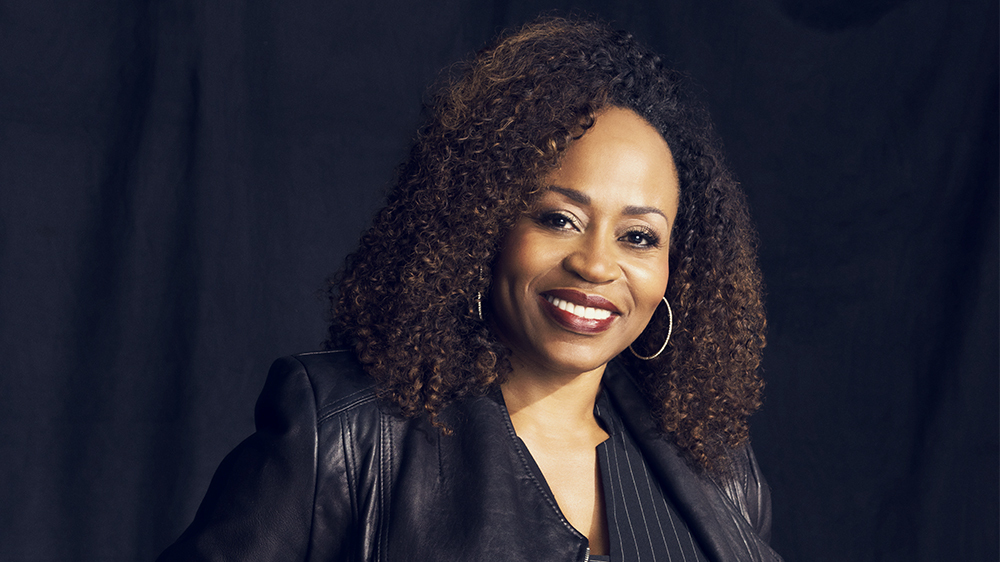
Inside Pearlena Igbokwe’s Journey To Hollywood And Universal TV

Pearlena Igbokwe. Image: Dan Doperalski/Variety


BY CYNTHIA LITTLETON


Pearlena Igbokwe was an English major at Yale, so it’s no surprise that she loves the process of reading and analyzing a literary work, breaking down the text and identifying its major themes and conclusions. In grade school, she was the type of kid who didn’t groan when a book report was assigned.

These instincts have served Igbokwe well in her nearly 30 years as a creative executive in television. But the Showtime and NBC alum, who has headed Universal Television since 2016, didn’t know what work lay ahead in the spring of 1985, as her sophomore year at the Ivy League college was coming to an end. She only knew she needed to hurry up and find a summer job. While scouring the listings and fliers tacked up on the walls of the career services center at Yale, she was immediately intrigued by a notice described as a “summer associate” position at NBC in New York.

Igbokwe, now 54, had felt a special connection to television ever since her family emigrated to New Jersey from Nigeria in 1971, when she was 6. The Igbokwes left behind the terror of living through a civil war and arrived in the land of “I Love Lucy,” “The Love Boat” and Bugs Bunny. Young Pearlena couldn’t get enough TV. The family’s small black-and-white television was her babysitter, her companion and her primary instructor in the language of her adopted home.

“I thought TV was this amazing thing,” she recalls. “It was my best friend.”

During her undergrad years at Yale, Igbokwe spent two summers working for NBC in research, first for the sales department and later for NBC News. As she ran around 30 Rock completing assignments and other chores, she had to pinch herself that she was being paid to kinda, sorta work in television.

“It just opened up everything for me,” Igbokwe says. “That feeling of loving TV and movies for all those years and now being even remotely attached to that world just felt incredible.”

Igbokwe’s path after college took a circuitous route through working in the financial services industry (she had to pay off loans) to business school at Columbia University. After earning her graduate degree, she landed a temporary job at HBO. Within a few months, she had offers for entry-level posts at HBO and Showtime. She opted for Showtime, where she would spend the next 20 years, first in New York and later in Los Angeles when she joined the programming team.

In 2012, when former Showtime chief Robert Greenblatt recruited her to become head of drama development for NBC, she was ready for a new chapter. “I felt like NBC was where I started,” she says. “I knew I would love to be here.”

After four years in drama, working on such series as “The Blacklist” and “This Is Us,” Igbokwe was promoted to president of Universal Television. The studio is riding the Peak TV wave, with some 40 shows in active production for NBC as well as outside buyers, notably Netflix (“Russian Doll,” “Master of None”), HBO (“The Gilded Age”), CBS (“FBI”), Hulu (“Four Weddings and a Funeral”), Amazon (“Forever”) and Freeform (“The Bold Type”). On her watch, Universal TV has upped its volume of output and gained traction on the prestige front. The production arm had two shows in the running for best comedy series at the Emmy Awards last month (“Russian Doll” and NBC’s “The Good Place”).

For most of her career, Igbokwe worked on the buying side of TV, hearing pitches from studio executives and showrunners. The move to being a seller, at a time when Universal TV has been encouraged to shop its wares outside NBC, has put her English major’s love of analyzing stories to good use.

“Pearlena is the kind of collaborator who asks the question that makes all of us step back and look at the piece in a new way,” says Amy Poehler, who has a production pact with Universal TV and was a driving force behind Natasha Lyonne’s “Russian Doll.”

Igbokwe has a natural warmth and a level of optimism that makes a difference. She’s quick to let loose a distinctive throaty laugh that puts others at ease.

“She’s real. In a town where a lot of people have masks on and a lot of pretense, Pearlena is real, down-to-earth good people,” says producer Debra Martin Chase, who has known Igbokwe for years and recently signed a first-look deal with Universal TV.

Poehler pays Igbokwe the ultimate compliment as a leader: “Pearlena’s got a little bit of Leslie Knope in her, that’s for sure,” she says, referring to the earnest city employee she played on the NBC/Universal TV comedy series “Parks and Recreation.”

Igbokwe has reached a point in her career and in her life where she’s reflecting on the arc of her story. For years she didn’t share much with friends and colleagues about her experiences growing up in Lagos during the 1967-70 period of Nigeria’s civil war with Biafra. But of late, she has opened up about how she was shaped by her family’s struggles during those formative years. “Sometimes you need some distance from a story to understand it,” she says. “I saw a lot of things.”

Igbokwe vividly recalls the horror of running into the woods with her mother and younger brother to escape aerial bombing raids above their village. She remembers the sound of helicopters that dropped food and humanitarian aid supplies out of the sky for the villagers. Also seared in her memory is the day when she was about 4 when she became determined to grab a sack of salt for her mother from an aid drop. She positioned herself in the perfect spot and dove on the ground as soon as the drop hit. She didn’t count on getting trampled by dozens of adults doing the same thing.

“They all just piled on me until finally someone was yelling, ‘There’s a kid under there!’” Igbokwe says. “When I got up, I was covered in salt from head to toe. I walked back through my village looking like one of the White Walkers from ‘Game of Thrones.’”

The visceral memories of war and violence and scrambling for food have given Igbokwe perspective on the life she has made for herself as a respected figure in entertainment. As the mother of two teenagers — a 17-year-old daughter and a 14-year-old son — she can only imagine the fear that her mother faced in Nigeria, trying to protect two young kids while also working to secure the promise of a new life in America.

Igbokwe’s father, a teacher, was the first to leave for the U.S. with the help of an American couple that had befriended the family. Pearlena, her mother and her brother followed two years later. It was an emotional roller coaster for a 6-year-old, between the reunion with her father and the culture shock of leaving Africa to settle in Montclair, N.J.

“I remember having the sense that we finally made it,” Igbokwe says. “I remember the feeling that people thought we were lucky. I was going to America.”

Most of Igbokwe’s relatives still live in Nigeria. She often wonders why fate determined that her family would be in a position to leave for a safer environment offering greater opportunities. “I’m the most grateful person in the world,” she says. “I don’t take for granted anything that’s happened in my life. From the world that I came from to work in the entertainment business — none of it was supposed to happen.”

Igbokwe broke ground for the industry in becoming the first black woman to run a major television studio. She earned her way to that shot by naturally demonstrating the mix of business savvy, creativity and empathy that makes for a strong leader in entertainment, in producer Martin Chase’s view.

“It’s so lovely to have a woman in charge who is very giving and very gracious and smart as a whip and a great manager,” says Martin Chase. “There’s no ego with Pearlena. It’s about the work. It’s important to her that everybody around here feels good about what they’re doing.”


SOURCE: VARIETY

Tuesday, October 8, 2019

Class And Experimental Narration Define ‘An Orchestra Of Minorities’

Chigozie Obioma. Image: Facebook


When is empathy evil? Appreciating others’ experiences carves out the space for solidarity in which people with privilege take action. But imagining others’ experiences implies the possibility of understanding their trauma. “Stepping into the shoes of others” requires one to assume they know what trauma is happening and how others would react.

People’s pain is often situated across boundaries of race and class. To empathize across those lines, one must squint to make out a fuzzy image of what is happening to others. They must further distort their own experience, alter their assumption of how the victims should react. On top of this, advocacy through publicizing others’ trauma can erase and paper over the reality of others’ experiences.

But then, what’s the alternative? Not empathizing whatsoever means victims’ stories aren’t heard. Could literature help create a more innocuous empathy?

Obioma’s “An Orchestra of Minorities” gracefully sheds light on how class and race affect the effability of another’s pain. At heart, it’s a charming love story. Chinonso is a Nigerian peasant farmer who meets Ndali, an upper-class woman. Obioma shows his mastery of class-based symbolism right off the bat: The two meet as Chinonso saves the upper-class woman from an attempted suicide.

Despite their differences in status, the two fall in love after a chance meeting following the incident. Naturally, Ndali’s upper-class family disapproves of their relationship, and the novel focuses on Chinonso’s attempts to win the affection of her family.

Here, the author begins to hint towards his mastery of remixing classic English stories (“Romeo and Juliet,” in this case) with tales of contemporary race and class. Chinonso’s journey to redefine his ascribed status is defined by humiliation at every turn. In a particularly difficult chapter, he’s made to valet a party that Ndali’s brother invited him to.

Eventually, though, Chinonso makes a journey to Cyprus to obtain an education and better match Ndali’s class (she plans to become a pharmacist). If the story in Nigeria highlights his class identity, his time in Cyprus showcases his racial identity. Obioma shows how Africans must continuously be aware of their ethnicity, with people confusing him with Black celebrities or asking to touch his hair.

The story is explained through the narration of Chinonso’s “guardian spirit” or “chi.” This spirit must recount and justify his actions in a “trial” to Nigerian Igbo deities. Through his narrator's omniscience and bias toward the protagonist, Obioma subtly parodies and pokes fun at usual Western storytelling. The trial is also a brilliant symbol for society’s judgment of Chinonso while showing the shortcomings of empathy. This is reflected in the plot, as even Chinonso’s love, Ndali, doesn’t truly understand his struggles.

Obioma offers a page spread of complex charts, graphs and lists at the start of the book to help explain the Igbo Cosmology. Heaven is broken down into domains, and the composition of man is conveniently summed up in a venn diagram. Both the universe and the process of reincarnation share their chart: The life cycle circulates the Earth and Spirit worlds.

Although initially intimidating, the spread’s significance becomes apparent over the course of the novel. This is less to do with appeasing Western Promethean impulses to box and map the Igbo Cosmology conveniently and more to help the reader navigate the book and its contents. The Cosmology is overwhelming at first like Chinosmo is overwhelmed in Cyprus.

But, as with any novel, this empathy crafted by Obioma has shortcomings. A privileged reader can simply close the book. Chinosmo is trapped in his situation.

Throughout the novel, Obioma masterfully balances the reader’s empathy and their realization of the fruitlessness of the relating. The story’s similarity to “The Odyssey” and “Romeo and Juliet” allows the narrative to be tangible and understood for Western audiences. Obioma’s brilliant prose and descriptions reinforce this.

Still, the deities’ trial reminds the Western reader of their inevitable shortcomings of real understanding. The meta-commentary of the trial does a great job of making readers acutely aware that Obioma sees them as an agent in this story.

Moreover, the fragility of pure empathy is reflected in the story: Throughout the story, Chinonso finds it difficult to communicate his situation to Ndali fully. This is most apparent through their correspondences while Obioma is in Cyprus and at the story’s conclusion. This empathy compels readers, giving them a glimpse of a (well done) perspective they haven’t experienced.

As a whole, Obioma’s book showcases the complex interactions involved in empathy. Communicating one’s genuine experience is difficult even to omniscient deities or the ones people love the most. It must be even more complicated between people one has never met.

The book’s prose, groundbreaking commentary and experimental narration style more than earn its place in the 2019 Booker Prize Shortlist. Whether or not it takes the prize, “An Orchestra of Minorities” is a gripping read. The book leaves a lasting effect on the reader’s perception of how race and class affect every aspect of one’s lives — even something as pure as love.


SOURCE: MICHIGAN DAILY

52 Years Later, Why Restitution For The Asaba Massacre Cannot Be Monetary

Combo of Murtala Mohammed and Ibrahim Taiwo. Image: Ilorin


There is an Igbo saying about when you wake up being your morning. It simply means that it is never too late to start. This, could be a good thing, as it engenders a resilient attitude that is not tapered by time. However, sometimes when someone wakes up late, the reasons may be more cynical, as in this story I’m about to tell.

The town of Evwreni is located 150km away from the capital of Delta State, and unlike Asaba which is consistently derided as a non-Delta town (the people of Asaba are of the Igbo ethnic group), there is no doubt that Evwreni is an oil producing Niger Delta town. In August 1999, the Evwreni Youths Association wrote a letter to the Shell Petroleum Development Company giving them an ultimatum to build a hospital, community centre, a borehole for the town, and tar the two roads in town – the Warri-Patani Road, and Palace Road. At the time, there were two major landmarks in Evwerni, the Girls Model Secondary School, which sat along the Warri-Patani Road, and the Ovie’s Palace, which was on Palace Road. In addition to these four demands, the EYA asked that Shell build a fence around the Ovie’s Palace, and install a telephone line for him. The Ovie at the time was Ovie Owin Kumani.

In response, Shell offered to pay homage and royalties to the Ovie in cash, and also offered some jobs and scholarships to the EYA. This last bit of information was kept from the majority of EYA members.

Eventually, the EYA found out, and went on what was initially a peaceful protest to the Ovie’s Palace. Unfortunately, armed palace guards, paid for by the Delta State government, shot at the protesters and killed one of them. Nine others were alleged to have sustained bullet wounds.

Following this incident, Evwreni elders called for the dethronement of Ovie Kumani, and eventually the situation boiled over on 20 January 2000 when the youths stormed the palace, and murdered Kumani, and another elder, Chief James Fashe. This story, illustrates the danger of monetary compensation in the system such as we have in Nigeria where systems of accountability are weak, and where because of a culture of impunity, the incentive to just take cash and make for the hills is strong.

A few days ago, I read an article about the Asaba Development Union, which claimed to be speaking for the people of Asaba with respect to engagement with the government of Nigeria. The group is demanding an apology and compensation. This coincides with the 52nd anniversary of the 7 October, 1967 massacre in which at least 800 men and boys from Asaba were killed by the Nigerian Army on suspicion of being sympathetic to the secessionist cause during the Biafran War.

The reason this deserves some commentary is because two years ago during the organisation of the half century of the event, various groups of Asaba indigenes were approached for their cooperation and contribution to the event, and they showed a distinct disinterest in the matter. In fact, it was during the six-week period of organisation before the event that I became involved and realised that there was no single group that had the capacity to organise a befitting remembrance.

But the show had to go on, and the Asaba Advisory Council set up a task force which ensured that the event went on despite the indifference of many Asaba groups, opposition from governmental figures, financial challenges and the time frame required to organise a successful event. At this point I will go on the record to say that were it not for the extraordinary support shown by Prof Wole Soyinka, Bishop Matthew Kukah of the Sokoto Catholic Diocese, and Archbishop Emmanuel Chukwuma of the Enugu Anglican Diocese, the event may not have even gone ahead. So great was the opposition, and so real were the threats.

At the event itself all the speakers, including Soyinka, Kukah, the Governor of Delta State, Ifeanyi Okowa, and Alban Ofili-Okonkwo, were very clear that given the time that has passed, and the fact that the families of the victims of that brutal event half a century ago have for the most part done quite well, that monetary compensation was not among the lists of requests by the people of Asaba. What we want is simply an acknowledgement that the town was decimated in 1967 just because of their Igbo ethnicity and despite the “one Nigeria” stance of the indigenes at the time, and an apology for that action.
The official communique after the event made it clear that if there is to be any talk of compensation, then it should be in form of a world class maternity hospital to be located in Asaba and open to all Nigerians.

After the event, the committee met with the traditional rulership of Asaba and a foundation was incorporated to pursue these objectives. The Asagba of Asaba, by royal decree, said that the Foundation is the officially empowered body to have discussions regarding government interactions over the massacre.

Then we now have this group coming up to claim monetary compensation… The objective of this piece is to sound an alarm, because this being Nigeria, this is a movie script we have seen before, and sadly the writers only ever seem to change the dates, locations, and names of the actors, but never the script itself.

As a victim who lost his maternal grandfather and many uncles in that sad event, I maintain that the stance of the task force that organised the half century event is the best one. You do not throw money at a thing like this, it will only lead to a fight. Rather, build the hospital, the foundation is asking.


SOURCE: THE GUARDIAN NIGERIA

Saturday, October 5, 2019

INTERVIEW: Ngozi Chuma-Udeh: Feminists Are Women Who Wash Clothes

Ngozi Chuma-Udeh


BY HENRY AKUBUIRO


Professor Ngozi Chuma-Udeh is the author of thirteen creative works, some of which include Teachers on Strike, Dreams of Childhood, Echoes of New Dawn, The Presidential Handshake, The Thing between Your Legs and Chants of Despair. Recently, she presented her latest work of fiction, Forlon Fate, to the public, witnessed by HENRY AKUBUIRO, who, thereafter, interviewed her on her writings, feminism and scholarship in Awka, Anambra State. Chuma-Udeh, a professor of English at Chukwuemeka Odumegwu Ojukwu University, Igbariam, is the proponent of the new feminism school called Beside Feminism. She told The Sun Literary Review that her own brand of feminism emphasises on developing the girl child alongside the boy child, as against the dominant view that behind every successful man is a woman.

You started your writing career as a schoolgirl, who did you set out?

In the years of growing up, you had a lot of dreams; you saw the world through the eyes of a kid. You wanted to be a great writer like Chinua Achebe, Cyprian Ekwensi and other literary greats, and you read novels like Dennis Robbins, and you wanted to write and be like them. That was the inspiration. You also read Mills and Boons series, and wished to write such romantic novels.

Which period are you talking about?

When I was about 12, 13 years… in the 1980s. (laughs) So you had this concept that life was all about “they lived happily ever after”. After reading Dennis Robbins, you wanted to configure life through your writing. Those were the formative years. Then, as you grew up, you were sold into the harsh realities of life. You now grew up from that romantic foundation and move into more political issues. Now, you feel the pangs of life. You begin to see the wrongs in your contemporary society, and you want to participate in addressing them. It will now change your focus from that child growing up who thought that life was a bed of roses, and now begin to see certain things going wrong in the society, which you could correct through arts. So you now find yourself writing about life, hardship, pains. It is no longer that happy, jolly life –in fact, you shift as reality sets in into a contemporary writer. You now begin to feel the burden of the society. That also shapes your writing.

From those formative years of innocence, how did your first literary work emerge?
I was in secondary school then, and teachers were on strike. I witnessed, firsthand, the hardship that followed (during the time of Jim Nwobodo as the Anambra State governor). But I am not saying Teachers on Strike, my first book, was about Nwobodo. It is a work of fiction. My mother was at the forefront of events –she was among the primary and secondary school teachers at loggerheads with the government. Things were hard. I had to come back from school, for the hardship couldn’t sustain me. Again, there was a debilitating teachers’ strike when I was a secondary school teacher. The two strikes teamed up to form my plot in Teachers’ on Strike. I believe it x-rays the ills in the society.

From that debut fiction to the latest, how has your orientation changed as a writer?

I don’t think my orientation has changed. I am still a contemporary writer. Sometimes, I veer into feminism –the concern of women and children, not really feminism, because I have a brand of feminism I call Beside Feminism.

What do you mean by that?

In our contemporary society, we say behind a very successful man there is a woman, but I don’t think it is right to place your wife or woman behind you. How many men know what goes on behind them? If you want to give something to somebody behind you, first, you have to twist your hand, after which you have to take it backwards. But, if your wife is beside you, she will be looking at you and you will be looking at her, and, side by side, you match on in progressivism. So Beside Feminism is all about: the girl children should be developed along their male counterparts.

How is it different from Womanism?

Well, Womanism takes in a lot of things, like pride for women. Womanism may say: let the woman be superior to the man to some extent; it is a kind of struggle for supremacy. But Beside Feminism is not a struggle for supremacy; it is not a fight for power; it is not a struggle. It is just about you bringing up the girl child alongside her male counterpart so that, together, they will match on side by side in progressivism. If you bring both sexes up, give them equal opportunities to develop; it will not only create a progressive outlook, it will also increase the life expectancy of our men. So Beside Feminism targets increasing the life expectancy of men by reducing the stress factors in their lives.

So what’s your take on Chimamanda’s brand of feminism?

As I told you before, there are many brands, and I can’t say her own is wrong because I don’t agree with it; and she cannot equally say mine is wrong because she may not agree with me. Just as there are so many people, so are there so many ideas. So it depends on the one you adopt. Hers may work in some areas; mine may also work in some areas. So it depends on who is adopting it.

Except for some feeble noises in some literary circles, feminism appears to be going downhill, unlike in the days of Buchi Emecheta. Do you agree?

There are a lot of misconceptions when it comes to feminism. People tend to twist, bend and squeeze feminism into their own corner to suit their purposes thereby making a bogus claim, like somebody who is lazy and can’t sweep his house; somebody who cannot cook for his family; somebody who cannot wash her clothes will tell you she is a feminist, and feminists don’t wash clothes. Feminists are the women who even wash clothes and clean the floors. That’s the idea of feminism: that you should allow the woman; give her the chance to develop, let her contribute to the development of not just her nuclear family but the society at large. So feminism means work to maintain a good family; live for your family; live for your husband; let your ideas match that of your husband; move beside your husband and be one in decision and in unison. Any other thing is not feminism.

You have just presented your latest work of fiction, Forlorn Fate. What inspired this book?

The Niger Delta issue inspired this book. I have looked at the Niger Delta as a sordid affair. The oil in Niger Delta has done more harm than good to the average Niger Deltan character. Look at this way: while we are there pursuing petty militant, who would have taught that it was the white man who engineered the militancy? That’s what Forlorn Fate says. This novel lays the blame not on the militants but on the Whiteman.

Does the novel has element of verisimilitude, or is a product of imagination?
It should have. Every work of art that lacks verisimilitude is useless. So I think, at certain level, the book is true to life.

The work has a broader canvas, I guess?

The work looks at man’s injustice to man. It looks at the horrors of the transatlantic slave trade. It also looks at the distablisation of people –that ancestral distablisation of carrying off people –the horrors of transatlantic slave trade; the evils of slavery and, now, the tracing of roots of these people, because Colonel Nina Sortorne, a major character in the book, came to the Niger Delta as an American soldier on a rescue mission and then discovered she came home to her roots. She now discovered there was a myth around her family, her great-grand father being carried away to slavery, and her coming back; because, if not for that timely intervention, the community road would have been destroyed by the Whiteman. The Whiteman wanted them to vacate, because he wanted to build an empire at all cost, so he wanted to drive them away. He wanted to send the entire community into extinction. He tried chemicals on them, and they did not move. If you read the first paragraph, you will see where I said that no child of nature, no matter how minute, leaves his home easily. That was just the message.

You an Igbo woman raised in the eastern part of Nigeria. Locating the setting your novel in Niger Delta, a different region, how difficult or easy was it for you to achieve a symmetry?

I grew up in the creeks of the River Niger, and I knew when we were growing up, my grandmother would tell you not to cry too much, because Ijaw people were walking about. There was this belief that Ijaw people were headhunters (laughs).

In the last few years, you have been engaged in departmental and faculty administration in the university where you teach. How were you able to combine writing, motherhood, scholarship and varsity administration?

When you are given these positions, if you don’t take time, they will send you into academic obituary: you cannot write, because you are a HOD or a dean; you find yourself grappling between your academic work and the post you are holding. I am a professor now, so you cannot but write. Being a professor is not as difficult as holding an office. The up-and-coming ones should hold the offices now.

ANA convention holds this month, from October 31st to November 3rd, 2019. I learn you are a running mate to one of the presidential aspirants. This is the second time you are gunning for that position. Why are you coming back?
I believe I have something to offer to ANA. I have a great contribution to make to ANA. It doesn’t matter how many times I will be contesting; the most important thing is that there is something I want to give to ANA, and that I really want to achieve.

What makes Barrister Ahmed Maiwada a better alternative?

I believe in him. I believe in his art as a leader. He is a wonderful lawyer, a benign soul, and I have this belief he will move ANA to a greater height. Some people are talking about zoning. In ANA, we are not talking about zoning; we talk about the individual. If you, because you came from the zone where the presidency has been zoned, decide to elect a look warm person who will not work, it will be tragic. I am not saying any of the contenders is look warm (laughs). I am only trying to say we should give everybody equal opportunity to contest; let ANA decide who among them will handle the affairs better. This is not a do-or-die affair; we all have our lives to spend in ANA as writers. If you don’t win this year, next year, you contest again. That’s the way I see it.