Saturday, December 18, 2021

Sacrificial Literary Geniuses

BY MICHAEL JIMOH

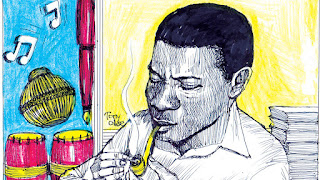
Christopher Okigbo image courtesy of The Guardian


Byron. Fitzgerald. Marechera. Okigbo. Plath. Shelley. They were all great writers who died young, some in their twenties, thirties, only one making it past forty. They were all dreamers, idealistic, adventurous and most often geniuses but sometimes unmindful of their private lives. What is it with these writers who seemed to have been destined to die young? Michael Jimoh writes on some of the world’s famous writers who died prematurely.

In August 1967, a 34-year-old Nigerian poet in battle fatigues and armed with his regulation rifle went to the warfront hoping to realise his compatriot’s dream of a free Republic of Biafra.

Three months before, on May 30 in the same year, Lt Colonel Emeka Odumegwu Ojukwu had carved out Igbo-dominated Eastern Region from the Federal Republic of Nigeria leading to the 30-months civil war.

Christopher Okigbo is Igbo by birth, born on August 16, 1932 at Ojoto in modern day Anambra state. At the start of the hostilities, he was teaching at Ibadan, capital of Western Region and an outstanding poet in the continent. With war drums sounding ever louder, Okigbo promptly relocated to the East and volunteered to fight in the Biafra Army.

Only days short of his 35th birthday, he was shot and killed in the battlefront by federal troops at Nsukka.

Of course, the federal soldiers didn’t know who he was or, perhaps, if they knew they didn’t care. To them, he was just one of the rebel enemy soldiers fighting as a secessionist in the newly declared Republic of Biafra.

Thus was the life of an otherwise brilliant career of one of Nigeria’s most promising poets cut short.

What might have been if the clarinet-playing, pipe-smoking, accomplished poet had lived much longer, up to sixty, say, seventy or even eighty? Those of his generation who did, Achebe, Clark and Soyinka were richly rewarded – a Booker, a Nobel and other highly regarded international and national prizes – for their works.

Okigbo himself had set the pace by becoming the first poet laureate in Africa after he was awarded first prize in the 1966 Festival of the Negro Arts in Dakar, Senegal. He turned it down, insisting that writers should not be classified according to race or ethnicity. Writing, he famously said then, “must be judged as good or bad, not as a product of a specific ethnic group or race.”

If he had lived longer, it is doubtful if Okigbo would have been counted out of the bigger and more prestigious prizes. Indeed, literary theorists and historians have proposed that Okigbo would certainly have been one of the early candidates for the Nobel in Literature – and with good reasons.

Okigbo already had a well-fostered reputation as one of the leading poets of his time. His productive output was going swimmingly, like the Idoto River flowing steadily in his birthplace. He would have added some more publications to the already existing ones considering his creative output in his brief existence: Heavensgate (1962,) Limits two years later and Silences the following year.

Starting off as a librarian at University College, Ibadan, where he sated his voracious appetite for reading, he contributed poems to Black Orpheus and was West Africa editor of Transition, a literary magazine. His star as a literary heavyweight was clearly ascending.

But the call to patriotic duty put an end to all that. Okigbo was only 34 when he died.

Another writer who also died prematurely, though not in the course of fighting a war except battling his own demons, was the Zimbabwean, Charles William Dambudzo Marechera, born on June 4, 1952 in Vengere township of Zimbabwe then known as Rhodesia.

Dambudzo had a hardscrabble early life but was a gifted child, a special endowment that will take him to privileged institutions such as the only Catholic school for students like him and then New College, Oxford England.

Spotting short dreadlocks long before it became faddish among young men and women all over the world today, Marechera was as gifted as they come but was also reckless and without restraint in his personal life.

Departing Africa for Europe on a scholarship, Marechera tried to remember what he left behind at home, recalling that “I suddenly remembered that I had, in the rude hurry of it all, left my spectacles behind. I was coming to England literally blind…I was on my own, sipping whisky and my head was roaring with a strange emptiness…I think that I knew then that before me were years of desperate loneliness, and the whisky would be followed by other whiskies, other self-destructive poisons.”

A confirmed non-conformist weighed under the burden of colonial rule with all its segregationist laws, Marechera never really outgrew his disenchantment with the Western world and all that it represented. His “Dambudzo Performance” wherein he suddenly snapped at an award night in his honour at The Guardian Fiction Prize in 1979 is the stuff of legend.

The year before, he had written and published House of Hunger, considered the Bible of visceral literature, an unvarnished creative piece straight out of his guts aptly dubbed “gut-rut.”

Like Okigbo did in Dakar eleven years before, Marechera became the first African writer ever to win The Guardian Fiction Prize in 1979. Publishers in Europe (England and Germany) breathlessly anticipated future masterpieces from him. They never came. Parceled off from London, Marechera found his way to Cardiff, Wales, where many more whiskies followed.

It was while in Wales that a vicar in Cardiff who witnessed, firsthand, Marechera’s constant inebriety wrote to his publisher James Curry of his concern about the Zimbabwean writer. “I would doubt if Mr. Marechera will be alive for very much longer – he hardly eats and only drinks.”

It turned out to be quite prophetic. On his return to his natal country, Marechera pub-crawled shebeens there, wrote there, slept there and became destitute before dying of complications from AIDS in 1987 at 35.

Writers dying prematurely isn’t quite a novelty. Why it is so is not exactly clear. Could it be a date with destiny? Or just plain carelessness on the writer’s part?

No one exemplifies this more than Romantic poet, Percy Bysshe Shelley. He was a month shy of his 30th birthday when he drowned in his own sailing boat, Don Juan, in the Gulf of Spezia Italy.

Could the boat accident have been prevented or was it a death foretold? The answer to both questions is yes.

In the late afternoon of July 8, 1822 Italian port authorities had warned the poet and two companions of a possible foggy weather when he set sail from Lerici to Livornio. Apparently, the poet’s wanderlust got the better of him.

As for the second question, Shelley himself had foreseen his possible demise upon the waters of Italy. In his celebrated poem, “Adonais,” Shelley writes that “The breath whose might I have invoked in song/ Descends upon me; my spirit’s bark is driven,/ From the shore, far from the trembling throng/ Whose sails were never to be Tempest given;/ The massy earth and sphered skies are riven!/ I am borne darkly, fearfully afar…”

In a publication by The Guardian of London of January 23, 2004, Richard Holmes looked into the circumstances surrounding the death of Shelley and concluded that the “sudden tragedy set a kind of sacred (or profane) seal upon his reputation as a youthful, sacrificial genius.”

Also considered “a youthful, sacrificial genius” was the untimely death of Shelley’s contemporary, rival, friend and compatriot, Lord George Gordon Byron, an unrepentant, unapologetic sybarite. He was born privileged, a lord, in January 22, 1788 in London. Gifted beyond measure, Byron’s personality and poetry would capture the imagination of Europe for years, culminating in his teaming up with the Greek nationalist fighters where he died of fever.

In March 1812, Byron’s first canto – Childe Harold’s Pilgrimage – was published to wide acclaim and reception, prompting one critic to comment that the poet “woke to find himself famous.”

Published in 1819, Don Juan, for which Shelley’s skiff was named, even had more public reception and appeal. Byron’s popularity rose correspondingly all over Europe. His scandalous relationships with men and women rose almost in equal degrees, famously fathering a child with his half-sister.

At this stage in his career and personal life, Byron was having the time of his life despite being hobbled by a clubfoot. It didn’t stop him from traipsing or boating across Europe, Italy, Portugal, Spain, Turkey and then Greece where, in his bid to aid the Greeks gain independence from Turkish rule, Byron died of fever in Missolonghi on April 19, 1824. He was just thirty-six.

Across the Atlantic from England, the United States of America has had its own share of gifted writers biting the dust early. The most famous instance is none other than Francis Scott Fitzgerald himself, famous for The Great Gatsby, Tender is the Night, This Side of Paradise, etc.

If there was one gifted writer who had the greatest potential to become great among his contemporaries, Fitzgerald was it. He counted among his close friends Earnest Hemingway, Edmund Wilson, John Dos Passos. Born September 24, 1896 in Saint Paul Minnesota, Fitzgerald showed early promise in school before proceeding to Princeton where he became a prominent member of literary and dramatic societies.

Not unlike much gifted individuals without much focus on academic life, he soon left Princeton, joined the army and then started penning short stories. Initially, success as a writer eluded him until he published the immortal The Great Gatsby in 1925. Fitzgerald worked for some time as a script/ screen writer in Hollywood, mainly for cash. He was always broke and part of the reason was his extravagant lifestyle, a lifestyle he shared ostentatiously with his wife, Zelda Sayre. They were also great imbibers, with Fitzgerald depending on the bottle more and more as his creative output declined/ waned. He himself would later claim in an interview of the “crack up” he suffered because of his needless indulgence.

Fitzgerald died four days before Christmas in 1940 at 44.

The lone, famous woman among the sacrificial geniuses of literature remains Sylvia Plath, tortured poet, short story writer, novelist and spouse of Ted Hughes, a much senior colleague and fellow poet. They were married briefly for six years, a union that was mostly tempestuous with Plath complaining of abuse by Hughes.

Despite that, Plath produced enough literary works to have been awarded the Pulitzer posthumously for The Collected Poems. She also wrote her most famous work, The Bell Jar. A gifted poet, Plath is credited with beginning a new genre of poetry called the confessional poem. She was born a Bostonian on October 27, 1932 and went to prestige schools like Smith College in her natal city and then Newnham College, Cambridge in England.

Though an American, Plath lived with Hughes in England for some time. She died there on February 11, 1963. She was a mere 30.

It must be said that Plath herself suffered bouts of depression through much of her adult life, occasioned sometimes by the loss of a loved one like her father after he died, and her disappointment at failing to meet and speak with Dylan Thomas, a celebrated poet, at a literary soiree once.

What did Plath do to herself afterwards? She “slashed her legs to see if she had the courage to kill herself.” After several unsuccessful attempts at suicide, Plath finally did take her life by gassing in her kitchen oven.

So, propelled by self-destructive forces, the environment in which they lived or circumstances surrounding them, nearly all of the writers above presented themselves as sacrificial geniuses on the altar of literary creativity.

Besides, a Nigerian novelist, poet, dramatist and senior journalist, Uzor Maxim Uzoatu, has a word or two on the possible reasons for their abridged lives.

“Highly talented people,” Uzoatu began by telling THEWILL, “who achieved fame early enjoyed something of a blessing in disguise in dying early because most of their latter works becomes a parody of their earlier ones. A typical example is William Wordsworth. He lived so long that critics said he had the longest decline in English literature. Back home, someone like Okigbo, because he died early people like to remember him as a genius. But if he had lived longer people would not like to see him as a plagiarist because he plagiarized so much. Because he is dead, people will just remember the ideal.”

Continuing, Uzoatu gave the example of Johnny Rotten of the rock band The Sex Pistols who said: “Live fast, die young and have a fine corpse.”

English Prof. Chris Abani Talks About Identity And Language In His Memoir ‘The Face’

BY KATHERINE MCDONNELL 


English Prof. Chris Abani, director of NU’s Program of African Studies, discussed his memoir “The Face: Cartography of the Void” on Friday as part of the Global Lunchbox speaker series.

A Nigerian-American author, poet, essayist, screenwriter and playwright, Abani uses many forms of literature to produce pieces with unique themes and genres. At the event, he said language can create and shape identity.

“Everything is a story, a narrative,” Abani said. “Language is the first and most powerful technology ever invented by humans.”

Abani said his experiences with Nigerian and American cultures and languages inform his stories. His understanding of other languages, like Igbo, helps him write pieces that go beyond individual genres, he said.

Igbo culture also helps Abani view narratives in a sense larger than the self, he said.

“In Igbo, you are not just yourself, but a cosmology,” Abani said. “When you greet someone, you greet them and the cosmology –– being the stories –– that follows them around.”

Writing, as Abani sees it, is a continuum. He said writers cannot settle on a single place or genre if they want to accurately capture the nuances of stories and characters.

Mentorship is the key to understanding this complex relationship with self and the stories that make up the world around us, he said.

Abani advised others to approach mentorship through apprenticing yourself to your craft — learning from those who came before you and creating as much as you can. Mentorship helps point people in the right direction, he added, and create answers for themselves rather than finding answers from others.

“Storytelling at its core is an expanding archive of human knowledge, of human consciousness,” Abani said. “Mentorship is really about helping someone get to where they want to go, rather than telling them where to go.”

Danny Postel, an administrator for the Global Lunchbox speaker series, said Abani’s works are more than works of literature, but an analysis of language and identity.

“Abani’s memoir is an exploration of the very nature of identity,” Postel said.

Postel said the Global Lunchbox speaker series are a great opportunity for students and faculty to connect with scholars of all fields. The events, which highlight research from social scientists on global issues, take place every Friday.

Ian Hurd, the event’s moderator, said a unique part of Abani’s work is his ability to tap into the core of what it means to be human.

“Being human — it’s about telling stories,” Hurd said.

And Abani looks to explore cultural intersections throughout his life in his stories. He said his memoir expands on his ideas about the cross-sections of language, identity and culture.

He added that an important part of his writing process is being willing to make mistakes. Failure has led Abani to his newfound understanding of how storytelling functions at a greater level, he said.

“Failure is an integral part of the process,” Abani said. “If you’re not failing, you’re not doing anything interesting.”

Hairstory As History: Nkemdiche: Obiora Nwazota’s Quest To Bring Igbo Culture Into Our Contemporary Lifestyle

BY MICHAEL WORKMAN 


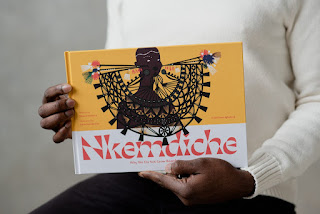
CHICAGO, IL (NEW CITY DESIGN) This sumptuously designed and illustrated volume by Obiora Nwazota and his team is bound like a children’s book, but is also a designed art object in its own right. Presented as a social “hairstory” folktale, it telescopes and uses the value and sacredness of hair in traditional as well as contemporary Black and brown cultures to thread a well-imagined conceit of the bearded women of Igboland. It’s a place also known as modern-day Nigeria where, in this alternative timeline looking back onto a practice that never existed, the women would languish beneath the Udala trees, “grooming their beards” while they “swapped stories and exchanged juicy gossip.”

Made with a clear objective to evoke the ancient dignity and nobility of African cultures that existed before the wretched history of the global slave trade, the book goes beyond the goal of a modern vision of a people and culture that often gets reduced in masscult depictions to that of Black oppression and suffering. “The physical design of the human being doesn’t go out of style,” Nwazota says. “All of a sudden, it opens up when you’re investigating any of these things, if you come at it for the purity of what it is, it’s equally as modern as it is old.”

Nkemdiche” is published by Ọkpara House, whose stated mission is to reclaim and assert the “relevance of Igbo culture on contemporary lifestyles within and beyond the Igbo community,” and the production crew behind the volume has adroitly integrated their efforts to produce a cohesive, moving and visually literate art object. Nwazota, a co-founder of Chicago’s celebrated Orange Skin boutique, and a longtime Igbo culture booster, has conjured this sweeping folktale, in a way that is moving for adults, but likely to spark in a profound way the childhood imagination about people and places otherwise poorly represented in the children’s literature of the States. Told alongside illustrations by Paris-born Chicago artist Lucie Van der Elst, the images are rendered in bold, solid collage-style colors, often integrating traditional Igbo fashions and textural designs, punctuated with bursts of fragmented imagery and rich, deep black skin tones that recall a Kerry James Marshall canvas, while also binding the visual narrative as the story progresses, illuminating it marvelously.

Asked about the idea to make this volume into a design object in and of itself, Nwazota describes his efforts to visualize African culture in an immediate and corrective way. “It was very intentional in the sense that, having explored the things from that era—okay? The normal idea of the imagery, the African imagery, when we see Africa—normally, it’s safari, it’s conflict, all that funniness. But when you think about African culture, you are thinking about masks, you are thinking about people maybe running half-naked with token animals like a giraffe or lion, and I’m like, ‘Wait a minute, that is not how we see ourselves.’ So, if you’re going to also talk about that same period, the way we see ourselves—that is what I wanted to capture in the design, the nobility of the same era. I wanted something as timeless but also filled with curiosity, but a curiosity you could actually identify with. In the same way you can get on a plane and the next day have a baguette in Paris, I wanted to show in this same way this thing where everything is so traditional and different but at the same time you can relate to it somewhat. So I think that is what’s very present in the book.”

It’s also notable how well the body text itself integrates the cultural background of its subject matter, as rendered by Mark Jamra and Neil Patel of Portland Maine’s JamraPatel studio, who set it throughout in Kigelia, “the first system of fonts for the most prominent writing systems in Africa.” Lyon-based Thomas Huot-Marchand’s 205TF studio’s display type flows seamlessly throughout, while Chicago’s Nick Adam and Bud Rodecker’s Chicago-based Span studio have brought it lovingly together in their typesetting and halting cover design.

Nkimdeche” is what is known as an instant classic, the first in a series planned by Nwazota to fill a long-simmering void in children’s literature to portray the life and worlds of Black and brown people. If this slim, important and mighty little design object of a tale doesn’t deserve a Caldecott Medal, none do.

“Nkemdiche: Why We Do Not Grow Beards,” written by Obiora Nwazota with illustrations by Lucie Van der Elst, Ọkpara House ($23), hardcover. For more information and to order, please visit OkparaHouse.com.

Michael Workman

Michael Workman is an artist, writer, dance, performance art and sociocultural critic, theorist, dramaturge, choreographer, reporter, poet, novelist, curator, manager and promoter of numerous art, literary and theatrical productions. In addition to his work at The Guardian and Newcity, Workman has also served as a reporter for WBEZ Chicago Public Radio, and as Chicago correspondent for Italian art magazine Flash Art. He is currently producing exhibitions, films and recordings, dance and performance art events under his curatorial umbrella, Antidote Projects. Michael has lectured widely at universities including Northwestern University, The School of the Art Institute of Chicago and The University of Illinois at Chicago, and served as advisor to curators of the Whitney Biennial. His reporting, criticism and other writing has appeared in New Art Examiner, the Chicago Reader, zingmagazine, and Contemporary magazine, among others, and his projects have been written about in Artforum, The New York Times, Artnet, The Financial Times, The Huffington Post, The Times of London, The Art Newspaper, The Wall Street Journal, New York Magazine, Art In America, Time Out NY, Chicago and London, The Gawker, ARTINFO, Flavorpill, The Chicago Tribune, NYFA Current, The Frankfurter Algemeine, The Chicago Sun-Times, The Village Voice, Monopol, and numerous other news media, art publications and countless blog, podcast and small press publishing outlets throughout the years.

Thursday, December 16, 2021

2023: Challenges Of The South East

BY SUNNY IKHIOYA


(VANGUARD) Every human being or society has the natural propensity to be wicked and violent, if the enablements for peace and stability are not in place, but is the recourse to violence the answer to these challenges? Will this be the answer to the much marginalised situation that the Igbos of the South east have faced since the end of the civil war in 1970?

When the Russian communist revolution took place in 1917, ending centuries of imperial rule and setting into motion political and social changes that led to the formation of the Soviet Union, the world took notice.

What Karl Marx, the philosopher predicted in 1848, had come to pass. His thesis was that capitalism would inevitably self-destruct, and would be replaced by socialism and ultimately communism.

According to Ernest W Adams, “Britain, like the United States, was never quite as oppressive towards its peasants and industrial working classes as some of the other nations of Europe were.

“It was bad, make no mistake, but it wasn’t anywhere near as bad to be a British peasant, as it was to be a Russian peasant under the czars. And, Britain made a number of important reforms that took the wind off the sails of the most extreme revolutionaries. The UK offered universal male suffrage in 1918, undoubtedly in part to recognise the sacrifices of so many men in the first world war, but, also in response to the Russian Revolution.”

In other words, in places where peasants were well treated, there was the least likelihood of a people’s revolution and vice-versa. When you look at the regions and countries with the highest rate of terrorism in the world today, they are places where the peasants, the ordinary folks have been left on their own; no food, no proper education and other basic needs.

They include Yemen, Somalia, Afghanistan, Sudan, Syria, Palestine, Libya, Mali, Burkina Faso, Chad, northern Nigeria, among others. The common trend is of a people who have been abandoned by their governments and so, they fall easy prey to religion and ideological doctrines. They see themselves as those with nothing to lose.

In the French revolution, at least four of the top ten leaders (Jacques Pierre Briscot, Maximilien Robespierre, Louis Antoine and Georfes Danton), all were executed through the guillotine, the same instrument that they had used to eliminate so many of their rivals.

What does this tell us? We must learn from history and never allow past mistakes to be repeated. Happenings in the South east are not ideal for development and progress of the people in that section of the country.

The leadership in that region must put heads together and pull their people, from the trap that their youths are presently encircling them in. It is a no win situation for them, especially if people from other parts of the country are not keying into their methodology.

The whole world knows that by all standards of fairness, the Igbo of the South east deserves to be President of the country, come 2023, but how this will materialise depends on the Igbos. Every Igbo man is pan Nigerian, and has his kith and kin cut across the length and breadth of the country, which gives him a networking advantage.

They have the resources to make this happen but need to do this in humility and with respect for their fellow Nigerians. That hubris, that pride and arrogance must be subdued, that feeling of ‘I am the best,’ must be totally expunged from their mindset. The spirit of ‘I’, instead of the ‘we’ must be cleared, while the feeling of force over dialogue must also not come into play. That is why they must reexamine their strategies.

Politics is a game, if you do not play it right, you will continue to end up on the losing side. I am not a fan of Hakeem Baba-Ahmed, director of publicity and advocacy of the Northern Elders Forum, but I totally agree with him that bringing the presidency to the South will not be by force. If you are to go by force, it will no longer be a democracy. We must decide on what we wish to practice.

It is also noteworthy that, while the Igbos are flexing muscles, they have not really narrowed down on the list they want to pick their presidential candidate from. While they continue with their belligerence against themselves and the world, supporters of Bola Ahmed Tinubu are already doing underground work, lobbying and campaigning to make their candidate become the next president.

You do not sow yam and expect to reap corn, you must work hard, plan and adopt the right strategies. Identify the weak areas and collectively agree on what path to follow. As it is now, it will seem as if Igbo leaders are waiting to ride on the notoriety of IPOB, to become popular candidates.

The ones that have been bold enough to tell the truth are being hunted down and threatened, others are keeping quiet, including governors of the region. They are not able to come out with a working security outfit, like the South west have done. We must try to build a united country that is free from unnecessary ethnic and religious sentiments.

History has shown that the Azikiwe-Awolowo division/betrayal was inspired by the British. If you have listened to the testimony of Mr. Smith, a Briton who witnessed it all in Nigeria, Azikiwe was blackmailed by the British into that alliance with the Northern Peoples Congress, NPC, not withstanding the fact that Zik by nature was a pan Nigerian.

Ordinary folks have been made to fight this imaginary war over the years. The achilles heel of the Igbos is the tendency to assert their superiority through bullying in whatever form, the same way some of the Fulanis are doing now that they are in control of leadership of Nigeria. We must all remember the fact that, no empire lasts forever. No matter how good, everything is dependent on time, circumstances and chance.

This is the chance for the South east but will they take it? Some have said that, even if the presidency is zoned to the South east on a platter of gold, they will not be able to produce a candidate, because it will be impossible for them to agree on one among themselves.

The South had only come this far in the pursuit of the 2023 ticket, because of the strong leadership that Governor Rotimi Akeredolu of Ondo State has provided for the southern governors forum. Even within this forum, you can see the South east governors dragging their feet. Let us see if they will prove us wrong.

Ikhioya wrote via www.southsouthecho.com

Owerri (Owere), Where Three Is A Crowd

BY FRANK MEKE 


OWERRI (SUN NEWS ONLINE) There’s something magical about Owerri, capital city of landlocked Imo State. This magical expression is about the people, so simplistic, accommodating and loving.

Ofe owere, the most expensive culinary identity and hospitality offering of the people, is the most popular soup in Igboland. Yes, there are other Igbo soups, ofe owere, a soup named after the gregarious indigenous people of owere, ranks number one within the town and outside.

In this town, which could be likened to Las Vegas, hotels and hospitality outfits abound. It is indeed an economy and industry.

Sadly, regulation and enabling environment for its sustainability are hugely lacking, coupled with poor penetration to the rural areas, where culture of the people hold sway.

From ngba (traditional wrestling), football competitions, traditional marriage, women, youths and men meeting (umunna, ndi Ada, ndi nne na nna), it is usually a coalition of colours and tongues, celebrating the return of sons and daughters who left home to greener pastures, and came back home to rejoice with expectant relations.

Over the years, that is how we roll across the East. Most us born outside this clime, take time to mingle. The love of relations, aunties and uncles were worth looking forward to.

I love the pounded yam of my mother’s people, with the oha soup delicacy. The village to village masquerade dance, the football games and the entertaining umu ada dances and xtmas choir.

Oh dear, Owerri, the soul of Igbo nation appears buried. The politicians have destroyed the heritage and culture of the people. The good old days of holidaying and visiting Owerri is gone and is like a dream.

We watch the known and unknown gun men steal our peace. An average owere man or woman, hates violence. It is taboo, to speak or generate violence in Owerri land.

It is a sacrilege to fight on days of celebration, it offensive not to love your neighbors and relations. To disturb the peace of palm wine and ogba mingled with stock fish, loving Owerri man, is to offend the gods. To frustrate the sharing and expression of hospitality to visitors, is to get the owerri man, to report you to Amadioha.

There no peace in owerri land today. It is not the making of the people. We went to bed and allowed the enemies to invade our once peaceful land.

We are like conquered people. Harassed daily by strange faces, both known and unknown. It’s even more painful that supposed known gun men, the security agents are now at behest of making the poor and innocent uncomfortable.

The fearless and outspoken but hospitable owerri person cannot move around the city without daily encounter with strange men in and out of uniform. Check points turned to points of untimely death now stir the people in the face.

Heavily hooded security agents now replace our masquerades. Police stations now turned village squares where the innocent and simplistic are put on judgement seat.

It is an offense to ride with friends and family around owerri. Three is a dangerous number and a crowd. No mercy for the tradition and culture loving owerri man.

There are now boundaries everywhere, some local areas, are profiled and if you dare, reveal your affinity, it is God that can save you.

Daily, strange and disturbing news of harassment of indigenes and their visitors abound. As much as one acknowledges that this is not best of time security wise across the country, it is benumbing to hear of tales of strange blanket condemnation of the innocent.

I recall an encounter of Borno state governor, Professor zulum with security agencies who he upbraided for subjecting innocent travellers on Maiduguri road to hardship

No doubt the lives of our security persons Matter and their sacrifices appreciated, it’s however unacceptable to chase innocent out of their homestead or to generate unbridled bitterness, inimical to return of peace to a land and its hospitable people, traumatized by senseless unknown gun men.

Can two people do anything meaningful except they agree? Do you secure a place without the people? In other places where there security challenges, it is apt and desirable to woo the people, unfortunately the reverse is the case in Nigeria.

To most of our security operatives, the road blocks are opportunities to drive the people away, label the innocent and punish those who ordinarily if well treated as fellow citizens deserving of dignity, would have assisted with information and tips to nab the nefarious in our midst.

The situation across the once peaceful eastern states not just Owerri alone, is sad. The fearful militarization, portend return to anarchy.

The people are not safe not because there are no presence of security persons but because between the unknown and known gun men, there exists a huge deep blue sea divide.

Significantly, the government of Hope uzodinma, seems unmoved by the overzealousness on the part of the security agencies. And for a government that depends more on diaspora investment, to allow imolites to go through this molestation, won’t help the hunt for the unknown gun men.

I should think that the Igbo nation has enough traditional engagement processes and platforms that can arrest the violence and help the speedy restoration of peace in Imo state.

Like many other Owerri persons, the village is no longer attractive as a destination for physical and spiritual reinvigoration. From covid 19 pandemic, now to a security lockdown, Owerri is a hard sell for holidays and recreation.

And for the love of Ofe Owere, it is wise to save your life, family and friends and watch your movements if you must visit owerri during the festive season and after.

Let me advice, if you must visit. Don’t argue with any man with a gun, respect security agents if accosted, no shouting, no finger pointing. If you are drunk, stay home. Hold seriously to your temper, bear the humiliation and walk away if allowed to go.

Don’t go grandstanding with your” mint car” and naira notes. The security agents are human and not all are free from the temptation of the flesh.

Don’t turn the check points to lecture room on English language, speak Igbo if the officer understands, and if he is not Igbo speaking, dialogue in low voice in pidgin English. Avoid night movements and parties. Sleep wherever the night meets you.

Don’t push your luck for a dead man is a dead man. If you allow yourself to be killed, there are still thousands of unresolved accidental killings across the country.

If you ask me, please stay away. There are many xtmas celebrations ahead. Is someone out there, reading this? It is no dream, at least you can wake up safely from a dream but you cannot wake up if you are shot dead simply because you cannot read or interpret the signs of the season.

Wednesday, December 15, 2021

INTERVIEW: Cheluchi Onyemelukwe, Winner, Nigeria Prize For Literature


Cheluchi Onyemelukwe functions as a writer, lawyer, law lecturer at Babcock University and gender advocate, but it’s her literary genius that is making waves at the moment. Early this November, she was announced as the winner of the Nigeria Prize for Literature, sponsored by Nigeria LNG, with her novel, The Son of the House. Also the winner of the 2019 Sharjah International Book Fair prize, and the SprinNG Women Authors Prize, her novel was equally nominated for the Giller Prize in 2021. HENRY AKUBUIRO chatted with her on her latest feat and her flourishing writing career.

It has been a wave of validations, rave reviews and publishing contracts from across the globe for your book, The Son of the House. Did you see all this coming?

(laughs) How can anybody see this coming, especially when you had experienced years of rejections? You probably hoped there would be people who would read the book and enjoy it. But the kind of back-to-back good things that have happened to this book, I wouldn’t say I was expecting them, though I had a feeling it was a good book. Maybe if it had been published when I wrote it, it wouldn’t have attracted the same attention.

When did you write it?

I wrote the first draft in 2013. I sent it out for four years before it was accepted for publication. But it wasn’t until in 2019 that it came out, followed with rave reviews and other good things back to back. It has been very exciting.

What encounters —physical, spiritual or scribal —that aided your journey as a writer?

I was raised in an environment where books and stories surrounded me. Those were my first encounters. My parents —my dad in particular —really enjoyed books. He would give me books. We had a lot of books to read. So that made me think I could be a writer. Then I would write short stories when I was in secondary school, and people would enjoy them. But when I went to study law, it kind of diverted me, though I knew I would always come back.

In those early days you were penning short stories, did you ever think you were going to be a consummate creative writer? When did you start taking writing seriously?

I have always taken writing seriously. I have now written a law text, articles, and all that, but my primary goal of being a writer was writing fiction. I have always written fiction. I wrote some poems in university, but my main genre has always been prose.

How close to reality is your award winning novel, The Son of the House, in the Igbo and Nigerian societies? Are there specific social contexts that inspired this novel?

I wanted the novel to be a realistic depiction of the context in which I grew up, whether you are looking at people having health issues in their homes, sometimes not being treated well; whether you are looking in terms of the different plot lines I have in my book, which are imaginatively created from a genuine background. Igbo communities are different in terms of how they approach certain things. But what I describe in my book I have heard people say to me was what happened to somebody that they knew, and things like that. I wanted it to be deliberately rooted. It was very brave for it to be rooted in the cultures of certain communities in Igboland and their understanding of the dynamics of living in those areas.

Which of the characters in the novel gave you the most challenge, and at what time did you finally say, “Yes, this is it? I got it.”

(laughs) I honestly think I have different challenges with different challenges with different characters. With Nwabulu, for example, having lived the life she did, one of challenges I had was depicting her realistically without making her too much of a pitiful character, realising she still has elements of urgency. So finding that balance of not being so melodramatic while still invoking feelings in the reader that I wanted was something I had to find. I remember sending the manuscript to an agent who said he felt that sense of place and really wanted to feel more of that character, and I understood what he was saying, because that was a struggle that I had to present to her in a full-fledged form. You see her and you see a human being who’s struggling but still has some power.

With Julie, it was more of getting away from Nwabulu really. I had to take a little break to put on my thinking cap. Her character is interesting and in a sense rootless. She invokes some kind of sympathy in the reader. She makes some choices, and you look at her and say, “How do we look at her? Maybe if I were in her shoes, I would have done the same.”

Did you at any point feel like stopping the story out of frustration or distraction?

I didn’t at any time feel like stopping the book. The reason was that I already had books that I stopped before then (laughs). So I was determined to get till the end, even if it never went anywhere. There were parts of the story that were easy and other parts that were difficult, but I was determined to get till the very end. And when I did, I was very happy. It still had to undergo a lot of changes from the first draft till the time it finished.

How long cumulatively did it take you to write the book?

It took me maybe 18 months to write. Initially, it took me about a year to write and I took some time off and did some significant rewriting over a period of six months.

What was at the back of your mind the night before the Nigeria Prize for Literature?

(laughs) As a person of faith, I had prayed about it. I was also well aware that the other competitors that I was up against were good, and it could go either way. So I needed to come to a place of peace where, regardless of how it went, life would go on and my writing would go on. I exercise every evening, so the night before, I exercised and did a bit of what we call prayer walk. I actually felt good. Incidentally, the following day, the day of the announcement, one of the first alerts I saw on my phone was the Sharjah prize that I won some time ago. I strongly felt it was an omen, for it was given exactly the same day two years ago — you know how Google Photos brings up your memories, and I said, “Wow, this is going to be interesting!” (laughs).

You have won the Nigeria Prize for Literature, joining a long list of winners, and we all know 100,000 dollars doesn’t come cheap anywhere in the world. What do you consider the most important thing NLNG has done with this annual prize?

One of the most important things it has done is providing support for writers. I know people like to talk figuratively, but maybe because I am a lawyer, I say it as it is. Practically, many of us have made little or nothing from writing in terms of money. So giving that support, even if one never gets anything, is something to be appreciative of. Beyond that, the validation the prize gives is something to relish, because other good writers have submitted their entries, and you have been chosen as a winner, there is a certain validation that it gives to you. I don’t know any writer who writes primarily for a prize, for it can go anywhere. You may even keep coming second each year without winning it, and everybody knows you are good. I can see the prize even doing more for writers if we continue to push it.

Are you thinking of giving back to society? How do you intend to spend this money? Hope it’s not going to be the case of winner-takes-all?

(laughs) How does one answer that question? I have mentioned it before, but I will repeat it for this audience: I am really thinking of doing something for younger writers from 18 to early 30s. At that age bracket, you would like to encourage people and tell them that there is a place to go. I haven’t fleshed out the ideas, but, in the coming months, I will do that, whether it is a small grant, something that encourages one to keep thriving.

In your writings, are you always guided by feminism, because there is a criticism which has gained currency over time that many female Nigerian writers always write from that perspective, even with the passage of time? If you look at the trials of Nwabulu and Julie in the hands of a wicked, male controlled society, we get a déjà vu.

(laughs) I can imagine while many people say that —that female writers tend to write from that perspective. I think there is still a lot that needs to improve in the crusade for gender equality in Nigeria. So you can’t leave your constituency and start talking about every other thing. From many female writers, they come from personal experiences —what they see around them. When I was younger, I was thinking I was going to succeed from the same platform as boys. I think I have tried to do that in my various fields. But we can’t get out of the fact that there are some things we need to address from the experiences you have had as a woman in Nigeria. So that comes out in your writings.

So which brand of feminism do you subscribe to —we have those who believe in womanism, motherism, complementary, gender equality, and what not? Where do you fall?

I try not to attach a label to myself. All of them, however you look at them, whether you are coming from a feminist perspective or womanism perspective or humanist perspective, bring something to the conversation that’s ongoing, regardless of people’s aversion to different strands of it —all kinds of things have been written about social media feminism and feminism that doesnt actually do anything, and things like that. What we are all saying is that there is an issue we need to create an environment that is much more equal, that recognises the humanity in all of us: men and women. That’s what all of that is all about.

As a writer setting out, which writers inspired you? Which one do you have the best connection with?

I really enjoyed Chinua Achebe’s novels as did most people. I enjoyed them on a different level. I found him, and which was even when he was here, to be like a forefather, especially for Igbo people: you can actually translate everything you are reading into Igbo. I think it takes you to a whole level of kinship: the way he infused his politics into his writings, and his politics not being what you consider as government. So there is definitely that bond. Beyond that, I enjoyed reading all the early female writers, including Buchi Emecheta whom I read as a young person, which shaped my thinking. But I read very widely, all over the world. But these are people you look at and consider them almost like people you know from your family, as it were.

Buchi Emecheta, especially, has been lampooned by many critics for demonising his male characters. Do you have a different view from hers, because the male characters in her novels come across as useless, wicked husbands?

(laughs) Sometimes those people make good fictional characters; you don’t have a character that’s good all round, and you will sense it’s easier to write about them. But I can understand why people may feel about how those characters can be caricatures of real men. For me, I want to portray everything, both the good man and the bad man, and I think I do that in my book. There are terrible men and there are terrible women, and I think we are all capable of growth, but privilege gives men more opportunities than women.

Post-Chimamanda’s debut as a novelist in 2003/4 and an award winning writer, so many women have found their voices, hogging the limelight as writers. Is there anything her personality did for female writers like you?

I think Chimamanda Adichie and her success did what successful people do. It’s like what Venus and Theresa Williams did for tennis. It just tells you what’s possible — that this is possible —It inspires you. If you ever have a drive, it tells you, “This can be me”. We can look at it as small, but this is not small. You can tell yourself and say, “This is doable.”

How did you handle the time flux in the novel, because the narrative spans across four decades as regards Nwabulu and Julie?

It wasn’t really difficult for me, because that was what I set out to do. I tried to sort of imagine the story,, when we think about some of the stories we tell each other —about maybe we see a family that’s not doing well, and we say maybe somebody died during the war, and actually that’s when their troubles began, and then something else happened, and so on. By the time you talk about this, you have gone through a period of time. That was how I conceived this book— that people would read it and find themselves in different chunks of time without feeling, at any point, nothing changed. So I let the story drive the time.

What’s your connection with Nwabulu, because she seems to be your most favourite character?

(laughs) I wouldn’t say that. It’s funny, because people have asked me if I am Julie, which could be interesting. However, I would say Nwabulu was a character I have been dreaming of writing about since I was a child. The questions I created around her have always been questions I have always asked: how do we manage poverty? How much harder is it for women to live in society?

How do you feel as a writer an idea suddenly comes to you and there is no time to put it together?

As a writer, that can be tough. I have learnt that, if you don’t take hold of it, you’ll lose it. You wake up the next day and remember that you had an idea, but the idea is gone. It hurts. My phone has been of good help in that aspect. I always text things to myself, email and Whatsapp things to myself (laughs). That’s what I do. If I don’t have my phone handy, I try to continue thinking of that idea so that my brain registers it.

You are a lawyer and a writer, how do you combine these endeavours without letting one suffer?

It’s very hard. I haven’t mastered it all. Right now, my writing suffers from my legal profession, because I devote more time to law and teaching than I do to writing. I am trying to feel at peace with that, because these are things I think, at this time in life, I must do.

Winning the Nigeria Prize for Literature comes with high expectations, where do you go from here?

We all have different callings in life. As a lawyer, there is a kind of law you would practise and you would make more money than you would get with any prize. But that’s beside it. I am working on another book already. Writing is something I desired to do before ever before I became a lawyer. I imagined that, one way or another, it would take time, but a new book must surely surface.

Now you are writing another novel, do you want your book to stand on its own or are you trying to build a body of work with connections between each book?

That’s an interesting question. But I think, by inclination, I would like to write books that would stand on their own. But you find that, if you have themes that resonate deeply with you, they are most likely to come out in other books.

Professor Akachi Ezeigbo, for instance, did it with her Umuga trilogy, are you not thinking along that line?

I want my next book to be totally different. People have asked me about a sequel, and I said, well, I won’t like to shut the door on it; but it’s not what I am thinking at this moment.

If you could tell your younger writing self something, what would that be?

I would say, “Keep pushing; please, create time for writing as you push for other things.”

What have you learnt from this novel, especially the writing process?

I have learnt you need to be patient. Sometimes you need to be patient with the writing process itself. Sometimes you need to be patient with the story. Sometimes you need to be patient with the publishing process. Every aspect of writing requires patience —I don’t necessarily mean 10 or 12 years. Sometimes you need to spend more time thinking more deeply about your story and come back to it with a different perspective. With all that I went through with this book, I would say patience is a virtue every writer must cultivate.

There is so much importance attached to having a son in the Igbo, and when it happens to be the only son, the importance grows. How do we rewrite this story in our society?

I would even think we are rewriting it as we speak. But we have a long way to go. Honestly, I don’t know how we can solve it, because it’s one that is connected to our history and culture. When we think of the Umunna system, it’s all part of it. If we are talking about changing it, we must talk about individuals, about women and what we want, who have three or four girls, should that be the end of the world?

What does literary success look like to you?

Literary success is people reading you, finding resonance in your story, being able to reflect on different issues and find something to take away. As a reader myself, that’s what we consider a successful writer. Then you think of people who have done that all over the years —that’s what we all want.


Finally, how would this prize shape your craft? Is it going to make you a more cautious writer, a fearful writer or a prolific scribbler?

(laughs) This is the question of the hour. I am trying very hard for it not to be any of those things. As I am working on my new book, I just tell myself, “Just focus on the story”. If you don’t do so, it puts pressure on you and you begin to ask yourself, “What did I do with the other story that works?” It’s normal human behaviour. But I think one has to remember that this is one’s passion, whether it wins a prize or not, whether people love it or not.

-----------------------SUN NEWS INTERVIEW

The Story Of The Life Of Pita Nwana, Author Of "Omenuko" (2)


BY B.I.N. OSUAGWU AND E.C. NWANA
Translated from the Igbo by Frances W. Pritchett

6 -- PITA CAUSES THE CHURCH OF HIS DAY TO SPEAK OUT STRONGLY

After a few months had passed, Pita returned home. It was a great surprise that someone everyone thought was wasting away in jail had returned and bought many different things. He had bought fine cloth and garments, a large cutting knife and its sheath, and many pictures for hanging in the church.

During the few months that Pita had not been at home, their church had declined greatly because they had no leader or advisor. This made Pita stay at home longer than he expected in order to see that their church did not collapse. He then went to Ajali and asked the priest to send a teacher to supervise their church, and they could help that teacher by doing farm work and performing various other tasks. The priest then told him that he would give them a teacher who would supervise their church and others in the surrounding area, but the teacher would live in Ikpanwahihia. When he finished these things, Pita then got ready and returned to Onicha where he was learning a craft.

In this way, he spent three months or more. Pita returned and came to see how things were going. Since Pita had been born with his upper teeth [considered an abomination], he had become someone who was an example, and many people of their land started to go to church. In their eyes, they said that Pita surpassed his mother and father as well as the kotima and the judges. From the time of this victory, Pita's younger brother started to go to church. Soon, he was baptised and took the name of Jacob. Another one took the name of Sidney, another one answered to David. Chima answered to Edward. Now they all started to go to church, their mothers and fathers continued to scold until they were tired, and the only thing left was for them to start going to church as well.

Because of the strong efforts of the teacher who supervised them, their church grew and progressed. After a few years had passed, when Pita went home as he did at first, he bought a bicycle [iron horse]. This made many people pleased with him. All those who had acted as though he and they were enemies then were ingratiating themselves with him. This also made people remember something that happened in Okigwe.

A European came to Okigwe to give people medicine for chickenpox and smallpox. He looked for someone to go around with him, so a chief there went to the home of a man with whom he had a land dispute, forcibly dragged out his eldest son, and gave him to the European. He thought that his enemy's heart would be broken.

It was not long before the boy began to enjoy his work. Soon, the white doctor acquired an automobile which he used to go all around to the places he was going to give people medicine. Everywhere he went, he and the child went together. By working hard, the child began to understand the white person's language, and started to learn what is called some tools of the trade they used in their work. After a few years had passed, the child had learned a lot of useful things, and became someone who was pointed to as an example and someone of whom people were envious. Even that chief who thought that he had hurt his enemy began to say, "Had I known." Finally, the child achieved an important position in the hospital and was able to educate his brothers. Their household became an exemplary place.

Similarly, there were some people who wanted the kotima to come and take their children and go to the court to see if they could go from there and progress like Pita Nwana. When Pita used to return home on the bicycle, he was under the control of his master. Before long, he was living on his own.

His master and those who owned the place where he was learning the craft then helped him and gave him a certificate that he used to get a job in Uzuakoli as an artist. The place where he worked was in a large Methodist school there. It was his responsibility to hire the various workers, both those who built houses and those who cut grass. This made him a well-known person in that land. All the white people there also liked him; the organization and supervision of all his work also pleased them very much.

Pita helped many people a lot. One time a certain white person who was getting ready to return to Europe sold him a motorcycle. This allowed him to go to his village whenever he wanted. In those times, World War II had ended, that was in the year 1945. Many soldiers' uniforms were being sold in the markets. Pita then bought several uniforms with the result that whenever he put them on and climbed on his motorcycle, took his double-barreled gun and slung it across his back, he looked splendid. Whenever he went back to their village, many people would gather in his father's house, eating and drinking.

Only the Fathers [priests] rode motorcycles in those days. Thus because of the motorcycle, people were asking if it was Pita or Father riding.

7 -- PITA BUILDS HIS FATHER A ZINC HOUSE

Pita then started to make plans to build his father a zinc house. It was a happy time when Nnanyi Kapi [Mr. Carpenter] told those with whom he lived that he wanted to build his father a zinc house. Many who were there that day promised to help in any way they could so that his plans for the house could be fulfilled. Especially the church members promised to help him in any way.

It was not long after he began to build the house that he finished it, because there were so many people helping him. While it was being built, some were treading mud, others were carrying loads, while others were molding clay. Young women had the task of fetching water. These things were done according to custom. It was neither because he was Pita nor that he was the son of Nwana. This was the way people cooperated with everyone in house-building. People did not have to be begged to work. Only by word of mouth did they get the message. Everyone who came would have something to do. Thus Pita finished a large zinc house that people would point to as a model. The house had a large meeting-place and four other rooms. It was a house that was a tourist attraction in those days.

Another thing Pita did was to buy a talking machine called a gramophone. Whenever he came home, his father's house became a place where the people came to hear the gramophone music. This meant that at times the house could not contain the crowds of people who came to hear the gramophone music. They would stay until dark. Some would bring wine with them. They would be listening to the music, drinking wine, and talking about the wonders of that talking box. Some asked if the singers were inside the box. Some asked if the singers were getting tired. When one went home, he told others. This caused people to continue coming until Pita went back to Uzuakoli. On the day he went back, people followed his motorcycle in greater numbers than those who came when Fada would visit.

When he reached Uzuakoli, he would use his double-barreled gun to kill various wild animals. He killed cane-rats, deer, antelope, bush pigs, and flying animals such as eagles, crows, large-headed hornbill [coucal who carried its mother on its large head]. It was said that when it was born, the earth did not exist. Therefore, when its mother died it buried her on its head because it could not find any earth in which to bury her.

It was not only a gun that Pita used to kill animals; he also set various types of trap to kill them. This let all the people living around Uzuakoli know that Pita used a gun to kill animals instantly. Also because Pita was the chief of all the workers and was a skilled craftsman, everyone called him "Kapi," which was the shortened name for "carpenter." What many people called him was "Master Kapi."

8 -- PITA KILLS A LEOPARD AND BECOMES A LEOPARD-KILLER

One day the trap of an Ozuitem person caught a leopard. The man then beat a drum to tell everyone not to enter the bush because there was a snake in the grass. Fear then gripped people both young and old, men and women. This kept everyone from going to gather firewood or fetch water if there were not two or three of them. But how long could they live in fear? If the leopard finally got out of the trap, there would be trouble. It might wait in anger for people going to their farms and chew them to death. Besides this, if the thorn in the forest pierces the chicken, no one will enter it. The leopard was not an animal that could be shot with a gunpowder device. Therefore they sent a message to Master Kapi. Three men were sent to take the message to Master Kapi. When they arrived, they took several gifts as though they were coming to summon a diviner.

They then delivered the message they had come to deliver. One who hunts a cow and calls it by name does not use a rope, he uses special cow medicine. When Master Kapi heard these messages, he had no hesitation in following them. He then gathered some bullets and put them into his bag. Since the messengers had come via the forest road, Kapi joined them and also used the forest road because that road was nearby, although it was not good for riding motorcycles.

They all then went as fast as possible and entered Ozuitem. They persevered until they found someone to guide him into the forest and show him where the trap was. Neither the owner of the trap nor the others was brave enough to approach it. After Kapi finished speaking words of encouragement to them, some agreed to follow him. Some stayed about a mile away; others carried guns, while others carried knives. When they arrived, the place looked as though it had been completely cleared off. When Master Kapi saw the leopard, he signaled to them with his eyes that everyone should get ready. He then took his gun and shot the leopard once; the leopard jumped up as if it were coming to fight, but the trap held it firmly. Master Kapi then shot it again and the leopard died. Some of those who had gunpowder devices then shot them into the air in joy, when they saw that the wild beast who had such great strength had died by force. They all happily and joyfully carried the leopard and went home, thanking Master Kapi and calling him Leopard-Killer. When they got home, they prepared a big feast, and Kapi then left. Ozuitem also gave him many kinds of presents, including the meat of the leopard belonging to the leopard-killer, or the killer's share.

Master Kapi answered to the name of Leopard-Killer but he did not like to answer to it enthusiastically because he said that that leopard belonged to someone else. But how many leopards does a person kill before he answers to Leopard-Killer? It was as if Master Kapi knew that the time would come that he would kill his own leopard. If a person agrees, his personal god agrees. Be that as it may, when Kapi returned to his town he told the townspeople the story of the leopard, and it caused great joy.

9 -- PITA KILLS A LARGE HARE

When he arrived at the Isiukwuato forest, the people of the town were hunting. When the hunt leader [one who shouted to scare game into the open] saw a large hare and how it was very heavy and spotted like a leopard, the man thought that it was a leopard. He then shouted in a loud voice:

Everyone here watch out.
Whoever is in the forest, whoever is in the road, I am saving my head - o.
Everyone save himself - o
What I saw
Was most fearful
It resembled the killer of a strong man on the day of war

Even his dog, when it saw this animal, put its tail between its legs, backed up, and ran to its owner.

At that time many other hunters had come out onto the road to find out if it was true. When they saw that even the dog followed, watching in fear, they gathered around to observe for themselves. They then thought about what they should do, especially since there was none of them had shotguns. They did not know that the fear that gripped the wild beast was greater than that of the hunters.

When Master Kapi? arrived and saw that they all carried guns and were standing as though there were one among them who had been shot accidentally, he stopped and asked them if all was well. After they greeted him, they told him what the hunt-leader had shouted in the forest.

He then turned and asked that person if he had rubbed his hands in his eyes, if what he said was really what he saw. He also asked the man if he had seen its head and its tail. The man said that all he knew was that he had seen only the top of its back. He repeated what he had said, that it was a leopard, the fear of which gripped him in the twinkling of an eye.

Master Kapi then asked them if the place this happened was nearby or in the forest. They said that it was not in the deep forest itself. Then he took his gun and held it in one hand. He took a stone and threw it into the forest. This made the dog poke its head into the forest. Then he took the gun and shot it in the direction they had pointed out, and the noise of the gun caused the hare to run out of its hiding-place. The dog then chased it fiercely. They all got well prepared to see what would develop. In the twinkling of an eye, the dog chased the animal and jumped into the path, but the place where they would run out into the road was far away, and the locally made guns they had could not reach there. They were very fearful.

Master Kapi then climbed on a rock that was there. The animal's head was visible on the road, and the gun spoke. The dog then ran around it wagging its tail back and forth and rejoicing as though it were the one that had bitten the animal to death.

When the hunters gathered, they saw that it was a hare that their brother had seen and talked about. Master Kapi then told them that no one was to blame and anyone who saw a lizard's head in a hole should run because a lizard's head resembled a snake's head. He asked them, "You who heard that it was an animal who ate its peers, did you run to avoid being called a leopard-killer?"

When he had gone across Okeohia, which was their neighbor, he stopped, shot his gun twice, then climbed on his motorcycle. The sound of the gun and the sound of his motorcycle made it known that he had returned. Many people followed him. Some carried pots of wine and came to greet him. They all would be drinking this when they listened to the gramophone and the story of how he killed the leopard. Since he knew that any time he returned, many people would be coming and would stay until dark, he had bought a European-style lamp. The way this lamp shone made them call it Brighter-than-moon. A man who had a locally-made candlestick came, but when people saw that Brighter-than-moon was producing something big, they told the man that he should put out his candle. He refused, saying that he would see whether the candle or Brighter-than-moon would be the first to be extinguished.

While they were listening to stories and various songs, the man did not know when the fire completely burned up the candle and also burned up its holder. When he was told that his candle had burned up completely, he said that his candle wanted to outshine Brighter-than-moon. They told him that it seemed that he was determined to be like a tiger's teeth [stubborn].

10 -- PITA GETS MARRIED

While Pita was building his father's house, he was also talking about getting married. It is true that Pita had become an important person, but he did not ignore his mother and father when he sought to marry.

If Pita had looked for a wife on his own, many women would have been trying in vain to go after him. So his father said that his parents would be in charge of finding him a wife. They then found a woman named Nwakaku who was the oldest daughter of Mr. Ekwedike, one of the Ogbu-onye-oma people in Arondizugu. You can be sure that any woman would be happy to marry into the household of someone like Pita Nwana. Pita was pleased that his parents had found him a wife.

It was not long before Pita's wife became pregnant and gave birth to the first son. That one died. The second one was also a boy who died, as well as the third and fourth ones.

People then started to express their opinions. Some reminded his father of all the various abominations that Pita had committed. Some said that it was Ana-mmiri, some said that it was Imo. Others said that it was the Ana-mmiri snake he killed that was snatching away his children.

Pita did not pay any attention to those people. The only thing he did was to take his wife and go to Uzuakoli where he lived. When they arrived, he told his wife that she should take heart, and that they would yet bear children. He also told her that she should remain strong. Soon they had another boy. Finally, they had five children: four boys and one girl whose name was Nwaobiara. This meant "a child who came to consume wealth." The name of their eldest son was Simon. The names of their other male children were Harry, Alfred, and Enechukwu.

THE DEATH OF PITA'S FATHER

It is nothing new that people's advancement is envied by their peers, and smiles are not always sincere. On the day of the celebration of the opening of the house Pita built for his father, an enemy gave poison to his father. He suffered illness from it for a few years, and then died. This did not cause Pita to change his behavior toward his fellow human beings, and act as though the death of his father had embittered him. Rather, he continued to show that all people were the same. He did not regress where the word of God was concerned, either in their land or in other places.

It was in 1935 that Pita built the house for his father, and his father died in 1937. Pita then moved into his father's house, because he was the oldest son.

11 -- PITA KILLS A BUSHCOW THAT IS TROUBLING THE VILLAGE

Many times the women of Uzuakoli would come and complain to Master Kapi about a large wild animal called bushcow that was spoiling everything they planted on their farms. This animal was very large, and everyone whose farm it traveled across would cry. The result was that wherever it went, whatever it trampled on and whatever it struck with its horns would look as though a huge tree had fallen on it. Anyone who had this happen on her farm would lose confidence and resort to divination to find out if she had done something bad to cause the bushcow to enter her farm.

This wild animal did not come all the time, but when it did come out and roam around, the news of it would be spread. People would announce it everywhere until the next time it would roam around again.

In the year under discussion, a huge rain had fallen, and everything planted on the farms had started to sprout. The corn had put up new shoots, the okra had sprouted; the yam had grown small yellow tubers. It is at times like this that the bushcow comes out. If the bushcow had been an animal that roamed singly, people would have been able to handle the situation or find the courage to endure what it was spoiling. The worst thing was that there were more than five or six of them every time they came out. This year, it seemed that all the bushcows in the forest came out. Therefore it was not only the women who were crying about what they spoiled in their farms, but the men as well.

When Pita heard about the calamity on people's farms, it distressed him a lot. He thought it important to act quickly to avoid disaster. Therefore, he decided immediately that he was going to make war on these animals. Without wasting time, he called two of his courageous men friends and asked them to join him in making war on these animals. But they replied that they had no guns, let alone knives, so how did he think they could join him in that type of expedition? He then told them that if their hearts were strong, they should have no fear.

When the early morning of that day came, the partridge cried, the coucal shouted, and the cock crowed twice. In the eerie night time [when every place seems to be calling out "Who goes there?"], they set out on their journey. When they went out, there were still a few sleeping hours left before the break of dawn on Sunday.

Before church was out, no one saw Master Kapi and those who were with him. Before the night's food was cooked, nothing could be heard. Now it was somewhere around nine-thirty. Fear gripped everyone in their houses. Everyone was filled with fear and imaginings. Their neighbors who knew that their master was not at home were coming and asking if he had returned.

When they finally returned, joy intoxicated everyone like wine. But when they saw that one among his followers was holding his intestines in his hands, all the happiness changed to crying and pity. No one dared to ask them how the expedition had gone.

The first thing Master Kapi did was to go and tell the headmaster of the Uzuakoli college that he should give him a vehicle to take that man to the hospital. When the white man wanted to know how the man got into the trouble that caused his intestines to protrude, Master Kapi told him that his story was a long one, that it was not something he was going to tell people one by one.

The next day many people gathered to hear how the disaster occurred. Master Kapi pieced together how everything happened and told it to them. Here is what he related:

"When my people and I reached the forest on the border of the land of the Uzuakoli at Bende, which is where I had heard that the bushcows were spoiling things, the only things we saw were bushpig tracks. We then went deeper into the interior of the great forest. Soon, we saw the tracks of bushcows. Their tracks were numerous, which showed that they were in a group. So we followed their tracks to see if we could find them. The place where we saw their tracks was where they had come to forage for food at night. But when we had gone more then two miles into the forest, we saw them in their resting place. When they saw us they got ready to run. Before they ran out, I noticed one of them that was the heaviest and told it to stop right there. The sound of the gun made them all start to run. The one that was shot in the head ran one way, while the others headed in a different direction. The gun had wounded that one badly, which made it pant, with its blood streaming like water. This let us know where it was going.

The sun that was shining that day made the animal bleed profusely. As it went along, we followed it until we got close to it, and I then shot it again. It then started to run to its death. We then followed behind it again. If it climbed up a hill, we followed it; if it climbed down, we climbed down too.

We were very encouraged because it was not running and looking back. Also, it was clear to us that nothing would prevent it from falling eventually. Since we were in the forest, it was not clear how any one of us could drag it. But if we had left the animal and gone back, others would bring the corpse to us in a few days. I had shot it three times but hardly scratched it.

As we continued to hunt the bushcow and came close to it, I shot it a fourth time and it started its running again. This time it would go toward the forest and then toward the road, like a drunken person. We expected it to fall, but it did not fall. At that time I told my group that I was tired. Iheukwu then said that we should not abandon the beast, but just rest a little. I asked him what we had to rest with, was it kola or pepper, and told them that we should leave because I did not have an ounce of strength left. Iheukwu then told me to give him the gun, and he would go and look for the animal.

I then gave him the gun, gave him bullets, and showed him how to shoot the double-barreled gun. I then sat down in fatigue, hunger, and thirst. At the same time, I was thinking about how to leave the forest in case leaving should become necessary. I could not tell where we entered the forest or where we could get out. While I was thinking about these things, what I heard was, "Master, he has killed me." I turned around and saw Nwankwo coming on the run. I asked him "What is it?" but Nwankwo did not stop, let alone speak to me. Since I saw only Nwankwo but not Iheukwu, I said there must have been a disaster. If the bushcow did not kill Iheukwu, Iheukwu would have killed the bushcow. I then ran to the place where I heard a commotion. As I went, I was calling out, but no one answered me. When I looked carefully and saw where the animal was standing in a certain corner of the forest, I did not know what to do, because I had nothing but a knife. I did not know where Iheukwu had been, so I could find out the location of the gun I had given him. He kept pointing to the place where he had let it fall, when the animal came out fighting.

While I was looking for the place where the gun was in the path so I could retrieve it, the animal fell down the way a big kola tree which had been chopped down would fall. Thanks be to God that it did not fall on Iheukwu where he was lying on the ground. When I looked for the gun and examined it, the bullets were still in it; I then aimed at the beast and shot it again. I did not know that what I shot this final time had already become a corpse. When I found out that the animal had died, I called Nwankwo and told him to come, that the animal had died, and he then laughed in delight. But when Nwankwo and I tried hard to lift it, we saw that he was bleeding, which showed that his laughter was forced. He would have shouted, except that he was holding his intestines in his hand.

We then took a cloth and bandaged his stomach. Since he was able to walk, we began to look for the exit road. When we had gone something like ten or more paces, Iheukwu said that it would be necessary to put a special mark on the beast, and that we should snip a piece off one of its ears to use to tell the people at home what had happened. In addition, someone else might contest for it, because the tortoise roasted yam in the fire and tied a string on it, saying that it would not be difficult for a person's property to become another person's property. We then reached home as you see us now."

After he finished telling these things, they all started to look for some way to bring home the body of that animal. Some people asked Pita how many strong men he thought it would take to carry the animal. Pita said that all of them there would not be able to carry it unless it were first carved up or cut into small pieces. They all then began to look for knives and axes. Some carried long, oblong baskets and plates, and some carried large baskets. Then they started to walk.

When they arrived, they were all speechless. At last they began to carve it up. Cutting up this animal was like using an axe to cut firewood from a kolanut tree.

In this way they kept on carving it, chopping away until they had carved it enough to allow them to carry it, because the return path was far away.

Soon, the young men were singing on their way. They carried the corpse of this wild animal. Perspiration was running off them like water, from head to foot. When they arrived and put down their loads, shouts of joy and sounds of pleasure were heard everywhere. Its two horns were short but twisted and black. Its two ears were as wide as Hausa shoes. Its eyes and mouth were like a cow's, but its nose was like a flute or a policeman's whistle.

After all of the bushcow's corpse was brought in, it was carved up and the meat was shared among kith and kin. The men took its head, while the women got together and ate its midsection. The meat was used to have a big feast, the news of which circulated to many places. Some people said that they had not seen an animal like this in their lives. Some said that they had never heard of anyone killing it. But now they had seen the corpse of this animal, seen the one who killed it, and joined in eating its flesh. Therefore, they were filled with happiness and pleasure and were thanking this great man, Pita Nwana, calling him various names like "Antelope-killer," "Leopard-killer," "Bushcow-killer," "Killer of the Biggest Animal," "One who kills all," including other things he had done, especially where the church was concerned.

In 1944 and 1945 when the soldiers who had gone to World War II (1939-1945) returned, people were selling lots of military uniforms in the Agbagwu market in Uzuakoli.

Pita Nwana bought some warm garments, both long-sleeved and short-sleeved. He also bought shoes and various hats. Each time he wore these things, it looked as though Hitler's soldiers had returned. Especially if he wore these clothes and his hat with his double-barreled gun slung over his back or carried on his shoulder, both whites and blacks looked at him as though the things had been brought into the market solely for him. [They looked so fine on him.]

Any time Piita Nwana would travel far away, he prepared well: he took his double-barreled gun, slung it across his back, and climbed on his motorcycle. Then one knew indeed that this man was truly handsome. His friends called him by various names. Some called him "most outstanding Igbo," while others called him "tree better than the oil palm."

One day he got ready in this way and went out. When he reached Umennekwu in Isikwuato, the people of the town were hunting. They had flushed out a large antelope. Some of the things the hunters carried were powder-guns or dane guns. Others carried spears and knives. They had shot the animal with their guns but had missed it, had pierced it with their spears but had not penetrated it. These hunters were shouting, and one who had a dog was shouting that his dog had chased out a wild animal. This man was shouting:

Who is on the highway?
If it leaves, you will give me its head o!
Do not allow it to leave.
Who is at the base of the tree?
Stay there o! Stay there o!

While he was shouting, his dog had forced the animal out in a life-and-death struggle. When Pita arrived, the animal was trying to cross the highway. Pita heard the shouts and the hunting bells of the dog hunting in the woods. He stopped and unslung his gun. He had not gotten off his motorcycle when the animal ran out and crossed the road again. Pita aimed his gun at it as it was running for its life, and killed it. Before the hunters ran out because of the odd gunshot they heard, some people asked him if he was the one who had shot the gun, and some asked him if he had seen when the animal crossed the road and escaped. He told them that it was he who had shot the gun, that the animal had not escaped; instead he pointed out to them where to go to carry off the corpse.

Some thought he was lying. So he asked them, "If it is a lie, why did I shoot, as if you would not hear a strange gunshot?" That made them go to see for themselves.

When they reached the place where the animal had fallen, some were happy and ran back to thank Pita, and some, dancing with joy, carried the corpse of the antelope out to the road. Then they all praised his name, hoping that he would give them some of the meat. He told them that since he was a traveler, they should carry the animal home, and they should share and eat in peace and joy. He also told them that they should not quarrel over it. They then thanked him profusely, and he climbed onto his motorcycle and began his journey again.

Everywhere he passed, people would come to find out if he was a priest or a minister. People would come out like this until he entered his town of Arondizuogu. When he got home his friends, kith and kin, and in-laws would come for eating and drinking. Shortly, he would shoot his double-barreled gun and people would call him various names such as Leopard-killer, Killer of Large Animals, One Who Shoots Into the Air to Demonstrate to the Public. The flutist would take his flute and call him Nwosu, Pita Nwana, Leopard-killer, Good Man, Things Are Best Done While Young. As the flutist was praising him he was praising others, wine would flow, food would be consumed in great joy.

This man played the flute as a way of earning a living. He went nowhere without his flute. He could go out of town and stay three or four nights doing nothing but playing the flute, drinking wine and filling his stomach. The name of this person was Okorie Nwoke. He was white from his head to his eyeballs. Therefore he was called White Okorie [albino].

One day, Okorie was in the church and had carried his flute in his bag. Sometimes he would carry two flutes. While the priest was praying, Okorie heard people singing without hiring a flutist. Okorie ran out of the church, joined the singers, took his flute and put it to his mouth, and then there were masquerades everywhere; people saw that he was leading them. Several people called Okorie's flute, "One who wakes up the sleeper," or "If the flute abandons the strong man, it goes home in the bag." Playing the flute was something that had consumed Okorie ever since the day Pita Nwana arrived in his town, because of his shooting of animals and the great joy, food and drink that accompanied it.

12 -- PITA'S RETIREMENT

In 1951 Pita Nwana stopped the work he was doing at Methodist College Uzuakoli. It was a source of regret among the Europeans, and especially among the people of Uzuakoli. They were very upset that Pita Nwana was going to stop working and leave Uzuakoli. Pita consoled them by saying that he was not going to die, but only retire. He told them that he and the white people had discussed it; that he had worked there about thirty years. Indeed, the whites did not want him to leave, but he said that he must go, that a sojourner must always go home.

On the day of his retirement party, many different things happened that should be remembered. The first-grade students and their teachers played a game of football in which Pita was the first one to kick off before the game began. That evening, the students did various demonstrations and sang many songs about Pita Nwana's manual labor in their school.

They also had a cinema show. When it was all over, they gave Pita Nwana gifts so that any time he looked at them, he would remember "Methodist College Uzuakoli."

Similarly, several clubs of various kinds brought him gifts that they had collected, until finally he had packed everything the college people gave him. They also gave him one of their black vehicles which he could use to transport all his things.

They finished by naming one of the college dormitories after Pita Nwana, which it is still called today.

Their schoolmaster, who was also a white man, gave him a beautiful document, or certificate. Because of the printing requirements of this book, we have left the certificate in the English language in which it was written. You will see it at the back of this book.

When Pita returned home on retirement, his attention turned completely to farm work. At times he planted more yams than others whose work it had been for their entire lives. He still shot his gun, but wild animals were not so numerous as they used to be.

Not long after returning on retirement, Pita Nwana suffered a big tragedy. His wife died after a few days' illness. His wife died in the year 1961, on July 31. Pita mourned greatly for her. But after around three years had passed, he married another woman whose name was Salome Nwafo, but the name
her husband called her was Nwannediya. Nwannediya was humble, and knew that what was very important to her master was to feed him at the proper times and to take care of keeping their household clean at all times.

While these things were happening, the church of which Pita had been a leading member before he left had become a very large church called St. Stephen's (CMS) Church, Ndianiche-Uwakonye, Arondizuogu. Even though Pita had grown old, he continued in every way to boost St. Stephen's.
He had already given thanks to God for guiding him in all his journeys, and for the way he returned carrying his own box, rather than being carried in a box by others.

People were coming, urging and inviting him to become a member of their town's governing body, because they well knew that he was an intelligent person and was an expert speaker. Soon, they gave him a written invitation to come and serve on their council that judged traditional matters. He received the document with pleasure. On the day he went to the first council meeting, the council members were very happy to see him.

The council members held their meetings monthly. Only a few months after Pita joined the council, he found that many things were happening: that a matter would be completed one day, but another time, a bullet would skip the one in front and hit the one in back [injustice]. He found also that evening wine and morning snuff were among the things that were ruining them. Worst of all was that in small matters that could have been decided that day, the parties to the case would be told that the case had been adjourned and postponed to another day so that the two parties could keep on pounding fufu and bringing raphia and palm wines. These thngs saddened him, so that he removed himself from those behaving this way, and then resigned from the council.

13 -- PITA NWANA DIES

In the book "Julius Caesar," written by the great European author William Shakespeare, Caesar's wife Calpurnia is made to say that when a poor person dies no special stars are seen in the sky, but the sky itself looks special when a wealthy person returns to his ancestors. This should have been what happened and took place during the life of Pita Nwana, but something happened to cause silence. On September 5, 1968, Pita Nwana died, from a fever of only two days.

We must remember that at this time a war was being fought between Biafra and Nigeria. It was in this year that the war killed many people; hunger killed those who were not shot to death. Those whom death extinguished and those whom hunger killed were too numerous to count. It was at this time that conscription [kwapu] happened in our land, when an able-bodied man would be in his house and he would be dragged out to go to war. This was the time when this fine man, this leopard-killer, this strong man with a high-bridged nose, the reliable man, the successful man, went to his eternal rest. This was the time when death, who kills a person and kills himself, took this man, the Master Carpenter-- Pita Nwana then bid the world goodbye.

Anyone would think that Pita's funeral would have been the kind attended by the great as well as the insignificant. It should have been like that, but as has been said, this was a time of war; in the sky there was no noise because of the way things were at that time. No one could go from place to place as he chose. Young men stayed in the forest preparing their bullets; those who were not old enough to fight were preparing for fighting, learning how to shoot and to dodge bullets, and waiting for their time to arrive. Before several of Pita's children came home, he had already been buried. His people cried so much and beat their chests, ground their teeth, and put on mourning clothes.

It is finished, the struggle is ended, Pita has gone home, returned to his ancestors, for all eternity.

Pita Nwosu Nwana did not amass any wealth. Pita did not take any titles because he was a churchman. He believed strongly in the church and in the things the church people were doing. Because of this, he was buried like a churchman. His grave is in the area around St. Stephen's C.M.S. Church which is in Ndi Aniche Uwakonye, Arondizuogu.

Pita is dead but his name lives on. We well remember that there is a certain book called OMENUKO. The book was published in 1933. Everything he wrote in that book was something that really happened, but the title of the book was not the name of the one who did these things. What
happened was that Pita thought that if he told the name of the person and the various things he did, both good and bad, if one was not careful, it could cause anger in the future. Since this book carries this name,and since Pita did not name the real person, it would not be good now that Pita has died to reveal the name of that person.

Omenuko as named in the book means "One who acts when wealth is scarce." Indeed, the man of whom we speak became one who gave out generously or one who showed kindness when things were scarce.

This book that Pita Nwana wrote was introduced only a few times in all the years by Longmans who published it. Any time he received that kind of money it brought him much praise. Besides going to church to give thanks, he invited his kith and kin and told them that money from "Omenuko" had arrived. Many of those who were informed would come and bring wine with them. He himself would go and buy wine and cook food. It brought great joy to those who came as well as to the master of the house. They used the time to tell stories and get answers to their questions. Even until today, the name of Pita Nwana continues to be known because of that book, and the names and work of his children and his brothers and sisters.

His faith saved him.

Pita Nwana ended his work with the Europeans in the year 1951. He was probably around 70 years old at that time.

He died in the year 1968. From this, it can be said that Pita was around 87 years old, that is, one could say that he was born around 1881. One can learn from the story of P?ta's life why it was appropriate that his book "Omenuko" be translated into various languages. Pita Nwana, One Who Did Things To The Maximum Extent Of His Powers--may his heart truly rest. We believe that his deeds will continue to make the world a better place.

Epilogue

The Igbo say that the death that kills a person does not kill the story concerning the death. They say that the father reaches the child. They say also that the hand waves the hand, from generation to generation. This is true of Pita Nwana's life. One who acted in times of scarcity, a powerful person, a revered man, a feared man, a man who was lauded and given praise-names has left the world, but his story continues until today. he book he wrote, "Omenuko," is what the Europeans call a classic, which is read over and over again.

This book called "Omenuko," One Who Does Things To The Maximum Extent of His Powers, tells his story from his childhood until his death, his work and the story of his life, including the things he said, until he died. He was a man who had faith in God and took his strength, his wisdom, his thoughts and his money and worked for God and his fellow man. He spoke the truth, and the truth was his salvation.

Appendix One

Copy of the letter Rev. Wood wrote to Pita Nwana upon his retirement:


Methodist College, Uzuakoli, 30th June, 1951

Mr. Peter Nwana

Mr. Peter Nwana is leaving the staff of this College after long and honourable service, to enjoy a well-earned retirement.

He worked as a carpenter for the Methodist Mission before the College was opened, working with Rev. Barry at Uzuakoli in 1921, and then going to Ndoro to work with Rev. Slater. In 1925 he returned to Uzuakoli to the College, which had been opened in 1923 under the name "Ibo Boys Institute," and he soon became head carpenter and foreman. I found him in that position on my arrival here in 1931, and for 20 years I have known him very closely, and have always found him eager to serve the best interest of the College.

In addition to being general foreman, in which capacity he engaged and directed labour and bought all local building and repair materials, he was constantly my adviser on local affairs, and acted as my interpreter and counsellor over a long period of land negotiations.

He was a faithful member of the Church, and for some time was class-leader of an Ibo class and has for many years been a local preacher of greater force and originality.

In spite of his sacrifice of his schooling for the sake of others, his linguistic talents have found outlet, and he is the author of "Omenuko," the first Ibo novel, a prize-winning entry in an all-Africa competition.

In addition he has been my friend, and I gladly pay this tribute to him, thanking him for all he has done for the College, and for me.

Signed,
Rev. J. Wood