Wednesday, March 16, 2022

ANAMBRA STATE: Governor Willie Obiano Farewell Speech

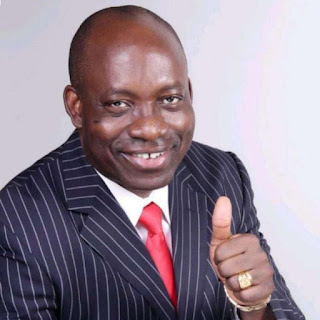
Gov. Willie Obiano. Image: Youtube

Ndi Anambra ekenem unu.

Eight years ago, when I gave my inaugural address, I shared my vision of a greater Anambra State with you. To some people, it sounded like a dream. To many, it came across as the usual sweet-talk from a politician. And yet to others, it carried the light of hope. Umu nnem, today, most of those dreams I shared with you have come true!

You asked for safety, we gave you “Nigeria’s safest state.” You asked for dignity; we sent our children to a global contest of intelligence and they defeated America, China, Spain and Turkey and brought back dignity and honour. You asked for legacies, we gave you monuments. Ndi Anambra, I touched a dream!

Brothers and sisters, as your governor, I worked under extreme pressure. I took many hard decisions. I stepped on toes. I didn’t answer some phone calls. I lost some friends on account of these. If you are one of those who felt offended by what I did or did not do, please forgive me. For in the words of the great Nelson Mandela, “Forgiveness liberates the soul.” A governor is also human. Whatever I did was for the good of Anambra State. Dalunu!

Umu nnem, I’m also aware that I did not fulfill every promise I made. But no government in the world has ever kept all its promises or solved all the problems of its time. However, my intentions were pure and my ambitions sincere. Let history be the judge!

Now, let’s take a look at what we did. Our efforts were audacious; covering major areas of development, from the softest to the hardest issues that challenge modern governance. While I have decided to leave my account of stewardship to historians and students of leadership, it may be necessary to recall that my Team and I began by defining the realities of our environment.

SECURITY

We figured that we would not be able to make reasonable progress unless we found a solution to the challenge of insecurity and public safety in Anambra State. In response to that, we organized Nigeria’s first international conference on security and flew in an Israeli security expert to facilitate the conference. The outcome was a revolutionary security architecture which helped us launch an all-out war on crime in our dear state. The crackdown was heavy; but in the end, we took back our state from the men of the underworld. I have not the slightest doubt that the glory of the new Anambra began with our victory over crime and criminalities.

The Soft Issues of Governance

Our campaign to return self-belief to our people was subtle but effective. The melodious Anambra Anthem, the Anambra logo and symbols of unique identity, the core values which are recited by school children every day; are all silent efforts to give our people’s pride back to them. Through these silent efforts, we have succeeded in raising some generations of Anambra children who have enough self-esteem to compete with their mates from across the world. Our concept of ana alu olu, ana alu mmadu which emphasizes commitment to the welfare of Anambra workers also led to improved loyalty and productivity from the workers. I must however recall that my administration was hit by two major recessions. But we still increased workers’ salaries and never owed salaries or pensions for one day. Our policy of “Doing more with Less” ensured that Anambra was insulated from the ravages of recession while we rolled out a Stimulus Package to reflate our sub-national economy.

The N20m Community-Choose-Your-Projects-Initiative

It is interesting to recall that our Economic Stimulus Package actually gave rise to the highly acclaimed N20m Community Choose-Your-Project Initiative, which has become a much sought-after model in rural development studies. This initiative also ensured that my administration touched all the 181 communities in Anambra State with projects of their own choices. The success recorded in the first phase of the project encouraged the administration to do even more; leading to the commencement of the second phase of the project. As a result of this, all the communities got projects worth N40m each from my administration.

Indeed, one of the major achievements that I look back to with pride is the establishment of a Court of Appeal in Awka. Until that development, our people had always travelled to Enugu to seek justice. But the setting up of the court has restored our people’s pride and dignity.

Education

We approached Education in three broad areas: Students’ Welfare, Teachers’ Welfare and Infrastructure Development. Essentially, my administration set out to maintain the competitive advantage our state has enjoyed in education over other states in the country and take it a notch higher. To achieve that, we sent Anambra teachers on off-shore training and exposed them to global best practices. We did that because we knew that the best way to take charge of tomorrow is to inculcate the right character in our teachers today. This is one of the secrets of Anambra’s great performances in education under my watch. In infrastructure, the 1000-room hostels we built in 12 technical colleges across the state are monuments that will speak for me long after I’m gone. In addition, we funded both missionary and public schools in equal measure. We donated the sum of N2.8bn to both Mission and Public Schoools. In Students’ Welfare, we have offered scholarships to over 300 students. A direct outcome of this is that both our school children and their teachers won impressive awards under my watch. And with this development, I have no doubt that the future belongs to Anambra State!

Health

In the words of America’s Ralph Waldo Emerson, “the first wealth is health.” My Team and I believed in this axiom. Health comes before wealth. One of our greatest legacies in the health sector is the Anambra State Health Insurance Agency (ASHIA) which was set up to make quality health delivery services easy and accessible to the greater number of our people. With only N12,000 per year, residents of this state can access high quality healthcare as they like. Our second major legacy in the health sector is the Anambra Oxygen Plant which is the biggest state-owned oxygen plant in Nigeria. This investment has continued to play an unforgettable role in the fight against COVID-19. The third major legacy is the Immaculate Heart Multi-Specialist Hospital Aguleri. This hospital is a showpiece of medical excellence. It is equipped with the most modern facilities that can be seen in any hospital across the world. Beyond these, we also paid a great deal of attention to the challenges of delivering quality healthcare to the riverine areas. We floated 26 water ambulances to deliver medical supplies to riverine communities. We also provided Keke ambulances for quick emergency shuttles in locations where conventional vehicles cannot easily access. And finally, we donated the sum of N1.2bn to all mission and government owned hospitals in the state to strengthen their capacities to respond to the medical needs of our people.

My Economic Blueprint

Fellow citizens, when leadership is focused and innovative, it invokes the future. My team and I worked very hard to invoke the future of Anambra State. We worked on my Economic Blueprint which is anchored on Agriculture, Industrialization, Trade & Commerce and Oil & Gas.

Agriculture

When we lit the fire of agricultural revolution in Nteje on May 15, 2014, we created a fertile soil for big industrial farms like Coscharis, JOSAN Agro, Chelsea Farms, Excel Farms and Lynden Farms to thrive. Our story changed immediately afterwards. Rice production output climbed from 80,000 metric tons in 2014 to 525,000 metric tons in 2021. Maize production rose from 15,902 metric tons to 74,255 metric tons. Cassava rose from 275,832 metric tons in 2014 to 2,060,687 and Vegetables from 48,032 metric tons in 2014 to 482,400 metric tons. We now have over 160,000 farmers and 3000 co-operative societies for farmers. In less than five years of operation, Coscharis Farms had quickly added a fully automated 40,000 metric tons rice mill to its investments. JOSAN Agro also added 50,000 metric tons rice mill at Umumbo to its fast expanding line of operation. Similarly, Lynden Farms expanded its scope beyond the 90,000 bird-facility it started with in Igbariam. It now has three production houses with an output of 265,000 birds laying an average of 72,000 crates of eggs per day.

Industrialization:

Our foray into industrialization was driven by the Anambra Small Business Agency (ASBA) which I set up on December 8, 2014. Since then, ASBA has successfully funded 10,000 cooperatives, micro enterprises and artisans while also providing operating capital to 300 small and medium enterprises. ASBA’s success has attracted Nigeria’s most modern Small and Medium Enterprises complex to Nkwelle Ezunaka. The complex houses an ultramodern industrial shoe-making hub with cutting edge technology and a capacity to produce shoes that compare with shoes made in Europe. One of the machines in the complex has a capacity to produce 1,500 soles per hour. On the strength of these stellar achievements, Anambra was declared the “Best State in Support of SMEs” and honoured at the Presidential Villa, Abuja in 2018. Today, made in Anambra shoes are exported to other West African countries on a weekly basis.

Oil and Gas

The crowning glory of our efforts in oil and gas is the recognition of Anambra State as an oil-producing state by the federal government. We have 15 oil wells at the moment. With this achievement, our dear state is now qualified to receive additional revenues from the 13% derivation fund given to oil producing states. This will definitely give a big financial elbowroom to my successor and make it easier for the state to undertake more ambitious projects. In addition, we successfully constructed two bridges to open access to the oilfields. They are the Aguleri Otu Bridge (which is also the longest bridge in the South East; measuring 280 meters long) and the Umueje Bridge. The Umueje Bridge also offers a direct access to the multibillion Naira worth Chelsea Farms. Before now, the oilfields could only be accessed through Enugu State.

Trade and Commerce

Our remarkable legacy in Trade and Commerce is the market modernization scheme which ensured the disbursement of the sum of N10m each to the 63 markets in Anambra State. It helped the various Traders’ Associations to upgrade the facilities in their markets. We also relocated many markets to lend depth to commerce and boost the capacity of our markets.

Power Supply

Ndi Anambra, you may recall that in my Inaugural Address I had assured you that my administration would pay a great deal of attention to power supply in our dear state. Today, I am delighted to report that we successfully constructed a 33 kVa distribution line from Oji River sub-station in Enugu State to supply electricity in Orumba North and South and even Isuochi town in Abia State. We also constructed another 33 kVa line from Agu Awka to Anambra International Airport to ensure a 22-hour supply of electricity to the airport per day. But perhaps even more important than that is our partnership with the Transmission Company of Nigeria (TCN) for the construction of electricity projects in Ifite-dunu, Umuchu, Amansea and Aguleri that will change power supply in Anambra State for the better.

The Overall Impact of my Blueprint

Fellow citizens, the direct result of implementing my blueprint is that under my watch, the economy of Anambra State grew from N3.2trn to N4.4trn. That comfortably placed us as Nigeria’s fourth largest economy. Another direct result is that under my watch again, Anambra joined Lagos and Rivers as the only states in Nigeria that could meet their operating obligations with funds from their Internally Generated Revenue (IGR) and earnings from Value Added Tax (VAT). Still under my watch, poverty rate in our dear state dropped from 53% in 2010 to 14.8% in 2020. Our dear state was also rated as the state with the lowest unemployment rate in Nigeria in 2020 at a stunning 13.1%. That was a time when the national average stood at 27%. Similarly, we were also rated as the state with the best Fiscal Responsibility Index in Nigeria after only Rivers State. And finally, to crown it all, Anambra State attracted the sum of $10.2m in foreign direct investment in 2020. Ndi Anambra, these statistics tell a simple story. A story of resilience in the face of incredible odds. A story of my stewardship to you.

Our Fight against Gully Erosion

It is important to mention our titanic struggle against gully erosion which threatens to swallow up our 4,844 square kilometers of land. Some of those gully erosion sites had swallowed large areas and several buildings before we moved in. A good example is the 100 Foot Road Nnewi which was threatening to swallow the famous Nkwo Nnewi Spare-parts Market before we moved in. The perplexity of fighting gully erosion is that you sink billions of naira in a big hole only to show a resurfaced patch of land afterwards. Anybody could walk past a reclaimed erosion site without knowing the enormous financial resources that went into reclaiming it. But that’s what we did in Nnewi, Amachalla Awka, Ugamuma Obosi, Minaj Obosi, Abagana, Enugwu-Ukwu, Nkpor, Nnewichi, Ezinifite, Ojoto, Ikenga Ogidi, Ekwueme Square and Nkisi Aroli among many other places.

Anambra International Passenger/Cargo Airport Umueri

Ndi Anambra, no experience compares to the pleasure of touching a dream. The feeling is unbelievable. It is even more so if the dream had lasted for 30 long years. Ndi Anambra we touched a dream when we commissioned the Anambra International Passenger and Cargo Airport Umueri. We are a people who covet dignity and honour. That airport has restored the dignity of our people and opened a new economic corridor for the entire South East region. The airport is a monument onto the ambitions of Ndi Anambra. It is a tribute to our desire to reject average and expand the frontiers of excellence in all we do!

International Convention Center Awka

The Awka International Convention Center represents the size of our dream. In its grandeur and sublime aesthetics, the Center points at the huge possibilities for Anambra State. In concept and execution, the International Convention Center did not pay attention to modesty. It reflects our collective drive for the best in whatever we do.

In both the City Stadium and the iconic flyovers in Awka and Amawbia, we see a statement in disarming beauty. They speak the language of the future. Just like the dazzle of the streetlights that shimmer all over our landscape at night. The 17 bridges and 113 roads we completed are also part of our distinctive landmarks. The robust development of Tourism Treasures like the Ogba Ukwu Caves and Waterfalls at Owerre-Ezukala and Ogbunike Caves in Ogbunike has added tourism to the many attractive offerings from Anambra State. They are things that remind us that we are the Light of the Nation.

A Promise Kept

Ndi Anambra, you may recall that the title of my inaugural address is “Expanding the Frontiers of Excellence.” Now if you look at the sparkling elegance of the Anambra International Passenger and Cargo Airport and the intimidating immensity of the International Convention Center, you may accept that my Team and I have indeed walked our talk. Also, in the same inaugural address, I had declared and I quote that “under my administration, we have no choice than to decide whether we are truly the sons and daughters of our fathers and true heirs to their long history of pioneering excellence.” Again, I think we have shown that we are true sons and daughters of our fathers and mothers. I think we have pioneered a few things and set a few standards for the future generation. Ndi Anambra, I think we have run this race well. I can look history boldly in the eye and dare it to judge me. I know it will be kind to me!

Historic Elections Under my Watch

Umunnem, I cannot end this speech without thanking you for the incredible support you gave me in the past eight years. I look back to all the historic records we made with pride. I look back to 21/21 with a deep sense of gratitude. What comes to my mind when I do that is the brilliant quote from American basketball icon, Kobe Bryant that “Winning takes precedence over all things.” Ndi b’anyi, winning is such a wonderful experience! Twenty-one over twenty is a watershed in the political history of this country. It was a moment when a proud people rose to their feet as one to reject every attempt at imposition. I thank you for that. I also thank you for the memorable nineteen-over-twenty-one victory you gave Prof Chukwuma Soludo in the last election. You rose against threats of violence and brazen intimidation to ensure that the vision of society we had worked hard to entrench in the past eight years is sustained. Dalunu rinne.

Ndi Anambra, it is not always easy to say goodbye. But I am happy that I am leaving you in good hands. I pray you to give the same support I enjoyed from you to our new governor. I have no doubt that he will surpass all our expectations.

Umunnem, dalunu

Oga adili unu mma o!

God bless Anambra State.

God bless Nigeria

Willie Obiano

Tuesday, March 15, 2022

How Igbo Traders Control Critical Sectors In 31 States, FCT

Traders at Aguiyi Ironsi International Market, Ladipo, Mushin Local Government Area of Lagos


Outside the five states that make up the South East geopolitical zone, traders who are of Igbo extraction are controlling critical sectors in 31 states and the Federal Capital Territory, reports by our correspondents reveal.

Reports from the South West, South South, North West, North East, North Central and the FCT, showed that investments of Igbo traders, cutting across all sectors dot the state capitals, LGAs, major towns and villages in other parts of the country.

The South East geopolitical zone is made up of Abia, Anambra, Ebonyi, Enugu and Imo states. At a time, agitation for secession is being spearheaded by the proscribed Indigenous People of Biafra (IPOB), Igbo traders enjoy peaceful, uninterrupted trading in other parts of the country.

'Igbos own 73% of Abuja property'

In Abuja, Igbo traders dominate the nerves of businesses in the city centre and the area councils.

Reports by our correspondents showed that the Igbo control housing and hospitality businesses just as they exclusively dominated spare parts and building materials trade in Deidei, Zone 5, Apo, Zuba and Mararraba.

During his tenure as minister of FCT, Malam Nasir El-Rufa'i, declared that the Igbo have acquired about 73 per cent of landed properties in Abuja.

"Sixty-eight per cent of the land allocations in the FCT belong to the 19 northern states, but in the actual land ownership, 73 per cent belongs to the Igbo with the most aggressive in land ownership belonging to the indigenes of Anambra State, while Ebonyi lags behind," El-Rufai said in 2007.

Sources in major markets in the FCT said most of the shops are owned by Igbo traders and investors.

An Abuja native in Kubwa, Mr Sunday Gazazhin, said no Nigerian would be comfortable with what Biafra agitators are doing to northerners in the South East.

Gazazhin, who is a youth leader, said Abuja indigenes have sacrificed their land willingly to Nigerians when the same right is being denied to other Nigerians in the eastern part of the country.

An Igbo trader who is a former chairman of Abuja Building Material Market in Deidei, Comrade Anthony Chukwuneke, told Daily Trust that he is in support of Biafra agitators and denied their involvement in attacking northerners in the South East.

When alerted about the Igbo's huge investment scattered in the North, in the event that they seceded, he replied, "The only thing that the Igbo trader should expect, is a special tax imposition against his business".

S/East traders dot 44 Kano LGAs

In Kano, the Igbo are going about their normal business with several investments in the commercial centre of northern Nigeria.

The spare parts and construction products market at Kofar Ruwa is one of the market areas in Kano where the Igbos dominate or play a significant role in the business of the market. While they are not the only tribe involved in the market, they control the highest volume of trade in it.

It was observed, however, that during the sit-at-home order of the IPOB recently, business activities in the market went on as normal.

Similarly, at the popular Sabon Gari Market (Abubakar Rimi Market) in Sabongari area of Kano, the Igbo and other non-indigenous tribes go about their day-to-day businesses peacefully with their hosts.

Daily Trust reports that aside from the major business interest, there is hardly any village in Kano's 44 local government areas that an Igbo man or woman would not be seen conducting his/her business and living amicably with their hosts.

Beyond the markets and other business interests, the Igbo are similarly heavily invested in the multi-billion Naira properties business across the state with a concentration in the Sabongari area of Kano metropolis.

While several individuals of Igbo extraction in Kano approached for comment declined on the basis of the sensitivity of the issues, Daily Trust recalls that the Eze Ndigbo of Kano, Igwe Boniface Ibekwe (Ide 1), had in a recent press release on behalf of the Association of Igbo Traditional Leaders in Diaspora, reaffirmed their "unalloyed support and commitment to the sustenance of a strong and virile Nigeria, where peace, unity, justice and equity prevail."

In Taraba, south-easterners dominate commerce

Igbo traders have dominated the building materials, spare parts, pharmaceuticals and other businesses in Jalingo, the Taraba State capital and other major towns in the state.

Findings revealed that 95 per cent of building materials, spare parts and pharmaceutical shops in Jalingo, Wukari, Takum, Gembu, Zing and MutumBiyu are owned by Igbos.

At Jalingo main mechanic village, almost 95 per cent of spare parts shops are owned by the Igbo. They also form over 65 per cent of the total motor mechanics in Jalingo and other towns in the state.

Similarly, most of the big pharmaceutical shops along Palace Way, Barde Way and other locations in Jalingo as well as in other towns and villages across the state are owned by the Igbo.

Bayelsa's economy under Igbo traders' control

Over 80% of businesses operated in Bayelsa State are owned by Nigerians from the South East region, our correspondent reports.

The Igbo traders see themselves as part and parcel of the state. Finding shows that many supermarkets, filling stations, eateries and clubs as well as other petty businesses are operated by Igbo people.

Checks at Swali Market, the biggest market in Bayelsa State, indicate that people from the South East are operating in the market peacefully with the people of the state.

A popular supermarket in Yenagoa, the state capital, belonging to an Igbo businessman is said to be the pioneer supermarket in the state.

Some Igbo traders' union leaders who spoke with Daily Trust said they have been operating in the state even before the creation of Bayelsa State.

Why we are leading in Akwa Ibom -- Eze Ndigbo

In Akwa Ibom, the Igbo are leading in the food market, household goods and supermarkets, electronics/electricals and auto/mechanical. They are in the majority in the automobile market called the mechanic village in Uyo, among other businesses.

They have continued to thrive even in the face of insecurity that is not just threatening Nigerians, the nation's territorial integrity but also the economy.

The Eze Ndigbo in Akwa Ibom, His Royal Highness, Eze Dr CYC Umeakuka JP, attributed the knack of the Igbo to thrive in business despite insecurity in the country to the peace they enjoy in the state and the hospitable nature of the people.

Umeakuka, who is also the President General of Eze Ndigbo in Nigeria and the Diaspora, said their risk-taking streak was a contributory factor to their success in business.

Igbo businesses thrive in Lagos

Despite the agitation led by the IPOB for an independent nation for the eastern region, businessmen from the area are thriving in Lagos, the commercial nerve centre of Nigeria.

A visit to major markets in the state indicated that they are doing their business without any hindrance.

Some major markets in the state, such as Alaba International, Jankara, Ladipo, Oyingbo, Computer village are dominated by people from the eastern region.

At Alaba International Market, which is the largest electronics market in Nigeria, they said there is no discrimination against them.

A visit to the Apapa ports also revealed that they are very active in clearing goods. In the hospitality business, a good number of hotels in the state are owned by Igbo businessmen.

Some of the businessmen who expressed confidence in the unity of the country claimed that the president and his men promoted the agitation in the region. They claimed that President Buhari has always shown his alleged dislike for the region through his utterances.

Collinson Oha, an electronics dealer in Alaba International Market, who has lived and traded in Lagos for over 12 years, said the people asking for separation are not happy with the way the government is handling things in the country.

Another trade, Chinozo Ebere, said the agitation in the South East has not affected his relationship with traders and customers from other regions.

However, some of them said if the agitation for Biafra succeeds, they would be willing to continue trading in Nigeria while they relocate the headquarters of their business to the new nation.

By Ismail Mudashir, Hamisu Kabir Matazu, Adamu Umar (Abuja), Clement A. Oloyede (Kano), Magaji Isa Hunkuyi (Jalingo), Bassey Willie (Yenagoa), Iniabasi Umo (Uyo) & Abiodun Alade (Lagos)

Article was first published at the Daily Trust, June 30, 2021

Saturday, March 12, 2022

Mindless killings In The Southeast

SUN NEWS EDITORIAL

The recent spate of killings in the South East, especially in Anambra State, demands urgent and drastic action. These killings have no pattern. The other day, for instance, a group of gunmen suspected to be cultists invaded a funeral ceremony at Ebenebe in Awka North Local Government Area of Anambra. They not only killed at least 20 mourners, they also desecrated the corpse inside a coffin by shooting at it several times. This is insane.

Nigerians were yet to come to terms with this absurdity when reports came that Chief Gab Ofoma, the billionaire Chairman/Chief Executive Officer of Ofoma Associates Limited, an estate surveying firm with headquarters in Port Harcourt, was gunned down while returning to his base in Port Harcourt from his home town, Nnewi. The incident took place at Ukpor-Lilu-Orsumoghu-Azia, Mbosi Road which connects Anambra and Imo State.

Besides, a professor of Economics and former permanent secretary in the old Anambra State, Professor I.O. Onyemelukwe (88) was also killed recently at Oko in Orumba North LGA of Anambra State. Onyemelukwe was the father of the winner of the Nigeria NLNG Prize for Literature 2021, Dr. Cheluchi Onyemelukwe. In Abia State, some gunmen also invaded a new cattle market at Omumauzor in Ukwa West Local Government Area recently and killed at least eight people.

The danger zones in the South East include Orlu, Orsu, Oru-East local governments in Imo State; Ihiala axis of Anambra State such as Isekke, Lilu, Orsumoghu, Azia, and Mbosi; Aguata and Orumba Local Government Areas of Anambra with Oko, Ekwulobia and Isuofia as major flashpoints.

Poverty and unemployment have helped to trigger the security crisis. The current rate of unemployment in Nigeria is 33.3 per cent. What this means is that a great number of youths are idle and have become willing tools for crime.They take all sorts of hard drugs which make them lose value for human life. A few weeks ago, the South East was designated as a haven for drugs. The reigning one now is called ‘mkpuru mmiri’ in local parlance. It is obvious that drugs and crime go together. Youths who take them can go to any length to commit evil.

Proliferation of small arms in the region has also helped to fuel the problem. Last year, some so-called unknown gunmen went on a killing spree of security agents. After killing them, they dispossessed them of their weapons. Security agents were killed in such places as Nkpologwu, Omogho, Neni, Awkuzu all in Anambra State. In different other parts of the South East, police stations and vehicles were destroyed and scores of policemen killed. In 2020, the EndSARS protests against police brutality had led to the killing of over 60 policemen and burning of over 200 police stations across the country. These actions significantly weakened the Nigeria Police Force as an institution. Now, criminals are having a field day and operating without much hindrance.

Consequently, the South East has become a cemetery of some sort as people become more careful of their movements. Driving a good car is now a crime in the region. If you are seen to be wealthy in any way, you are a target. The region is not too far from what happened in places like Afghanistan, Iraq, Libya, Somalia, and Syria where gangsters rule.

The South East is noted for entrepreneurship and high economic activities. Nnewi alone can account for half of what we have in some other parts of Nigeria economically. But now, people are already finding it difficult to invest in the region. What will happen in the next few years will shock people and this will have a spiral effect on the economy of Nigeria.

We can’t continue this way. Major stakeholders in Igbo land should meet and decide on how to contain the spate of insecurity in the region. Political leadership in the region should also sit up. We seem to have lost our humanity. It appears our youths are no longer abreast of our cultural and ethical values. Some of them do dirty jobs for politicians. With the general election coming up in 2023, we should exercise extreme caution to avoid witnessing severe violence. This calls for a reorientation of the youths.

It is pertinent to warn youths who are behind this criminality to desist from it. One day, nemesis will catch up with them. Non-state actors cannot be allowed to dictate the security pace. It is government that has the monopoly of violence.

Unfortunately, the problem has gone beyond the South East governors. It is time the Federal Government stepped in. There is need for a special security operation in the region to mop up illegal arms in circulation and flush out these bad elements.

Security agents should also intensify efforts to eliminate cultism and the use of hard drugs in the country. They should collaborate with local vigilance groups in different communities for the purpose of sharing intelligence. The hideouts of some of these criminals are known. Security agents must take the war to them and flush them out of the zone. Enough of these mindless killings!

Anambra: How We Got Soludo To Run For Gov - Kate Azuike

SUN NEWS INTERVIEW


Mrs. Kate Ifeoma Azuike, a former manager with the Niger Insurance Plc, is the women leader of Ndi-Igbo Amaka, a socio-cultural organisation, President/Founder Ada-Ife, and leader of the women wing of Soludo Support Group, Lagos State chapter. In this interview with VERA WISDOM-BASSEY, she spoke about how she and others convinced Prof. Chukwuma Charles Soludo, former Governor, Central Bank of Nigeria to run for the governorship election and how they mobilised Anambra people to vote for him.

What is Ndi-Igbo Amaka association?

It is the umbrella body that oversees the supervision of all the markets in Lagos. We have about 58 markets; all the heads of markets leaders in Lagos belong to this group. It foresees all issues in the markets in the state. As a result of this, for a long time now, there has not been any closure of markets in the state.

Is the association meant only for the Igbo or is its membership open to everyone?

It includes Yoruba, Hausa, Igbo, as long as you are trading in the markets. Our activities cover you, not that you partake in the meetings. It covers everyone in the markets, and we collaborate with the government in running the affairs of the markets. We also have our executives in the government. They inform us on what the government wants and does not want from our markets. So, we are the forerunners of the government.

What do you hope to see in the 58 markets you made mention of?

You know sometimes, last year, the military men went to Ladipo market and killed one person. But immediately that thing happened, we went there to calm the situation. We discussed and came to a conclusion. Even the army men involved saw what they did as wrong. After the incident, with the way we handled it, such an incident can never happen again. At times, we set out a programme whereby leaders would visit markets to create awareness for the traders on how to live peacefully with others and do their businesses. We teach them how to avoid trouble and keep the law so that nobody will harass them, at any time.

How do you handle disturbance from touts and area boys?

When you visit Trade Fair to purchase goods, nobody will disturb you today because everyone has their boundaries. They have laws guiding them. So, the executives make sure that they obey. But where the association cannot handle them, they turn to us in Ndi-Igbo Amaka Association, which happens to be a bigger umbrella.

I understand that you are also the leader of the women wing of Soludo Support Group?

Yes. It was from being the woman leader of these other associations that I became the women leader for Soludo Support Group (SSG) in Lagos State. We started the group in Lagos before we moved to the East. Those in Anambra followed us and mobilised others during the election. But we in Lagos worked hard to make sure we informed and mobilised people about the governor-elect. We talked to people about the suitability of his candidacy. We said if he becomes the governor things will become better for the state. He will do what he did at the Central Bank by turning the banking system around. We started two years before he declared an interest as a governorship candidate. We as a group went to him and asked him to vie for the governorship election. We told him how his election would affect the state including children unborn because we know what he can do if he eventually wins. We also compelled people to go down to the state and cast their votes, and many of them did.

At what time did you convince him to run?

He said he wanted to think over it when we told him. He had run in 2015 but did not win. But this time around he wanted to take his time and think about it. But later he called us to say that he was ready. He wondered if APGA (All Progressives Grand Alliance) would allow him to run. We visited the APGA chairman and they accepted him to run for the party. We were so happy when APGA declared him their candidate. Then all of us in Lagos went down to the East and started grassroots campaigns, going from village to village.

We noticed that the election in Anambra was generally peaceful. Why was it so?

It shows that Anambrarians love Soludo; it will happen again in the presidential election. If God gives us the right person that the people want, you will see that the election will be very easy.

On March 17, Soludo will be sworn in as Anambra State governor. What is the way forward for him?

As soon as he won the election, he quickly went to work. He inaugurated an 80-man committee and put in place: Call for expansion of interests, the Anambra Talent Data Bank. Soludo wants his administration to be open, and not based on man-know-man. That is if you know what you can do for Anambra State, send it into the box, and tell us what you can voluntarily do for the state. When they go through it, so many people have been filling out the form, and if you can prove what you said you can do, that person will be called. I know that after he leaves office, many people will emulate him on how he developed their state. Things will be done on merit and not man-know-man

What do you see Anambra State becoming under his leadership?

We want the state to become the second Dubai; we want that wherever an Anambrarian is, he will be agitating to go home. What our people built in Lagos and Abuja, we want it replicated in the state. But this time around, things will be well-structured and it will work with plans, not just anyhow. The data box is open to everybody from Anambra, Enugu, Imo, Delta and other states in Nigeria, so that what you learn you carry back to your state. This brings development. And people who see what he has done will say:” ah, I never knew that this thing can be done.”

What’s your advice for women who aspire to be in a leadership position like you are?

First of all, they should know their God, have a cordial relationship at home with their husbands and be open to them, so that they can advise them when they are going wrong. They should believe in themselves, and leave out fear of the unknown and move forward and aim high. And, by God’s grace, they will get to their goals.

Wednesday, March 9, 2022

Governor Soludo: Is Over 1000 Entry-Level Info-Tech Jobs in 100 Days Possible?

 BY EMEKA MADUEWESI

Charles Chukwuma Soludo

In Silicon Valley, you launch fast and early, then you iterate, reiterate, and iterate again and again until your product attracts fewer consumer complaints. You don’t launch a perfect product, rather you strive for perfection. Can Governor Soludo create 1000 information technology jobs in his first 100 days in office? My answer is a resounding “YES!” The next question is, “HOW?” Let’s go for low-hanging fruits with high local human development impact and global reach.

Anambra State has 275 public secondary schools and over 1200 public primary schools. If you employ just one Information Technology Evangelist for each public school, that’s over 1000 IT jobs. Simple. But what would be their job descriptions? What would be their responsibilities?

My idea of an Information Technology Evangelist (TE) for each public school in Anambra State is an entry-level website developer who will work with a team to create a technology template for the Anambra State school system. Each TE will be posted to a school and should be able to create blogs, microsites, landing pages, and update that school’s standard website daily with activities in the school and the school community. Being always deliberate, it would be my suggestion that TEs should be sent to the same primary or secondary school they attended.

The TEs will maintain and update the personal and contact data of the students, parents, and teachers (Parent Teachers Association) as necessary and track any ongoing governmental and community projects for auditing and reporting purposes. The TE will also be responsible for communicating and updating the PTA through newsletters, social media, phone calls, surveys, and emails as needed. The job title is “Technology Evangelist” because they will be required to teach the basic principles of computer hardware, software, and information technology to the students, parents, and teachers to develop their computer literacy skills.

Let me go into history. It used to be that if you were late to school, the headmaster or headmistress, or your class teacher would punish you. Your parents may not know you were late that day or even for several days. If you were absent from school, your parents may not know that you left home but did not attend school, and the school will mark you absent. From Governor Peter Obi’s account, I learned that some schools may lack certain teachers but the Principal would lie to the Governor that the school lacks nothing. The Governor had to give his own phone number to the Senior Prefects for direct contact.

Since Governor Soludo wants to run a smart and transparent government, he would be needing true and accurate data for each student, their parents or guardians, each teacher, every home, every house, and every community around every public school. It would be the responsibility of the TE to source this data and deliver them to the government or the public through the school website as the case may be. A parent who needs to speak to the child’s Math teacher should be able to do so by phone or email. A parent whose child was late should know by 9:00 AM that day. A parent whose child was absent should know by 12:00 Noon that day. It would be the responsibility of the TE to ensure that this data is available. The school and parents need to know how many times a child was tardy or absent in a term and why.

A few weeks ago, we read the sad news of a 19-month-old pupil of Arise and Shine Nursery and Primary School, Asaba, Delta State, who was reportedly flogged to death. The deceased was the son of a single mother who registered him at the school about three weeks before this incident. Though this was a private school, it would be the responsibility of the proposed TE to ensure that a parent could be reached in a matter of minutes to pick up a child whose condition or conduct is not conducive to a learning environment.

Recall that I said that the TE would be part of a “team” that will create a technology template for the Anambra State school system. It would not just be over 1200 TEs scattered all over Anambra State. Each TE is part of the local government team working together to identify problems facing their community that may require technology solutions. For example, a local government TEt team could collaborate to solve traffic problems at road junctions in the community. They could also work on creating alumni (old student associations) for the school, if there was none, or strengthen the existing ones to be more efficient and productive.

Since this is an entry-level job with no growth path in the school system itself, the TEs would be required to engage in continuous technology education and certification to re-skill and up-skill their knowledge for their professional growth. In fact, the TE job should be seen as a temporary opportunity to prepare TEs as thoroughbred professionals with up-to-date knowledge for their niche specializations in the global market.

As iron sharpens iron, the TEs would be expected to participate in online and in-person studies and certifications that will make them competitive in the global market and be sought after by the MAANA group (Meta, formerly Facebook, Amazon, Apple, Netflix, Alphabet, formerly Google) and Microsoft. This process could also spark their inventive juice to create products, become entrepreneurs, or work local and international gigs on contract.

Could TEs generate revenue? Of course! They could run very narrowly targeted, educationally-themed Google Ads and Amazon affiliate accounts. They could also generate revenue from small business ads and events announcements in the community, provided the school’s websites are not cluttered. Yes, they could generate revenue for the government.

To conclude, I’m not expecting a perfect program and performance in 100 days. However, creating this job opportunity to keep ụmụaka Anambra busy and productive, with a growth path of continuous technology education and certification, and preparing them for the global market sounds right to me. Trust me, this information technology/community organizer combo would look awesome in their resume. Human development is more important than concrete buildings and flyovers. Let’s start first and refine as we go. It’s also high time we stop empowering our youth with Sienna vans and wheelbarrows.

Ndi Igbo, chetanụ n’ọbụ aka n’eme azụ mgbakụlụ!

Emeka Maduewesi, Esq., LLM

Friday, March 4, 2022

Nnamdi Azikiwe "Address To The Igbo People"


This address was delivered at the Igbo State Assembly held at Aba, Nigeria, on June 25, 1949. In this address, Nnamdi mentioned the bad press, discrimination and marginalization of Igbos under the British government and called for Igbos to fight for their self-determination but under Nigeria and Cameroon, which will later lead up to the United States of Africa.


Harbingers of a new day for the Ibo nation, having selected me to preside over the deliberations of this assembly of the Ibo nation, I am conscious of the fact that you have not done so because of any extraordinary attributes in me. I realise that I am not the oldest among you, nor the wisest, nor the wealthiest, nor the most experienced, nor the most learned. I am therefore grateful to you for elevating me to this high pedestal.

The Ibo people have reached a cross-road and it is for us to decide which is the right course to follow. We are confronted with routes leading to diverse goals, but as I see it, there is only one road that I can safely recommend for us to tread, and it is the road to self-determination for the Ibo within the framework of a federated commonwealth of Nigeria and the Cameroons, leading to a United States of Africa. Other roads, in my opinion, are calculated to lead us astray from the path of national self-realization.

It would appear that God has specially created the Ibo people to suffer persecution and be victimised because of their resolute will to live. Since suffering is the label of our tribe, we can afford to be sacrificed for the ultimate redemption of the children of Africa. Is it not fortunate that the Ibo are among the few remnants of indigenous African nations who are still not spoliated by the artificial niceties of Western materialism? Is it not historically significant that throughout the glorious history of Africa, the Ibo is one of the select few to have escaped the humiliation of a conqueror’s sword or to be a victim of a Carthaginian treaty? Search through the records of African history and you will fail to find an occasion when, in any pitched battle, any African nation has either marched across Ibo territory or subjected the Ibo nation to a humiliating conquest. Instead, there is record to show that the martial prowess of the Ibo, at all stages of human history, has rivaled them not only to survive persecution, but also to adapt themselves to the role thus thrust upon them by history, of preserving all that is best and most noble in African culture and tradition. Placed in this high estate, the Ibo cannot shirk the responsibility conferred on it by its manifest destiny. Having undergone a course of suffering the Ibo must therefore enter into its heritage by asserting its birthright, without apologies.

Follow me in a kaleidoscopic study of the Ibo. Four million strong in man-power! Our agricultural resources include economic and food crops which are the basis of modern civilisation, not to mention fruits and vegetables which flourish in the tropics! Our mineral resources include coal, lignite, lead, antimony, iron, diatomite, clay, oil, tin! Our forest products include timber of economic value, including iroko and mahogany! Our fauna and flora are marvels of the world! Our land is blessed by waterways of world renown, including the River Niger, Imo River, Cross River! Our ports are among the best known in the continent of Africa. Yet in spite of these natural advantages, which illustrate without doubt the potential wealth of the Ibo, we are among the least developed in Nigeria, economically, and we are so ostracised socially, that we have become extraneous in the political institutions of Nigeria.

I have not come here today in order to catalogue the disabilities which the Ibo suffer, in spite of our potential wealth, in spite of our teeming man-power, in spite of our vitality as an indigenous African people; suffice it to say that it would enable you to appreciate the manifest destiny of the Ibo if I enumerated some of the acts of discrimination against us as a people. Socially, the British Press has not been sparing in describing us as ‘the most hated in Nigeria’. In this unholy crusade, the Daily Mirror, The Times, The Economist, News Review and the Daily Mail have been in the forefront. In the Nigerian Press, you are living witnesses of what has happened in the last eighteen months, when Lagos, Zaria and Calabar sections of the Nigerian Press were virtually encouraged to provoke us to tendentious propaganda. It is needless for me to tell you that today, both in England and in West Africa, the expression ‘Ibo’ has become a word of opprobrium.

Politically, you have seen with your own eyes how four million people were disenfranchized by the British, for decades, because of our alleged backwardness. We have never been represented on the Executive Council, and not one Ibo town has had the franchise, despite the fact that our native political institutions are essentially democratic—in fact, more democratic than any other nation in Africa, in spite of our extreme individualism.
Economically, we have laboured under onerous taxation measures, without receiving sufficient social amenities to justify them. We have been taxed without representation, and our contributions in taxes have been used to develop other areas, Out of proportion to the incidence of taxation in those areas. It would seem that we are becoming a victim of economic annihilation through a gradual but studied process. What are my reasons for cataloguing these disabilities and interpreting them as calculated to emasculate us, and so render us impotent to assert our right to life, liberty and the pursuit of happiness?

I shall now state the facts which should be well known to any honest student of Nigerian history. On the social plane, it will be found that outside of Government College at Umauhia, there is no other secondary school run by the British Government in Nigeria in Ibo-land. There is not one secondary school for girls run by the British Government in our part of the country. In the Northern and Western Provinces, the contrary is the case. If a survey of the hospital facilities in Ibo-land were made, embarrassing results might show some sort of discrimination. Outside of Port Harcourt, fire protection is not provided in any Igbo town. And yet we have been under the protection of Great Britain for many decades!

On the economic plane, I cannot sufficiently impress you because you are too familiar with the victimization which is our fate. Look at our roads; how many of them are tarred, compared, for example, with the roads in other parts of the country? Those of you who have travelled to this assembly by road are witnesses of the corrugated and utterly unworthy state of the roads which traverse Ibo-land, in spite of the fact that four million Ibo people pay taxes in order, among others, to have good roads. With roads must be considered the system of communications, water and electricity supplies. How many of our towns, for example, have complete postal, telegraph, telephone and wireless services, compared to towns in other areas of Nigeria? How many have pipe-borne water supplies? How many have electricity undertakings? Does not the Ibo tax-payer fulfill his civic duty? Why, then, must he be a victim of studied official victimization?

Today, these disabilities have been intensified. There is a movement to disregard traditional organization in the Ibo nation by the introduction of a specious system of a form of local government. The placing of the Ibo nation in an artificial regionalization scheme has left an unfair impression of attempted domination by minorities of the Ibo people. In the House of Assembly and the Legislative Council the electoral college system has aided in the complete disenfranchisement of the Ibo. As a climax, spurious leadership is being foisted upon us—a mis-leadership which receives official recognition, thus stultifying the legitimate aspirations of the Ibo. This leadership shows a palpable disloyalty to the Ibo and loyalty to an alien protecting power.

The only worthwhile stand we can make as a nation is to assert our right to self-determination, as a unit of a prospective Federal Commonwealth of Nigeria and the Cameroons, where our rights will be respected and safeguarded. Roughly speaking, there are twenty main dialectal regions in the Ibo nation, which can be conveniently departmentalized as Provinces of an Ibo State, to wit: Mbamili in the northwest, Aniocha in the west, Anidinma and Ukwuani in the southeast, Nsukka and Udi in the north, Awgu, Awka and Onitsha in the centre, Ogbaru in the south, Abakaliki and Afikpo in the northwest, Okigwi, Orlu, Owerri and Mbaise in the east, Ngwa, Bende, Abiriba Ohafia and Etche in the southwest. These Provinces can have their territorial boundaries delimited, they can select their capitals, and then can conveniently develop their resources both for their common benefit and for those of the other nationalities who make up this great country called Nigeria and the Cameroons.

The keynote in this address is self-determination for the Igbo. Let us establish an Igbo State, based on linguistic and ethnic factors, enabling us to take our place side by side with the other linguistic and ethnic groups which make up Nigeria and the Cameroons. With the Hausa, Fulani, Kanuri, Yoruba, Ibibio (Iboku), Angus (Bi-Rom), Tiv, Ijaw, Edo, Urhobo, ltsekiri, Nupe, Igalla, Ogaja, Gwari, Duala, Bali and other nationalities asserting their right to self-determination each as separate as the fingers, but united with others as a part of the same hand, we can reclaim Nigeria and the Cameroons from this degradation which it has pleased the forces of European imperialism to impose upon us.

Therefore, our meeting today is of momentous importance in the history of the Ibo, in that opportunity has been presented to us to heed the call of a despoiled race, to answer the summons to redeem a ravished continent, to rally forces to the defence of a humiliated country, and to arouse national consciousness in a demoralized but dynamic nation.

SOURCE

Nnamdi Azikiwe (1961). Zik: A Selection from the Speeches of Nnamdi Azikiwe, Governor-General of the Federation of Nigeria formerly President of the Nigerian Senate formerly Premier of the Eastern Region of Nigeria. Cambridge: Cambridge University Press. 

Thursday, March 3, 2022

Arch TV Show Interview With Amaka

ARCH TV INTERVIEW WITH AMAKA QUEENETTE

Amaka Queenette


Views from the Arch TV Show interview Amaka The Igbo Princess February 2022. The interview followed no particular guidelines and covered topics of spirituality, growing up in Saint Louis and the Illuminati.

Interviewer: Good morning Amaka how are you doing today.

Amaka: I am well today thank you so much for asking thank you so much for having me. I’m super psyched to be here.

Interviewer: That’s wonderful so tell me Amaka where exactly are you from? I know you live in Los Angeles right now but where were you born and raised?

Amaka: Well I was born and raised right here in St. Louis Missouri of course. I love my hometown and it’s just so exciting to be back home.

Interviewer: Ok because people refer to you as an Igbo princess like an African queen or something so I wasn’t sure if you were born in Africa and raised in St. Louis. What’s your African connection exactly.

Amaka: I was born and raised in America but I have Igbo heritage that I love to embrace.

Interviewer: Now, what’s Igbo?

Amaka: It is a tribe based out of Nigeria. It’s a culture and language. Most black Americans probably have some Igbo heritage.

Interviewer: Ok that’s cool and I hear you speak a little Igbo too. Let me hear you say something in the Igbo language.

Amaka: Ifunanya

Interviewer: Which means?

Amaka: When learning a new language you have to learn how to say love first.

Interviewer: I agree with this. So Amaka tell me what was it like growing up in St. Louis and how did you manage to escape some of the stereotypical things that occur to people here?

Amaka: Growing up in St. Louis was really fun and I have a lot of family here and they’ve always supported me throughout my entire life. It was always fun playing with my cousins and stuff like that but also the Saint Louis culture can be kind of rough and that definitely made me strong. Early on as a child I realized that a lot of the negatives that come with the city was something I did not want to be apart of so I was able to make the differentiation as a child regarding what I wanted and what I didn’t want and having an understanding of what you want what you don’t want can help take you down the right path so I think that’s how I was able to escape some of the stereotypical things that occur to people here.

Interviewer: Real facts spoken right there. So I listened to some of your music and I’m surprised it was actually really really good I really really like the “Love U” track and the “One Time” hits. Do you write the lyrics to your songs?

Amaka: Hahaha, yes, I definitely write the lyrics to all my songs. All my songs are written with passion and they come from my heart.

Anambra State Is Bleeding

BY CHIKA UNIGWE


What is happening in my beloved Anambra State? The news coming out of the state is heartbreaking. All is not well in the South East but Anambra, particularly, is bleeding furiously and at a terrifying rate. The euphoria that greeted the election of Prof. Soludo is being eclipsed by the barrage of bad news coming out of the state.

I had hoped we could capitalise on the relative calm that surrounded the gubernatorial election itself, and the joy at its outcome to ride into a bright, new dawn. We would show the rest of the South East how to work a state. Sadly, that’s not quite how things are working out.

Every day, there’s more news of attacks and killings and abductions and overall mayhem. Last week alone, about 20 young men were killed by hoodlums at a funeral in Ebenebe, Awka North Local Government, where the corpse was desecrated too. The coffin was allegedly opened and the corpse shot at multiple times and beaten. Some have said those responsible are cultists.

In the same week, as the funeral in Ebenebe was invaded by armed thugs, 84-year-old Prof. I. O. Onyemelukwe was shot and killed by armed men at Oko on his way back from Enugu to Nanka. His daughter, the writer and lawyer, Cheluchi Onyemelukwe, wrote a tender, beautiful eulogy to her brilliant father – who served Anambra State (and Nigeria) as a public servant and as an academic – on Facebook writing that “Despite the circumstances of his death, we are grateful to God for a life well-lived, a joyful feisty life lived every single second, a life committed to doing good…” Per reports, “the gunmen killed Prof. Onyemelukwe in the less than one hour operation, while abducting two men, who were said to have been unable to answer questions about the self-determination struggle of the IPOB.”

The week before the murders at Oko and Ebenebe, the Chairman/CEO of Ofoma Associates Limited, Chief Gab Ofoma, was shot and killed around the Ukpor-Lilu-Orsumoghu-Azia-Mbosi road (which connects Anambra and Imo State) on his way back to Port-Harcourt from his ancestral home in Nnewi. Per an eyewitness’s report on Olisa TV, he was killed probably because “he was riding in an SUV and looked like a ‘big man.”

This week has started with the report of two high profile kidnappings in Ozubulu, and the theft of a car. There is an accompanying video of a man whose singlet has turned red from blood being carried onto an okada, presumably to a hospital for treatment. A Tweeter user in Uyo claims that when his friends from Anambra State visit the state, they forgo their fancy cars for public transport for fear of being victims of kidnappers or car snatchers. There are rumour of students at girls’ school sexually assaulted by some unknown hoodlums. How has this become our new normal? How do we go on like this?

Anambra’s self-designated motto of Light of the nation feels very much like an irony at this point because whatever light Anambra has, is shrouded in darkness. Insecurity all over Nigeria is a problem, but Anambra State seems to be in some sort of scary free fall where unknown gunmen, cultists, hoodlums, gangsters, agitators etc. etc. are operating with brazen impunity, wasting lives at will simply because they can.

The incoming administration of Prof. Soludo will have its hand full if we are to reverse the trend and have some light break through the dark, evil cloud enveloping the state.

Ndi Igbo say that an elder cannot be at home and watch a goat give birth while tethered. Recently, the Anambra State Elders Council met and per an extract of their communique published in the Daily Post: “The Council after an in-depth deliberation of the current security challenges decided that to address the increasing security crisis in the state, advice (sic) that traditional rulers of various communities and president’s-general, as well as religious leader (sic) and all the stakeholders to ensure that the youth imbibe the right values in order (sic) avoid destructive vices like violence and drug abuse.”

With all due respect to the elders, and without access to the entire communique, the time for advising is gone, and now is the time for action. You cannot advise away wanton killing of anyone who “looks like a big man.” Or the desecration of a corpse. Or the invasion of a funeral to kill more people. Or the abduction of those who disagree with your politics.

Anambra has to show that it is serious about security. If not in this present administration under which the evil is expanding, then in the eagerly awaited incoming one. Prof. Soludo has his work cut out for him. He has promised to be a transformational leader, so we are looking to him to bring sanity back to our beloved state. How to do this? A friend whose opinion I respect suggests that once he takes over, Soludo should ask for the deployment of all security forces. If that’s not enough to reverse the trend, then he must introduce vigilante groups.

This is certain: Prof. Soludo will be inheriting huge challenges. I wish him the wisdom, the capability and the willingness to drag Anambra State into the path of sustained healing.

Soludo As Moses Of Igboland?

BY SUNNY IGOANUGO

Chukwuma Charles Soludo


I was one of those who agreed that Chukwuma Charles Soludo, had grown beyond being governor of Anambra State. As one of the star-boys of the Southeast, if not Nigeria, I supported the view that he should rather be gunning to be president.

So, when I heard some people asking, what he is looking for in Anambra, I couldn’t agree more. But beyond this, I also had another personal grudge against him. I wasn’t enamoured of his politics. That I must confess.

Here’s why! I was completely scandalised by his apparent approval of the shenanigan of the crowd in Awka either from the government in power or the All Progressives Grand Alliance (APGA), in recent years, as it seemed to me then.

His notorious statement in the wake of the 2017 governorship election that Anambra was not broken and needed no fixing really did it for me. It practically gnawed at my innards.

Firstly, coming from Anambra I could attest that Soludo’s position was not factual. Anambra was broken on many fronts then and even to a great length. Besides, the manner he emerged APGA candidate for the November 6, 2021 governorship election after the party switched to its invidious tactics of banning potential threats, was for me a confirmation of my worst fears.

But look at me now taking the front seat as a cheerleader. I’ve already gone full circle. His actions and pronouncements are the turning point.

I have begun to see signs that Anambra, my state might, just be on the verge of another clean break, in the same manner Chris Ngige and Peter Obi, broke away from the Chinwoke Mbadinuju parlous era.

Soludo’s high-priced academic credentials have never been the major appeal to me too, because many leaders I know with similar pedigree had failed in the past and are still failing now. We’re currently dealing with one of them in the Southeast, making waves in the media for his many gaffes. The use to which those credentials are to be put, was, for me the important issue.

You can now see why I find the vibes coming from Awka, as quite alluring. One, that Soludo was able to gather the 80-man Oby Ezekwesili-led transition committee in such a jiffy is a feat only a man with immense reach and capacity could.

As Woodrow Wilson, former US president wrote in his book, What is Progress? ”The direction is just as important as the impetus of motion.”

This early hand Soludo has shown looks good. It is a fundamental departure from the current picture in the state. What is more? To think that the eggheads are conducting the task on pro bono basis, also says quite much. Many had wondered from whence Anambra would source the funds to pay them, given their pedigree.

Imagine what this committee, which parades the very best of the Nigeria’s elite thinkers in all the sectors of the economy and the professions is capable of coming out with. And without pay to boot.

Again, the man of the moment hits another bulls eye. He has shunned flamboyance for a lean government structure. He has dumped the tag, Your Excellency for his first name, Charles. “Call me Charles, Charlie, Charlie Nwamgbafo, or Mr. Governor,” he says.

Not a few have complained that in recent years of Governor Willie Obiano, Anambra government house and around it had turned into places of obnoxious revelling, uncontrollable binges and other illicit activities, at the expense of the people’s commonwealth.

In fact, you may have heard that the governor-elect is currently at a loggerheads with the powers in Awka over the budget of his inauguration, insisting that it be cut down from the more than N600million to just N20million and that instead of a fanfare at the new International Conference Centre, in Awka, he would prefer to be sworn in inside government house banquet hall. The way to go, you might say.

But that is not the true picture. Hear the correct version from the man himself: ”I do not wish any event, dancers or players and all that. I just want to show up for work, like every first workday. Though it is going to be a Friday, which is the weekend, I’m going to work for over eight hours that day.

“No ceremony, no event, no party, nothing. Not even 10 Kobo will be spent. So the people who are saying N20million has been budgeted should go and tell us where they will get that money. It is going to be work, work, work, and that is what we’ll epitomise.”

Then the icing on the cake: “If a Pakistani will give us 24 hours of electricity, I will bring him and make him commissioner for utilities. What the people care about is the services they get and not necessarily who did it. We want to get good results here. What matters is the result. Accountability is a must here.” Okwu agwu! Palava finish!

But here comes the bigger task. Outside fixing Anambra, the larger picture is the mandate the governor-elect has been grappling with since July 2017. Ohanaeze Ndigbo, the apex decision-making body of the Igbo in Nigeria and worldwide had handed him with the job of creating the template for transforming the fortunes of Igboland, by designing a new economic and political development agenda for the people.

This task was laid on the shoulders the ex-CBN boss, who is leading a 100-member Planning and Strategy of a body drawn from the seven states under Ohanaeze’s influence – the five core states of Igboland, plus Delta and Rivers.

Named South East Development Company (SEDECO), the body created by former President General of Ohanaeze, Nnia Nwodo, also has the likes of Mazi Sam Ohuabunwa, Deputy and Ferdinand Agu, as part of the membership.

But no sooner after, it was beset with lethargy arising from the attitude of the Igbo governors who were supposed to provide it with the financial and political lifelines, achieving very little as a result.

But with Soludo, becoming the governor, the idea, may soon receive the jolt in the arm it requires to give it life once more.

Imagine that all Igbo states are able to grow one million palm trees in each of the states, yearly within the next five years with a corresponding growth of processing industries for the palm produce both on high, medium and small scale levels, maximise its coal resources for power generation. Part of the mandate given to committee is to design the framework for achieving this.

Other items on the card is to take inventory of all mineral resources and design a carefully scripted plan for engaging the federal government in their exploitation; the development of a refinery for petroleum resources; a paradigm shift to greenhouses methodology for vegetable production using the Netherlands experience as a typology and a deliberate policy for the development of ICT hubs in the states of the region to encourage human capital development.

Soludo and his team were also directed to work on the educational curriculum of the zone that would focus on the development of skills among men and women and recommend appropriate policies to states to improve the educational standards in their schools at all levels and growth of reliable financial institutions for mortgage, small scale business financing and research.

Imagine if, as he did with the Ezekwesili committee, he is able to convince and mobilise his colleague-governors to toe this line and therefrom, provide the wherewithal for the attainment of the agenda. How would Ala Igbo turn out before the expiration of his eight years?

He has already demonstrated his ability to mobilise, meaning that transforming Anambra into a dream Taiwan or Dubai, may not be a tall order after all.

If he adds into the kitty, the integration of Igboland to produce a giant economy, given its immense human and natural resources, what else would prevent the area from joining the elite club of a first world?

Indeed, some people believe Soludo already has his job cut for him. For instance, they say that raising N50trillion from Ndigbo is as easy as sleeping and waking up. It only needs someone who knows what keys to press on the piano to produce a melodious tune.

Incidentally, the Soludo committee was Ohanaeze’s response to the quit notice given to Igbo people by some groups in the North in that year. With the signs of social, political, and economic danger still hanging in the air like the sword of Damocles, many believe that an economically-viable Igboland is the buffer to withstand such a threat. With a self-sufficient Igbo enclave, who needs a Nigerian president?

When ala Igbo becomes an economic superpower, who says Nigeria won’t beg them with kolanut and spirits to send them a son for the same redemption? And who is likely to be the one?

Would Soludo be the Moses to lead Ndigbo out of Egypt? The naysayers are already accusing him of talking too much. But what if he matches action with words? Wouldn’t that divide the Red Sea and allow free passage of the people?

Thursday, February 24, 2022

What, Exactly, Do Nigerians Want From Ndigbo?

BY IKECHUKWU AMAECHI


THE usual refrain on the lips of Nigerian leaders, particularly those who successfully prosecuted the brutal civil war against the breakaway Biafran Republic is the indivisibility of the country.

One of them, General Ibrahim Babangida, in an interview with Arise Television on August 7, 2021 to mark his 80th birthday anniversary, put it rather bluntly: “When we were in the military, we talked about certain issues about Nigeria: the unity of Nigeria as far as we were concerned was a settled issue.”

While it would have been good if the unity of Nigeria was a settled issue, happenings in the country tend to suggest otherwise unless the unity Babangida and his ilk talk about is the agreement by those who won the war to exclude those that lost.

Otherwise, what kind of unity is it in a country where a people that constitute a significant percentage of the population are hated and despised not for any crime committed but for simply being who they are – Igbo. Two recent events prompted this reflection.

First, was the shameful conversion of the sacred altar of God by a Catholic priest as a launch pad for his vitriol against Igbo congregants in his parish.

On Sunday, February 6, Rev. Fr. James Anelu, the priest-in-charge of Holy Trinity Catholic Church, Ewu-Owa Gberigbe, Ikorodu, Lagos State, abruptly, without provocation, stopped the singing of soul-lifting Igbo choruses and songs during a service he was conducting.

In a video that went viral, the visibly angry clergy pontificated that the excesses of Ndigbo must be curtailed if they are to be kept from “dominating other people in this parish”.

And what was the crime of the Igbo parishioners? They were joyfully singing and dancing to the altar of God during the second collection.

To the embittered and resentful priest, singing Igbo songs in a Catholic church in Yoruba land is an act of domination.

He was so incensed that he uttered a heresy: The spirit of God in any place recognises only languages indigenous to that geographical location.

It is instructive that Fr. Anelu is not Yoruba. If he had enquired about the history of the Holy Trinity Catholic Church, he will probably find out that over 65 per cent of the money used in building the church and running it, including feeding him, was contributed by Igbo parishioners.

Barely 24 hours later, an obviously embarrassed Alfred Adewale Martins, the Catholic Archbishop of Lagos, issued a “disclaimer” directing Anelu to proceed on “an indefinite leave of absence”.

In the suspension letter which he personally signed, Archbishop Martins urged all “Catholic faithful to hold on to the faith and continue in our worship of God as one big family united in love and not separated by language, culture and race”.

I doubt if Anelu, wherever he is now, is penitent. He is simply consumed by hate. He is a victim of prejudice. And we commit a serious error of judgement if we think he is an outlier.

The second incident happened in Yola, Adamawa State. An Igbo businessman, Vincent Umeh, who lives in the state, bought a house from a willing seller, Ismail Mamman. Today, he cannot live in the property not because of any infraction of the law but simply because he is Igbo.

A Deputy Commissioner of Police, DCP, Ibrahim Baba Zango, currently serving in Lagos, says it is an insult for an Igbo to be his neighbour in Yola.

Umeh should reverse the purchase deal or face bitter consequences, including risking his life, DCP Babazango decreed. “We are a homogeneous community, I don’t want you; you can’t be my next door neighbour, I swear. What sort of insult is this? Can any Northerner move now to the South-East, say Onitsha and just bump into any neighbourhood to buy a property; just like that?” DCP Babazango asked Umeh on phone.

Such chutzpa may strike some as bizarre. But it is not. Just like Fr. Anelu, DCP Babazango is also not an outlier.

That is the humiliation Ndigbo are subjected to in their own country every day. From Lagos to Sokoto; from Bayelsa to Kebbi, they are being harassed every day for daring to invest and own properties in their own country.

Most times, some of these harassments are state-sanctioned. For instance, two weeks ago, the Kano State Sharia police, Hisbah, destroyed nearly four million bottles of beer in a crackdown on alcoholic beverages. The bottles were crushed into the ground by bulldozers in front of cheering crowds. After the bulldozers had done the job, Hisbah operatives then lit the crushed remains on fire and allowed the blaze to burn into the night.

“Kano is a sharia state and the sale, consumption and possession of alcoholic substances are prohibited,” the head of the religious police, Haruna Ibn Sina, crowed after supervising the mindless ruining of people’s lives.

Most of these businesses being destroyed are owned by Ndigbo. There is no law in Nigeria banning alcohol. Nigeria is deemed a secular state, yet Sharia law trumps the Constitution when Igbo businesses are involved. Nobody raises a whimper in defence of the right of the people to do legitimate business in their own country.

The irony is that just like Fr. Anelu who is sustained by offerings made by his Igbo parishioners, Hisbah officials are paid with money raised from the Value Added Tax, VAT, paid on the same alcoholic beverages they destroy with glee.

Those who blame Nnamdi Kalu and his Indigenous People of Biafra, IPOB, mentees for preaching secession ignore the asinine antics of Fr. Anelu and DCP Babazangos of this country, the same way those who blame Chukwuemeka Odimegwu-Ojukwu for declaring an independent Biafran nation in 1967 conveniently gloss over the waves of pogrom that resulted in the killing of thousands of innocent Igbo folks, patriotic Nigerians, most of them born in the North, with no other place to call home until the well-organised slaughter began in 1966.

Between May and October 1966, more than 30,000 Igbos and other Biafrans were killed in Northern Nigeria, and between October 1966 and June 1967 more than 100,000 more were massacred. In some instances pregnant women were killed, unborn babies pulled out of their wombs and murdered as well. Many of the victims were beheaded.

Those who defend that bestiality by invoking the equally condemnable killings in the January 15, 1966 coup conveniently ignore the fact that the Military Head of State and Supreme Commander of the Nigerian Army, Major-General Johnson Thomas Umunnakwe Aguiyi-Ironsi, and the cream of the Igbo officer corps were wiped out in the revenge coup of July 29, 1966.

They also forget that long before the January 15, 1966 coup, which was conveniently branded an Igbo putsch by those who had an extermination agenda, pogrom had been the lot of Ndigbo in the North.

A report, “Chronology of recorded killings of Biafrans in Nigeria: From June 22, 1945 to September 28, 2013”, put it this way: “The first incident in which the murder of Igbo people took place in Nigeria was in Jos on June 22, 1945. Hundreds of Ndigbo were murdered by the Hausa-Fulani during the pogrom and tens of thousands of pounds sterling worth of their property either looted or destroyed. No single person was apprehended or charged by the British regime nor an enquiry set to determine the “official” cause of this gruesome act.

“The second mass killing of Igbos and other Biafrans happened in Kano in 1953. In both cases, thousands of Igbo people with their families were brutally murdered and their property looted.”

What those who raise the spectre of Igbo domination simply because Ndigbo are everywhere forget is that the people love adventure. It did not start today and it is very unlikely to end tomorrow. Many Igbo leaders were born outside Igboland. Dr. Nnamdi Azikiwe was born in Zungeru, a town in Niger State, on November 16, 1904, ten years before Nigeria’s birth after the amalgamation in 1914. Odumegwu-Ojukwu was born in the same Zungeru on November 4, 1933.

The fact is that Ndigbo love travelling. They enjoy it. That is who they are. Do they dominate their environments? No. Rather, they help in building up wherever they sojourn. That is a virtue not a vice, which should not call for envy and bad blood.

If all other Nigerians can imbibe that culture, the country will be better for it. Those who don’t want Ndigbo out of Nigeria and yet will not allow them to enjoy their full rights as citizens are the problems of this country, not Ndigbo.

Wednesday, February 23, 2022

How The media Failed Japan’s Most Vulnerable Immigrants


BY DREUX RICHARD

TOKYO (JAPAN TODAY)
- The Ministry of Foreign Affairs is a strange institution. It’s responsible for the way Japan is perceived abroad, and it decides who receives the opportunity to immigrate. But its jurisdiction over the lives of immigrants largely vanishes when they reach Japan. It’s also the most influential agency that does not play a meaningful role in developing the government’s legislative agenda. Senior MoFA officials can only watch in dismay as less prestigious agencies, including some of Japan’s most corrupt, devise legislation that erodes the rights of immigrants and damages Japan’s international reputation.

A proposed overhaul of Japan’s detention system, scuttled in 2021 after the death of detainee Wishma Rathnayake and a resulting wave of protests, was especially unpopular with Japanese diplomats. The Kishida administration has revived it anyway, with parliamentary debate anticipated this summer. Until recently, MoFA relied on the press to guard against legislative aggression toward immigrants, quietly passing sensitive information to reporters who covered the Ministry of Justice, which enforces immigration law.

According to MoFA officials who acted as my sources during the 10 years I covered immigration, their current reluctance to cooperate with journalists is related to the sense, among the agency’s staff, that the media has become “much louder, but much less effective” on issues of immigration.

The officials I spoke with traced this problem to 2019, when a detainee starved to death at a detention center in Nagasaki, following a four-week hunger strike.

The Ministry of Justice cleared the detention center of wrongdoing, issuing a report that contained several defamatory statements about the detainee. He was not, as the ministry’s findings suggested, a hardened criminal or a deadbeat father—not according to court records, not according to his family.

The report went on to claim that it wasn’t possible to return the detainee to Nigeria because he refused to cooperate with the deportation process in January 2019. But the report also documented a meeting in May of 2019 where the detainee begged to be deported. As one MoFA official dryly observed, “May comes after January.”

The death was covered in Japan’s major newspapers, as well as a variety of global outlets. All of them printed the government’s claims without attempting to verify them. Not a single reporter succeeded in confirming the identity of the detainee, a native of southeastern Nigeria who came to Japan 19 years earlier to look for work in the leather tanneries of Hyogo Prefecture. His name was Gerald “Sunny” Okafor.

An important story about the destruction of a family was overlooked. Okafor’s widow, who is deaf, struggled to raise her daughter alone after her husband was detained, pushing her to the brink of psychological collapse. Immigration officials took advantage of her vulnerability, pressuring her to file for divorce and promising—disingenuously—that it would expedite Okafor’s release.

The media also failed to uncover administrative malpractice at the detention center, which led Mr. Okafor to believe that steps were being taken to expedite his return to Nigeria. After learning this wasn’t true, he refused to receive intravenous fluids, precipitating his death. The Nigerian embassy helped the Ministry of Justice cover up these mistakes, leaving a paper trail in Okafor’s immigration file.

The success of this cover-up has undermined the best opportunity to sink the proposed immigration reforms, which were developed in response to Okafor’s death. The reforms are based on the insulting notion that the detention center could have saved Okafor if it had possessed greater powers of coercion—the power to sanction his attorneys, for instance, if they pushed too aggressively for their client’s release.

But the press has helped to turn Okafor’s death into a non-story, by disseminating state propaganda that diminishes the death’s significance, then responding to that propaganda with opinion essays instead of investigations.

“The media approaches the immigration debate as an ideological matter, rather than a test of the integrity of Japan’s institutions,” observed one MoFA official who monitored Mr. Okafor’s case. “That’s not helpful to people in government who are trying to fix the system, because it doesn’t change anybody’s mind. It only inflames existing disagreements.”

If disobeying the instructions of immigration officials becomes a criminal offense, as the government has now proposed, it will be made possible by the collapse of non-partisan relationships between trustworthy elements of Japan’s government and their counterparts in the press.

In an era of journalism where editorial decisions are shaped by web traffic and algorithms, the loss of knowledgeable sources may not strike every media professional as a matter of concern. Reporters didn’t need to speak with anyone who knew Mr. Okafor in order to write about him, or to decide that it was no longer necessary to write about him — even as parliament debated legislation that resulted from his death.

“They got the answers they needed,” Okafor’s widow observed in our most recent correspondence. “And in such a convenient way: from no one, from nowhere.”

For six years, Dreux Richard covered Japan’s Nigerian community for a daily newspaper in Tokyo. His first book, Every Human Intention: Japan in the New Century, was published by Pantheon in 2021.

© Japan Today

Japanese Media And The Ghost Of Sunny Okafor—Nigerian Immigrant Who Starved To Death In Protest

"But the press has helped to turn Okafor’s death into a non-story, by disseminating state propaganda that diminishes the death’s significance, then responding to that propaganda with opinion essays instead of investigations."


Japan’s Ministry of Foreign Affairs (MoFA) is a strange institution. It’s responsible for the way Japan is perceived abroad, and it decides who receives the opportunity to immigrate. Senior MoFA officials can only watch in dismay as less prestigious agencies, including some of Japan’s most corrupt, devise legislation that erodes the rights of immigrants and damages Japan’s international reputation.

A proposed overhaul of Japan’s detention system, scuttled in 2021 after the death of detainee Wishma Rathnayake and a resulting wave of protests, was especially unpopular with Japanese diplomats. Until recently, MoFA relied on the press to guard against legislative aggression toward immigrants, quietly passing sensitive information to reporters who covered the Ministry of Justice, which enforces immigration law.

According to MoFA officials who acted as my sources during the 10 years I covered immigration, their current reluctance to cooperate with journalists is related to the sense, among the agency’s staff, that the media has become “much louder, but much less effective” on issues of immigration.

The officials I spoke with traced this problem to 2019, when a detainee starved to death at a detention center in Nagasaki, following a four-week hunger strike.

The Ministry of Justice cleared the detention center of wrongdoing, issuing a report that contained several defamatory statements about the detainee. He was not, as the ministry’s findings suggested, a hardened criminal or a deadbeat father—not according to court records, not according to his family.

The report went on to claim that it wasn’t possible to return the detainee to Nigeria because he refused to cooperate with the deportation process in January 2019. But the report also documented a meeting in May of 2019 where the detainee begged to be deported. As one MoFA official dryly observed, “May comes after January.”

The death was covered in Japan’s major newspapers, as well as a variety of global outlets. All of them printed the government’s claims without attempting to verify them. Not a single reporter succeeded in confirming the identity of the detainee, a native of southeastern Nigeria who came to Japan 19 years earlier to look for work in the leather tanneries of Hyogo Prefecture. His name was Gerald “Sunny” Okafor.

An important story about the destruction of a family was overlooked. Okafor’s widow, who is deaf, struggled to raise her daughter alone after her husband was detained, pushing her to the brink of psychological collapse. Immigration officials took advantage of her vulnerability, pressuring her to file for divorce and promising—disingenuously—that it would expedite Okafor’s release.

The media also failed to uncover administrative malpractice at the detention center, which led Mr. Okafor to believe that steps were being taken to expedite his return to Nigeria. After learning this wasn’t true, he refused to receive intravenous fluids, precipitating his death. The Nigerian embassy helped the Ministry of Justice cover up these mistakes, leaving a paper trail in Okafor’s immigration file.

The success of this cover-up has undermined the best opportunity to sink the proposed immigration reforms, which were developed in response to Okafor’s death. The reforms are based on the insulting notion that the detention center could have saved Okafor if it had possessed greater powers of coercion—the power to sanction his attorneys, for instance, if they pushed too aggressively for their client’s release.

But the press has helped to turn Okafor’s death into a non-story, by disseminating state propaganda that diminishes the death’s significance, then responding to that propaganda with opinion essays instead of investigations.

“The media approaches the immigration debate as an ideological matter, rather than a test of the integrity of Japan’s institutions,” observed one MoFA official who monitored Mr. Okafor’s case. “That’s not helpful to people in government who are trying to fix the system, because it doesn’t change anybody’s mind. It only inflames existing disagreements.”

If disobeying the instructions of immigration officials becomes a criminal offense, as the government has now proposed, it will be made possible by the collapse of non-partisan relationships between trustworthy elements of Japan’s government and their counterparts in the press.

In an era of journalism where editorial decisions are shaped by web traffic and algorithms, the loss of knowledgeable sources may not strike every media professional as a matter of concern. Reporters didn’t need to speak with anyone who knew Mr. Okafor in order to write about him, or to decide that it was no longer necessary to write about him — even as parliament debated legislation that resulted from his death.

“They got the answers they needed,” Okafor’s widow observed in our most recent correspondence. “And in such a convenient way: from no one, from nowhere.”

For six years, Dreux Richard covered Japan’s Nigerian community for a daily newspaper in Tokyo. His first book, Every Human Intention: Japan in the New Century, was published by Pantheon in 2021. This article originally appeared in Japan Today and has been edited for our audience.