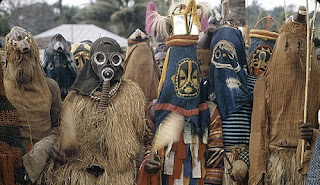
Translated by Frances W. Pritchett
Acknowledgments
We thank with all our hearts the many people who helped us to write and publish this book.
We thank the children and the relatives of Pita Nwana. We also thank our wives and children who had patience when we were researching and writing these things. They deserve thanks.
We also thank especially Ark Publishers who printed this book so it could reach the public. Others are Sunray Publications, Port Harcourt, whose director is Chief Philip Nkwocha of Emeabiam.
We also take the opportunity to thank especially our good friend, a great American white woman whose name is Ms. Frances W. Pritchett and who loves the Igbo language and strongly supports it.
This American woman came to Nigeria to Igboland several times. One time when she came she went to Nsukka and read to us at the S.P.I.L.C. meeting everything she wrote in Igbo and closed her remarks by saying,
Igbo people, you should persevere
So that English should not drown out Igbo.
To all of these we say "Thank you"and ask God to grant that each one may enjoy the fruits of his labors.
Dr. B. I. N. Osuagwu (KSC)
Maazi E. C. Nwanna
Omeokachie appears to mean "someone who, when he does something, does it with the maximum amount of his powers."
Foreword
While a person is alive his deeds create his reputation. The name of this book, OMEOKACHIE OMENUKO, is something that was done and came out during the life of Pita Nwana.This book was not called Omeokachie because Pita Nwana was acting like God. What we say about this is that Pita
Nwana became a person who said something, and had the belief and the determination to see that what he planned to do would be fulfilled as he expected. It was not easy.
Many times people plan something they will do but they do not have the dedication to see that the thing comes to pass. People like this try hard and pray that the thing they plan will happen. Prayer without faith through work is not effective. In Pita Nwana's case, he planned and prayed as well as working for all of those things to go forward the way he expected. It was this that caused his son to give him this name of OMEOKACHIE that is used to name the book.
One who reads OMENUKO? of Pita Nwana will wonder if what happened in that book was completely true or if it was a fiction, but if one reads this book OMEOKACHIE OMENUKO it will help him to know who Pita Nwana really was. The person will then know if the things he wrote in that book were factual or if they were folk tales.
Omeokachie Omenuko is a book about the life of Pita Nwana, a special man among men, a man who trusted his personal god and did a special work for the public without receiving any money.
This book is good, so any man and woman and students great and small should read it and see how the life of this man was. If one reads it, he should take what Pita did to make our lives today good as they should be and also make our world tomorrow better than today.
Dr. B. I. N. Osuagwu (KSC)
Maazi E. C. Nwanna
1 -- THE CHILDHOOD OF PITA NWANA
Crossing over like the morning stars
Which lost their essence (qualities) in the sun.
This is how we leave this world and die
Only our work will be used to remember us by
Only the truth we spoke when we were alive
Will be used to remember us by
When we leave this world and die
We well know that it is a very difficult thing for a person to do something that will be used to recognize his name or remember him by after he dies. People do many things at times, both good and bad. There is nothing better than a person doing good things while he is alive, which people will use to remember him forever.
Nwosu was born in Arondizuogu around the year 1881. The name of his father was Nwana, while his mother's name was Mgbokwo.
They were well known in their town, Arondizuogu. His father was a farmer, while his mother helped him.
They loved Nwosu very much. Nwosu (Igbo name: Pita) began as a child to do things that showed the type of person he would become. It is said that one can tell from childhood how a person will be as an adult. Nwosu was the eldest among his father's five sons. Nwosu was older than Chima, Chima was
older than Ikediobi, Ikediobi was older than Igboko, Igboko was older than Okike.
As Nwosu had turned out to be special, his age-mates or peers respected him in various ways. They would not go hunting or wrestling if Nwosu did not go with them. We must not forget that when a person hunts a cow and calls its name, if the person does not use his charms, he uses his rope. Any time Nwosu went somewhere with his friends, he did not fail to do something special or spectacular that was beneficial.
It is true that Nwosu was 'one who didn't see a rope and didn't tap palm trees' where his young male companions were concerned, but it did not mean that he did not help his parents. Doing errands and doing things quickly caused his mother and father to send him on any errands that were important. Before long, Nwosu began the love he had for crafts. He used to make traps and kill fish and return home. This pleased his mother Mgbokwo, which made her call Nwosu "Morning without empty hands."
The people of his land loved Nwosu very much. The adults loved him because he ran errands and was very agile. He did things that were beyond his years. The young men loved him. The young women used his name in praise songs. All these things pleased his parents. Soon Nwosu began to look after his own welfare. He then joined a certain man in their land and began to learn how to trade in the market. They traveled on foot from their land, Ndizuogu, to Onicha, where they purchased gunpowder and many other things.
One day when they went to market, Nwosu saw some white evangelists who were preaching the gospel.
Everything they said pleased him very much. When he reached home he began to ponder their words.The next day they went to market, he made a point to inquire from those who followed the white people as to what one should do to have a branch of their group in Ajali. When Nwosu reached home, he called together his friends and told them that he was going to go to Ajali. He told them what he was going to look for there. Only one of his friends agreed to go with him. When they reached Ajali, the people of that group told them that they were having meetings on the seventh day. They then started going to church in Ajali every seventh day.
Going to church in Ajali never stopped Nwosu from helping his mother and father as he had done before. He and his young men friends continued inviting others in their group, who were Okorie Onyeji, someone from the Amazu people, Osunkwo Eze and Ikediobi, Nwosu's brother. No one bothered them about their meeting-place or hampered them in any way. But soon, they started to show what they had learned. Besides various hymns they were learning, they were taught to get rid of all the customs that were not good and praying to idols.
In their land, there were several different forests called spirit-forests. No one entered them because they were places where people offered sacrifices and threw away various bad things like people with swollen stomachs, people with leprosy and plague, as well as those who had been killed by other things. There were rivers in their land where one did not go fishing. The rivers were Anammiri Imo and Okwara-afo. The first thing Nwosu invited his friends to go and do was to fish in Anammiri. Since no one had been fishing in that river, they caught an amazing amount of fish that day.
When they returned, his mother did not allow him to take them into her kitchen. That day, Nwosu looked for a pot, spoon, and fire, and cooked his fish. The other members of his group joined him, but they were not completely confident. Because of this, when their mothers and fathers found them out, they hurriedly threw away all their fish. When these people went to their friend Nwosu to ask him how he was getting along, they saw him eating and wiping his mouth.
Another thing that happened that surprised many people was entering the Ngene-Onicha forest and completely clearing it. This made many people of their land think that perhaps he had something wrong with his head. They then whispered among themselves that perhaps his father was aware of what his son was doing. Since Nwana Izuogu his father was born, no one had entered this forest, let alone cleared it. A few people came out and acted as though they did not see what Nwosu was doing.
Onwukaeme was the only one who saw him and snapped his fingers and said that where a child takes bow and arrow and shoots a vulture, is there not also an adult there? He scolded Nwosu and told him to come out, the vulture is not an edible animal. If the vulture were an edible animal, people in the time of the ancients would have eaten it. The one he was addressing did not pay attention as though it were he being addressed. nother thing Onwukaeme said was that "If one who is being treated for hernia gets a swollen stomach, he will not fail to get what he is seeking in the bad bush."
2 -- PITA'S NEW FAITH
All these things Nwosu was doing upset all the elders and the priests because it is said that if nothing is done in the beginning, it can bypass the one in front and affect the one in back. It is said too that it is not good for an elder to stay in the house while the goat gives birth on a tether. They then started to plan what they should do. So they called a meeting. The ones they invited were some elders and some priests. They also invited Nwana Izuogu, Nwosu's father. Their meeting-place was in the obi of Okoro Okeke. The meeting was held in the evening.
When they started, the first one to speak was Mr. Onwukaeme, who had seen Nwosu on the day that he was clearing the Ngene-Onicha forest. He then said, "My brothers, what you do not see on the body of the female goat, you will not see on the body of its child. This child Nwosu Nwana, the rain that he is going to cause has not yet fallen. It is said that what the chicken pecks up it scrapes up with its feet. The reason that I say this is that if two people like Nwosu were born in our land, tragedy would befall us. Therefore, let us take out the firewood that is smoking before the fire spreads."
After he finished speaking, one voice asked Nwana Izuogu if what was said was clear to him. Nwana then replied, "Our people, since the time Nwosu my son entered the congregation that they are attending in Ajali, we have been at odds [if I say up, he says down]. Something one does not know how to do, a way to do it exists. If you completely knock down a shrine, there is no one to perform a divination. But be aware that one will not on account of a child defecating badly wipe its bottom with agamevu [a prickly plant]." Silence was everywhere. Ozowara then said, "Nwosu is not a yam that you blend with the cocoyam. As Onwukaeme said, if there were two Nwosus in this land of ours, a bird would fly right across its nest [i.e., there would be a disaster]. What you are silent about is that Nwosu is too much for his father and is too much for all of us as well. We are the ones who own this land. What we say will be done. The one we tell to stay will stay; the one we tell to leave will leave. We tell someone, tie a palm frond on Nwosu's hand and drag him out to the market." Udensi then said to him, "If you say, drag Nwosu out to the market, you and Nwosu, which one will sell the other"
Ozowara became very angry. He then said that he should be given to Udensi and he could sell this minor child Nwosu all by himself. "Who is greater than I who use mouth to eat yam and cocoyam and will ask me and Nwosu which one would sell his friend?"
They both then began to quarrel. They scolded each other loudly. The meeting ended that day without any decision.
When Nwana reached home it was midnight. Only his chief wife, Nwosu's mother, was awake. She then asked him, "Did this evening's meeting go well?" Nwana told her that it was all right. By the time his wife brought him food, before she went out Nwana had fallen asleep in his chair.
Mgbokwo: Father, have you gone to sleep?
Nwana: Mgbokwo my wife, if the dog remains tied up is it like . . . ?
Mgbokwo: Please do eat something.
Nwana: What food is it? Is your son Nwosu in this house?
Mgbokwo? Father, what is the matter? He is here.
Nwana: It was only matters about Nwosu that everyone who attended the meeting today talked about.
Mgbokwo: Please, continue eating. Is it something about Nwosu that is keeping you awake?
Nwana: I told him that if the ram that grows horns, the back of its neck must become strong. Seeing and not speaking kills the adult, but speaking and not hearing kills the child. It is indeed true that it is not only in Ndizuogu that the new congregation came out; however, Nwosu is a person who takes learning to the utmost. Whether the kinsmen will try to kill him and the members of his group will save him, that is what I, Nwana, do not know. What I do know is what the people of our land say they will do to him. I have nothing more to say.
When Nwana finished eating, they retired. Everyone was pondering Nwosu's situation. At dawn, Udensi came to ask Nwana what he thought about his son Nwosu. When he entered, Nwana greeted him,he responded and called Nwana by his warrior name which was OGBU-KA-IYI. Nwana answered him. After they finished the morning hand-washing, Nwana brought kola and invoked the spirits, saying:
"God in heaven, chew kola
Izuogu chew kola; Iheme chew kola
Eke, Orie, Afo, Nkwo, four markets
Four weeks, whatever the day brings, let it eat.
What a person knows, knows him.
Nwosu my son, this thing you are doing
People are talking everywhere about you;
If it is good, let it belong to me and my enemies
But if it is bad, let it be on your head."
After he finished this invocation, Udensi did not know what to say, because when death seeks the one he will kill he has seen the corpse that is carried on the head.
While these things were happening, Nwosu and his group were discussing their baptism and how a church of their own could be brought to them in their own land.
The head of their church, a priest, told them that any time they finished their building, he would personally come and bless it and then baptize them.
They were very happy that the priest would come to open their building whenever they finished it. Because of that, they went steadily ahead with their work. Many people had already begun to side with Nwosu and his group. Some who secretly joined them went and fished in the Imo River in waters where no one had fished before, and all the fish in it were taboo. They were afraid of nothing that was in the water, they would be selecting the one they wanted.
Not long afterward, they finished building their church, then went to Ajali and told the priest that they had finished building their church. They and the priest then decided when he would come and open the church for them.
The priest also promised them that on that day they would be baptised. He also told them that they should keep on looking for food and wine because very many people would be coming with him. Some would come from Adazi, Onicha, Oka, including those joining him from Ajali. They and the priest then agreed that it would happen in the eighth week, or the fourth church week.
When they returned, they divided the work each one should do, like apportioning to everyone what he was able to do. Nwosu promised that meat and fish would not be a problem, that he could bring enough for everything they were going to cook. He said that anyone else who killed an animal or fish for them must be sure to dry it over the fire. Regarding the wine, since everyone of them was a palm wine-tapper, that was a job that they agreed should fall to everyone, that is to bring wine.
Another thing they did was to see that they finished everything that was important in that building, like building the seats. They then molded the clay and made ten seats inside the building. They all worked hard--those who fetched water, those who molded clay, those who carried loads, and those who worked at anything they were assigned to do. Soon, all the work was finished. Peoople were surprised at the way that church work was finished speedily, and to all specifications exactly as they wanted it.
3 --NWOSU IS BAPTIZED AND TAKES THE NAME OF PETER (PITA)
The second meeting the elders and native-born citizens held concerning what would should be done to Nwosu and his group was held in the house of Mr. Ogbu-onye-isi-ogu. The reason he was called Ogbu-onye-isi-ogu was that his followers then scattered like an oil-bean seed. Another name this man was called was Okwu-a-na-aso-anya. The reason he was called a name like this was that there was no one he avoided any time he wanted to talk. He also believed that a matter that was avoided would not end speedily or quickly. Therefore, any time one wanted to discuss an important matter, or a matter one wanted to end quickly, the matter would be taken to his house.
When Nwana was preparing to go to the meeting, he called Mgbokwo and told her that they they were going to judge his son Nwosu. After he left, it was not long before Nwosu entered. His mother then called him and told him that his father and others had gone to the home of Ogbu-onye-isi-ogu to decide what would happen to him. Nwosu did not answer and just ignored her [sent her to market]. His mother then told him that one who did not agree would agree on the mat. Nwosu then began to think about what he should do.
At no time did he have second thoughts about his faith in the church. His only bolster was that any time something was difficult, he would run out and go to consult their church teacher in Ajali.
While they were in their meetingplace, Nwosu came close to the house of Ogbu-onye-isi-ogu, climbed the oha tree that was there, and observed them where they were meeting and heard everything they said. Ogbu-eme-nwa then asked Mr. Nwana what his thoughts were about all the abominations his son was committing. Nwana replied that he loved his son, but he would not tolerate his father being reincarnated and then overfeeding him. He also said, "Anything you do so that Nwosu learns something will benefit me as well as all of you. But be aware that it is not only in Ndizuogu that this church has come." They then asked him if the church people in Ajali were doing all these things that Nwosu was doing. Nwana replied that "If someone tells what he is suffering, he is thrown out alive."
Finally, they all agreed that Nwosu should be sued [nwa nnunu]. Anyone who has been sued has suffered. The elders and the chief join together and sue that person in court. When that person comes to court they tell him to step up into the dock where he cannot see anyone else who is being
judged. The chiefs will fire questions at him. Finally, they will decide among themselves what will be done to that person.
It will be remembered that Nwosu was in the tree listening to what they were doing in the meeting when they decided this. Not all of them felt good about it, but no one said a word. They then chose the ones to go and bring the court action and the time they would go. But whichever place they decided on to hold a yam feast, they did not want there to be any quarreling before the yam feast was over.
When Nwana returned in the evening, Nwosu asked him, "Have you all finished the secret meeting you were holding? I thought that you were going to talk about destroying our church."
Nwana: If that is done, what will you all do?
Nwosu: Do you ask what we will do? Did you all not hear what happened to Uga's people?
Nwana: What happened to Uga?
Nwosu: When Uga shot the European gun, where were they?
Nwana: Go and sit down, I am tired of talking; if you tell the ear and it does not hear, when the head is cut off, it and the ears go to death together. My son, listen to the [story of the] squirrel who was chattering in the forest, the broad leaf then told the squirrel to please shut his mouth, but the squirrel continued loudly. The broad leaf then told the squirrel that the reason he told him to shut his mouth concerned the lives of both of them. In a few minutes, a hunter came and shot the squirrel, then broke off the broad leaf and wrapped it up. The broad leaf then told the squirrel that what he told him had come to pass. Do you understand my meaning?
Nwosu: No matter what is said, whether the squirrel says or does not say something, in only a few days the pastor will come to open our church for us.
The day the teacher came to prepare Nwosu and his group for the coming of the pastor was a big day. The teacher told them that the bell would be rung, a first time and a second time. They then would start the meeting. The teacher taught them many other things of various kinds that they must learn about before they were baptised.
Question: Who created you?
Answer: God created me.
Question: God created you for what purpose?
Answer: God created me to love and worship him.
Question: How do we know that God exists?
Answer: The world and everything in it tell us that God exists because there is no one who can create all these things.
Question: Do we need to sacrifice to approach God?
Answer: No, God does not want sacrifices in the way that our ancestors sacrificed to gods made by hand. Rather, he wants us to give ourselves to him with all our hearts.
Those who were going to be baptised had to learn the ten commandments and know them by heart and also be able to read them at any time. The commandments were these:
First: you should have no other gods besides me
Second: do not take the name of God in vain
Third: remember the sabbath day and keep it holy
Fourth: honor your father and your mother
Fifth: you should not commit murder
Sixth: you should not commit adultery
Seventh: you should not steal
Eighth: you should not bear false witness against your neighbor
Ninth: you should not covet your neighbor's wife
Tenth: you should not covet your neighbor's property
After they learned these things and all the various prayers, they then related to the teacher the various troubles they were having. Nwosu told him that he was close to being kidnapped and sold out because he did not worship all the gods in their land. He also told him that the people of his land were determined to punish him or make him suffer if he did not leave the church.
These things made the teacher feel sad. He then comforted them and read to them what was written in the Bible Book of Matthew, chapter 5, verse 6:
Any time they blame you, trouble you, say various bad things against you falsely because of me, rejoice and be very glad; because this is the way they persecuted the prophets who came before you.They finished by singing, "Send, send, the good news which is a blessing so it can be learned everywhere, send, send."
After they finished, Nwosu told the teacher that another thing on his mind was that any time anything was hard for him to do, he would pack up and go to him in Adazi. Especially since his father had joined in wanting something to be done to him.
The teacher told him that they should read what was written in the Bible in First Corinthians chapter 16, verse 13:
Stand firm in your faith
Be manly, be strong
Be persevering, be steadfast
Some will hate you
Others will scorn you
Ignore them and look upward
Trust in God
Some of these words strengthened Nwosu's heart. The teacher pointed out to them the examples of several people whose stories were in the Bible who had suffered because of the word of God. People like Stephen, who was stoned to death. Peter suffered very much because of following the way of God. Job suffered enough for everyone to use as an example.
After he was finished, the teacher told them many different things they should have ready for the day when the priest would come to baptise them.
On the morning of that day, Nwosu made ready and wemt and rang the first bell. Shortly after the morning sun came out he rang the second one. It was not long before the priest's carriers arrived. They all then went out to the road to welcome the priest and his people. He then asked them if they had prepared well, because he had sent word to many people from other towns to come and join them in this great event. He told them that many people would come from Adazi, Umunze and Agulu. This made Nwosu and the others hurry around more than they had expected to.
When all these people had arrived, the priest told them to go and ring the bell. They all then began to sing hymns and pray and chant and tell the good news from the Bible which was the word that came from God.
It was not only Nwosu and his group who were baptised that day; many of those who came from various other towns were baptised as well. Nwosu then changed his name. From that day on, his name became Pita [Peter]. His friend Okike Maduagwu answered to Stephen. Another answered to Job, because they said in their hearts that if they suffered what Job suffered, they would not go back on their words. No one answered to Jonah, because they were very surprised and amused that a fish swallowed Jonah and carried him in its stomach for three days.
The townspeople who came to find out what was happening were numerous as the sands of the earth. This caused the whole church compound to be filled with people. They watched them and heard the hymns they were singing.
Come so you can be baptised
Wash away your sins
You will have a covenant with Jehovah today.
4 -- PITA COMMITS AN ABOMINATION
From that day on many of our people began to look at that church with suspicion. On Sunday, some of them would come secretly to join the singing. When some of them reached home, their parents knew that they had gone to church and did to them what the elephant did to the oil palm. Some joined in fishing in the Imo, but they did not allow their parents to find out.
As was said earlier, from the day of his baptism, Nwosu answered to the name of Pita. Also from that day, a number of young men began to take a great interest in that group. Above all, they loved each other and ran errands for their mates a lot.
One day Okike's brother, the one who answered to Stephen now, contracted leprosy [white sickness] and died. All the people of the village gathered to find out what the church people would do. Everyone knew very well that leprosy was a sickness to be shunned. The church people then gathered together to pray, took the man and bound him on a mat, went and buried him. They also held a big funeral for him. The village people then expected that they would all contract leprosy. Nothing happened to anyone, not even a rash.
One Sunday, the village people put on a masquerade and made it go and block the road, so that when Pita and his group came from church it could give them a thorough beating. When church was over, the masquerade prevented the women and children from leaving. They then ran back and told the men. When Pita came there, the masquerade called him Pitaee. Pita said o-o, and said that since he knew that his name was now Pita, all was well. Pita then said to him, "Please masquerade, allow the church people to go home. Human beings and spirits do not contest for a rat's ear."
While they were speaking, a flutist called to Pita and told him to run away quickly, that someone stronger [who had pepper] had come. Since Pita was hearing what the flutist was saying, Pita asked the flutist if he was the one with pepper or if it was the masquerade who had pepper. The flutist then cried what the bird cried to the millipede. The masquerade leader then started to address him by various names like this:
It is satisfying!
It is satisfying!
It surprises the dog O
It surprises the dog and it bites its owner to death
The bad dog is excessively greedy - It is satisfying!
The bad lizard runs around before the spirits
The corpse of this lizard is carried by the tail
It provokes the strong man and challenges him
It happens all around
If you do not act like a snake
Children will take you and make a rope
While this person was saying these things, the flutist was playing his music, the masquerade felt as though he were carrying the sky and earth on his head. He then applied a whip to Pita's waist and whipped him! Pita thought to himself that what he had been wanting had happened. Pita then lifted the masquerade up and threw him to the ground and climbed on top of him. Everyone gathered there, both men and women, and saw for the first time that a man was beating up a masquerade, and they thought that the masquerade would come up with some different kind of maneuver.
But when Pita shouted that the masquerade was biting him, it was clear that the spirits were tired. When the herbalist keeps on mixing the medicine for cutting ichi marks, you can be sure that his sorcery is exhausted. Because of the masquerade's biting him, Pita beat him up thoroughly. The masquerade then shouted in a loud voice, "Nwosu! Hey! Pita. Pita Nwana, Nwana Izuogu. Mgbokwo don't kill your brother o!" Pita asked him, "Are you a man or are you a spirit?"
He said that he was a man. Pita then asked him, "Does that mean that you are not a spirit?" He said to Pita, "Didn't you know that when dawn comes, the one who carries me [the masquerade] changes into a man?"
While all this fighting was going on, all the people who had come out of the church had a chance to get away. When those who followed the masquerade, the flutist, the drummer and the one who called him great praise names saw that the one who had been on the ground had fallen on the one who had been on top, and this had become a disgrace, they ran and begged Pita to leave the masquerade alone. So he left him.
This struggle caused pandemonium everywhere. Some said that what Pita did was extremely wicked. Some asked why the masquerade agreed to fight a human being. The elders said that the house that people wanted to destroy had been burned. If you look for a way to eat ants, the ants fall into the oil. This meant that they had seen something they could use to finish off the young man who put aside Nwosu as his parents had named him, and now answered to Pita. They then held another secret meeting. This time, they did not tell Nwana that they had set a time for a meeting. They agreed that they would sue Pita in court. They then sent various gifts to the court clerk so he would do for them what they wanted, which was for Pita to be put in jail.
On that day, it started to rain in the morning and continued all day. No one went outside or to the farm to get something to eat. The Imo River flooded and filled the forest and the roads. The riverbed swelled because the Okwaraafo was flowing into the Imo, but since the Imo was completely flooded and overflowing, it could not handle all that water and it entered all the forest and farm land. This is why the people said that rain hunts. Because of this all the wild animals, those that live in water and those who stay on land and those who live inside holes, ran out staggering around. The townspeople then came out, both those who had guns and those who had knives, to see if there were some wild animals they could shoot. Nwana told Pita that he should not join in the hunt but Pita refused. It is true that Pita had committed an abomination in growing his upper teeth first, but his father Nwana loved him. The reason his father told him not to go was that his enemies could conspire to take guns and kill him in the forest.
When Pita went, he seemed to know what his father had in mind, so he avoided every place where the others were. Soon, he saw a water python with its head stuck in a bunch of grass but the rest of its body was on top of the ground. Pita was very frightened because the snake was huge. Pita pierced it with one knife-stroke. The snake wrapped itself all around the trees there and broke them. Soon, the whole forest looked like a place where two strong men had had a fight. Since the knife had cut it badly, it was not long before its strength gave out. Pita then looked for a good strong rope, tied it around its tail and dragged it home. Pita acted as though he had gone to pick up something he had left there earlier. A crowd of people joined him in returning to his father's compound. When his father saw what his son had carried home, he chased him away with the thing he was carrying. Pita then called the church people and they skinned the snake.
The fat on that snake would fill three baskets. It was as long as 24 footsteps of one adult man. They finished cooking it and sent out word to those of their group in Ajali, as well as those in Oka and Umunze. The story of the python then spread everywhere. Some people would not believe that the one who killed an animal like this would survive until dawn, because if a child gathers more firewood than his peers it is said that he gathered it in the bad bush.
Three days later, a court messenger [colonial policeman], or kotima, traveled not knowing the road, not losing his way, not getting lost in the forest, and came looking for Pita. When he came, Pita was not at home but his mother and father and Ikediobi, Pita's brother, were at home. At that time, people avoided kotima the way they avoided evil spirits. The kotima told them to go and find Pita. If Pita was not found, he would take his mother. When Ikediobi heard this, he broke into tears. He was crying and looking around for Pita. When he found Pita, he said to him, "Is it you that the policeman is looking for? Come on now. He says that if you do not come, he will take our mother Mgbokwo."
"Are you saying that he is a policeman, or is he a kotima?"
"I don't know. All I know is that you are the one he wants."
The two of them then started home. When they arrived, the kotima was in the house doing nothing but scolding. As was said at first, the kotimas were avoided the way white people were. When Pita entered the house, the kotima then continued to scold loudly. Nwana then said to him, "Sir, take it easy. The one you came to arrest has not run away, and you are not searching for him. I know that the child whose father is a thief kicks doors down."
The kotima expected Pita to be afraid or to run away when he saw him; on the contrary, when he came in, he asked the kotima if he was the one he wanted, and he said "Yes." Pita told him they should go at once. Nwana then told them to wait so that food could be cooked for the kotima to eat. Pita told him to go to the place of those who sent him so they could feed him. When the kotima saw that Pita was standing firm in what he was saying, he told them please that they should bring food for them to eat, since the place they were going was far away.
While the kotima was eating, Nwana asked him, "If one were to reach Ugwunchara today, when would the judgment take place? Pita, when will the chiefs of our land come to judge him?" The kotima said that his court case would be the next day. Nwana again asked him, "Where will Pita be until tomorrow?" The kotima said that Pita would be taken to jail. "Are you going to handcuff him?" The kotima told him "No-o. e will not be handcuffed because he has not stolen anything." Nwana sighed and ground his teeth. He said to them, "All right then, go well." When one is thinking about what he is going to plead in court, does he know what the judges will ask him?
I know what I will say, if people say that I gave my son bad advice.
5 -- THE COURT MESSENGER TAKES PITA TO COURT
When the kotima was looking for Pita, those who heard it thought that a disaster would occur. Some stayed in the road to see when the kotima would take Pita and what he was going to do. When they came out, what they saw in the pot was not soup. Some asked themselves, "Is it Pita arresting the kotima or is it the kotima arresting Pita?" The reason they said this was that Pita did not act sad about it. His heart was strong as a rock. His legs were stronger on the ground than those of the kotima. This made them say that the snake always gives birth to something long, which meant that Nwana had a child who resembled him in bravery.
Pita and the kotima then began their journey and reached Afo-Umu?na. The kotima wanted to drink some wine, but he couldn't enter the market wearing the kotima uniform. If he did that, the market people would run away. So he thought about what to do, then took his hat and put it into his bag. He also took his belt and put it into his bag. He undid the items he had tied around his waist and put them into the bag, and gave it to Pita to carry. When he arrived at the place where elders were drinking wine, no one looked at him as a government person. They told him that if he wanted to drink wine, he should come and join them in pooling some money to buy one bottle of wine to drink.
Since this was their custom, they then pooled money and bought one small pot of wine and told him that they would be four people drinking it because the price was six cowries, and it would cost them one head of cowries and three pieces. The kotima agreed. They then poured out the wine and were drinking. One of them brought out kola, they broke it and ate. Those who had snuff brought it out too, and they took it. Then they told several long stories of various kinds. Soon, the wine intoxicated them and their voices rose and fell loudly. Then they started to look for someone who would drink the dregs (lees) of wine. One of them said that they should first collect the money before they finished drinking wine. After they got the money together, the kotima told them to give him the dregs to drink, since he was traveling a long distance.
They then asked him, if he was going to drink dregs, if he was an elder or what? He told them that it was not something he was concerned with. He told them that their lineage, both their children and their adults, should come to an end. The wine had started to affect him. This was something very bad that he told them. They then said that even if it pleased this man to become Igwekala, he should not touch their wine to his lips any more. The kotima said, "Pour out the dregs and give it to whomever you want to give it so I can see it for myself."
They then poured out the wine and wanted to give it to an elder, but the kotima flatly refused and began to stamp on the cup of wine. They became angry and took the wine and poured it all over his body and asked him who he thought he was. He then called Pita and said to him, "Bring me my bag so they can know who I am." When Pita brought the bag, they expected that he would prepare some European medicine for them. But when he brought out his cap and put it on his head, and took his belt and tied it on, they knew that he was not some ordinary person. They all then threw away the things they were carrying on their persons. Each one ran faster than the other. Those who were in the crowd unaware of what had happened, as well as the goat-sellers and the chicken-sellers, ran away, and the market broke up in confusion. Pita fell down laughing. After that, they started their journey again. When they reached Otanchara without realizing it, it had started to get dark.
The next day the chiefs and citizens all flocked in like vultures. Pretty soon they all came and filled up the court house. Some people remained outside.
When the session began, the kotima called Pita and placed him in the dock. All the chiefs then peppered him with questions, both important and unimportant. The clerk knew very well that there was really nothing bad before them that Pita had done, any more than that he had brought the gospel. The clerk himself knew that the gospel was beneficial.
One of the elders then asked a question about the fight Pita had had with the masquerade. The clerk asked them if the masquerade had come to court with them. One person then asked him if he knew what he was talking about, saying "How can a masquerade come to court?" They then told him that he should forget everything concerning the masquerade. The only purpose of the gathering was to decide what should be done to Pita because he had committed an abomination. When they saw that it would be hard for the clerk to sentence Pita without knowing the gist of what he did, they then went outside and consulted and called out the clerk and offered him a large amount of money just so they could have Pita thrown into prison.
It was well known that if you pay a diviner, he digs up a root from the bad bush. But it was obvious to the clerk that Pita had done nothing.
When they entered, the clerk asked Pita if he had heard all the charges they had laid against him, and asked if there was anything he wanted to say. Pita then said that he would listen to them and let them finish saying everything they wanted to say. He then told the clerk that they had forgotten to say one thing. That was that he had killed a large python.
In order to please them, the clerk told them that he would postpone Pita's sentencing until the District Commissioner could come to review it. They all then left.
On the day the D.C. came, the clerk told the D.C. about the case involving Pita and the townspeople. He also told him that he saw nothing really bad that Pita had done. When the D.C. saw that Pita was a fine young man, tall, light-skinned, strong, trim and lank, he was very interested in him. It was not long before the D.C. discovered the wisdom Pita had, and took him back to Onicha and turned him over to a man who worked at crafts in the church there.
Pita then started to learn how to work at crafts by assisting the man and serving him.
Since the people of their land continued to believe that Pita was suffering [lit. peeling fiber with teeth] in prison, they did not know that he was in Onicha learning a craft. Regardless of anything they thought about Pita, he remained at Onicha growing in wisdom, especially in things concerning the word of God. If a poor soul is continually driven off, he will eventually be driven into a better place.
Acknowledgments
We thank with all our hearts the many people who helped us to write and publish this book.
We thank the children and the relatives of Pita Nwana. We also thank our wives and children who had patience when we were researching and writing these things. They deserve thanks.
We also thank especially Ark Publishers who printed this book so it could reach the public. Others are Sunray Publications, Port Harcourt, whose director is Chief Philip Nkwocha of Emeabiam.
We also take the opportunity to thank especially our good friend, a great American white woman whose name is Ms. Frances W. Pritchett and who loves the Igbo language and strongly supports it.
This American woman came to Nigeria to Igboland several times. One time when she came she went to Nsukka and read to us at the S.P.I.L.C. meeting everything she wrote in Igbo and closed her remarks by saying,
Igbo people, you should persevere
So that English should not drown out Igbo.
To all of these we say "Thank you"and ask God to grant that each one may enjoy the fruits of his labors.
Dr. B. I. N. Osuagwu (KSC)
Maazi E. C. Nwanna
Omeokachie appears to mean "someone who, when he does something, does it with the maximum amount of his powers."
Foreword
While a person is alive his deeds create his reputation. The name of this book, OMEOKACHIE OMENUKO, is something that was done and came out during the life of Pita Nwana.This book was not called Omeokachie because Pita Nwana was acting like God. What we say about this is that Pita
Nwana became a person who said something, and had the belief and the determination to see that what he planned to do would be fulfilled as he expected. It was not easy.
Many times people plan something they will do but they do not have the dedication to see that the thing comes to pass. People like this try hard and pray that the thing they plan will happen. Prayer without faith through work is not effective. In Pita Nwana's case, he planned and prayed as well as working for all of those things to go forward the way he expected. It was this that caused his son to give him this name of OMEOKACHIE that is used to name the book.
One who reads OMENUKO? of Pita Nwana will wonder if what happened in that book was completely true or if it was a fiction, but if one reads this book OMEOKACHIE OMENUKO it will help him to know who Pita Nwana really was. The person will then know if the things he wrote in that book were factual or if they were folk tales.
Omeokachie Omenuko is a book about the life of Pita Nwana, a special man among men, a man who trusted his personal god and did a special work for the public without receiving any money.
This book is good, so any man and woman and students great and small should read it and see how the life of this man was. If one reads it, he should take what Pita did to make our lives today good as they should be and also make our world tomorrow better than today.
Dr. B. I. N. Osuagwu (KSC)
Maazi E. C. Nwanna
1 -- THE CHILDHOOD OF PITA NWANA
Crossing over like the morning stars
Which lost their essence (qualities) in the sun.
This is how we leave this world and die
Only our work will be used to remember us by
Only the truth we spoke when we were alive
Will be used to remember us by
When we leave this world and die
We well know that it is a very difficult thing for a person to do something that will be used to recognize his name or remember him by after he dies. People do many things at times, both good and bad. There is nothing better than a person doing good things while he is alive, which people will use to remember him forever.
Nwosu was born in Arondizuogu around the year 1881. The name of his father was Nwana, while his mother's name was Mgbokwo.
They were well known in their town, Arondizuogu. His father was a farmer, while his mother helped him.
They loved Nwosu very much. Nwosu (Igbo name: Pita) began as a child to do things that showed the type of person he would become. It is said that one can tell from childhood how a person will be as an adult. Nwosu was the eldest among his father's five sons. Nwosu was older than Chima, Chima was
older than Ikediobi, Ikediobi was older than Igboko, Igboko was older than Okike.
As Nwosu had turned out to be special, his age-mates or peers respected him in various ways. They would not go hunting or wrestling if Nwosu did not go with them. We must not forget that when a person hunts a cow and calls its name, if the person does not use his charms, he uses his rope. Any time Nwosu went somewhere with his friends, he did not fail to do something special or spectacular that was beneficial.
It is true that Nwosu was 'one who didn't see a rope and didn't tap palm trees' where his young male companions were concerned, but it did not mean that he did not help his parents. Doing errands and doing things quickly caused his mother and father to send him on any errands that were important. Before long, Nwosu began the love he had for crafts. He used to make traps and kill fish and return home. This pleased his mother Mgbokwo, which made her call Nwosu "Morning without empty hands."
The people of his land loved Nwosu very much. The adults loved him because he ran errands and was very agile. He did things that were beyond his years. The young men loved him. The young women used his name in praise songs. All these things pleased his parents. Soon Nwosu began to look after his own welfare. He then joined a certain man in their land and began to learn how to trade in the market. They traveled on foot from their land, Ndizuogu, to Onicha, where they purchased gunpowder and many other things.
One day when they went to market, Nwosu saw some white evangelists who were preaching the gospel.
Everything they said pleased him very much. When he reached home he began to ponder their words.The next day they went to market, he made a point to inquire from those who followed the white people as to what one should do to have a branch of their group in Ajali. When Nwosu reached home, he called together his friends and told them that he was going to go to Ajali. He told them what he was going to look for there. Only one of his friends agreed to go with him. When they reached Ajali, the people of that group told them that they were having meetings on the seventh day. They then started going to church in Ajali every seventh day.
Going to church in Ajali never stopped Nwosu from helping his mother and father as he had done before. He and his young men friends continued inviting others in their group, who were Okorie Onyeji, someone from the Amazu people, Osunkwo Eze and Ikediobi, Nwosu's brother. No one bothered them about their meeting-place or hampered them in any way. But soon, they started to show what they had learned. Besides various hymns they were learning, they were taught to get rid of all the customs that were not good and praying to idols.
In their land, there were several different forests called spirit-forests. No one entered them because they were places where people offered sacrifices and threw away various bad things like people with swollen stomachs, people with leprosy and plague, as well as those who had been killed by other things. There were rivers in their land where one did not go fishing. The rivers were Anammiri Imo and Okwara-afo. The first thing Nwosu invited his friends to go and do was to fish in Anammiri. Since no one had been fishing in that river, they caught an amazing amount of fish that day.
When they returned, his mother did not allow him to take them into her kitchen. That day, Nwosu looked for a pot, spoon, and fire, and cooked his fish. The other members of his group joined him, but they were not completely confident. Because of this, when their mothers and fathers found them out, they hurriedly threw away all their fish. When these people went to their friend Nwosu to ask him how he was getting along, they saw him eating and wiping his mouth.
Another thing that happened that surprised many people was entering the Ngene-Onicha forest and completely clearing it. This made many people of their land think that perhaps he had something wrong with his head. They then whispered among themselves that perhaps his father was aware of what his son was doing. Since Nwana Izuogu his father was born, no one had entered this forest, let alone cleared it. A few people came out and acted as though they did not see what Nwosu was doing.
Onwukaeme was the only one who saw him and snapped his fingers and said that where a child takes bow and arrow and shoots a vulture, is there not also an adult there? He scolded Nwosu and told him to come out, the vulture is not an edible animal. If the vulture were an edible animal, people in the time of the ancients would have eaten it. The one he was addressing did not pay attention as though it were he being addressed. nother thing Onwukaeme said was that "If one who is being treated for hernia gets a swollen stomach, he will not fail to get what he is seeking in the bad bush."
2 -- PITA'S NEW FAITH
All these things Nwosu was doing upset all the elders and the priests because it is said that if nothing is done in the beginning, it can bypass the one in front and affect the one in back. It is said too that it is not good for an elder to stay in the house while the goat gives birth on a tether. They then started to plan what they should do. So they called a meeting. The ones they invited were some elders and some priests. They also invited Nwana Izuogu, Nwosu's father. Their meeting-place was in the obi of Okoro Okeke. The meeting was held in the evening.
When they started, the first one to speak was Mr. Onwukaeme, who had seen Nwosu on the day that he was clearing the Ngene-Onicha forest. He then said, "My brothers, what you do not see on the body of the female goat, you will not see on the body of its child. This child Nwosu Nwana, the rain that he is going to cause has not yet fallen. It is said that what the chicken pecks up it scrapes up with its feet. The reason that I say this is that if two people like Nwosu were born in our land, tragedy would befall us. Therefore, let us take out the firewood that is smoking before the fire spreads."
After he finished speaking, one voice asked Nwana Izuogu if what was said was clear to him. Nwana then replied, "Our people, since the time Nwosu my son entered the congregation that they are attending in Ajali, we have been at odds [if I say up, he says down]. Something one does not know how to do, a way to do it exists. If you completely knock down a shrine, there is no one to perform a divination. But be aware that one will not on account of a child defecating badly wipe its bottom with agamevu [a prickly plant]." Silence was everywhere. Ozowara then said, "Nwosu is not a yam that you blend with the cocoyam. As Onwukaeme said, if there were two Nwosus in this land of ours, a bird would fly right across its nest [i.e., there would be a disaster]. What you are silent about is that Nwosu is too much for his father and is too much for all of us as well. We are the ones who own this land. What we say will be done. The one we tell to stay will stay; the one we tell to leave will leave. We tell someone, tie a palm frond on Nwosu's hand and drag him out to the market." Udensi then said to him, "If you say, drag Nwosu out to the market, you and Nwosu, which one will sell the other"
Ozowara became very angry. He then said that he should be given to Udensi and he could sell this minor child Nwosu all by himself. "Who is greater than I who use mouth to eat yam and cocoyam and will ask me and Nwosu which one would sell his friend?"
They both then began to quarrel. They scolded each other loudly. The meeting ended that day without any decision.
When Nwana reached home it was midnight. Only his chief wife, Nwosu's mother, was awake. She then asked him, "Did this evening's meeting go well?" Nwana told her that it was all right. By the time his wife brought him food, before she went out Nwana had fallen asleep in his chair.
Mgbokwo: Father, have you gone to sleep?
Nwana: Mgbokwo my wife, if the dog remains tied up is it like . . . ?
Mgbokwo: Please do eat something.
Nwana: What food is it? Is your son Nwosu in this house?
Mgbokwo? Father, what is the matter? He is here.
Nwana: It was only matters about Nwosu that everyone who attended the meeting today talked about.
Mgbokwo: Please, continue eating. Is it something about Nwosu that is keeping you awake?
Nwana: I told him that if the ram that grows horns, the back of its neck must become strong. Seeing and not speaking kills the adult, but speaking and not hearing kills the child. It is indeed true that it is not only in Ndizuogu that the new congregation came out; however, Nwosu is a person who takes learning to the utmost. Whether the kinsmen will try to kill him and the members of his group will save him, that is what I, Nwana, do not know. What I do know is what the people of our land say they will do to him. I have nothing more to say.
When Nwana finished eating, they retired. Everyone was pondering Nwosu's situation. At dawn, Udensi came to ask Nwana what he thought about his son Nwosu. When he entered, Nwana greeted him,he responded and called Nwana by his warrior name which was OGBU-KA-IYI. Nwana answered him. After they finished the morning hand-washing, Nwana brought kola and invoked the spirits, saying:
"God in heaven, chew kola
Izuogu chew kola; Iheme chew kola
Eke, Orie, Afo, Nkwo, four markets
Four weeks, whatever the day brings, let it eat.
What a person knows, knows him.
Nwosu my son, this thing you are doing
People are talking everywhere about you;
If it is good, let it belong to me and my enemies
But if it is bad, let it be on your head."
After he finished this invocation, Udensi did not know what to say, because when death seeks the one he will kill he has seen the corpse that is carried on the head.
While these things were happening, Nwosu and his group were discussing their baptism and how a church of their own could be brought to them in their own land.
The head of their church, a priest, told them that any time they finished their building, he would personally come and bless it and then baptize them.
They were very happy that the priest would come to open their building whenever they finished it. Because of that, they went steadily ahead with their work. Many people had already begun to side with Nwosu and his group. Some who secretly joined them went and fished in the Imo River in waters where no one had fished before, and all the fish in it were taboo. They were afraid of nothing that was in the water, they would be selecting the one they wanted.
Not long afterward, they finished building their church, then went to Ajali and told the priest that they had finished building their church. They and the priest then decided when he would come and open the church for them.
The priest also promised them that on that day they would be baptised. He also told them that they should keep on looking for food and wine because very many people would be coming with him. Some would come from Adazi, Onicha, Oka, including those joining him from Ajali. They and the priest then agreed that it would happen in the eighth week, or the fourth church week.
When they returned, they divided the work each one should do, like apportioning to everyone what he was able to do. Nwosu promised that meat and fish would not be a problem, that he could bring enough for everything they were going to cook. He said that anyone else who killed an animal or fish for them must be sure to dry it over the fire. Regarding the wine, since everyone of them was a palm wine-tapper, that was a job that they agreed should fall to everyone, that is to bring wine.
Another thing they did was to see that they finished everything that was important in that building, like building the seats. They then molded the clay and made ten seats inside the building. They all worked hard--those who fetched water, those who molded clay, those who carried loads, and those who worked at anything they were assigned to do. Soon, all the work was finished. Peoople were surprised at the way that church work was finished speedily, and to all specifications exactly as they wanted it.
3 --NWOSU IS BAPTIZED AND TAKES THE NAME OF PETER (PITA)
The second meeting the elders and native-born citizens held concerning what would should be done to Nwosu and his group was held in the house of Mr. Ogbu-onye-isi-ogu. The reason he was called Ogbu-onye-isi-ogu was that his followers then scattered like an oil-bean seed. Another name this man was called was Okwu-a-na-aso-anya. The reason he was called a name like this was that there was no one he avoided any time he wanted to talk. He also believed that a matter that was avoided would not end speedily or quickly. Therefore, any time one wanted to discuss an important matter, or a matter one wanted to end quickly, the matter would be taken to his house.
When Nwana was preparing to go to the meeting, he called Mgbokwo and told her that they they were going to judge his son Nwosu. After he left, it was not long before Nwosu entered. His mother then called him and told him that his father and others had gone to the home of Ogbu-onye-isi-ogu to decide what would happen to him. Nwosu did not answer and just ignored her [sent her to market]. His mother then told him that one who did not agree would agree on the mat. Nwosu then began to think about what he should do.
At no time did he have second thoughts about his faith in the church. His only bolster was that any time something was difficult, he would run out and go to consult their church teacher in Ajali.
While they were in their meetingplace, Nwosu came close to the house of Ogbu-onye-isi-ogu, climbed the oha tree that was there, and observed them where they were meeting and heard everything they said. Ogbu-eme-nwa then asked Mr. Nwana what his thoughts were about all the abominations his son was committing. Nwana replied that he loved his son, but he would not tolerate his father being reincarnated and then overfeeding him. He also said, "Anything you do so that Nwosu learns something will benefit me as well as all of you. But be aware that it is not only in Ndizuogu that this church has come." They then asked him if the church people in Ajali were doing all these things that Nwosu was doing. Nwana replied that "If someone tells what he is suffering, he is thrown out alive."
Finally, they all agreed that Nwosu should be sued [nwa nnunu]. Anyone who has been sued has suffered. The elders and the chief join together and sue that person in court. When that person comes to court they tell him to step up into the dock where he cannot see anyone else who is being
judged. The chiefs will fire questions at him. Finally, they will decide among themselves what will be done to that person.
It will be remembered that Nwosu was in the tree listening to what they were doing in the meeting when they decided this. Not all of them felt good about it, but no one said a word. They then chose the ones to go and bring the court action and the time they would go. But whichever place they decided on to hold a yam feast, they did not want there to be any quarreling before the yam feast was over.
When Nwana returned in the evening, Nwosu asked him, "Have you all finished the secret meeting you were holding? I thought that you were going to talk about destroying our church."
Nwana: If that is done, what will you all do?
Nwosu: Do you ask what we will do? Did you all not hear what happened to Uga's people?
Nwana: What happened to Uga?
Nwosu: When Uga shot the European gun, where were they?
Nwana: Go and sit down, I am tired of talking; if you tell the ear and it does not hear, when the head is cut off, it and the ears go to death together. My son, listen to the [story of the] squirrel who was chattering in the forest, the broad leaf then told the squirrel to please shut his mouth, but the squirrel continued loudly. The broad leaf then told the squirrel that the reason he told him to shut his mouth concerned the lives of both of them. In a few minutes, a hunter came and shot the squirrel, then broke off the broad leaf and wrapped it up. The broad leaf then told the squirrel that what he told him had come to pass. Do you understand my meaning?
Nwosu: No matter what is said, whether the squirrel says or does not say something, in only a few days the pastor will come to open our church for us.
The day the teacher came to prepare Nwosu and his group for the coming of the pastor was a big day. The teacher told them that the bell would be rung, a first time and a second time. They then would start the meeting. The teacher taught them many other things of various kinds that they must learn about before they were baptised.
Question: Who created you?
Answer: God created me.
Question: God created you for what purpose?
Answer: God created me to love and worship him.
Question: How do we know that God exists?
Answer: The world and everything in it tell us that God exists because there is no one who can create all these things.
Question: Do we need to sacrifice to approach God?
Answer: No, God does not want sacrifices in the way that our ancestors sacrificed to gods made by hand. Rather, he wants us to give ourselves to him with all our hearts.
Those who were going to be baptised had to learn the ten commandments and know them by heart and also be able to read them at any time. The commandments were these:
First: you should have no other gods besides me
Second: do not take the name of God in vain
Third: remember the sabbath day and keep it holy
Fourth: honor your father and your mother
Fifth: you should not commit murder
Sixth: you should not commit adultery
Seventh: you should not steal
Eighth: you should not bear false witness against your neighbor
Ninth: you should not covet your neighbor's wife
Tenth: you should not covet your neighbor's property
After they learned these things and all the various prayers, they then related to the teacher the various troubles they were having. Nwosu told him that he was close to being kidnapped and sold out because he did not worship all the gods in their land. He also told him that the people of his land were determined to punish him or make him suffer if he did not leave the church.
These things made the teacher feel sad. He then comforted them and read to them what was written in the Bible Book of Matthew, chapter 5, verse 6:
Any time they blame you, trouble you, say various bad things against you falsely because of me, rejoice and be very glad; because this is the way they persecuted the prophets who came before you.They finished by singing, "Send, send, the good news which is a blessing so it can be learned everywhere, send, send."
After they finished, Nwosu told the teacher that another thing on his mind was that any time anything was hard for him to do, he would pack up and go to him in Adazi. Especially since his father had joined in wanting something to be done to him.
The teacher told him that they should read what was written in the Bible in First Corinthians chapter 16, verse 13:
Stand firm in your faith
Be manly, be strong
Be persevering, be steadfast
Some will hate you
Others will scorn you
Ignore them and look upward
Trust in God
Some of these words strengthened Nwosu's heart. The teacher pointed out to them the examples of several people whose stories were in the Bible who had suffered because of the word of God. People like Stephen, who was stoned to death. Peter suffered very much because of following the way of God. Job suffered enough for everyone to use as an example.
After he was finished, the teacher told them many different things they should have ready for the day when the priest would come to baptise them.
On the morning of that day, Nwosu made ready and wemt and rang the first bell. Shortly after the morning sun came out he rang the second one. It was not long before the priest's carriers arrived. They all then went out to the road to welcome the priest and his people. He then asked them if they had prepared well, because he had sent word to many people from other towns to come and join them in this great event. He told them that many people would come from Adazi, Umunze and Agulu. This made Nwosu and the others hurry around more than they had expected to.
When all these people had arrived, the priest told them to go and ring the bell. They all then began to sing hymns and pray and chant and tell the good news from the Bible which was the word that came from God.
It was not only Nwosu and his group who were baptised that day; many of those who came from various other towns were baptised as well. Nwosu then changed his name. From that day on, his name became Pita [Peter]. His friend Okike Maduagwu answered to Stephen. Another answered to Job, because they said in their hearts that if they suffered what Job suffered, they would not go back on their words. No one answered to Jonah, because they were very surprised and amused that a fish swallowed Jonah and carried him in its stomach for three days.
The townspeople who came to find out what was happening were numerous as the sands of the earth. This caused the whole church compound to be filled with people. They watched them and heard the hymns they were singing.
Come so you can be baptised
Wash away your sins
You will have a covenant with Jehovah today.
4 -- PITA COMMITS AN ABOMINATION
From that day on many of our people began to look at that church with suspicion. On Sunday, some of them would come secretly to join the singing. When some of them reached home, their parents knew that they had gone to church and did to them what the elephant did to the oil palm. Some joined in fishing in the Imo, but they did not allow their parents to find out.
As was said earlier, from the day of his baptism, Nwosu answered to the name of Pita. Also from that day, a number of young men began to take a great interest in that group. Above all, they loved each other and ran errands for their mates a lot.
One day Okike's brother, the one who answered to Stephen now, contracted leprosy [white sickness] and died. All the people of the village gathered to find out what the church people would do. Everyone knew very well that leprosy was a sickness to be shunned. The church people then gathered together to pray, took the man and bound him on a mat, went and buried him. They also held a big funeral for him. The village people then expected that they would all contract leprosy. Nothing happened to anyone, not even a rash.
One Sunday, the village people put on a masquerade and made it go and block the road, so that when Pita and his group came from church it could give them a thorough beating. When church was over, the masquerade prevented the women and children from leaving. They then ran back and told the men. When Pita came there, the masquerade called him Pitaee. Pita said o-o, and said that since he knew that his name was now Pita, all was well. Pita then said to him, "Please masquerade, allow the church people to go home. Human beings and spirits do not contest for a rat's ear."
While they were speaking, a flutist called to Pita and told him to run away quickly, that someone stronger [who had pepper] had come. Since Pita was hearing what the flutist was saying, Pita asked the flutist if he was the one with pepper or if it was the masquerade who had pepper. The flutist then cried what the bird cried to the millipede. The masquerade leader then started to address him by various names like this:
It is satisfying!
It is satisfying!
It surprises the dog O
It surprises the dog and it bites its owner to death
The bad dog is excessively greedy - It is satisfying!
The bad lizard runs around before the spirits
The corpse of this lizard is carried by the tail
It provokes the strong man and challenges him
It happens all around
If you do not act like a snake
Children will take you and make a rope
While this person was saying these things, the flutist was playing his music, the masquerade felt as though he were carrying the sky and earth on his head. He then applied a whip to Pita's waist and whipped him! Pita thought to himself that what he had been wanting had happened. Pita then lifted the masquerade up and threw him to the ground and climbed on top of him. Everyone gathered there, both men and women, and saw for the first time that a man was beating up a masquerade, and they thought that the masquerade would come up with some different kind of maneuver.
But when Pita shouted that the masquerade was biting him, it was clear that the spirits were tired. When the herbalist keeps on mixing the medicine for cutting ichi marks, you can be sure that his sorcery is exhausted. Because of the masquerade's biting him, Pita beat him up thoroughly. The masquerade then shouted in a loud voice, "Nwosu! Hey! Pita. Pita Nwana, Nwana Izuogu. Mgbokwo don't kill your brother o!" Pita asked him, "Are you a man or are you a spirit?"
He said that he was a man. Pita then asked him, "Does that mean that you are not a spirit?" He said to Pita, "Didn't you know that when dawn comes, the one who carries me [the masquerade] changes into a man?"
While all this fighting was going on, all the people who had come out of the church had a chance to get away. When those who followed the masquerade, the flutist, the drummer and the one who called him great praise names saw that the one who had been on the ground had fallen on the one who had been on top, and this had become a disgrace, they ran and begged Pita to leave the masquerade alone. So he left him.
This struggle caused pandemonium everywhere. Some said that what Pita did was extremely wicked. Some asked why the masquerade agreed to fight a human being. The elders said that the house that people wanted to destroy had been burned. If you look for a way to eat ants, the ants fall into the oil. This meant that they had seen something they could use to finish off the young man who put aside Nwosu as his parents had named him, and now answered to Pita. They then held another secret meeting. This time, they did not tell Nwana that they had set a time for a meeting. They agreed that they would sue Pita in court. They then sent various gifts to the court clerk so he would do for them what they wanted, which was for Pita to be put in jail.
On that day, it started to rain in the morning and continued all day. No one went outside or to the farm to get something to eat. The Imo River flooded and filled the forest and the roads. The riverbed swelled because the Okwaraafo was flowing into the Imo, but since the Imo was completely flooded and overflowing, it could not handle all that water and it entered all the forest and farm land. This is why the people said that rain hunts. Because of this all the wild animals, those that live in water and those who stay on land and those who live inside holes, ran out staggering around. The townspeople then came out, both those who had guns and those who had knives, to see if there were some wild animals they could shoot. Nwana told Pita that he should not join in the hunt but Pita refused. It is true that Pita had committed an abomination in growing his upper teeth first, but his father Nwana loved him. The reason his father told him not to go was that his enemies could conspire to take guns and kill him in the forest.
When Pita went, he seemed to know what his father had in mind, so he avoided every place where the others were. Soon, he saw a water python with its head stuck in a bunch of grass but the rest of its body was on top of the ground. Pita was very frightened because the snake was huge. Pita pierced it with one knife-stroke. The snake wrapped itself all around the trees there and broke them. Soon, the whole forest looked like a place where two strong men had had a fight. Since the knife had cut it badly, it was not long before its strength gave out. Pita then looked for a good strong rope, tied it around its tail and dragged it home. Pita acted as though he had gone to pick up something he had left there earlier. A crowd of people joined him in returning to his father's compound. When his father saw what his son had carried home, he chased him away with the thing he was carrying. Pita then called the church people and they skinned the snake.
The fat on that snake would fill three baskets. It was as long as 24 footsteps of one adult man. They finished cooking it and sent out word to those of their group in Ajali, as well as those in Oka and Umunze. The story of the python then spread everywhere. Some people would not believe that the one who killed an animal like this would survive until dawn, because if a child gathers more firewood than his peers it is said that he gathered it in the bad bush.
Three days later, a court messenger [colonial policeman], or kotima, traveled not knowing the road, not losing his way, not getting lost in the forest, and came looking for Pita. When he came, Pita was not at home but his mother and father and Ikediobi, Pita's brother, were at home. At that time, people avoided kotima the way they avoided evil spirits. The kotima told them to go and find Pita. If Pita was not found, he would take his mother. When Ikediobi heard this, he broke into tears. He was crying and looking around for Pita. When he found Pita, he said to him, "Is it you that the policeman is looking for? Come on now. He says that if you do not come, he will take our mother Mgbokwo."
"Are you saying that he is a policeman, or is he a kotima?"
"I don't know. All I know is that you are the one he wants."
The two of them then started home. When they arrived, the kotima was in the house doing nothing but scolding. As was said at first, the kotimas were avoided the way white people were. When Pita entered the house, the kotima then continued to scold loudly. Nwana then said to him, "Sir, take it easy. The one you came to arrest has not run away, and you are not searching for him. I know that the child whose father is a thief kicks doors down."
The kotima expected Pita to be afraid or to run away when he saw him; on the contrary, when he came in, he asked the kotima if he was the one he wanted, and he said "Yes." Pita told him they should go at once. Nwana then told them to wait so that food could be cooked for the kotima to eat. Pita told him to go to the place of those who sent him so they could feed him. When the kotima saw that Pita was standing firm in what he was saying, he told them please that they should bring food for them to eat, since the place they were going was far away.
While the kotima was eating, Nwana asked him, "If one were to reach Ugwunchara today, when would the judgment take place? Pita, when will the chiefs of our land come to judge him?" The kotima said that his court case would be the next day. Nwana again asked him, "Where will Pita be until tomorrow?" The kotima said that Pita would be taken to jail. "Are you going to handcuff him?" The kotima told him "No-o. e will not be handcuffed because he has not stolen anything." Nwana sighed and ground his teeth. He said to them, "All right then, go well." When one is thinking about what he is going to plead in court, does he know what the judges will ask him?
I know what I will say, if people say that I gave my son bad advice.
5 -- THE COURT MESSENGER TAKES PITA TO COURT
When the kotima was looking for Pita, those who heard it thought that a disaster would occur. Some stayed in the road to see when the kotima would take Pita and what he was going to do. When they came out, what they saw in the pot was not soup. Some asked themselves, "Is it Pita arresting the kotima or is it the kotima arresting Pita?" The reason they said this was that Pita did not act sad about it. His heart was strong as a rock. His legs were stronger on the ground than those of the kotima. This made them say that the snake always gives birth to something long, which meant that Nwana had a child who resembled him in bravery.
Pita and the kotima then began their journey and reached Afo-Umu?na. The kotima wanted to drink some wine, but he couldn't enter the market wearing the kotima uniform. If he did that, the market people would run away. So he thought about what to do, then took his hat and put it into his bag. He also took his belt and put it into his bag. He undid the items he had tied around his waist and put them into the bag, and gave it to Pita to carry. When he arrived at the place where elders were drinking wine, no one looked at him as a government person. They told him that if he wanted to drink wine, he should come and join them in pooling some money to buy one bottle of wine to drink.
Since this was their custom, they then pooled money and bought one small pot of wine and told him that they would be four people drinking it because the price was six cowries, and it would cost them one head of cowries and three pieces. The kotima agreed. They then poured out the wine and were drinking. One of them brought out kola, they broke it and ate. Those who had snuff brought it out too, and they took it. Then they told several long stories of various kinds. Soon, the wine intoxicated them and their voices rose and fell loudly. Then they started to look for someone who would drink the dregs (lees) of wine. One of them said that they should first collect the money before they finished drinking wine. After they got the money together, the kotima told them to give him the dregs to drink, since he was traveling a long distance.
They then asked him, if he was going to drink dregs, if he was an elder or what? He told them that it was not something he was concerned with. He told them that their lineage, both their children and their adults, should come to an end. The wine had started to affect him. This was something very bad that he told them. They then said that even if it pleased this man to become Igwekala, he should not touch their wine to his lips any more. The kotima said, "Pour out the dregs and give it to whomever you want to give it so I can see it for myself."
They then poured out the wine and wanted to give it to an elder, but the kotima flatly refused and began to stamp on the cup of wine. They became angry and took the wine and poured it all over his body and asked him who he thought he was. He then called Pita and said to him, "Bring me my bag so they can know who I am." When Pita brought the bag, they expected that he would prepare some European medicine for them. But when he brought out his cap and put it on his head, and took his belt and tied it on, they knew that he was not some ordinary person. They all then threw away the things they were carrying on their persons. Each one ran faster than the other. Those who were in the crowd unaware of what had happened, as well as the goat-sellers and the chicken-sellers, ran away, and the market broke up in confusion. Pita fell down laughing. After that, they started their journey again. When they reached Otanchara without realizing it, it had started to get dark.
The next day the chiefs and citizens all flocked in like vultures. Pretty soon they all came and filled up the court house. Some people remained outside.
When the session began, the kotima called Pita and placed him in the dock. All the chiefs then peppered him with questions, both important and unimportant. The clerk knew very well that there was really nothing bad before them that Pita had done, any more than that he had brought the gospel. The clerk himself knew that the gospel was beneficial.
One of the elders then asked a question about the fight Pita had had with the masquerade. The clerk asked them if the masquerade had come to court with them. One person then asked him if he knew what he was talking about, saying "How can a masquerade come to court?" They then told him that he should forget everything concerning the masquerade. The only purpose of the gathering was to decide what should be done to Pita because he had committed an abomination. When they saw that it would be hard for the clerk to sentence Pita without knowing the gist of what he did, they then went outside and consulted and called out the clerk and offered him a large amount of money just so they could have Pita thrown into prison.
It was well known that if you pay a diviner, he digs up a root from the bad bush. But it was obvious to the clerk that Pita had done nothing.
When they entered, the clerk asked Pita if he had heard all the charges they had laid against him, and asked if there was anything he wanted to say. Pita then said that he would listen to them and let them finish saying everything they wanted to say. He then told the clerk that they had forgotten to say one thing. That was that he had killed a large python.
In order to please them, the clerk told them that he would postpone Pita's sentencing until the District Commissioner could come to review it. They all then left.
On the day the D.C. came, the clerk told the D.C. about the case involving Pita and the townspeople. He also told him that he saw nothing really bad that Pita had done. When the D.C. saw that Pita was a fine young man, tall, light-skinned, strong, trim and lank, he was very interested in him. It was not long before the D.C. discovered the wisdom Pita had, and took him back to Onicha and turned him over to a man who worked at crafts in the church there.
Pita then started to learn how to work at crafts by assisting the man and serving him.
Since the people of their land continued to believe that Pita was suffering [lit. peeling fiber with teeth] in prison, they did not know that he was in Onicha learning a craft. Regardless of anything they thought about Pita, he remained at Onicha growing in wisdom, especially in things concerning the word of God. If a poor soul is continually driven off, he will eventually be driven into a better place.