Saturday, January 8, 2022

INTERVIEW: A Survivor’s Tale: How I Ran Mad After Taking Mkpuru Mmiri

By Chioma Okezie-Okeh

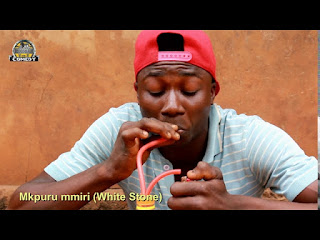
Image: Youtube


A 23-year-old young man named Okechukwu Nnorom, and a lucky survivor of the devastating effect of methamphetamine, otherwise known as Mkpuru mmiri in Igbo language, has revealed how he got hooked with the drug. He stated also how he got knocked out in the process, owing to his ignorance and innocence.

It was meant to be a bet worth N10, 000, and he decided to give it a try, he told Saturday Sun. The bet was all about who could take three cubes of the substance and still remain stable. But in less than five minutes after consuming it, Nnorom became restless and began to sweat profusely. The spectators and other competitors advised him to try and vomit out the substance. But he insisted on hanging on despite the dangerous sign, adding that he wanted the N10, 000 bet for keeps.

Twenty minutes after he refused to heed the advice, he switched personality and started exhibiting the traits of an insane person. According to eyewitnesses, it took the efforts of six able-bodied men to hold him down and to tie him up. When they saw that there was no improvement in his condition, after pouring several sachets of water on him, they alerted his family, who came over to pick him up in the football field where he lay helpless after being tied up. Quickly, they rushed him to a private mental rehab facility in Aba, Abia State. There he spent three months getting well.

How I got hooked

When Saturday Sun met him, Nnorom, who is fully back to his senses said that his greatest wish now is to serve God as a pastor. Recalling what he passed through, the much he could remember before he lost his senses, the young man claimed that he was deceived into believing that the Mkpuru Mmiri of a thing was just a regular ice laced with hot drinks.

His account: “I am from Abia State and the first child of my parents. I have four siblings. My uncle and master sells curtain materials. I was asked to live with him after I lost my father in 2019. In fact, he was the one who insisted that I should relocate. That was sometime in October of that year.

“To be sincere, he took good care of me and all his apprentices with whom I lived together in his house. As a young man, I had few friends with whom I used to go to a football field in Aba to play. The little money we got from hustling in the market was used mostly to buy drinks to entertain ourselves especially on Sunday evenings when we did not go to market.

“Among us boys there were always hot drinks, both sachet and small-bottled ones flying about. I refused to take marijuana because I feared that my uncle, who is a Christian, might notice through my mouth or body odour. He had warned me that if I misbehaved, he would send me packing. I don’t have a father and my mother is a petty trader. I had no better option.”

Nnorom said that he continued to keep to this principle till sometime in August when he was challenged to lick a cube of ice and earn some money. “Normally after playing ball, we would be thirsty. One man that sells all sorts of hot drinks was the one who brought this Mkpuru mmiri thing. He told us that he iced some of the hot drinks for those who were thirsty. Initially, I was not moved to join them to have a taste. He shared it among some of the boys. They took it but I did not see them react to the effect.

“It was the following Sunday when the man who we knew and addressed as “Chief” placed a bet that I became interested. The first set took two cubes and the winner won N5000. I saw that as easy. I decided to give it a try when the man increased the bet price to N10, 000.

“But I found out that after taking it, I started sweating very much as my head began to spin as if it didn’t belong to me anymore. They asked me to force myself to vomit. But thinking that it was just a side effect of what I took, I refused to heed their advice. I had hoped that the effect would clear soon and I would win the bet. But as the impact of the hangover continued to increase, I totally lost it. From that point on, I could not recall what happened until I found myself in the hospital. But my mother told me that I was later admitted in the hospital. I am so ashamed of myself. But right now, I am ok. I believe and pray that I will be able to serve God for the rest of my life.”

Excited mother thanks God for son’s ‘deliverance’

His mother could not hide her excitement when she spoke to Saturday Sun. She called her son’s recovery something of a miracle.

“Just like he explained, he left Kaduna to live with his uncle in Aba after the death of his father in 2019. I also relocated to Umuahia because of the increase in insecurity around the area where we lived in Kaduna. The second reason was that my business was no longer booming. All was well until I received a call in August from his uncle that my son has run mad. He said they were able to grab and drag him to the hospital where he was chained. I thank God that he was discovered on time, allowing the doctors the time to battle and save his life. He spent three months at the rehabilitation centre till he was fully recovered. I thank God for his uncle who did not abandon us for all those three months.”

Nnorom’s story is a tip of the iceberg, as regards the incalculable mental havoc that methamphetamine, or Mkpuru mmiri, the mind-bending drug, is causing among Igbo youths. Determined to bring an end to the spread, Saturday Sun learnt that the National Drug Law Enforcement Agency (NDLEA), is aggressively clamping down on the barons said to be mainly Igbo businessmen. This has led to several arrests, including the recent one at Enugu airport. The suspect, who was en route to Dubai, was found with a large quantity of Meth.

NDLEA reveals brains behind drugs, vows to stamp it out

So far the NDLEA has succeeded in shutting down some of the conduit pipes and frustrating some of the producers. But at the same time, their efforts have driven many of the patrons and barons underground from where they continue to manufacture and market the product to interested buyers, mainly youths.

In an interview with Saturday Sun, the agency’s Director of Intelligence, Sunday Zirangey, revealed that the drug barons started producing Meth in Nigeria in 2009. Investigations, he noted, revealed that it was South Americans, Colombians and their partners in Nigeria that brought them into the country. They were not only producing the meth in Nigeria, setting up clandestine laboratories, they were also training some Nigerians.

“Criminals, you know, always have foresight,” he said. “They want to make money; they want to be in charge. So, they partner with the South Americans to come and produce meth in Nigeria because they know that millions of dollars are involved. They also, in their own ingenuity, didn’t want to be dependent on the South Americans. They said to Nigerian barons, ‘Okay, we can partner with you. They said: ‘You are producing for us today. Can you train some of our people to be doing it?’ And the first Colombian that came, said: ‘if you can pay me what I will charge you, I will do it.’ And how much was it? – $38,000 per week training seven people for a certain period of time, and they were doing it in their hotel, in Ikeja, in Lekki, Lagos. After some time, those people got trained, that is the locals, Nigerians. They were not even pharmacists; they were not trained chemists. But, by combining one chemical with the other, they were able to get meth. They didn’t know the implication of what they were doing. Some of the locals died in the course of trying to learn the meth production because it involved very hazardous chemicals. If you inhale the chemicals, you develop a lot of organ diseases like kidney, heart, and all that.

“Anyway, when we saw this trend, we started working with our counterparts, the Americans. They showed interest, and through intelligence provided by them we uncovered and seized the first Nigerian lab in 2011. Between 2011 and 2019, the agency was to seize 18 methamphetamine laboratories. We’re not looking only at foreigners. In fact, we usually get intelligence when the foreigners are coming in, right from their take-off to arrival.

We follow them till when they set up the labs and begin to produce. Right from scratch, we started from when they came into the country; we followed them. They went to Enugu, went to Anambra and finally settled in Asaba. This was for a period of 13 months. We followed them without them knowing that they were being monitored. This job is intelligence-driven and takes a lot of painstaking investigation. Our aim is to make sure that the agency is positioned to be able to really rise to the challenge of this time, because the drug traffickers will not stop at anything to make their money; all that matters to them is money.”

Wednesday, January 5, 2022

Irish Citizen Chebuche Feels Very Much At Home In Kilcash And Carries Nigeria In Her Heart


Chebeuche Anyanwu. Image: Tipperare Live
 

BY BREDA JOYCE

KILCASH, IRELAND (TIPPERARY LIVE)
-- Chebeuche Anyanwu was born among the Igbo people of eastern Nigeria. In 2003, she came to Ireland seeking asylum. She now lives in Kilcash with her five children.

Waiting on God’s Time

The Igbo people in eastern Nigeria like to cook a particular leaf which is very bitter and will remain so if you close the lid of the saucepan while cooking. However, if you leave the lid open and do not rush the cooking process, exposing it to the air sweetens it and the taste is no longer so bitter.
I find it strange that Irish people like to keep a lid on issues such as their mental health and cancer.
Irish people are very private, they are slow to admit that all is not well on the inside. Sharing burdens and worries is important among my Igbo people.

If one feels depressed, for instance, one says so openly – there isn’t the same stigma; the person suffering is put in touch with someone else who has suffered from this same illness and come through it.
With time one’s suffering or burden is lessened through exposure and no longer leaves such a bitter taste. People are unable to cope when they try to cope alone. Loneliness is the greatest disease.
When I came to Ireland first, people here didn’t seem happy to me. I felt that people were into themselves, just did their own thing, so I felt the need to put myself in a bottle and close myself in.
My people are very open, they celebrate openly, they are lively and enjoy life, but they are also very loud spoken compared to the Irish.

When I attend parent - teacher meetings, my children tell me, “Mum you are too loud, they will think you are angry.”

They also remind me to smile even if the teacher doesn’t! Yet when I speak to my former classmates on WhatsApp they say, “You’ve become so quiet!”

PAINFUL

Leaving my three small children behind was so painful. My husband and my mum too. I arrived in Ireland in the month of May in 2003. I couldn’t believe how cold it was.

When I woke up in Dublin, I felt lost in this strange place among strangers. There wasn’t much life on the streets or in the markets. I was hungry and there was nothing but sandwiches to eat. I was pregnant and I was heartbroken.

NIGERIA

In Nigeria a grandmother spends the first year with her daughter to help her care for her new-born. I knew my mother would be there for my children, that they would be happy with her.

But through my tears on the plane, I could see their confused little faces looking up at me. I could feel the imprint of their tiny fingers clinging to my legs. I cried every night for those two weeks in the home in Dublin. In Carrick, in Bridgewater House, I was without them for almost a year.

Prayer kept me going, that and talking to them by phone nearly every day.

I was overjoyed when my husband came on a holiday visa for three weeks in 2004 and I saw my children again, they were aged two, three and four and when we all met in Dublin, they met their new baby sister for the first time. The baby was one-year-old by then. I had my five children and my husband in one room; it was wonderful to be together again.

SACRIFICE

It was difficult for us all when my husband went back alone. But we are Christians. We married for better or worse. I made a sacrifice for my children - I want them to have a good education and be independent. I didn’t have those chances myself.

What attracted me to Ireland is that you are a Christian people. Christian values in my country are very important too.

My mum says, “If you talk to God, He will provide the solution to your problems.” When we were small, if we had a headache my mum would pray, and we would be ok. I read the Bible every day and apply it to my life. Sometimes I pray as I walk around but my children give out to me for mumbling. They say, “Stop because my friend will see you mumbling!”

We are Catholic but the Catholic church is very different here.

Nigerian services are much livelier and last about two hours. Children are taught Bible in Nigeria.
Here I take my children to a Pentecostalist church so that they become familiar with it. It is important to me to instill moral and social values in my children though they can be mocked for knowing the Bible.
I used to wake them up at 6am in the morning to study and to pray. I gave them verses to meditate on. But they are too big now and accuse me of mistreating them, making them study the Bible so early in the morning!

I have three boys and two girls, the youngest is 15. My two eldest children enabled me to go to college and to work by looking after their younger brothers and sister.

STRUGGLES

They had no time to play sport as other children did. It is difficult to have to be a mother and a father to them at the same time. They’ve never seen me relax. I tell my kids they must work as well as study. We must work harder than white people for everything. They see my struggles. Now my three older children study politics and economics, medicine, and genetics. The youngest two are still at school.
My first job was in Greenhill Nursing Home. In 2006, I did a Health Care Support certificate course. Then in UCC I did Disability Studies over two years. After that I did an Applied Social Care degree in WIT over four years.

I have a child with special needs which made it very difficult for me to be flexible with social work as I needed to look after him.

I am now working in social care.

My children experience more racism that I do. They know there is racism even if Irish people don’t talk about it.

They experience it in school and in their environment. Too young to stand up for himself, my youngest son asked me, “Why did God not just create one colour?”

My older children can speak up for themselves now. Both of my daughters are feminists, and I am so proud of them.

Racism has made my children become hard workers, and that includes sport too. My son told me that if he shouts and complains that he is not picked for a team, it only brings out negativity, and he won’t be able to play his best.

Sometimes my children advise me, “The person who treated you like that didn’t know what she did was bad. Just leave it there and move on.”

I tell my children that we are not responsible for anyone’s behaviour to us. We just need to work on ourselves and move on. Racism won’t go away.

The way we bring up our children matters a lot. I like my children to have high expectations of themselves. I tell them, “Nobody should tell you that you can’t jump, and if they do, then jump so high that they won’t be able to see you.”

My daughter was told she couldn’t do honours English, but she jumped so high she is now studying medicine.

PEACEFUL AND SAFE

Ireland for now is our home. It is a very peaceful and safe place. Irish people in general are very reserved, very “inside” but very generous.

This is their country. Mostly people are ok, but like everywhere, some are good, some are bad. But there is a lot going on in the background. I might enter a shop and the security man follows me around as if I’m a thief.

It’s important for Irish people to realise that racism is still there; people pretend it isn’t.
Irish people who have travelled are more open. Others are very defensive and closed and insecure. People everywhere have the same worries and needs. The environment we grow up in shapes us, but we should not judge people.

CULTURE

We must learn about the culture of others. As Steve Jobs said, we must believe at every moment in our lives and that will give us hope and take us somewhere.
But it can be hurtful when you are trying so hard to be good. Still, you have to smile and have a positive attitude.

My name Chebeuchechukwu means “waiting on God’s time”.

Good things happen slowly for me. My surname Ogudo signifies strength and the confidence of being unbeatable.

I use our Igbo saying to encourage my children. Isi aro ka eji ama utonsi: the way you work hard and study now and the people you befriend determines your tomorrow.

My husband’s name is Anyanwu. It means “Sunshine”. I really miss him, and my children miss their dad. I haven’t seen him since 2018 when he came on a holiday visa.

NO REGRETS

I miss our extended family too and the friends I grew up with but I’ve no regrets about coming here.
We went back to Nigeria to visit in 2015. My eldest son really wants to go back there to work. He loves the culture but my youngest is big into hurling - he loves it here and has so many friends here now he wants to stay.

FEEL AT HOME

I feel at home here, but I carry Nigeria with me. I make sure my children understand our culture. Every day we eat Nigerian food, and my children love it especially onu-gbu– bitter leaf food.
I would love to go back to Nigeria and live with my Igbo people again one day, perhaps when I’m older and retired. But for now, I’m very happy to be here in Ireland.

GRATEFUL

This country has given us so much – I am so grateful in every way, but I won’t take the weather back home! If my children were in Nigeria now, they would not have the education they have.
My children are settled - they are happy here. I have learned so much from them. When I write something, they rephrase it so that Irish people will understand. My children have become very close to me and are protective of me.

Ireland has changed me for the better. In Nigeria life is all about struggling to live. I appreciate life more now. Though I have to wait for everything, I see the light coming in. Hope is patience. I am waiting on God’s time!

Our Sense of Place

Breda Joyce grew up in county Galway and taught at secondary level in Kenya and in Cahir.
Her poetry has won and been shortlisted for several awards and appears in anthologies and literary journals.

Her first collection, Reshaping the Light, was recently published by Chaffinch Press.

Breda also writes short fiction and memoir.

Reshaping the Light is available to purchase from The Narrow Space and The Bookmarket in Clonmel and from The Tudor Hub, Carrick as well as from online booksellers listed on the Chaffinch Press website.

Tuesday, January 4, 2022

Mama Roz’s Chronicles: Kidnap, A Widow’s Tale

BY ROZ AMECHI
Emenike Ihekwaba. Image: Twitter


Kidnapping has become an all too familiar evil in our society today and was at some point a way of life in the Eastern part of Nigeria. Many victims made it home safely but sadly some didn’t. Chy’s story takes us through the tragic pain and trauma this experience causes to the family and friends of the victims.

Chy’s Story

When Chy and Emenike met in June 1987, it was love at first sight. In fact, he proposed to her on that first day and she, mesmerised with this tall, handsome and debonair fellow, quickly accepted. They got married a year later on the 29th of October 1988. Like most marriages, the early days were pure bliss but as the years passed, things began to go sour. Her husband kept late nights, drinking with his friends much to her annoyance and irritation. Chy responded by joining the Full Gospel Business Men’s Fellowship International (FGBMFI) who taught her how to pray for her husband and marriage. It worked. He gave his life to Christ and joined the FGBMFI rising swiftly to the position of Chapter President. Chy was ecstatic. Her marriage “became new” again, they spoke the same language and their children were happy. Their home had turned into an enviable Christian home and they prayed that they would eventually age and enjoy their grandchildren together. Unfortunately, that was not meant to be.

In the first week of August 2012, the couple sent their children on holiday to the US. Emenike, having risen to the position of Permanent Secretary of the Imo state government, had formed the habit of holidaying abroad with his wife and children. They visited the United Kingdom and the United States as frequently as they could. This year was no different and they had sent the children ahead with the plan that Emenike would join them two weeks later. A week to his travel date, his boss, the Deputy Governor of the state, asked him to postpone his trip as he wanted to travel and the two of them could not be out at the same time so he shifted his dates two more weeks ahead.

On Sunday 26th of August, they had been invited to two events. One was in Mbano for the thanksgiving service of a priest whose ordination they had been unable to attend and the second was a child dedication service in their home church, St Paul’s in Nkwerre. They decided to attend both. Leaving home at 8am, they attended the Mbano service and left at 12 noon for Nkwerre. As they usually did, they stopped briefly at Amaraku market to buy goat meat for Emenike’s favourite pepper soup.

Chy waited in the car whilst Emenike went into the market to buy the meat. It wasn’t long before he returned, with the meat seller who was carrying the meat, to the car. He opened the front door, put the meat in and then went to the back to open the door, when an SUV stopped dramatically in front of their car, blocking their exit route. It all happened so fast. Three hefty young lads in black wearing bullet proof vests with the words “Police” on the front, alighted from the car. Chy was puzzled. She could not imagine what they could have done wrong to justify this aggressive approach and she asked them “what did we do?’. No one answered her. One came towards her door whilst the other two went directly to her husband.

Emenike figured immediately that these were not real policemen and he shouted “Chy run!”. She didn’t need to hear anything else. As if transported by an unseen force, she ducked under the arm of the man by her door and started running. She hadn’t taken two steps before they started shooting. She thought they were shooting at her but she didn’t stop. She just kept running as her husband had told her to. Everyone in the market started running too. There were some women conducting their August meeting nearby, they ran too. It was complete pandemonium. As she ran, her headtie, outer wrapper, bag and slippers all fell but Chy kept running. She saw an open door and went inside. There were people there. She was trembling and her heart was pounding. She didn’t know where Emenike was and she was terrified. After about 15 minutes the shooting stopped and people went back outside again. She asked where the man she was with was, and they told her he had been taken in the boot of the robbers’ car. Hearing that, her heart sank, she fell to the ground and started weeping. Her nightmare had just begun.

A little boy came and gave her back her bag. She looked into their car. Her husband’s phones and wallet were still there. These were clearly not armed robbers so she wondered what their mission really was. Why did they come for Emenike? It also turned out that they didn’t actually shoot at anyone. They just shot at the tyres of all the cars on the street to make sure that no one came after them. A couple of real policemen appeared from nowhere and started interrogating her until one of the bystanders stopped them. “Can’t you see the state she is in? please leave her” he said. They let her go and she returned to Owerri without her husband.

Chy called her brother-in-law who was attending the event in Nkwerre. He went to the scene of the incident. The driver who had also run, had now reappeared and was taken to the police station but a call came from Government House asking the police to release him and the vehicle. So now, all they could do was sit and wait for the kidnappers to make contact. Chy went to the bank and withdrew all her savings. Then she called friends, relatives and colleagues asking them to donate what they could. She wanted to have enough money ready for the kidnappers. She was quite hopeful.

As she sat and waited, she remembered a similar experience she had with her eldest son four years before. It was in September 2009 and armed robbers had come to their house. They took her 14-year-old son and kept him in the bush for 8 days. During that time, she did not eat or sleep a wink. She just sat and prayed; but after they paid one million Naira, she got her son back. She was convinced that the same would happen with Emenike. They would ask for money; she would pay and then he would come home. She never expected things to turn out the way they did.

The kidnappers did not call till the fifth day and when they did, they asked for N50m. Negotiations started at that point. No one had that kind of money and even though he was a government official, the government offered no assistance. It took two weeks, back and forth, and then finally they were given 48 hours to produce N10m. Chy had managed to collect N6m so they had to find the balance. The kidnappers also wanted 3 bottles of Hennessey. They sent instructions about where the money should be dropped off. Chy stared at the GMG bag of money when they finally managed to collect it all. She had never seen so much cash in her life. N10m in cash! She hadn’t even seen N1m. They had strict instructions not to involve the police and they obeyed. The money was taken to them at the drop off spot. Two men on a motor bike appeared and collected the money and her brother-in-law was told to go to Obinze barracks to pick up her husband.

Finally, it was all over. Success at last. They all rejoiced when her brother-in-law called and said he had been given a location. They arranged a clinic for him to go for a check-up. Chy cooked his favourite fish pepper soup with agidi. He was to be picked at 12 noon so by that time, everything was ready and they waited.

At 6pm her brother-in law called to say that he was still waiting and Emenike had not come. Chy was crushed and confused. She couldn’t process that information. Looking back, she remembers that day as the worst day of her life. She had waited for her husband to return from the kidnapper’s den but he never did. Eventually they asked her brother-in-law to come home. It was really all over but it had ended so horribly. They all started wailing. This was not the end they had expected. This could not possibly be the end. But Emenike never came home and Chy never saw her beloved Emy again.

Years passed but her agony did not diminish. She kept wishing and longing to see Emenike; his smiling face and his comforting arms. Every day even now, she looks out for him thinking that by some miracle, he will walk through the door. If he had died, she would have buried him and moved on but this situation offers no closure. The pain, trauma and agony are unimaginable but she has learnt to live with them.

Chy did all she could. She wrote petitions to the First Lady, Dame Patience and her Senator, Chris Anyanwu who contacted the Commissioner of Police but nothing came of it. She paid for policemen to come to Imo state with trackers from Port Harcourt but the required government support was not forthcoming and eventually they left, taking with them all the hope she had.

She suffered from high blood pressure, low blood pressure and heart palpitations but her mother ever by her side, was her rock. She stood by her all those years. She made her strong and taught her how to carry on in spite of all the odds. She herself had also lost her husband when she was only 44 and had buried her son who was to become a reverend father but she overcame those challenges and now encouraged her daughter to do the same.

At the time of the incident none of Chy’s children had graduated but she had to counsel them and tell them they must succeed so that when their father comes home, he would be proud of them. After 7 years she was advised to perform a burial ceremony in his honour. She did that in 2020 and erected a tomb.

Her four children have all graduated now. Her two daughters are married and she has five grandchildren whom Emenike has never seen. Her mother passed away in September 2021 and has since been buried.

In 2014, Emenike turned 60 and was due for retirement. Chy was asked to apply for his benefits and she did, but nothing was paid. She is still pleading with the Imo state government to consider her case and pay the benefits to give her and her children some much needed respite. She is hoping that someone will read this and be moved to reach out to the Imo state government on her behalf.

Monday, January 3, 2022

Ndigbo Urged To Sustain Culture Of Self-Help To Deepen Devt


Emeka Wogu. Image: Twitter


BY EMMANUEL UGWU-NWOGO

UMUAHIA (THIS DAY)
-- With the ever increasing competition for government attention among the various sections of the country, Ndigbo have been urged to sustain their age-old culture of self-help in order to deepen development in their communities.

Former Minister of Labour and Productivity, Chief Emeka Wogu, made the call at the weekend in a chat with journalists after inaugurating a road project constructed by a private citizen, Mr. Julius Nwojo Osiri, at Abiriba in Ohafia Local Government Area of Abia State.


He said the Igbo spirit of self-help was amply demonstrated in the construction of the road, adding that Ndigbo have over the years learnt to depend less on the government.

The former minister recalled that the culture of self-help was well entrenched after the civil war following the failure of the General Yakubu Gowon-led federal government to implement the policy of reconciliation, reconstruction and rehabilitation.

“We are development-inclined, resilience, and we don’t wait for the government to do everything for us,” he said.

To illustrate the power of self-help, Wogu cited Abiriba community fondly called ‘Small London’ because of its level of development, saying over 80 percent of the infrastructures in the community were products of self-help by the people.

However, he pointed out that there is a limit to what could be achieved through self-help, citing construction of highways, hence, the government should not abandon its responsibility to the people. He noted that the cry of marginalisation in the South-east region came about because of the non-implementation of the three Rs promised by Gowon.

The man behind the road project, Osiri, said he was motivated by the spirit of self-help inherent in Abiriba people to build the street in memory of his father, Prince Nwojo Egbebu Osiri, who passed on seven years ago.

“If you can’t do much, you can do a little to positively impact on our environment,” he said, adding that “every little effort counts.”

Osiri, who also dedicated his new house, advised that those who have the means should not hold back in helping to develop their communities, saying: “We shouldn’t be waiting for the government to do everything for us.

“In any direction you find yourself and you know you can impact on the society, please do so,” he said, noting that a little drop of water eventually make a might ocean.

Sunday, January 2, 2022

Abaribe, Ekweremadu: A Tale Of Two Revisionists

Enyinnaya Abaribe and Ike Ekweremadu 


BY LEO SOBECHI

ABUJA (THE GUARDIAN)
-- The Senate Minority Leader, Enyinnaya Abaribe’s recent declaration of interest to contest the 2023 gubernatorial ticket of Peoples Democratic Party (PDP) has sparked off concerns and discussions about the anticipated intensity of divisions in Southeast, especially in the buildup to the 2023 general elections.

Although what Abaribe did could be described as a political ambush on the outgoing incumbent, Dr. Okezie Ikpeazu, it exposed how far crisis of electoral ambitions would shape the politics of Southeast, particularly regarding the governorship seats.

Abaribe is not alone in the quest to transit from the Legislature to the Executive. He has a fitting ally in the immediate past Deputy President of Senate, Dr. Ike Ekweremadu. Together they parade unparalleled records as the oldest occupants of their senatorial seat from the Southeast.

However, just as it is not possible to attribute a possible connivance or resolve to unsettle the home front, the fact that the immediate past Deputy President of Senate, Ekweremadu, is also oiling his political machinery to seek the governorship ticket of People Democratic Party (PDP), makes the development very intriguing.

Both ranking federal lawmakers have incumbent PDP leaders as their state governors. But, this is just about the least factor that raises the red flag to their gubernatorial aspiration.

Rich Contrasts

Although Abaribe was elected for a first term in April 2007 and sworn in on May 29, 2007, he earned repeat electoral victories in 2011, 2015 and 2019. Having therefore been a constant face in the Red Chamber of the National Assembly for close to 12 years, it is obvious that 2023 should be his final passing out.

On his part, Ekweremadu, who considers himself as the lucky star of Enugu State politics, started featuring in the Red Chamber from May 29, 2003. And going by the four years’ period of each term, by 2023 the Mpu, Aninri Local Government Area would have occupied the same seat for 16 years.

In his alma mater, University of Nigeria, Nsukka, where he read law, admission is only given to those who are 16 years of age in addition to possessing other academic criteria. That could explain why the former Deputy Senate President wants to graduate from the Senate to the Lion Building, the seat of Enugu State Government, as governor.

If Ekweremadu’s desire to transit from the Legislature to the Executive follows the natural argument that change is constant, Abaribe’s ambition to be governor seems to be on the retrogressive instead of the progressive path. At the start of the fourth republic, Senator Abaribe was elected alongside current Senate Chief Whip, Orji Uzor Kalu, for the governorship seat. But, two months to the end of the term, Abaribe jumped out of the boat in order to scuttle his captain’s attempt to drown him through impeachment.

The people of Abia State still recall the cat and mouse relationship between the deputy governor, Abaribe and Kalu, the governor. Sources disclosed that Abaribe survived countless impeachment plots, even as he was accused of being a dissembler and divisive character, which Kalu could not stomach.

However, unlike Abaribe, Ekweremadu was not a deputy governor, but enjoyed a cozy political closeness to former Governor Chimaroke Nnamani, who appointed him, first as Chief of Staff and later, Secretary to the Enugu State Government. Yet, like Abaribe, Ekweremadu was also accused of dissembling and overzealousness.

Before Governor Nnamani propped him up to represent Enugu West Senatorial District in the Senate, the former DSP was alleged to have moved some members of the Enugu State Executive Council to Calabar, where they were administered with fetish oath to support him for the governorship. Being a power player and political tactician, Governor Nnamani decided that “we have to send Ike to Abuja, he has to give us chance to finish what we are doing for Enugu people.” In a cabinet reshuffle that trailed the muse, commissioners and appointees loyal to Ekweremadu were tactfully dropped.

Again, just as Abaribe moved over to All Nigeria Peoples Party (ANPP) to contest the 2003 governorship of Abia State, it was from the All Peoples Party (APP) that Governor Nnamani brought Ekweremadu to serve as his Chief of Staff.

The contrasts did not end there. Both Abaribe and Ekweremadu are known to have fought against the political interests of their former principals. Apart from contesting the governorship against Orji Uzor Kalu, who was seeking a second term in 2003, the Senate minority leader has continued on a parallel political path with the Senate Chief Whip.

For Ekweremadu, despite launching out political on the goodwill of Dr. Chimaroke Nnamani, the former Deputy Senate President was said to have mobilized resources to stop Nnamani from accessing the Senate for a second term. As former political godsons, Ekweremadu and then incumbent Enugu State governor, Sullivan Chime, stonewalled the Peoples Democratic Party (PDP) in 2011, Dr. Nnamani founded the Peoples for Democratic Change (PDC) on which platform he contested the Enugu East Senatorial election.

Apparently, in attempt to retire their former principal to political oblivion, Governor Chime and Ekweremadu propped up the Deputy Leader of the House of Representatives, Gilbert Nnaji against Senator Nnamani. Riding on the combined forces of power of incumbency and federal might, Senator Nnamani was denied a second senate seat to represent Enugu East.

The same scenario was repeated in 2015, but the masses revolted and protests filled the length and breadth of the senatorial district, including parts of the state capital.

Pained by the cycle of political wickedness against their principal, incumbent Governor Ifeanyi Ugwuanyi ensured not only the return of Dr. Nnamani to PDP, but also ensured that the mischiefs of 2011 and 2015 were redressed by support the return of the Ebeano political godfather to the Senate.

Watchers of Enugu State politics say Governor Ugwuanyi employed an uncanny political strategy to thwart Ekweremadu’s plans to use Senator Gil Nnaji to propel his governorship ambition. With Senator Nnamani back in the Senate, as well as his rock-solid grassroots support, it would be seen how any PDP governorship candidate can win without the support of Enugu East.

Across the entire length and breadth of Enugu State, former governor Nnamani retains popular acclaim in addition to his charismatic mass appeal. It is said that by bringing Senator Chimaroke to his corner, Governor Ugwuanyi, showed that he possesses the political ‘Urim and Thumin’ of Enugu State politics, especially with his ecumenism style of leadership.

It is doubtful of if Governor Okezie Ikpeazu would support Abaribe’s governorship, because as the outgoing governor, the incumbent should follow the tradition of propping up his preferred successor for the PDP ticket. Talks about Governor Ikpeazu’s possible switch over to All Progressives Congress (APC) have been making the rounds in Abia State, but the governor has literally sworn that there is and there would be nothing like defecting.

In the absence of overt support for his governorship ambition therefore, it is left to be seen how Abaribe intends to snatch the PDP ticket from the incumbent governor, particularly given that both hail from the same council area.

If Abaribe is to consider an alternative platform, his best option would be the All Progressives Grand Alliance (APGA), because talk of APC would be akin to asking the Maduforo Ngwa to count the teeth of crocodile with his fingers.

For Ekweremadu, the first hurdle to cross is the zoning arrangement in Enugu State, which the masses seem to be religiously attached to in the interest of peace and social harmony. However, supporters of the former Deputy Senate President contend that at no time did any political party or stakeholders sit down to draw a charter for power distribution in the state.

Going by the rotation of the governorship slot, Enugu East Senatorial District is the next in line to throw up the next governor. But, citing former Governor Chime’s observations during an interaction with journalists in 2018, Ekweremadu and his supporters insist that there is nothing like zoning. Chime had noted that it was for fairness and need to reduce tension that he supported Enugu North Senatorial District to produce his successor and not based on any zoning plan.

The recent Anambra State governorship election, which former Central Bank governor, Prof. Chukwuma Soludo won, reinforced the zoning debate in Southeast. Soludo, who hails from Anambra South Senatorial zone defeated 17 other candidates drawn from the two Senatorial zones of Anambra Central and South.

While proponents of zoning thumb their chest that the outcome of the election was more of a triumph of zoning, others maintain that Anambra voters chose the best candidate, arguing that it is only in the absence of a qualitative candidate from a favoured zone could produce a different result.

Abaribe and Ekweremadu are entitled to their democratic right to stand for election, but whether that right vitiates voters’ right to adopt an unwritten convention would be seen at the end of the ballot on March 6, 2023.

Legislative Stature

BOTH Abaribe and Ekweremadu stand tall as giants of Nigeria Senate. While the representative of Abia South Senatorial District emerged as the voice and conscience of the Senate, especially in the Eighth and Ninth plenaries, Ekweremadu’s election by his colleagues on three consecutive occasions as Deputy President of Senate is not a mean record.

By the time the 2023 governorship poll holds in Abia State, Senator Enyinnaya Harcourt Abaribe would be 68 years. The man he wants to succeed is not up to 60. Perhaps, Abaribe wants voters to determine which is easier between state governors retiring to the Senate for legislation or old Senators ascending to the executive seat of a state governor.

For Ekweremadu, he would be seeking the governorship ticket at 60 in a state where nobody above 55 had ever held sway. Although age is a matter of the mind, but the two giants of Nigeria Senate would have a lot of explaining to do to youth of their constituency why they should continue to dominate the public space instead of grooming others.

Both men have done their best to ventilate the yearnings and aspirations of their constituents, particularly on the much talked about Igbo position in the Nigeria project. Abaribe earned his stripes and scars from voicing opposition to human right abuses of secessionist agitators, including the members of Movement for the Actualisation of Sovereign State of Biafra (MASSOB) and Indigenous People of Biafra (IPOB).

The Senate Minority Leader was arrested and detained in 2018 briefly by the Department of State Services (DSS) for being an IPOB sympathizer, especially given his role in signing the bail bond of the IPOB leader, Mazi Nnamdi Kanu.

On the score of relationship with the secessionists, Ekweremadu has both sweet and sore tales to tell. Although he was part of the high level stakeholders support for the release of the IPOB from detention in 2017, IPOB activists in Germany swooped on him during his visit to Nuremberg for the Annual Cultural Festival and Convention of Ndigbo in Germany.

About four young men among those who attacked Ekweremadu in Germany were later apprehended and charged for the assault. Unlike Abaribe, whose recourse to verbal darts against opposition, the former DSP is said to be adept at bipartisan collaboration in championing Igbo causes.

For instance, it was gathered that at the onset of the President Muhammadu Buhari administration, Ekweremadu decided to run again for the post of Deputy President of Senate following the failure of Buhari to appoint either Dr. Ogbonnia Onu or Dr. Chris Ngige as the Secretary to the Federal Government (SGF).

Again, in 2019 Ekweremadu was said to have rebuffed overtures from the Governors’ Forum to allow Senator Ovie Augustine Omo-Agege to emerge his successor unopposed, especially given the withdrawal of Senator Francis Alimikhena. This time around, the former DSP resolved with his PDP colleagues that Omo-Agege must not be allowed to emerge unopposed after debasing the hallowed chamber in the Eighth Senate.

“It would have been sacrilegious to unanimously endorse the event of April 18, when armed hoodlums invaded the Senate to steal the menace, so it was not about winning or not winning for a fourth term as DSP,” a PDP source confided in The Guardian.

It was perhaps on account of his closeness to APC leaders that the impression stuck that the DSP was planning a move to the governing party for Enugu State governorship contest.

Despite their individual achievements in the Red Chamber, both Abaribe and Ekweremadu seem to be plotting their retirement from public office by swimming against the tide of public perception. Already, politicians across the political divides, especially with the main opposition PDP have begun to interrogate the fruitage of their long sojourn in the Senate for the people at the grassroots.

As the two Senators begin the journey towards liberalizing the politics of their respective states, it would be seen how far they can go to disrupt the lure of zoning and power of incumbency.

Sign Of Things To Come

PERHAPS what happened in Orba, Udenu Local Government Area of Enugu State on Friday December 31, 2021serves as a foretaste of the public perception about their ambition to be governor against the run of rotation. Leaders of Orba community, who were acting on the understanding that Ekweremadu should not be offered any platform to market himself, reprimanded a member of the community, Mr. Charles Mbah, for using his birthday as a campaign ground for the former DSP.

It was gathered that after fracas broke out earlier in the year following a football march sponsored by the former DSP, stakeholders of Enugu North Senatorial District resolved that no individual or group should invite Ekweremadu for any public function before the governorship primaries of PDP.

The leaders maintain that since Governor Ugwuanyi is a product of zoning, nobody should be supported to rubbish the power sharing arrangement in the state. They also contended that as the incumbent, their brother, Ugwuanyi, should be supported to guide the state on the path of peace and brotherhood in selecting the next governor.

The reprimand of Charles Mbah could be a potent sign that the masses in Southeast are high on zoning. As men of means and men, how Abaribe and Ekweremadu survives the people’s power would determine the strength of their conviction, particularly given the yearning of Southeast to produce President Buhari’s successor.

Saturday, January 1, 2022

They Were Paid N10m To Kill Me, But I Escaped — Imo Journalist

Illustration: Greenbarge Reporters


BY EMMA NNADOZIE

OWERRI, IMO STATE (VANGUARD)
-- A journalist in Imo state, 55-year-old Prince Chibuzor Ndukwe, has miraculously escaped from hired assassins who were paid N10m to kill him. He was abducted from his residence, blindfolded and taken into a thick bush. Few days later after his abductors confirmed payment of N10m for him to be killed; he succeeded in escaping from their grip. His narrow escape was as miraculous as it was bizarre. He gave a vivid account of the incident. Excerpts:

My travail started with the destruction of my house in the village by some hoodlums. They came with sledgehammer and were busy destroying my house in broad daylight while armed policemen were there.

Later, another group came and kidnapped one of my guards, they thought I was the one. Unfortunately, when they discovered that it was not me, they connived with their police collaborators, tagged him an IPOB member and threw him into the cell at the Anti-kidnapping Unit, Owerri.

When we got information that my guard was in their cell, we moved in, pacified them with some money and he was released.
My abduction

On the day of my abduction, I was lying down on the bed at 7:15 pm when one motorcyclist rode into my compound. When my wife asked what he was looking for, he said he came to drop something from my wife’s school for her.

My wife wanted to know why he came at that time of the night but he assured that there was no cause for alarm and left. We did not know that he came to monitor us.

Fifteen minutes after he left, some other men came in a red Toyota vehicle, drove inside my compound and one of them, armed with a dagger, proceeded straight to my bedroom.

When they dragged me outside to the sitting room, I saw one of them pointing a gun on my wife’s head. As soon as we came out, he directed the gun at me and shouted that if I talk, he would kill me.

They asked where I kept the money and I said I didn’t have money in the house, I don’t normally keep money in the house. They said, ‘go and bring your ATM card, where is your car key? Where is your phone?’

I brought my two phones which they collected as well as my wife’s phone before they asked me to lie down. I then asked them, ‘why do you want me to lie down, tell me what you want, is it not money, let me look for money and give you, leave me alone’, but they said no, that I should go out.

They led me out and I followed them. They went to the car, asked me to open it and enter. They then collected the key from me immediately I entered, blindfolded me and asked me to lie down flat.

But when I demanded to be allowed to sit since I had already been blindfolded as it would not be easy for me to lie down, one of them hit my face with the butt of the gun which forced me to lie down in the car.

I was sandwiched between two of them with another one behind the wheels while three of them entered another other car and zoomed off to an unknown place.
Exchanges with their paymasters

That was how these people took me away on that Friday night. They took me to one small old building on the road where we spent the night.

When we were going, they were calling the people that sent them, what I heard was, ‘pay the money now. We are with this man now, if you don’t do it, we will leave him oo. We don’t need to waste time with this man inside this vehicle, we want to complete the mission and go our way’.

It was like they had a little misunderstanding with the people that hired them. The people didn’t pay that money that Friday evening, so the following day, being Saturday, I was still in that small building, blindfolded.

There were tiles there. I managed to know this because I raised the blindfold after they locked me inside and went outside the building.

I saw the window, I saw that it was a burglary proof that they used in that room and when they started coming, I put back the blindfold. I was there that Saturday.

In the night, they picked me, took me to a bush where I was kept in a two-storey building.
Torture

In the building, they left one of them, who was armed with a gun, to keep watch over me. Meanwhile, they tied my legs and hands. They then started to beat me and told me that I should forget this world, that it was over for me.

They were beating me with something like a metal; they hit it on my head and cut a small part of my head, they did same on my legs. On my hand, there were bruises, they cut my hand also and tied me with chain and other things.

So, I was there till Sunday when the money they were asking for came. I heard them when they were quarreling with the people that hired them. They were telling the people, ‘you raise the money na, what is going on, what is happening, we will leave this man o’.

They were speaking in Igbo. The person replied them that they should exercise patience, that they would bring the money in cash that night, that it was not going to be by transfer again.

On Sunday morning, their boss, called Mopol left. They left their member called ‘Agile’ to stay with me and monitor me. In the same building they kept me, there were three or four churches where people were singing praises.

The one who was guarding me pointed gun at me saying that if I made the slightest noise he would kill me there. I stayed there till the people at the church dismissed and left.
‘N10 million paid for my head’

Their boss came back at 3pm. I knew the time because they were openly talking about time. I gathered all information while they were communicating.

They were freely behaving as if my fate was already concluded and nothing would make me survive and tell any story. In fact, they had already condemned me and that must be why they were discussing not minding whether I heard or not.

One of them said it was ten million naira that was given to them to kill me. He said “this night, at least, we go go rest now, after tonight we go go relax’.

I kept on asking myself the meaning of that. After that, they brought bread to me to eat, I said I don’t want to eat, they brought water, I said I didn’t want to drink.

They said ‘ok, make you no think say na this thing go save you, whether you eat or not’.
Going to the ‘gallows’

On Monday morning, they walked me downstairs and crossed a tarred road. I discovered that the building was near a tarred road and nobody knew that something terrible was happening in that building.

This is because, as we walked down, we crossed the tarred road and I heard voices of other people around. The one that took me down handed me over to another person.

After crossing the road, another person took over and we started walking inside the bush. After sometime, he asked me to sit down, he called the other person and told him, ‘come now, let’s go and waste this man and get away’.

I was crying, pleading with them to spare my life because I have five small children, that they should not waste me. As we were walking inside the bush, we got to a certain point where they removed what they used in covering my eyes.

I now saw the kind of hefty men that were holding me. The next thing they did was to show me a dead body around.

They said, ‘do you see that dead body, na so you go be very soon.’ We passed that one, they showed me another dead body.

By then, they had removed the rope with which they tied my leg, leaving the one on my hands. I then told them I wanted to urinate and they agreed.
Narrow escape

While we were trekking, one of the abductors was in front, the second one was behind. After I requested to urinate, the one at my back moved in front, following his colleague and they were walking slowly while waiting for me to finish urinating.

When I was about to finish, the other one turned and said ‘come, haven’t you finished?’ I said ‘it remains small,’ he said, okay and turned because I was watching them.

As he moved, a voice came to me saying, ‘man, can’t you run away now?’ It continued like a whisper saying, ‘run away’.

Immediately that voice came to me, I turned round and started running inside that bush. When they noticed it, they turned back and pursued me.

And the place I entered was a thick forest, so I entered one small bush and stayed quiet, they fired shots but they didn’t get me, they flashed their torch light but they didn’t see me.

Inside the bush, I used my teeth to untie the rope with which they tied my hands and I started creeping slowly on my knees like an animal.

They were looking for me here and there and I heard them quarreling and asking the one at my back why he left me to escape. As I was creeping away from them, crying in pains, they continued blaming each other.
How succor came

When I got to one road, I started walking fast heading to nowhere in particular. I walked till I got to another road and saw a light from a generator.

I didn’t know that one of them was around that place and I started to move fast.

Unfortunately, the sound of my feet alerted them and they pursued me until I got to a fenced compound and I jumped into the place and continued running when one of them shouted on his colleagues warning that they should not follow me because vigilante men were around the place.

If they had followed me, they would have caught up with me because when I ran into the compound, nobody came to my rescue because they were all asleep and there was also no vigilante men there.

I had to run into one man’s house and started knocking at his door, I pleaded with the man to help me but he refused. I started telling him that ‘I am Prince Ndukwe Chibuzo, the son of a traditional ruler, I came from Ihitte-Uboma, I was kidnapped from my house’.

I began to explain to the man but I think the man was afraid; he didn’t open that door. I now said ‘ok forgive me, help me, let me stay at the corner of your compound till the morning so I can explain myself better’.

He didn’t say anything, he left me. I stayed there. I think the man contacted the vigilante people on his phone.

So, vigilante people came from nowhere to where I was and began to flash light. I wanted to run, but they said “don’t run, we are here for you’.

When they flashed that light on me, I asked them ‘are you vigilante?’ they said, ‘yes’ and I said ‘God, thank you’. They now took me to a better place. That was how I was saved.

I cannot imagine my escape, up till now; I have never believed that I am out of these people’s hands. The vigilante people later told me that we were in Anyara in Isiala-Mbano, about seven kilometers to Owerri town.

Later, the vigilante people gave me hot water to drink because I had not tasted anything for days. They called their President General and other notable men in the community including the chairman of the Local Government.

They later invited policemen from Anti-Kidnapping Unit in Owerri. We met them while we were on our way to Owerri.

Initially, I was very skeptical to go with them. However, after much persuasion including making a call to their Commissioner who assured me of my safety, I followed them.

I later heard that a team of policemen from IGP’s Intelligence Response Unit also came to the place after getting information that I escaped and they frantically searched for me.

But the network was very poor and they missed where I was with the vigilante team.
After rescue

Meanwhile, it was gathered that after he was rescued, he made a statement with the operatives of IGP’s Intelligence Response Team in Owerri, IRT who swung into action.

Sources said few weeks later, men of the IRT succeeded in arresting one of the key suspects in the kidnap saga. The suspect, according to reports, turned out to be one of the escapees from Oweri Prisons during the end SARS protest.

Police sources said he played a prominent role in the kidnap of the journalist in connivance with other suspects still at large, said to be close relatives of the victim.

It was also learned that the police team arrested a serving policeman suspected to be the supplier of arms to the kidnappers. Police sources said he was later taken to the Commissioner of Police for interrogation after which he was dismissed from the police and handed over to the investigating unit.

So far, it was further learned that the team was closing in on other major suspects in the crime, including those that allegedly paid N10m for the journalist to be killed.

Amazing Story Of Onyeka Nwelue, Nigerian Youth Who Founded James Curreý Society In UK

Onyeka Nwelue image courtesy of Onyeka Nwelue


BY LUMINOUS JANNAMIKE

ABUJA (VANGUARD)
-- Anybody that observes the stable rise of Onyeka Nwelue in the field of African literature and how he has been able to build for himself an empire around the art of storytelling, may not know that this has been the childhood ambition of the Imo-born academic and entrepreneur

Onyeka studied Sociology and Anthropology at the prestigious University of Nigeria, Nsukka (UNN) before earning a scholarship to study Directing at the Prague Film School in Czech Republic.

Nonetheless, he has always had a strong desire to become literary giant, an ambition he never considered quitting even as he worked hard and persevered through all the odds that came his way.

While reminiscing on his past during a chat with Sunday Vanguard, the UK-based Nwelue said that since childhood, he had always dreamt of becoming wordsmith, adding that his successes in life were divinely orchestrated by God.

He said, “I started out as a visual artist. My parents were very supportive of my craft. My aunt, Flora Nwapa, Africa’s first woman to be published by James Currey lived with my mother. So, when I said I wanted to be a writer, they all supported it.

“I began writing in English when I was 12 years ago. I didn’t struggle as a child. Not at all. I was greatly supported by family. They thought what I chose to do, is honourable.”

Born in 1988 into a lineage of talented griots in the enterprise of storytelling, it is no wonder that Nwelue was able to grow to become an outstanding artist whose achievements cut across filmmaking, book authoring, publishing and selling as well as talk-show hosting. He is one of Africa’s most respected personalities in Oxford, UK.

Speaking of his roots, “I hail from a lineage that, on both the paternal and maternal branches, is steeped in the knowledge and traditions of the Igbo people, a lineage that is characterized by academic and professional distinction in various spheres, and members of whom have consistently ventured into and distinguished themselves in public service. I think because of the kind of support I got from my family, my life was shaped into believing so much in my craft. I have also had to dig deep into my ancestral line.”

When clocked age 27, his book ‘Hip-Hop is Only for Children’ won the ‘Creative Non-Fiction Book of the Year’ at the 2015 Nigerian Writers’ Awards. Three years later, his novella entitled, ‘Island of Happiness’ which was adapted into an Igbo-language film, ‘Agwaetiti Obiụtọ’, won ‘Best Feature Film by a Director’ at the 2018 Newark International Film Festival.

His quick understanding of the intricacies literature helped him to secure an opportunity to study Ancient Classic Literature, under Professor Martin Puchner at Harvard University.

While James Currey co-founded the African Writers’ Series with Chinua Achebe under Heinemann Publishing and published over 250 books by African writers, Onyeka Nwelue founded the James Currey Society, through which he established the James Currey Prize for African Literature and the James Currey Fellowship in cooperation with African Studies Centre, at the University of Oxford.

Nwelue’s unbelievable journey isn’t just about fame and fortune, but also about putting them to worthy causes. He believes in giving back to society. The literary icon has been a regular philanthropist to the needy around the world. He does whatever he can in his capacity to support the education of the youths.

He said, “I established the Onyeka Nwelue Scholarship for Outstanding Imo State Economics Student and I hope this can last longer. I am helping set up and build a film school in Haiti. This is different from the James Currey Prize and many others I want to set up. I have a publishing house, Abibiman Publishing in London and co-founded World Arts Agency in Johannesburg.”

At 33, Nwelue is an Academic Visitor at the African Studies Centre at the University of Oxford and the English Language Department of the Faculty of Humanities, Manipur University in Imphal, India.

Having lived in Mexico, France, the US and now splits his time between the UK and South Africa, Nwelue is also an expert in the music industry with the aim to make La Cave Musik, his record label, bigger and influential while producing stars in the industry in a bid to take over the global music industry.

Like millions of Nigerians, Nwelue dreams of a secure and prosperous Nigeria but insists the youths must rise to the occasion by acquiring education and participating in politics.

According to him, “We are living through a critical period in the Nigeria story. More so, we are living through defining times for Ndigbo and the South-East. Given the insecurity crisis and a case of snail-speed development that is now being reversed, fresh thinking is required to chart the course forward for the country. Young people should get involved in education and politics by all means. They may just find their life purpose through these platforms.”

Thursday, December 30, 2021

One Of Calgary's Top Lawyers Charles Osuji Recipient Of Prestigious Awards in 2021

PRESS RELEASE

Charles Osuji. Image courtesy of Charles Osuji


CALGARY, AB, CANADA, DECEMBER 30, 2021 (24-7 PRESS RELEASE) — Osuji’s acclaim began in 2016 when he was nominated as the 2016 Professional of the Year by Obsidian, Alberta. The next year, he was rated one of the Top 3 Employment Lawyers in Calgary, Alberta for 2017 – an award he’s won every year since then.

2021 Awards & Recognition for Charles Osuji

This winning trend continues today. In 2021, Osuji added many awards and recognitions to his already lengthy list of accomplishments, including being named “one of the best lawyers in Canada.”

Lexpert Rising Star: 2021 Leading Lawyers Under 40, Canada

Every year, Lexpert selects lawyers who are “at the top of their professional game while still dedicated to giving back.” This year, Lexpert named Charles Osuji a 2021 Rising Star in Canada’s Leading Lawyers Under 40 category.

Osuji has risen in the Canadian legal community “fast and furiously” while maintaining his humility, kindness, and generosity with his time and professional talent. “His unique combination of high intellect, tireless work ethic and business acumen fuels this rising star, but Osuji remains grounded by his role as a model citizen for all young professionals.”

Best Lawyers: Ones to Watch in Canada, 2022

Charles Osuji was recognized and chosen by peer review as a Best Lawyers: Ones to Watch in Canada, 2022, for his outstanding professional excellence in private practice. For Osuji, this award is “yet another confirmation that there’s a place for you at the table if you consistently put in the work and keep a good name while surrounded by a tribe of supporters…There are no limits!”

2021 Avenue Calgary Top 40 Under 40

Avenue Calgary recognized Osuji as a Top 40 Under 40 this year for his ability to “champion diversity at his law firm and mentor other immigrants to succeed in business. Osuji says, “Excellence in diversity – that’s the story I want to tell.” And he tells it well by inspiring, hiring, and mentoring locally and internationally trained lawyers from a range of cultural heritages.

2021 Power of Inclusion Community Award

The Council of Nigerian Professionals, an organization that empowers people to enrich our community with a focus on Canada’s socio-economic and political needs, recognized Osuji’s contributions to the community with the Power of Inclusion Community Award.

The Power of Inclusion Award is given to “individuals, leaders and community members working tirelessly within their sphere of influence to be inclusive of others irrespective of culture, creed, beliefs, social class, sexual orientation and more.”

2021 Top 25 DEI Persons of the Year Award

The Canadian Multicultural Group named Charles Osuji one of the Top 25 DEI Persons of the Year in 2021. The Group recognized Osuji’s unique approach to law and leadership, and highlighted the prominence of diversity in his practice.

Evidence of this diversity is in the multilingual staff at Osuji & Smith, who speak English, Igbo, Bengali, Edo, Spanish, Arabic, Japanese, Korean, Arabic, French, Hindi, Punjabi, Gujarati, Marathi, and Urdu.

Top 3 Lawyers in Calgary, Alberta

Besides all this national recognition, Osuji was recognized as one of the Top 3 Employment Lawyers in Calgary, Alberta by ThreeBestRated for the fifth year in a row. He was also named one of the Top 3 Business Lawyers in Calgary, Alberta for the third year in a row, and one of the Top 3 Divorce Lawyers in Calgary, Top 3 Estate Planning Lawyers in Calgary, and Top 3 Civil Litigation Lawyers in Calgary, Alberta for the second year in a row.

2021 Nominations

The accolades don’t end there for Charles Osuji in 2021. In addition to the awards, he was nominated for the Black Excellence Award by Calgary Black Chambers, the 2021 Les Prix Canie Awards’ Black Entrepreneur Award, and the 2021 Torch Awards by Better Business Bureau.

Ongoing Nominations & Awards for Charles Osuji

The acclamation of 2021 followed increasing recognition in 2020, including being named a Young Influencer by Canadian Magazine in their list of Canada’s Top 25 Most Influential Lawyers, and the 2020 Immigrant of Distinction (Achievement Under 35) Award by Immigrant Services Calgary.

Osuji was also nominated for the 2020 Employer Awards for Newcomer Employment by Immigration, Refugees and Citizenship Canada and the 2020 Canadian Bar Association’s Douglas Miller Rising Star Award.

Awards Osuji won in 2019 included the 2019 Hope Awards by Aspen Family and Community Network Society, the 2019 Entrepreneur of the Year (Afro Canadians) Award by Diversity Magazine, and the 2019 CY Ekwulugo Award for Volunteering and Community Service, courtesy of the Igbo Cultural Association of Calgary, Alberta.

Influential & Award-Winning Lawyer Charles Osuji

Despite all this attention, Osuji remains dedicated to giving back to the community in various ways while leading his own law firm with excellence. His entrepreneurial, multicultural, and holistic approach to the practice of law makes him a role model for diversity and the legal profession in general.

Besides running a free legal clinic primarily for Calgary’s newcomer population, and mentoring Canadian immigrants through the Calgary Catholic Immigration Society, Osuji continues to offer his expertise with:

– Alberta Legal Aid,
– the Alberta Law Society Lawyer Referral Service,
– Igbo Cultural Association of Calgary,
– the Mustard Seed,
– Habitat for Humanity, and
– his church, where he plays piano.

Osuji’s law firm Osuji & Smith Lawyers has won awards and recognitions as well, including:

Top Choice of Business Law Services of 2021 in Calgary
– 2021 Best Business in Canada by Canadian Business Review Board
– Best Employment Lawyers in Calgary
– Best Real Estate Lawyers in Calgary
– Best Family Lawyers in Calgary
– Best Divorce Lawyers in Calgary

Osuji & Smith Lawyers provides services in various areas of law including employment and labour law, family, real estate, wills and estate, corporate commercial and business, personal injury, civil litigation, and immigration law.

Contact Lawyer Charles Osuji, one of Calgary’s top lawyers, at 403-283-8018 or by email at info@osujismith.ca.

Founded in 1980, Osuji & Smith: Calgary Employment, Business & Family Lawyers is a diverse, fast-growing, award-winning Calgary full-service law firm with a focus on Employment Law, Civil Litigation, Real Estate, Family & Divorce, Personal Injury, Immigration, Business and Corporate, Wills and Estate.

Wednesday, December 29, 2021

Hero Lager Supports Igbo Apprentices With N50m Grants


The grand finale of the IgbaBoi Hero campaign from Hero Lager in promotion of Igbo apprenticeship scheme popularly called, Igba Boi, has been held in Lagos. The IgbaBoi Hero initiative of Hero Lager, a premium beer by International Breweries Plc, a proud part of the world’s largest brewer with over 400 beer brands, AB InBev, culminated in the award of certificates and financial grants totaling N50 million to graduates of the scheme.

The Initiative was launched to reinforce its Ahagiefula (Legacy) Campaign message – May Your Name Never Be Forgotten. This campaign was built upon the insight that the Igbo people’s biggest ambition is to leave a legacy that makes their names renowned. The Igbo Apprenticeship (Igba Boi) system is the longest existing communal legacy of the Igbo People.

Igba Boi was activated in six markets across the South East and Lagos, including Ogbaru Main Market, Onitsha, Nkwo Nnewi Market, Awka, Coal Camp Market, Enugu, Alaba International Market, Owerri, Ariaria International Market, Aba, and Alaba International Market, Lagos. The campaign reached a total of 12,290,487 million people, 4680 apprentices applied to the programme and 300 apprentices were eventually shortlisted. These 300, got a total 1.4 million + votes of confidence from consumers who were asked to vote in support of their ambition.

Giants Now: Osi Growing Football In Nigeria

BY MATT CITAK
Osi Umenyiora


Osi Umenyiora growing football in Nigeria with The Uprise

Osi Umenyiora put together a dominant career with the Giants.

In 129 games from 2003 to 2012, the defensive end amassed 75.0 sacks, good for the sixth-most in franchise history. Additionally, his 32 forced fumbles ranks No. 1 all-time among Giants legends, while his 70 tackles for loss comes in at No. 4. Umenyiora was a two-time All-Pro, two-time Pro Bowler and of course, a two-time Super Bowl Champion during his years with Big Blue. He was inducted into the Giants Ring of Honor back in 2015.

As impressive as he was on the field, Umenyiora has made a tremendous impact off the field as well. While he was born in London, Umenyiora's parents are both originally from Nigeria. He has quietly been donating resources to Nigeria for two decades now, but he recently decided he wanted to do more for his homeland.

Umenyiora's latest humanitarian effort is called The Uprise, a football program established in Nigeria by the former Giant and Ejike Ugboaja, a former Nigerian professional basketball player.

Through this program, three young men earned the opportunity to travel to the International Combine in London.

"We had some of the guys come over to the UK combine, and the people who saw them were wowed," Umenyiora said. "They were amazed by the level of size, strength and athleticism these guys have, and I was just telling them there's so many more of them there who just need that opportunity, right? And the mentality and the work ethic that they all have, it's not just, 'Oh, I need to make it the NFL.' They want to go to school, they just want a chance to do something better with their lives, and American football is pretty much a sport that gives them that opportunity."

Check out the video below to view Umenyiora's inspiring effort to help grow football in Nigeria through The Uprise.

 In the latest edition of Papa's Perspective, Bob Papa and John Schmeelk look back at some of the most memorable matchups between the Giants and Bears, which can be found in the audio below.


Monday, December 27, 2021

Ckay Tells The Story Behind His Viral TikTok Hit 'Love Nwantiti'

Ckay


Ckay is opening up about his career.

The 26-year-old performer stopped by the Spout podcast to discuss the incredible year he’s had, as well as the success of his viral song “Love Nwantiti.”

Host Erik Zachary began by bringing up Ckay‘s recent performance at the O2 Arena in London, which the musician called “surreal.”

“Like that was so… It was like, it was my first time performing at the O2, you know, and yeah, it was crazy to see the love, man,” he said, adding: “A big shout out to Wizkid for having me on there. Big shout-outs.”

He then shared the story behind his hit track “Love Nwantiti,” which had already been a commercial success in Nigeria in 2019 before blowing up on TikTok this year.

“Yeah, I was literally freestyling,” he explained. “So I make my beats most of the time. I was literally in my living room, I didn’t even make ‘Love Nwantiti,’ in a studio like I would usually do.”

He continued, “The funny thing is, so I made this around midnight, and I was supposed to put words to the chorus the following morning. So, you know, after I slept, I woke up and I listened to the song again, I’m like, yo, this is fire as it is but I was just like, you know, let me just try to put some words in it. So I tried to put some words in it, and it just wasn’t [as good.] So I left it like that and, you know, we put it on.”

Ckay added that the version of the song that ultimately got released was the first take he did in his living room.

“Wow, that is… You didn’t recut it or anything. So this is like what you recorded in your living room,” Erik said.

“Exactly. That’s what you’re hearing right now,” he replied.

-------------------JUST JARED

Wednesday, December 22, 2021

Recognized For International Human Rights Work, UWindsor Prof Receiving Prestigious U.S. Law Award

Judge Chile Eboe-Osuji, president of the International Criminal Court, has served as Judge of the organization since March 2012. He's also served as legal advisor to the UN High Commissioner for Human Rights. (International Criminal Court)

ONTARIO, CANADA (CBC)--A professor at the University of Windsor will be accepting a prestigious award in Washington this April.

Chile Eboe-Osuji is accepting an award for his work to further international human rights and accountability — as a jurist, teacher, scholar, prosecutor and international official.

The award is called the Goler T. Butcher Medal, and it's presented by the American Society of International Law. It also came as a bit of a surprise.

"I feel greatly elated by it. It was not something I expected," said Eboe-Osuji. "When it came I was here in Toronto preparing my course for my students at the University of Windsor and I got this email from the American Society and it was a letter and I was greatly, greatly elated by it."

Eboe-Osuji said it was his family that initially pushed him in the direction of law.

"You have parents who encourage you into a certain direction ... my father was very instrumental in nudging me in the direction of the law and I accepted it, I did not rebel. I was not the rebellious kind," he said.

Born during the Nigerian Civil War, Eboe-Osuji said it left a "lasting impression on his mind," but that his work in international law was "happenstance."

In 1997, while practising law in Toronto, Eboe-Osuji said a colleague asked him to be part of the United Nations International Criminal Tribunal for Rwanda.

From there, his extensive resume continued; He is the president of the international criminal court and has served as a judge for the organization for nearly 10 years, and he was the legal advisor to the United Nations high commissioner for human rights — all while he is teaching law and political science at the University of Windsor and Lancer University.

Despite this work, Eboe-Osuji is quick to point out the work that still needs to be done abroad and at home in Canada.

"There has been some progress made, in fact progress came about amid a horrid global experience in the Second World War," he said, referring to the formation of the UN and recognition that "human beings have a role in international human rights."

But genocide continues, he said, and it's almost like 1945 was forgotten.

"Canada has come a long way this country has done important things some on a global stage," said Eboe-Osuji.

"The reconciliation project is important to pursue it and ensure there is confidence that lessons of that experience have been learned," he said.

"And Canada also, I do believe, can come back to what it used to be known for during the eras of Lester B. Pearson and Pierre Trudeau, as that middle power that was the voice of conscience amongst nations."

One positive step, is seeing more non-white Canadian judges, he said.

Eboe-Osuji will be presented this award on April 7 in Washington, D.C.

For more stories about the experiences of Black Canadians — from anti-Black racism to success stories within the Black community — check out Being Black in Canada, a CBC project Black Canadians can be proud of.

Tuesday, December 21, 2021

Camouflage: Best Of Contemporary Writing In Nigeria

BY TOYIN FALOLA


Many critics have categorized the different periods of the Nigerian literary scene in different nodes from means, methods, and concerns. No matter the generation, worldviews are shaped by the problems facing them at that period. The literary and national consciousness of the first and second generation of Nigerian writers was predominantly dominated by the notion of instant Nigerian dream and gradual process of the views and moral standing of ethnic conscious Nigeria.

These two generations sought to carry out their intentions with different methods in a bid to reconstruct, adjust, refute and even restructure Nigeria’s history and European standards. As a result, most of their works were laced with complex language, obscure linguistic, and sophisticated writings, creating the notion that the average Nigerian writing across genres should have specific tenets or features.

Post-independence Nigerian writings are particularly rich in language, content, phases, trends, and even structure across all genres. The emergence and inclusion of migrant writers, considered contemporary cosmopolitan writers and domiciled outside their natal matrix but are still very involved in Nigerian affairs, is the game-changer in Nigerian literature.

Adesanmi and Dunton (2005), in a narrow but relevant scope, opine, “Third generation writers prominent among whom are Chimamanda Adichie, Sefi Atta, Helon Habila, Chris Abani, Chika Unigwe, Helen Oyeyemi, Teju Cole, Unoma Azuah, Biyi Bandele, Maik Nwosu, Okey Ndibe, Chuma Nwokolo, Segun Afolabi, Uwen Akpan and Uzodinma Iweala, were born after or around 1960 and were, therefore, temporally severed from the colonial event.” Though limited to Nigerian authors, their assertion reveals that migrant literature and writers constitute a significant generation in the periodization of African literature.

Furthermore, Adesanmi and Dunton highlight the defining characteristics of third-generation writers thus, “Third generation writers’ works are decentralized and not subject to conventionally erect structures or ideologies. They maintain that fluid plot, faster-paced narrative and language shorn of the domestication impulse of the first and second generation of writers with setting almost always urban and Euromodernist”. Still ascribing defining characteristics to third-generation writers, Olaniyan (2012) describes their literary productions as “an overall healthy development of cultural creativity, the type that continually breaches accepted boundaries and invents new forms and suggests new meanings.”

This anthology under review, Camouflage, edited by Nduka Otiono and Odoh Diego Okenyodo, assembles a new generation of writers in Nigeria and the diaspora ranging from the age of 24, which is the youngest, and the oldest about 46. Most of these authors are well known in various capacities, from writers’ forums to winning international awards. The features and ideologies of this new generation of writers in the Nigerian literary scene are in line with the notion of Nduka Otiono’s Introduction in this collection. Otiono established in “Of Chameleons and Gods: A Generation in Search of New Idioms” that there is a total disconnect “between learned critics and academics in the ivory tower and the creative activities of new Nigerian writers,” which has affected the outlook of the writers in the Nigerian literary scene.

Also, based on the criticism of the new generation of writings in Nigeria, Otiono shows how Niyi Osundare, Olu Obafemi, and Charles Nnnolim identify that pale work, ideological sterility, and lack of proper idioms are the significant problems associated with the works of these new writers. However, it is pertinent to state that this critical collection aims to delegitimize and reconstruct the notion that a generation is better than another generation ideologically, stylistically, or aesthetically. Following T. S. Eliot’s goal of his famous essay, “Tradition and Individual Talent,” which hinges on the idea of innovation and expressionism, the contemporary, evolving, and complex ways of living have inspired much of the new writing socially and politically. Even from the title, which shows borrowing and intertextuality, a modern technique by these new writers, from a giant from the African literary scene, Jack Mapanje, Otiono concludes “Camouflage, to the various guises and voices which our contemporaries deploy to speak to the Nigerian condition and to overcome censorship—be it under military adventurers in politics or under pretentious “democrats” in the new dispensation.”

Through the critical reading of the poems and short stories in the collection, the authors adopt the concept of realism as there is a sign of a tremendous pursuant and continuance in the idea of realism by early writers in Nigeria. Currently, most of these new authors take on the transitional role of realism, in which they use descriptive images and inventive idioms to represent the disillusionment and dystopia of the Nigerian space as it is. They are also observant writers, documenting everyday life in straightforward prose and accessible poems, with the skilful description of characters from all levels of the society, accurately detailing their manners and speeches.

In the interaction of the literary with the notable developments in Nigerian literature in different climates such as philosophical, social, or cultural, the various works of the individual authors in the collection shows the movement to a self-conscious trend which is unique and overtly contributes to the idea of generic instability which, even though is problematized, produced an array of resistance for older generations and also to the function of the contemporary Nigerian literary scene.

Following Nduka Otiono’s categorization of the authors in the collection and their specificity, ranging from “David Nwamadi’s “Boom-Time for Grave Diggers;” Angela Nwosu’s “The Final Tea;” Chiedu Ezeanah’s engagement of national tragedies; the unorthodox pidgin poetry of Victor Eboigbe, “Gari don pass Naira;” to the bold, feminist erotic offerings of some of the female poets featured, especially Victoria Sylvia Kankara, Lola Shoneyin, Nonye Bethel and Nkechi Nwosu-Igbo,” it is significant to point out that these instabilities and troubled canon convention by these new authors can be considered as a form of symbolic and metaphorical action that has further shaped our understanding of the Nigerian world and reinvented the Nigerian literary scene. These generic trends and conventional discourses confirm or answer what Okey Ndibe suggests on the idea that we need a new way of telling our stories.

As a result, these new writers have reinvented, reconstructed, and reimagined new languages and devices that justly adapt to the new Nigerian complexity. More importantly, to answer the older critics and how they harshly berate these new writings, I claim that these stories and new writings may seem to be “poisoning” the Nigerian literature, but it is also an antidote for the disillusioned and new Nigerian complexities. These authors’ reshaping and evident rewriting in the collection shows a performative aesthetics that offers and creates new ways of perceiving the new Nigerian reality.

Overall, the analyses of Camouflage’s poems and short stories address and open up many questions and interrogations, particularly in the Nigerian literary scene and space. One of such is the threshold of boom, prosperity and utopia, and postcolonial conditions that the typical Nigerian writer is opened to and its sustainability and continuance by the new crop of writers. In addition, the concerns and subject matter that permeate most of the literary works in the collection seek to continue in the vigorous pursuit of holding leaders accountable for the unpleasable, nervous, and traumatic conditions the average Nigerian citizen faces daily.

It is pertinent to state that these established writers in the diaspora tend to explore cultural diversity in their works. Each of the literary works in the collection is an authentic and apt representation of the numerous phases and chains of events that reeks of disillusionment, which has overridden Nigerians from the period of independence until contemporary times. They seem unchanged, and, obviously, these conversations and topics are what early writers dwelled on and what the new writers are seeking to pursue in different patterns. However, these literary works’ conversations include nodes of community sharing, a different or strange identity, and headstrong resistant literature that are significant stylistic deviations from the old generation of writers. More importantly, they are still relevant in the discussions about the dysfunctionality in the sociocultural and sociopolitical spaces of the country. Excitingly, this collection opens up new dialogues concerning genre, language, and idioms and draws attention to the disillusionment of Nigerian society. It is coming urgently when readers home and abroad are introduced or fed wrong notions about the Nigerian state. These works are a sort of re-representation of the Nigerian consciousness, contributing significantly to the postcolonial conditions of scholarship in Nigerian literature.

This book is about the Nigerian post-independence conditions and new Nigerian realities, and it is also effective in problematizing and dramatizing the relationship between ideology and aesthetics that tends to reshape the Nigerian experience. Interestingly, the anthology litters the individual works of the contributors alphabetically rather than thematically, which gives the reader a memorable and fascinating surreal experience of encountering the unknown and navigating different styles and ideologies while digesting the collection.

Finally, the collection will contribute to the existent, vibrant scholarly discussions and materials on the Literature of Nigeria and the Diaspora literature. It will contribute to new trends and generic structure in this aspect of literature and will be helpful to sociologists, psychologists, policymakers, and other categories of people. This is because it will give exposés on the intricacies of the Nigerian daily experiences and image, which as Nduka Otiono rightly put, “Nigerian writers and intellectuals more positively project the country’s image internationally than the billions of naira spent on foreign missions and image laundering.” Thus, the array of writers portrayed in the anthology, Camouflage, confirms that literature and liberal arts in Nigeria are significant exports that should be seriously considered.


SOURCE: TRIBUNE