Sunday, December 19, 2021

INTERVIEW: RMD And I Have Great Chemistry Acting Together – Ego Boyo

BY IVORY UKONU

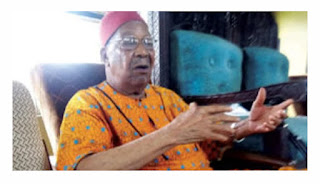
Nwakaego Boyo


Ego Boyo is best known for her role as Anne Haastrup in Checkmate, a TV soap opera that was quite popular in the 1980s. Now a film producer and part-time actress, she speaks with IVORY UKONU about some of the things she has been up to in recent time and her tenure as the 60th president of the International Women Society

But for your recent appearance alongside Richard Mofe Damijo in the TV drama series Mr X, one would have said you stayed away from acting for so long. Is there a reason for this?

There was some intentionality behind my absence from the screens. I did want to focus on my producing, and I also wasn’t sure at the time that I wanted to go on acting because the roles I was being offered were simply variations of the Anne Haastrup role, and I did not want to be stereotyped. After a few years of producing though, I found that my love for acting was still very much alive. Some director friends offered the odd cameo role, and as far as it was a small part I could play in a day’s shoot, I was happy to accept.

If you had continued acting without a break, you probably would have turned out to be the Jodie Foster of Nigeria. Don’t you think?

Well, I guess we will never know, but I think everything worked out for the best. The roles I am being offered now are more mature and well thought out, which is what I always wanted. I didn’t want a role in a film or a drama series that was not fleshed out.

Returning to the screens with RMD exactly 30 years after you made your debut in the TV drama series, Checkmate and later Violated, is to say the least significant. Was this deliberate? Why did it have to be you and RMD again?

I think RMD and I had such a great relationship and chemistry in the two projects we worked on together. He wanted to try that formula in the new project and it turned out to be a winning combo.
You have produced five movies till date. The last one was released in 2019.

 Are you working on a new one?

I was working on some projects and then the COVID-19 pandemic struck. We have had time to rethink and re-work the script. But despite the delay, I am actually glad that I didn’t go forward with it. We have been in production for over a year. The plan now is to start principal photography by mid-2022.
Why do you always seem to take your time to make a new film?

I prefer to focus on the development of a project. I think it is best to take my time so as to get the best results. I don’t like to rush the process. I prefer to let things develop organically. Ideally it would be great to have a film come out every year or two films every year, but it hasn’t always worked out that way. For instance, Akin Omotosho, who directed my last film ‘The Ghost and the House of Truth, had access to the script about 10 years ago. One day, when we were working on another film, he mentioned it to me and I thought it was a great concept. We started work, changed certain aspects of the script, had conversations with the potential cast and crew, agreed on schedules and from then to the final film took five years to achieve.

From your own experience, what criteria must a film fulfill to be considered a good one?

The writing is crucial. It has to be a well written story with a solid plot, theme and well-defined characters and then good directing. The directing is crucial for the story to work. Also crucial is a great director with a clear creative vision and a plan to develop the story, what he/she hopes to achieve and how, then how he/she intends to work with the entire crew to deliver that vision. Next is getting the right cast to interpret the characters. It is important that the director gives clear directions to the entire team, from the actors to the production crew, in terms of cinematography, lighting, sound and art direction, directing every single aspect of the shooting and then post so that the vision is delivered. It is all about teamwork. The team worked together in a cohesive manner to produce this amazing creative work.

How would you assess the Nigerian film industry, between the period you started out as an actress and the present time?

The industry has grown in leaps and bounds. It has attracted the attention of film aficionados and found new audiences worldwide. More than ever, the audiences are really paying attention and consuming our content. They are receptive to the work and have created this wave of attention that has taken us from just the shores of our country to the world and that is great. There has also been a great deal of improvement in the quality and diversity of our story telling, improved technical expertise and marketing our work.

The challenges remain largely similar. Distribution is still a huge problem, financing is still a huge problem. Loans are available but they are largely difficult for the majority of film makers to access. While there has been some investment from corporate organisations and now, with more streaming platforms commissioning content, some film makers are getting access to funding.

Unfortunately, a lot more film makers still struggle to get funding and access to these new distribution channels. The distribution models need structure and need to be available and accessible for equitable distribution of films. We need more cinemas in more locations, willing to screen all genres of films, more streaming platforms offering lucrative deals and opportunities open to everyone.

What is your greatest achievement as a movie producer?

I haven’t made it yet. I think there is still more to come. I want to make a film that makes a huge cultural impact. I would like that the film creates a cultural shape and that every time the film is mentioned that cultural shape is discussed and it would be because of an Ego Boyo film. Two of my early productions, Violated and Keeping Faith, became forms of reference for many films that came after and continue to inspire.

What are your thoughts on casting social media influencers in movies against using core professionals?

Popularity is not my form of casting, professionalism is. It’s about being able to interpret a role effectively and believably on screen. Anyone committed to the process and willing to subject themselves to the profession, I will proceed with. Film is an art form. Therefore, you have to treat it with that degree of respect and intentionality.

Beyond movie productions, your company, Temple Production handles documentaries, jingles and advertisements. Which of the numerous jobs you have handled stands out for you and why?

The advertisement and jingle for the presidential campaign of 1998. And then the short film for midwives and the silent experimental film were made in 2017.

You were the 60th president of the International Women Society. What was the experience like for you?

It was interesting and challenging. At the time I had been a member for 18 years and I wanted a charity that was giving back, especially to girls and women, and the structure was what attracted me. I had worked in different areas of the organization, so when the opportunity came to head the society, I took it. I was focused on projecting a fresh approach, a 21st century society, and to find ways to attract more young women into the society. Additionally, it was to ensure support for our projects; scholarships, widows business trust, the IWS nursery school and adult literacy center.

What legacy did you leave behind when you handed over?

I hope I left a legacy for the organisation to continue to flourish by bringing in new blood and securing our position and creating awareness of what we do.

What experiences would you say must have significantly shaped you to be who you are today?

The loss of a parent early can shape and/or change you. My father was everything to us; he was our protector, our role model, our backbone, adviser, father, friend – he was everything to us, so, it really affected all of us in the family. We grew up faster and had to focus on using the lessons he taught us to live our lives in ways that would always honour him and our upbringing.

What was growing up like with a Nigerian father and a Barbadian mother?

It was a lovely upbringing. It was also a great mix of both cultures, Igbo and the culture of Barbados where my mum is from, which is, of course, similar.

How did you meet your husband, Mr Omamofe Boyo? What was the attraction?

We met in Lagos, but I have been most unwilling to give anyone that story but my friends and family know the exact story. I prefer to keep the details to myself.

You have been married for close to 30 years. So, you must be doing something right. What advice would you give to the younger generation who don’t have any qualms about ending their marriage at the drop of a hat over very flimsy reasons?

All I can say is that marriage is a union between two imperfect people and it’s not perfect, expect that. It is a work-in-progress. Be committed, be honest with one another and communicate. Discuss the important things beforehand. Things like finances, children, religion, education and values.

How do you unwind?

I read, listen to music, meet up with friends, walk and garden.


SOURCE: THE WILL

INTERVIEW: Mbazuluike Amaechi Reveals Why Zik Couldn’t Be Nigeria’s Elected President

FROM CHIJIOKE AGWU

Mbazuluike Amaechi


ABAKALIKI, EBONYI STATE (SUN NEWS) Chief Mbazuluike Amaechi, an elder statesman and First Republic Minister of Aviation was in Abakaliki,Ebonyi State to see Governor David Umahi.

He spoke with journalists on his recent visit to President Muhammadu Buhari with some Igbo leaders, the militarization of Southeast and the quest for Nigeria president of Igbo extraction in 2023, among other issues. Excerpt:

You led some Igbo leaders to see President Buhari recently. Can you tell us some of the major reasons for the visit?

A few days ago, I led a small delegation of Igbo leaders to meet the President of Nigeria on the growing tempo of violence in Nigeria especially in the Southeast. The president was happy to receive our delegation, and our discussions were frank, sincere and all targeted at advancing peace and full reconciliation and we are expecting a positive result.

What is your mission in Ebonyi?

I have come to Ebonyi State to greet the governor who is the Chairman of the South East Governors Forum, and seek their support in our efforts to find peace. I am deeply worried and pained by the new spate of violence between some policemen and civilians who were said to have been killed and I am appealing to all who may be involved in these crimes to please seize violence and give peace a chance. Whether they are of IPOB or MASSOB or known or unknown gunmen or agents of any organ or personality should please stop it now. You can never achieve peace or reconciliation through violence. As the only surviving minister and member of the government of the First Republic I appeal to all to please respect my age and help me to make peace , before returning to my maker. I want to comment on the new spate of violence. I am trying to bring peace and freedom to Igbo land. You people are young elements , you don’t know what pleasant place our place was before, we grew up at a very difficult time , at a strange time where there is no food, no money , nothing and your money have no value again and everything has been destroyed and we are trying to bring back that peace. Today, in Igbo land, from Abakaliki to Enugu , I know it is used to be about 35 minutes drive , but now if you have no escort, it will take you about an hour or two because on the roads there are checkpoints upon checkpoints. In our own side, Anambra, Imo and Abia, you need to see what is happening there. People are travelling, they are made to come down, all passengers in a lorry or a bus, men, women, children. Women who are pregnant, women who carry children at their back, they are made to raise their hands above their head. This is not a free country. So, these are the things I want to stop. And I want to stop the killings, I have the capability of saying it, one of the discussions I had with the president last week, was the safety of Nnamdi Kanu detention and the whole situations and how it should be handled, how to reconcile the Igbo side of this country who were the leadership of the struggle for independence and creation of the country and to reconcile them with the rest of the country. We have been isolated since the war ended, we are not given responsible positions in the country, the economy has been destroyed, the only seaport at Port Harcourt is closed because it was close to the Igbo. Our traders order their goods and they arrive at Lagos and from Lagos , to Abakaliki or to Onitsha. The customs molest them on the road and take more of the profits they will make in the business . People are suffering now, you people are in hell now. In Ebonyi State, I don’t know why they had to allow the Nkalagu cement factory to die. Nkalagu cement is the only major industry in Ebonyi State so far. And it was the major thing that sustained us during our time and at that time , if you pay N200, at Nkalagu cement they will deliver to you one lorry load of cement, 200 bags of cement anywhere in the eastern part of Nigeria. Today, that place is closed, it must be re-opened . I have seen the wonderful thing that the governor is doing here, I have seen the development here, but the next phase will be to put an industry here .I am not dying tomorrow, I am 93 years old ,I will live and see this development and you people will live and see it and grow with it.

Giving how the country is going especially the treatment being meted to the Igbo,what message do you have for the Igbo youths?

Well, my message at the moment, particularly when the Igbo are at the receiving side , is for the Igbo to use that Igbo sense , silence is golden . You see there is one weakness Igbo people have, what you will do tomorrow; you say it today. I will do this tomorrow, if you do it tomorrow it is no longer news , if you don’t do it tomorrow the shame is yours . So the best thing is for them to use their sense. Let us work silently. God has given the Igbo land the blessings of men, women and children who are hardworking and self-reliant and education is very high in our place, so with proper management and discipline, with proper planning we will succeed. We will come back to the original position of the Igbo in Nigeria.

Some people are saying that you went to Abuja to discuss with the president on how to release Nnamdi Kanu , but failed to discuss the main issue of marginalization which is fueling the agitations of Nnamdi Kanu and IPOB?

People who are saying that are putting the cart before the horse before that should draw it. This marginalization issue has always been there and also being discussed. They cannot be solved in a violent way.It is when we have this young man out, then we will have dialogue. Dialogue is the only thing, meet people, solve their problems, give and take .That was how we applied it in our time.

Nigeria president of Igbo extraction has continued to elude the Southeast since the end of the civil war. 2023 is already by the corner. What is your thought on this and your advice to Igbo politicians?

First of all, let me take you back a little to history. Ndigbo lost a very bright chance of producing the president of Nigeria in 1979. Dr Azikiwe called me in April 1978 and told me as his field man in his time to go back to Nigeria and tell them that he wanted to come back to politics. I went to Lagos , I contacted Shehu Shagari and said I have come , how do we work together to get this one . So, Shagari summoned two other people from the North , Shettima Alimonguno and Sunday Awoniyi from Kwara State . Then I went with Azubuike Okafor and Dennis Osadebe . We were holding meetings in Lagos at the residence of Shehu Shagari and I was reporting to Zik until we eventually agreed on a platform called NPN, that Zik will be the presidential candidate and Shagari will be his running mate . So I came back and reported to Zik and Zik said it is good, you know it is the Emirs that determine, are you sure that this your agreement that the Emirs will not knock it off? So, I went back to Lagos and told Shagari this is the fear of the old man , then Shagari dismissed it and said he was in consultation with our Emirs . Then the following week, the Sultan of Sokoto sent the Emir of Zaria to Zik at Nsukka with four pieces of brooked and four pieces of round footstool they make in the North and to tell Zik that they the Emirs in the North are in support of what the politicians are planning. Zik said again ,but what about the soldiers , the soldiers might take up the government again if we win the election. And I said to him, Owelle if they kill you now , they didn’t kill you early. He said, get out this foolish boy, and we laughed, I went back to Lagos and told Shagari , this is what Zik is saying again about the Army. Shagari said haba, does that man really want to be president, why all these? Okay, I will get in touch with the Army, come back in the evening. We will have dinner in the evening. Then in the evening I went back to his house in Victoria Island in Lagos and there Danjuma came, Danjuma was the Chief of Army Staff then. So, the three of us had dinner and Shagari then told Danjuma this is the fear the old man is nursing about the election. Danjuma said no , no, no , but he is the real man we want. It is that kind of elder that we really want that will bind this country together. Alright I can’t go to Nsukka because if I go to Nsukka the press will catch me, go back and tell Zik that I am going to Calabar on Saturday to Army’s sports , I will make a speech at army’s sport at Calabar and in that speech I will send a message to him. So, on that day Danjuma went to Calabar and made the speech and said that he was reassuring the nation that the Army was ready to hander over finally to a civilian government and return to the barracks, but they must warn that the person that they will hand over to must be an elder that can unite the country, not to somebody that will come and cause problem again. He must be a father; a true father of the nation. Suddenly, Jim Nwobodo lost nomination with Onoh in the party and went back to the other party called NPP and went to Zik and asked Zik to dump whatever arrangement he was making and come to NPP, that NPP is our own party, Igbo party and we will put you in the government, and suddenly Zik changed his mind and he made announcement that a plan for his birthday in November 1978 at the Presidential hotel Enugu is cancelled and it was that day he was supposed to be presented to the nation. The motion was to be moved by Maitama Sule from Kano to be seconded by Tony Enahoro from the West and I will speak last from the East. He made a statement that he had cancelled his birthday party. I was shocked and I went back to him on the 17th of November and asked him what happened, he said Jim came to him and gave him reasons he should join them in NPP. And that he thinks it was better for him to belong to a party of his people. That he didn’t want to go to a party where Akinloye will be the national chairman and he also didn’t want to belong to the same party with Mbadiwe ,reminding me what Mbadiwe did to him. He gave all these flimsy excuses . In my book, I wrote the history of Nigeria, you will see it. I said Zik made Jim Nwobodo governor and unmade himself president, that was what happened. That party at Enugu that was aborted, Osadebe came and went to Zik’s house, they did not allow him to see Zik, they told him that Zik was sick , that night Osadebe was going back and he had an accident and got paralyzed till he died, Moji Lagbaje from Ibadan a close associate of Adelabu came for the party at Enugu, it was aborted , he went to Nsukka to see Zik and he was told that zik was not feeling well and he couldn’t see him. On his way back to Ore he had an accident and died with three leaders with him, four of them died in his car . That was how he lost the opportunity of becoming Nigeria president. So the party moved around and nominated Shehu Shagari. Then on the 13th of January 1978 at Kwara State hotel , I was there on a campaign tour, Shagari as the candidate already nominated was to choose and announce his running mate. So he called me in the hotel on the 13th of January with Akinloye the national chairman and told me that they have selected me to be his running mate and I said Shehu thank you very much, you know my association with you, I am a very sincere man , I can’t see myself running for a lower position when Zik is running against you. I can’t run an election to defeat Zik. See, Igbo people will not forgive me, my children will not be able to explain it and so I am not going to accept it. And so I nominated Alex Ekwueme to be the running mate. That was one opportunity we had. Then during the return to democracy in 1998, Ekwueme ran for president , the same Jim Nwobodo went to the North again and betrayed Ekwueme when they were in Jos convention when PDP were selecting their candidate. And that was how we lost again. Now as for next year I think the country, many horses that have grown in other parts of the country and they are people who are not happy to see the Igbo come back again. But they are people who are giving a rethink to what has been happening all these years and they will want in order to bind the country together to have a true Nigeria , a true federation where everybody will belong and they are prepared to cooperate with the Igbo. The trouble we have now is like I called a meeting in my house , a joint meeting of PDP and the APC, I told them look APC go to your party , work hard , nominate an igbo presidential candidate. PDP go to your party, work hard and make sure you nominate an Igbo presidential candidate, let them contest and whosoever wins is an Igbo man. But if any of the major parties nominate another person from another place, it will be a very big contest, and it will be very difficult for an Igbo man to win on the platform of any of the other small political parties. But the question is that I don’t think that the Igbo politicians are applying enough strategy. You see, to get such a position you have to plan and strategize ,you have to organize, you have to move , you have to mobilize and you don’t making noise. You do it quietly before people know what you are doing, like I said if you say what you want to do tomorrow so much today, if you do it tomorrow it is no longer a news. But if you fail to do it, then you will be termed a failure. So, the best thing is to come out with a surprise and that is the best strategy. I am still alive and I am prepared to help them to plan if anybody comes to me .

You Don’t Fall And Remain Glued To The Ground For 50 Years

BY EMEKA ASINUGO


In the last 10 years or so that Mazi Nnamdi Kanu brought the plight of the Igbo in Nigeria to international limelight and thus intensified the Igbo struggle for self actualization, I had taken great interest in studying why even in the face of their acknowledged resilience and hard work, the Igbo seem helplessly trapped in the contraption of a union which their youths find most difficult to accept as their ideal vision of a country.

The truth we must accept is that when two cultures clash, the weaker culture gives way to the stronger culture which invariably assimilates it. Before the civil war, the Igbo were highly revered because the other tribes saw them as very enterprising, very successful and very unassuming. The other Nigerian tribes had a level of respect for the Igbo that almost bordered on fear. Some Nigerians who were not of Igbo extract loved them and wanted to be like them. But our Igbo cultural heritage fell apart when our people were forced to surrender to Nigeria on 15 January 1970 in order to forestall the massive suffering of Igbo women and children, many of who were dying daily from starvation and kwashiorkor.

The then Finance Minister, Chief Jeremiah Obafemi Awolowo added his own punishment on the Igbo by decreeing that every Igbo who participated in the civil war on the side of Biafra would be entitled to only £20 of his money, no matter how many millions he had in his bank account. That was deliberate wickedness and one that set the ball rolling for Igbo downfall. All Nigeria knew that the Igbo were hard working and that no matter what the conditions were, they would always find a way to survive and excel. And perhaps, Awolowo knew the collective damage his decree would do to the psyche of the Igbo race. It is difficult to think he didn’t plan the downfall of the Igbo race in an attempt to please his masters who made him the finance minister. But even at that, the Igbo survived and resurfaced. So, what is it that has kept them down, still agitating to be set free, still struggling for self actualization more than 50 years after the civil war?

When Igbo was Igbo, they had laws that defined their culture which every Igbo man, every Igbo boy, every Igbo woman and every Igbo girls obeyed to the letter. I think that the children of nowadays were not taught those lessons by their parents or they were deceived by their peers not to take those laws seriously any more. Whatever it was, there is a need to revisit some of these laws for the sake of those who did not know about their existence and those who do not understand how little drops of water can make a mighty ocean. And I think that what everyone who loves the Igbo should do is to circulate this message to get to as many people as possible.

In my days, a lot of premium was placed on trust. The Igbo should recognize that for them to make sense of their struggle, they had to trust each other absolutely – and I mean absolutely. That would pave the way for them to be trusted as a people. Just before the former Vice President of Nigeria, Dr. Alex Ekwueme joined his ancestors at 10 pm on Sunday 19 November 2017, he very eloquently echoed this problem with the new generation Igbo. Dr. Ekwueme noted that one of the most important attributes of Igbo people which anchored on their trust for each other had gone with the winds since the end of the Nigerian civil war of more than 50 years ago. He warned that once the Igbo lacked trust among themselves, it would be difficult to make progress. Dr. Ekwueme recalled that Igbo people prided themselves on their level of unity before independence and immediately after independence. He extolled the Igbo man as the most important of God’s creation “after the white man” and explained that God had a very soft spot in His heart for Igbo people and endowed them with great intellect.

Dr. Ekwueme said that when Igbo was Igbo, there was so much unity, such that once Igbo leaders met and took a decision, every Igbo person would abide by it. The trust among the Igbo was the reason apprenticeship became popular with them. The result was that parents would allow their children to stay with an established Igbo man to learn a trade for periods ranging from two to five years after which the apprentice would then be “settled” to start his own business. But even after the settlement, the newly settled young trader would continue to get goods on credit from his former master and return the money after sales because of the trust that existed.

Today, lack of trust has diminished that age-long cooperation between the master and his former apprentice, which is worrisome. Towards the end of the apprenticeship period, it is either the apprentice absconds with huge sums of money belonging to his master, or his master trumps up lies against the apprentice that he stole his money. He would then send the young man home with empty hands in order to avoid settling him. “The main problem of the Igbo today is lack of trust. If we can rebuild trust among ourselves, our people will be better for it,” Dr. Ekwueme said. He wondered at what point the Igbo went wrong.

It is easy to trace at what point the Igbo went wrong when we articulate what defines Igbo people in the first place. One of the fundamental laws that distinguished the Igbo and their tradition and culture was respect for an older person. It had nothing to do with money. It was a general law that affected every Igbo because everyone is normally older that someone. So, even if that person was older with one week or one month or one year, he or she had to be accorded due respect by anyone younger than him or her. It was a culture our people valued so much because it tallied with the republican nature of the Igbo people’s social life.

That culture was jettisoned immediately after the civil war after Chief Awolowo decided to impoverish the Igbo. The psychological result of Awolowo’s decree was that today, Igbo people tend to respect anyone who has money more than anyone who is older but poorer than them. So, unless that culture of respect for older people is revived and invigorated that every Igbo man or woman, boy or girl must show due respect to his or her older Igbo, believe me the Igbo will find themselves still glued to the ground fifty something years after their fall, especially as the North and the West generally show a lot of respect to those who are older than them.

Another area the Igbo have to look into is the role Igbo women play in all of this. Today, Igbo women seem to be the ones at the forefront of the quest for money, no matter how such money was made. In the process, they trade their pride for money. But let us not make any mistake about it. The success or progress of any people to a huge extent depends on how proud and reserved their female citizens can be. Before the Nigerian civil war, it was very difficult for people from other Nigerian tribes to have Igbo girlfriends, not to talk of marrying them. It was a status symbol for a non-Igbo to marry an Igbo girl, just as a black man marrying a white woman in those days was a status symbol. You had to be a top doctor, engineer, architect, military officer or a top lawyer to be even able to talk to an Igbo girl. But today, Igbo women have lost that pride that once defined the Igbo nation because of their inordinate ambition and quest for money they no longer care how it was made. And not until they come out of the woods and reverse this trend will the Igbo struggle have meaning.

The third an equally important area the Igbo have to look into is the stupid habit they learnt from other Nigerian tribes of spraying money during events. That is not Igbo culture by any stretch of the imagination and it portrays the Igbo in very bad light in the eyes of the international community. The international community knows that no one who suffered and genuinely made money can afford to dispense with it the way our people do these days. The very unsettling idea negates everything the Igbo man stands to be counted for – hard work, resilience, frugality and accountability. In civilized societies, if anyone wanted to make a gift of money to another, the one would simply draw up a cheque in the name of the recipient, or put the money in an envelope addressed to the recipient and hand it over privately. That is what civilized people do. They don’t spray bundles of money in a nonchalant display of affluence that only gets minions applauding them hysterically.

Perhaps, those Igbo who indulge in this suspicious practice do so because of their egocentrism, because they want to be seen in public as the wealthy ones. It just doesn’t make sense to any civilized person and the Igbo are known to be civilized. We need to stop this attitude of spraying money and adopt the more civilized attitude of writing cheques or enveloping the money we offer as gifts to our beloved friends and family. When we start with these three laws, we will notice changes in the struggle.

The Igbo should stop mourning and take their destiny in their own hands. And the leaderships of Ohanaeze and IPOB should take note of what to do. You don’t fall and remain glued to the ground for more than 50 years. Ndigbo need to put their acts together.

Notes On Igbophobes, Igbo-Haters And Igbomaniacs (3)

BY DOUGLAS ANELE

Douglas Anele


Concerning the serious weakness in the Igbo character that ended our discussion last week, Prof. Chinua Achebe captures it succinctly in his eponymous work, There was a Country: A Personal History of Biafra, by affirming that as a group its success “can and did carry deadly penalties: the dangers of hubris, overweening pride and thoughtlessness which invite envy and hatred or, even worse, that obsess the mind with material success and dispose it to all kinds of crude showiness.


There is no doubt at all that there is a strand in contemporary Igbo behaviour that can offend by its noisy exhibitionism and disregard for humility and quietness.” This deadly character flaw has over the years led to insensate generalised hatred of Ndigbo by Nigerians from other ethnic groups, especially those who see them more as unwanted uppity competitors rather than as compatriots.

It must be pointed out that the character problem Prof. Achebe refers to can also be found amongst the Fulani, Hausa, Ijaw, Yoruba, etc. Nonetheless given the ubiquitous presence of Igbo people all over the place, their own hubris, showiness and noisy exhibitionism tend to be more noticeable, offensive and widespread.

Unfortunately many nouveaux riches of Igbo extraction like Obi Cubana and his close associates seem not to have learnt the lesson encoded in the Igbo proverb that oke soro ngwere maa mmiri, ahu koo ngwere o gaghi ako oke (if a rat plays with the lizard in the rain, if the body of the lizard dries off, the same will not be the case for the rat).

The preceding remarks points to a negative side of the Igbo character. But as a nuanced thinker Achebe also notes that in other countries an ethnic group as industrious as the Igbo would trigger healthy competition and the rebirth of achievement and learning.

Unfortunately in Nigeria “it bred deep resentment and both subtle and overt attempts to dismantle the structure in place for merit in favour of mediocrity under the cloak of a need for ‘federal character’ – a morally bankrupt and deeply corrupt form of the far more successful affirmative action in the United States.”

Accordingly, those looking for the main reason why Nigeria has become a horrible caricature of what a nation should be need look no further because, as the renowned novelist wryly remarks “The denial of merit is a form of social injustice that can hurt not only the individuals directly concerned but ultimately the entire society…whenever merit is set aside by prejudice of whatever origin, individual citizens as well as the nation itself is victimised.”

In short, all the policies meant to pull down the Igbo have boomeranged. Nigeria is now a giant with the feet of soft clay, a big-for-nothing agglomeration of peoples afflicted with a succession of some of the most selfish, incompetent and shameless leaders in the world.

The late Sardauna of Sokoto, Alhaji Ahmadu Bello, was a prominent unapologetic Igbophobe and Igbo-hater. For instance, he vehemently kicked against the sizeable number of Ndigbo in northern Nigeria and the preeminent positions they occupied in different aspects of life there.

Again the Sardauna championed some of the discriminatory policies of the First Republic that favoured northern Nigeria to the detriment of the south generally and Ndigbo in particular. Indeed, in an interview with a British journalist shortly after independence he affirms that as premier he would rather employ a foreigner than an Igbo, a fellow Nigerian, to fill any vacant position in his region simply because the Igbo, according to him, are ambitious and have a tendency to dominate others.

Apparently Ahmadu Bello was not interested in merit or in employing qualified Igbo to foster national unity. His main focus was to exclude the ‘uppity’ Igbo from being employed in the north. As we observed earlier, after the Biafran war members of the dominant faction of the northern conservative military-civilian establishment in the corridors of power continued the Sardauna’s apartheid policy against the Igbo.

For them, Ndigbo are lower class citizens that should ingratiate themselves before Fulani caliphate colonialists in order to make any headway economically and politically at the federal level. And the obnoxious quota system was a readymade tool to ensure that merit was sacrificed on the altar of “federal character” as defined and implemented by those running what Prof. Ben Nwabueze describes as the “invisible government” controlled by the northern elite.

Of course, without lowering standards it would have been virtually impossible for northerners to compete and outperform Ndigbo in various aspects of human endeavour that depend on individual initiative, creativity, industriousness and self-reliance. This is very evident especially since 1970 in the education sector where cut-off marks for admission at various levels of formal education run by the federal government are deliberately lowered to accommodate underperforming northern candidates whereas their Igbo counterparts with far better scores are denied admission.

The same discriminatory system is applied in employment into federal ministries, departments and agencies. All the same, Ndigbo have continued to play the role of primus inter pares with respect to the informal economy of northern Nigeria (and other non-Igbo majority areas) in spite of those obnoxious discriminatory policies and periodic violence targeted against them.

On the other hand aside from recent increase in the number of cattle dealers in the south-east due to deliberate pro-north policies of selfish bulimic factotums of the Fulani oligarchy like Orji Uzor Kalu, Hope Izodinma and Dave Umahi, majority of northerners in Igboland are barely managing to survive as beggars, low-grade artisans, gatemen, petty traders, okada riders and keke operators who mostly live in very squalid conditions.

Consequently if all the northerners in Igboland were to pack and relocate to their respective states, it would make a tiny mark, not a dent, on the socio-economic condition of the Igbo towns where they lived whereas if people of Igbo extraction had left the north en masse some time ago as proposed by a rag-tag collection of irascible northern youths the negative economic impact on the north would have been serious.

This claim will irritate northern Igbophobes and Igbo-haters who often shamelessly and falsely claim that Igbo people put unnecessary obstacles that prevent members of other ethnic groups from establishing and progressing in Igboland. Igbophobes and Igbo-hatersmaking such claim conveniently ignore the fact that Ndigbo living outside Igboland face even greater obstacles than the imaginary bottlenecks they are complaining about butstill continue to soldier on because of two main reasons: one, their indefatigable can-do attitude and, two, they take the concept of One Nigeria seriously.

That said, with the decades-old divisive policy of Igbo exclusion by the northern ruling cabal and their acolytes from the south now taken to a whole new level by the current nepotic administration of President Muhammadu Buhari it is time for Ndigbo to begin a critical re-examination of what it really means to be an Igbo in Nigeria.

It is probably true that majority of Nigerians from other ethnic groups are Igbophobes and Igbo-haters. This is particularly true amongst a segment of northerners who still think that having lost the civil war Ndigbo should be satisfied with whatever situation they find themselves in the country and be grateful.

IGBO POLITICS: 2023: APGA Vows To Win More Guber, National Assembly Seats In Nigeria

BY CHIJINDU EMERUWA


ABUJA (DAILY POST) The National Chairman of the All Progressive Grand Alliance (APGA), has boasted that it will win more gubernatorial and legislative seats in Nigeria come 2023 general election.

Ozonkpu Victor Ike Oye, said this in a statement forwarded to DAILY POST on Sunday, by the National Publicity Secretary of APGA, Barrister Tex Okechukwu, at the end of the enlarged meeting of the National Working Committee of the party held at its National Secretariat in Abuja.

The APGA National Chairman also reiterated that the party will spread more and even overtake other major political parties in Nigeria.

Oye said, “APGA is consistently rising, spreading all over the country as the most formidable political party giving its pacesetting antecedents in all democratic ramifications.

“Nigerian people have seen that APGA is transparent, diligent and determined to take the party to the next level, unlike other parties. They are indicating interest to join from all over the country and even from the diaspora.

“Even the defectors are full of regrets and are making frantic efforts to rescind and reverse their mischievous mistakes by decamping to APC”.

He further stated that APGA is the bride and pride of contemporary Nigeria politicians.

Oye said, “the usual sincerity and determination of all the stakeholders in the party, particularly in the immediate past election that produced Professor Charles Chukwuma Soludo as governor and Dr. Ibezim as Deputy governor-elect of Anambra state respectively speaks volumes.

“Every astute politician in Nigeria particularly in the southeast has found APGA as the only political haven and are hurriedly taking advantage of that, by trying to join. Other political parties are overwhelmed with the irreversible political crisis”.

Continuing, the national Chairman further reiterated that Governor Willie Obiano of Anambra State did excellently well and that Soludo will definitely do more and improve in the established legacies of Obiano’s administration in the state.

“Professor Charles Soludo stated categorically that he has contracted with Ndi ANAMBRA, and that he will bring his wealth of international and national experiences to bear in developing Anambra State, that he has resolved to make Anambra State a haven for investors and even for leisure seekers, he promised massive infrastructural development, security will be at its best, provision of jobs for the youths of Ndi Anambra, partnership with public and private sectors etc”, Oye said.

He, however, used the medium to commend the National Working Committee (NWC) and other party faithful for their unshakable and maximum cooperation since their inception more particularly during the trying times of the immediate past gubernatorial election.

According to the statement by the APGA spokesman, the National Secretary of the party, Dr. Labaran Maku, Deputy National Chairman Northern Nigeria, Adamu, the Deputy National Chairman southern zone, Chief Uchenna Okogbuo and all the national vice-chairmen and members of the APGA NWC were present during the enlarged meeting held in Abuja.

In another development, the Yobe State Executive Committee of the All Progressive Grand Alliance has honoured its national chairman, Ozonkpu Victor Oye for an excellent leadership award.

The State leadership of the party described him as a Colossus and a go-getter.

Saturday, December 18, 2021

In Memoir, BU’s Louis Chude-Sokei Writes Of Navigating “Multiple Blacknesses”

BY SARA RIMER


Louis Chude-Sokei’s Nigerian father helped lead the Biafra rebellion and was killed fighting for that short-lived country in 1968, before his son turned two. His Jamaican mother set up hospitals for the wounded and airlifts for starving Biafran children. By the time Chude-Sokei was a teenager, he’d moved from a refugee camp in Gabon to a strict religious home for “left behind” children in Jamaica to the gang-ridden Los Angeles neighborhood where he and his mother eventually settled. There he lived amongst the vibrant African diaspora of his extended family—all the while hearing people tell stories of his parents, “the JFK and Jackie O of Biafra.”

Growing up, he secretly read David Copperfield and other British Victorian novels in Jamaica, became a devoted fan of David Bowie, and got good enough at football—a game he didn’t even like—to make his high school football team so he could avoid the violence of his neighborhood.

These stories and many others populate Chude-Sokei’s new coming-of-age memoir, Floating in a Most Peculiar Way (Houghton Mifflin Harcourt, 2021). These days Chude-Sokei is the director of BU’s African American Studies Program, a College of Arts & Sciences professor of English, and holder of the George and Joyce Wein Chair in African American Studies.

“This is the story of a young Black man trying to find himself in a world where he never quite seems to belong,” Ijeoma Oluo writes in the New York Times Book Review. The author is “too African for Jamaica, too Jamaican for America, too American for Nigeria,” Oluo writes.

Chude-Sokei is also editor-in-chief of The Black Scholar, ranked by Princeton as the top journal of Black studies in the United States, and an expert on the literature and music of the Black diaspora and the relationship between race and technology, from robotics to artificial intelligence, among many other subjects.

BU Today talked with him about Floating, which owes its title to a David Bowie lyric, and how in writing it he set out to reconcile the “multiple Blacknesses” of his life—Igbo, African, Jamaican, Black American—and to challenge readers to see beyond the conventional narrative of Black/white in America.

Q & A WITH LOUIS CHUDE-SOKEI

BU
Today: What have you been told about your father?

Chude-Sokei: Very charismatic. Good-looking, tall—really tall. Myth and romance make everyone tall. He was the titular head of the family clan and supposed to marry an Igbo woman from a titled clan. My mother, however, came from this Jamaican lower middle-class family, where she’d been taught that Africans were primitive. Yet she married an African, six weeks after they met in colonial London. And moved with him to Nigeria.

What was your sense of yourself at Jamaica’s Seventh Day Adventist Home for children, where you lived from about age four to nine, when you joined your mother in Washington, D.C.?

My goal was to be just like a Jamaican kid. Though Jamaican kids all wanted to be like African Americans we’d see on TV.

You write that when your mother was at work you would dig into her boxes stuffed with newspaper clippings about Biafra and the war and photos of your father and your godfather, who was the president of Biafra. 

Was that sort of like your first archives?

Absolutely. She worked multiple jobs as a nurse at different hospitals, and didn’t talk about the Biafra war, or the genocide. I started looking through all the boxes in the apartment trying to figure out—what is all this stuff? And I’d pull out a magazine with my godfather on the cover. Or a photo of my dad! And clippings about the plight of the Igbos and pictures of emaciated kids.

How were you starting to form your identity as a boy in Washington, D.C.?

In the same way I did in Jamaica. What’s the Blackness here? As I tell in the book, that’s when I discovered the American skin color thing by being called the “n-word” by a white kid. I didn’t know what it meant. I don’t think he knew what it meant, either, other than it’s something you say to a Black kid to make him angry. I also got insulted by an African American teacher who said Africans are an embarrassment to “real” Black people because of the post-colonial violence on the continent.

That was a moment of realizing that American racial differences are very different from what I’d known. In Jamaica there is awareness of racism and colonialism, but it’s more abstract because everybody is Black. People in positions of authority are Black, same thing in West Africa. When you come to America, you feel minority status. That status and its implications are what I began to learn.

Because I was always surrounded by immigrants, it was hard to be subsumed into the American Black/white narrative. They may have gotten on my nerves, but you could never get away from the African diaspora. Folks would sit around and drink beer and eat curry goat and there’d be the Yoruba, and the Igbo and the Jamaicans and the Trinidadians and Haitians and South Africans. It was not academic, nor was it politically correct. A lot of them thought racism was simply Black Americans complaining about America, a country these immigrants almost died trying to reach. They’re like, we just survived a genocide! Trying to argue with them about systemic or structural racism was indeed a challenge.

"We know that America by 2050 or so is going to be browner and less white. Well, Black America is going to be less traditionally Black because of Black immigrants, more of whom have arrived here over the last few decades than during the slave trade."

—Louis Chude-Sokei

Your mother tells you that you first heard David Bowie in the refugee camp in Gabon. What was it about Bowie that so mesmerized you?

It’s easy now to talk about the metaphoric alien that refuses to assimilate, or the Spaceman who decides it’s better to float than come down. But these meanings came from growing up in a Seventh Day Adventist House in Jamaica where reggae was forbidden because it was Rasta or secular. We could only listen to gospel and country and western, which is popular in Jamaica. We couldn’t listen to pop music, except when the girls would sneak in a radio and listen to the Jackson Five. But imagine if that’s your musical universe. Then you hear Bowie. To discover that much of what he was singing was essentially science fiction bolstered my interest in that genre.

Can you talk about that big turning point in high school, when you let a bunch of your neighborhood friends into the gym one night, unlocked the storage room, and they stole sports equipment? You didn’t take anything, but you were all caught and faced a disciplinary hearing.

One of many turning points. I’d also been a victim of serious violence. Friends were jailed or shot. There was a time when it was about fists and knives, but then guns began to show up. I was kicked off the football team and shunned by all the cool guys because the assumption was that I was a snitch.

That’s when I started hanging out with the nerdy kids. Some white, some not. But the white ones all loved Bowie. And were shocked by this Black kid with impeccable sports and thug credentials listening to Bowie and obsessed with sci-fi.

That period is also when I discovered, behind the gym, the college guidance counselor’s office. I was trying to figure out what’s next. I didn’t want to get killed. I didn’t want to go to jail. And I wanted to placate my immigrant family. College was the answer.

What do you hope people take away from your story?

That this is also a book about the complexities of race and racism, not the simplistic binary that is currently dominant. It is safer to reduce race to a Black-and-white debate, when there are so many other nuances and ethnic groups at work at the same time.

This is a story of someone who’s navigated that, internationally and nationally, for his whole life. When I got to college, I was already interested in this thing called diaspora, which you can’t talk about without talking about colonialism and racism, but also immigration. Of course, while learning about this, the cops are harassing my friends and me all the time. We would be pulled over and thrown into gutters, with them stepping on our backs or tossing us in jail overnight only to release us with no charges. That came from being a Black American kid around South Central LA. But amidst all of this, there is still xenophobia within the African American social world and a privileging of African American experiences over other Black or immigrant struggles.

The book is also the story of someone who knows that American notions of race and ethnicity are changing. We know that America by 2050 or so is going to be browner and less white. Well, Black America is going to be less traditionally Black because of Black immigrants, more of whom have arrived here over the last few decades than during the slave trade. Black people with different experiences of race and racism are changing the dynamics, and that is one of the most important facts about Black America today in my estimation.

As the director of African American Studies and editor of The Black Scholar—one treats American Blackness with respect and acknowledgment, because it is intellectual and politically essential to all Black thought and experiences. But at the same time, one is something else. That something else still awaits a full emergence. That’s what this book is trying to signal.


Sara Rimer A journalist for more than three decades, Sara Rimer worked at the Miami Herald, Washington Post and, for 26 years, the New York Times, where she was the New England bureau chief, and a national reporter covering education, aging, immigration, and other social justice issues. Her stories on the death penalty’s inequities were nominated for a Pulitzer Prize and cited in the U.S. Supreme Court’s decision outlawing the execution of people with intellectual disabilities. Her journalism honors include Columbia University’s Meyer Berger award for in-depth human interest reporting. She holds a BA degree in American Studies from the University of Michigan.

F.C. Ogbalu: Father Of Igbo Language, Literature

BY CHIKA ABANOBI


For sure, Frederick Chidozie Ogbalu, popularly known and addressed as MaziF.C. Ogbalu while alive, was not the first person to write a book in Igbo language. For instance, there was Bishop Ajayi Crowther’s first Igbo primer, a 17-page booklet containing Igbo alphabet, words, phrases, sentences. Written in Isuama dialect (used by emancipated slaves of Igbo origin who settled in Sierra Leone and Fernando Po in the 1800s), it was published in 1859.

There was J. C. Taylor’s New Testament Bible written in Onitsha dialect of Igbo. Although Taylor, born in Sierra Leone to parents who were Igbo freed slaves, grew up speaking Igbo as his mother tongue, his translation, however, never saw the light of the day, never got published because of the disagreement that arose between him and J. F. Schön, a German CMS (Church Missionary Society) missionary and language expert who felt that the dialect was not a universally accepted one in the then known Igbo world.

There was Archdeacon Henry Johnson’s 1871 Book of Common Prayer as there was Archdeacon Thomas J. Dennis-led Igbo Language Translation Committee’s 1910 and 1913 publication, respectively, of Ije Nke Onye Kraist (the translated version of John Bunyan’s Pilgrim Progress), and Igbo Union Version Bible which later became enmeshed in controversy after being rejected by Onitsha Igbo speakers, although much of the work on it was done by Archdeacon Johnson, a Yoruba, who was a highly intelligent and versatile translator, who not only developed an advanced Igbo orthography different from the Isuama dialect but also translated into Igbo the books of Matthew and Mark; Julius Spencer (born in Sierra Leone to a Yoruba father and Igbo mother, he translated the book of Acts) and, David Anyaegbunam (an Igbo who had worked for the CMS as a catechist, he translated the book of Psalms and all of the Pauline epistles).

There was Israel E. Iwekanuno’s 1924 Akuko Ala Obosi (a 262-page historical offering written in Onitsha dialect), as there was the 1932 Pita Nwana’s Omenuko. Originally published in 1933 by Longman, Green and Co. Ltd, London, it is widely acclaimed as the first novel written in the Igbo language. Ogbalu, born in 1927, was six-years-old when this book which tells the life story of Igwegbe Odum, an Aro Igbo businessman/politician, who migrated to Arondizuogu, was published. The book came long before D.N. Achara’s Ala Bingo (written in the 1940s in the old Igbo orthography before being translated into the new in 1963). Tagged akuko aroro aro (fiction), Ala Bingo is about the various experiences of life of a chief who goes to work in one year and returns the next year. Not to forget the 53-page Ije Odumodu Jere. Written by Leopold Bell-Gam and illustrated by Uthman Ibrahim, it was published in 1966 by Longmans.

But, in terms of contribution to the development of Igbo language, culture and literature, Ogbalu towers above them all, not only by dint of his copious Igbo literary offerings but by his1949 founding of Society for Promoting Igbo Language and Culture (SPILC), to hasten and re-invigorate the battle for Igbo language. He went to bed dreaming about the development of its language, literature and culture, and he woke up in the morning still thinking about it. He walked as much as he ran, and flew with the ideas he had about its development. And, when he breathed his last in 1990 after a fatal motor accident, he died with the dream. And, looking back at events that unfolded afterward, it will not be out of place to say that he died with the dream and the dream died with him.

Before he and his SPILC stepped in to bring some order and sanity into the chaotic scene that was Igbo orthography and language development, any mathematical figure above 400 was given an amorphous name called nnu kwuru nnu (nnu being the name that Igbo called 400 in numeracy and nnu kwuru nnu, the hundreds/figures above nnu). If a child wants to divulge a secret, he says that his mother is struggling with the door. But by dint of meticulous linguistic research that saw members of the committee traversing the length and breadth of Igboland, they came up with Igbo names for figures beyond hundred, thousand, million and even billion. And, that was how we got, in Igbo numerology, figures like nari (hundred), puku (thousand), njeri/ijeri (million) and nde (billion). They even added, for good measure, words like Mahadum (university) and ekwenti (telephone) to the burgeoning Igbo vocabulary.

At various stages of the enterprise, Mazi Ogbalu sponsored the publication of a number of periodicals in Igbo to provide forums for discussing matters of interest, and outlets for budding writers in the language. They included: Anyanwu (The Sun, the first Igbo newspaper), Onuora (The Voice of the People), Igbo Ga-Adi (Igbo Shall Live), Odenigbo (That which is Famous in Igboland) and Igbo (The Journal of SPILC).

From his prolific pen flowed out many Igbo publications, ranging from novels to poetry books, folktales/fantasy books, textbooks and journals. They include the popular Mbediogu (1975), Nza Na Obu, Dimkpa Taa Aku A hu Ichere Ya (1972), Ebube Dike (1974), Obiefula, Uwaezuoke (1976), Nmoo Nmoo, Igbo Mbu (1-6), Ilu Igbo, Omenala Igbo (1974), Ndu Ndi Igbo, Onu Ogugu Igbo (1981), Okowa Okwu (Igbo Dictionary), Junior Omenala Igbo, Ayoro (Poem for) Umuaka, Abu Umuaka (1979), Junior Igbo Course, Igbo Institutions and Culture, Okwu Ntuhi (A Book of Igbo Riddles, 1973), Mbem and Egwu Igbo (1977), Edemede Igbo, The New Practical Igbo Grammar, School Certificate Igbo (1974), Onu Ogugu Igbo, Igbo Idioms (1966), Uyoko Mbem Igbo (Anthology of Igbo Poems, 1984), Mbido Maka Umuaka Nta Akara (1977), Akwukwo Ogugu Igbo (1972).

In all, he published about 100 books, but his first child and daughter, Dr. Mrs. Elizabeth Ijeoma Jidenma, Managing Partner, Leading Edge Consulting, contends that they are probably more than that. “While he was alive, he himself did not know the number of books he wrote,” she said. “In fact, there were books he wrote that others drew his attention to after he had forgotten all about them. And, he would only remember them whenever they were mentioned, simply because he did not keep records of their publication.”

“F. Chidozie Ogbalu sometimes called the “father” of Igbo language and culture, was a lifelong teacher and champion of his Igbo heritage,” Prof. Frances Pritchett of Philander Smith College, Little Rock, Arkansas, USA, observed in the introduction of her 2003 posthumous interpretation of Ogbalu’s Ilu Igbo, the Book of Igbo Proverbs into English: “He … took a great interest in the Igbo-related controversies of his time. These controversies revolved around efforts to standardise the writing and spelling of Igbo language, and to improve its numeral system.” If the two-tailed lizard is not killed, one with three tails will emerge. All lizards lie on their stomachs, so we cannot tell which has a stomach-ache. But, then, one should not use the fact that craw-craw itches to scratch himself into blindness.

Wherever a crying child points his finger, if his mother is not there, his father is. Towards resolving the controversy, Ogbalu published two seminal works,An Introduction to Official Igbo Orthography and An Investigation into the New Igbo Orthography. He also founded and developed SPILC to spearhead the fight for an appropriate Igbo orthography. It was in the course of the fight that he took the title, Mazi, in place of Mr. and ever after was to be addressed as Mazi Ogbalu. The monkey said that his eyebrows almost spoiled his beauty.

Prichett opined that the SPILC (in which Ogbalu later became its first Executive Chairman) had lofty aims, such as promoting the study and knowledge of Igbo language, sponsoring lectures, conferences, and teaching materials, encouraging young writers; and raising the consciousness of the Igbo people so that so that they would not lose sight of their cultural heritage. If someone you hate has a rash, you call it leprosy. She recalled that the SPILC seminars, “one of which I was privileged to attend in 1979” were influential in the establishment of a Department of Igbo Language and Linguistics at the University of Nigeria, Nsukka. “Dr. Ogbalu was able to bring together people who shared his aims, and many of them are striving to keep SPILC alive now that it has lost its great leader. In the course of his all-too-brief life, Dr. Ogbalu published a remarkable number of works that gathered and preserved Igbo oral literature.”

Ogbalu himself stated as much in his paper entitled “Problems and Prospects of Publishing in an Indigenous Language: The Igbo Experience,” presented at the 1986 conference held at the University of Nigeria, Nsukka (UNN), on the development of Igbo language, culture and literature. That was seven years after the one Prof. Pritchett attended and four years before he was killed in an automobile accident.

“The story of how I got involved in publishing might throw some light on the problems and prospects of publishing in Nigerian language,” he remarked at the beginning of the presentation. “… In 1948, I remember, Rev. T.T Solaru was appointed the first Nigerian publisher (or is it manager?) in the then Oxford University Press based at Ibadan. He came to Dennis Memorial Grammar School, Onitsha, where I was serving as a tutor and delivered a lecture in which he outlined his work in that enterprise. After listening to him, I felt that the way had been opened for me to meet the challenge which my principal, Rev. E.D.C Clark, had thrown at me when I wrote a militant article in the Nigerian Spokesman on the Igbo orthography controversy.

“Rev. Clark had frowned on the article, because it was loaded with the nationalist feelings of the time, and coincided with the meeting of the Synod of the Diocese on the Niger (July 1948). He concluded his reprimand by saying that what I should have done was to produce books in Igbo to vindicate the claim that the Old (Union) Igbo Orthography was better than the New (Adam-Ward) Orthography which I had attacked strongly, rather than my getting involved in writing a newspaper article.

“There were no books in print written in Igbo except the Bible, the Hymn/Prayer Books, Azu Ndu and two or three other primers each hardly up to twelve pages: all these were in the new orthography. It is true that books like Omenuko, a translated version of John Buyan’s Pilgrim’s Progress, (Ije Nke Onye Kraist), R.E. Iwekanuno’s Akuko Ala Obosi, all in Igbo, as well as Ibo Grammar and Ibo Dictionary by Rev. T.J. Spencer had been published, but they were all out of print. At least, with the exception of Pita Nwana’s Omenuko, I had not at that time come across any of them. One could see my problem as a teacher of Igbo language and why the outburst referred to above was justified.

“I decided to produce manuscripts for the publication of books that could meet my students’ needs. Unfortunately, neither Rev. Solaru’s O.U.P. nor any other publishing house would accept manuscripts in Igbo, not even Thomas Nelson and Sons, which now publishes a number of my works. In the fifties and sixties, publishers discriminated against Igbo, even though they were publishing freely in Hausa and Yoruba. As a leading official of the Society for Promoting Igbo Language and Culture, which I founded in 1949, I did not spare them in my speeches, newspaper releases and articles. That was why, when the first publisher to appoint an Igbo editor to his staff did so, he had to write, appealing to me to minimize my attacks. The point I am making here is that because publishers (almost all of them Ibadan-based) discriminated against Igbo, I was forced into publishing.

“In 1957, I established my own printing press, the Varsity Press, in Onitsha. I was compelled to do this because of the immense delays I suffered at the hands of printers. There were also many disagreements over quality of paper and binding, typefaces (most of which were battered), outright suspension or cancellation of works already in progress without notice and regard to the fact that the deposits I paid were eked out of my meagre salary.

“The Varsity Press contributed a great deal in paving the way for me, because I could influence the quality of paper and work done and time of delivery. In fact, that printing press could have probably grown into one of Nigeria’s biggest book manufacturing and printing presses were it not that it was completely burnt and razed to the ground during the Nigerian Civil War. Woodpecker says that after his parents die he will break off the trunk of the apü tree, but after they have died, a boil grows in his mouth. It was resuscitated with a hand Adana purchased without rollers from a printer who had, before fleeing as a refugee, hidden it in the ground at Amawbia.”

The reason one chews a chewing stick is so that the ear can begin to dance. The press provided outlets for many Igbo writers who, otherwise, might have remained unpublished and unknown. In fact, some of the most successful Igbo books in different genres came out of the press. They include works like Ude Odilora’s moralist novel, Okpa Aku Eri Eri; E. Obike’s longest published Igbo epic poem, Eke Une, J. Munonye’s picaresque novel, Aghirigha, and several others. If the hand holds the spoon, the mouth is overjoyed. Tortoise says that his brothers did something good when they sewed him a coat of iron.

Born on July 20, 1927, to Michael Obiefuna Ogbalu and Elizabeth Nwamgbogo Ogbalu of Adagbe, Abagana, in Njikoka Local Government Area, Anambra State, Fred, as he was fondly called by his childhood friends, had his primary education at St. Peter’s Central School, Abagana, where he obtained the First School Leaving Certificate with distinction in 1940. Early the next year, he proceeded to Dennis Memorial Grammar School (D.M.G.S) Onitsha where, in addition to his studies, he joined the Society for Promoting African Culture (S.P.A.C), founded by a perceptive and far-sighted teacher, National Ohiaeri. It was this society which gave him some stimulating glimpses of the significance and meaning of African culture, and particularly of Igbo culture.

He later displayed a brilliant performance at the then Senior Cambridge School Certificate Examination held in November-December, 1944, where he passed in Grade 1 with what was then known as exemption from London Matriculation. That is to say, he passed at a sitting, a prescribed combination of subjects at the level required for direct admission into London University or to any other British University. The pear says that he caused the rich man to eat ashes.

On leaving the secondary school, he entered the Teaching Training College at Awka, where he obtained the Higher Elementary (Grade ID Teachers’ Certificate with a number of merits in 1946). In 1953, he obtained the then Nigerian Senior Teachers’ Certificate in Geography and History. The following year (1954), he achieved a degree of the University of London in Economics as a private candidate.

After leaving the teacher training college, he was posted to teach at Ubulukwu in present-day Delta State in 1947, later to his Alma Mater, DMGS (1948) and much later to St Augustine’s Grammar School (S.A.G.S), where in 1949, he and his friends and colleagues founded the Society for Promoting Igbo Language and Culture (SPILC). One whose house is burning does not hunt rats. The Society was to be one veritable instrument with which he was to register most of his achievements for the language and culture of the Igbo people for the rest of his life.

“Anybody with the least acquaintance with Igbo literary history in the twentieth century will agree that from the forties up to now, and perhaps for some time to come, a huge, pervasive and perhaps infectious Ogbalu factor runs through the period,” Prof. ‘Nolue Emenanjo, remarked. For Prof. Ernest E,enyonu, “Mazi F.C. Ogbalu sowed the seeds of Igbo Language and cultural studies, and they fell on good soil.”

The corpse in the ground told the flute player that he heard him, but the clay soil would not let him get up, so wrote Ogbalu in Ilu Igbo.

Sacrificial Literary Geniuses

BY MICHAEL JIMOH

Christopher Okigbo image courtesy of The Guardian


Byron. Fitzgerald. Marechera. Okigbo. Plath. Shelley. They were all great writers who died young, some in their twenties, thirties, only one making it past forty. They were all dreamers, idealistic, adventurous and most often geniuses but sometimes unmindful of their private lives. What is it with these writers who seemed to have been destined to die young? Michael Jimoh writes on some of the world’s famous writers who died prematurely.

In August 1967, a 34-year-old Nigerian poet in battle fatigues and armed with his regulation rifle went to the warfront hoping to realise his compatriot’s dream of a free Republic of Biafra.

Three months before, on May 30 in the same year, Lt Colonel Emeka Odumegwu Ojukwu had carved out Igbo-dominated Eastern Region from the Federal Republic of Nigeria leading to the 30-months civil war.

Christopher Okigbo is Igbo by birth, born on August 16, 1932 at Ojoto in modern day Anambra state. At the start of the hostilities, he was teaching at Ibadan, capital of Western Region and an outstanding poet in the continent. With war drums sounding ever louder, Okigbo promptly relocated to the East and volunteered to fight in the Biafra Army.

Only days short of his 35th birthday, he was shot and killed in the battlefront by federal troops at Nsukka.

Of course, the federal soldiers didn’t know who he was or, perhaps, if they knew they didn’t care. To them, he was just one of the rebel enemy soldiers fighting as a secessionist in the newly declared Republic of Biafra.

Thus was the life of an otherwise brilliant career of one of Nigeria’s most promising poets cut short.

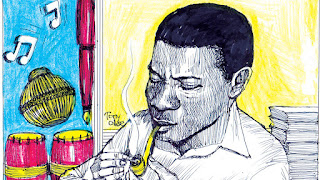
What might have been if the clarinet-playing, pipe-smoking, accomplished poet had lived much longer, up to sixty, say, seventy or even eighty? Those of his generation who did, Achebe, Clark and Soyinka were richly rewarded – a Booker, a Nobel and other highly regarded international and national prizes – for their works.

Okigbo himself had set the pace by becoming the first poet laureate in Africa after he was awarded first prize in the 1966 Festival of the Negro Arts in Dakar, Senegal. He turned it down, insisting that writers should not be classified according to race or ethnicity. Writing, he famously said then, “must be judged as good or bad, not as a product of a specific ethnic group or race.”

If he had lived longer, it is doubtful if Okigbo would have been counted out of the bigger and more prestigious prizes. Indeed, literary theorists and historians have proposed that Okigbo would certainly have been one of the early candidates for the Nobel in Literature – and with good reasons.

Okigbo already had a well-fostered reputation as one of the leading poets of his time. His productive output was going swimmingly, like the Idoto River flowing steadily in his birthplace. He would have added some more publications to the already existing ones considering his creative output in his brief existence: Heavensgate (1962,) Limits two years later and Silences the following year.

Starting off as a librarian at University College, Ibadan, where he sated his voracious appetite for reading, he contributed poems to Black Orpheus and was West Africa editor of Transition, a literary magazine. His star as a literary heavyweight was clearly ascending.

But the call to patriotic duty put an end to all that. Okigbo was only 34 when he died.

Another writer who also died prematurely, though not in the course of fighting a war except battling his own demons, was the Zimbabwean, Charles William Dambudzo Marechera, born on June 4, 1952 in Vengere township of Zimbabwe then known as Rhodesia.

Dambudzo had a hardscrabble early life but was a gifted child, a special endowment that will take him to privileged institutions such as the only Catholic school for students like him and then New College, Oxford England.

Spotting short dreadlocks long before it became faddish among young men and women all over the world today, Marechera was as gifted as they come but was also reckless and without restraint in his personal life.

Departing Africa for Europe on a scholarship, Marechera tried to remember what he left behind at home, recalling that “I suddenly remembered that I had, in the rude hurry of it all, left my spectacles behind. I was coming to England literally blind…I was on my own, sipping whisky and my head was roaring with a strange emptiness…I think that I knew then that before me were years of desperate loneliness, and the whisky would be followed by other whiskies, other self-destructive poisons.”

A confirmed non-conformist weighed under the burden of colonial rule with all its segregationist laws, Marechera never really outgrew his disenchantment with the Western world and all that it represented. His “Dambudzo Performance” wherein he suddenly snapped at an award night in his honour at The Guardian Fiction Prize in 1979 is the stuff of legend.

The year before, he had written and published House of Hunger, considered the Bible of visceral literature, an unvarnished creative piece straight out of his guts aptly dubbed “gut-rut.”

Like Okigbo did in Dakar eleven years before, Marechera became the first African writer ever to win The Guardian Fiction Prize in 1979. Publishers in Europe (England and Germany) breathlessly anticipated future masterpieces from him. They never came. Parceled off from London, Marechera found his way to Cardiff, Wales, where many more whiskies followed.

It was while in Wales that a vicar in Cardiff who witnessed, firsthand, Marechera’s constant inebriety wrote to his publisher James Curry of his concern about the Zimbabwean writer. “I would doubt if Mr. Marechera will be alive for very much longer – he hardly eats and only drinks.”

It turned out to be quite prophetic. On his return to his natal country, Marechera pub-crawled shebeens there, wrote there, slept there and became destitute before dying of complications from AIDS in 1987 at 35.

Writers dying prematurely isn’t quite a novelty. Why it is so is not exactly clear. Could it be a date with destiny? Or just plain carelessness on the writer’s part?

No one exemplifies this more than Romantic poet, Percy Bysshe Shelley. He was a month shy of his 30th birthday when he drowned in his own sailing boat, Don Juan, in the Gulf of Spezia Italy.

Could the boat accident have been prevented or was it a death foretold? The answer to both questions is yes.

In the late afternoon of July 8, 1822 Italian port authorities had warned the poet and two companions of a possible foggy weather when he set sail from Lerici to Livornio. Apparently, the poet’s wanderlust got the better of him.

As for the second question, Shelley himself had foreseen his possible demise upon the waters of Italy. In his celebrated poem, “Adonais,” Shelley writes that “The breath whose might I have invoked in song/ Descends upon me; my spirit’s bark is driven,/ From the shore, far from the trembling throng/ Whose sails were never to be Tempest given;/ The massy earth and sphered skies are riven!/ I am borne darkly, fearfully afar…”

In a publication by The Guardian of London of January 23, 2004, Richard Holmes looked into the circumstances surrounding the death of Shelley and concluded that the “sudden tragedy set a kind of sacred (or profane) seal upon his reputation as a youthful, sacrificial genius.”

Also considered “a youthful, sacrificial genius” was the untimely death of Shelley’s contemporary, rival, friend and compatriot, Lord George Gordon Byron, an unrepentant, unapologetic sybarite. He was born privileged, a lord, in January 22, 1788 in London. Gifted beyond measure, Byron’s personality and poetry would capture the imagination of Europe for years, culminating in his teaming up with the Greek nationalist fighters where he died of fever.

In March 1812, Byron’s first canto – Childe Harold’s Pilgrimage – was published to wide acclaim and reception, prompting one critic to comment that the poet “woke to find himself famous.”

Published in 1819, Don Juan, for which Shelley’s skiff was named, even had more public reception and appeal. Byron’s popularity rose correspondingly all over Europe. His scandalous relationships with men and women rose almost in equal degrees, famously fathering a child with his half-sister.

At this stage in his career and personal life, Byron was having the time of his life despite being hobbled by a clubfoot. It didn’t stop him from traipsing or boating across Europe, Italy, Portugal, Spain, Turkey and then Greece where, in his bid to aid the Greeks gain independence from Turkish rule, Byron died of fever in Missolonghi on April 19, 1824. He was just thirty-six.

Across the Atlantic from England, the United States of America has had its own share of gifted writers biting the dust early. The most famous instance is none other than Francis Scott Fitzgerald himself, famous for The Great Gatsby, Tender is the Night, This Side of Paradise, etc.

If there was one gifted writer who had the greatest potential to become great among his contemporaries, Fitzgerald was it. He counted among his close friends Earnest Hemingway, Edmund Wilson, John Dos Passos. Born September 24, 1896 in Saint Paul Minnesota, Fitzgerald showed early promise in school before proceeding to Princeton where he became a prominent member of literary and dramatic societies.

Not unlike much gifted individuals without much focus on academic life, he soon left Princeton, joined the army and then started penning short stories. Initially, success as a writer eluded him until he published the immortal The Great Gatsby in 1925. Fitzgerald worked for some time as a script/ screen writer in Hollywood, mainly for cash. He was always broke and part of the reason was his extravagant lifestyle, a lifestyle he shared ostentatiously with his wife, Zelda Sayre. They were also great imbibers, with Fitzgerald depending on the bottle more and more as his creative output declined/ waned. He himself would later claim in an interview of the “crack up” he suffered because of his needless indulgence.

Fitzgerald died four days before Christmas in 1940 at 44.

The lone, famous woman among the sacrificial geniuses of literature remains Sylvia Plath, tortured poet, short story writer, novelist and spouse of Ted Hughes, a much senior colleague and fellow poet. They were married briefly for six years, a union that was mostly tempestuous with Plath complaining of abuse by Hughes.

Despite that, Plath produced enough literary works to have been awarded the Pulitzer posthumously for The Collected Poems. She also wrote her most famous work, The Bell Jar. A gifted poet, Plath is credited with beginning a new genre of poetry called the confessional poem. She was born a Bostonian on October 27, 1932 and went to prestige schools like Smith College in her natal city and then Newnham College, Cambridge in England.

Though an American, Plath lived with Hughes in England for some time. She died there on February 11, 1963. She was a mere 30.

It must be said that Plath herself suffered bouts of depression through much of her adult life, occasioned sometimes by the loss of a loved one like her father after he died, and her disappointment at failing to meet and speak with Dylan Thomas, a celebrated poet, at a literary soiree once.

What did Plath do to herself afterwards? She “slashed her legs to see if she had the courage to kill herself.” After several unsuccessful attempts at suicide, Plath finally did take her life by gassing in her kitchen oven.

So, propelled by self-destructive forces, the environment in which they lived or circumstances surrounding them, nearly all of the writers above presented themselves as sacrificial geniuses on the altar of literary creativity.

Besides, a Nigerian novelist, poet, dramatist and senior journalist, Uzor Maxim Uzoatu, has a word or two on the possible reasons for their abridged lives.

“Highly talented people,” Uzoatu began by telling THEWILL, “who achieved fame early enjoyed something of a blessing in disguise in dying early because most of their latter works becomes a parody of their earlier ones. A typical example is William Wordsworth. He lived so long that critics said he had the longest decline in English literature. Back home, someone like Okigbo, because he died early people like to remember him as a genius. But if he had lived longer people would not like to see him as a plagiarist because he plagiarized so much. Because he is dead, people will just remember the ideal.”

Continuing, Uzoatu gave the example of Johnny Rotten of the rock band The Sex Pistols who said: “Live fast, die young and have a fine corpse.”

English Prof. Chris Abani Talks About Identity And Language In His Memoir ‘The Face’

BY KATHERINE MCDONNELL 


English Prof. Chris Abani, director of NU’s Program of African Studies, discussed his memoir “The Face: Cartography of the Void” on Friday as part of the Global Lunchbox speaker series.

A Nigerian-American author, poet, essayist, screenwriter and playwright, Abani uses many forms of literature to produce pieces with unique themes and genres. At the event, he said language can create and shape identity.

“Everything is a story, a narrative,” Abani said. “Language is the first and most powerful technology ever invented by humans.”

Abani said his experiences with Nigerian and American cultures and languages inform his stories. His understanding of other languages, like Igbo, helps him write pieces that go beyond individual genres, he said.

Igbo culture also helps Abani view narratives in a sense larger than the self, he said.

“In Igbo, you are not just yourself, but a cosmology,” Abani said. “When you greet someone, you greet them and the cosmology –– being the stories –– that follows them around.”

Writing, as Abani sees it, is a continuum. He said writers cannot settle on a single place or genre if they want to accurately capture the nuances of stories and characters.

Mentorship is the key to understanding this complex relationship with self and the stories that make up the world around us, he said.

Abani advised others to approach mentorship through apprenticing yourself to your craft — learning from those who came before you and creating as much as you can. Mentorship helps point people in the right direction, he added, and create answers for themselves rather than finding answers from others.

“Storytelling at its core is an expanding archive of human knowledge, of human consciousness,” Abani said. “Mentorship is really about helping someone get to where they want to go, rather than telling them where to go.”

Danny Postel, an administrator for the Global Lunchbox speaker series, said Abani’s works are more than works of literature, but an analysis of language and identity.

“Abani’s memoir is an exploration of the very nature of identity,” Postel said.

Postel said the Global Lunchbox speaker series are a great opportunity for students and faculty to connect with scholars of all fields. The events, which highlight research from social scientists on global issues, take place every Friday.

Ian Hurd, the event’s moderator, said a unique part of Abani’s work is his ability to tap into the core of what it means to be human.

“Being human — it’s about telling stories,” Hurd said.

And Abani looks to explore cultural intersections throughout his life in his stories. He said his memoir expands on his ideas about the cross-sections of language, identity and culture.

He added that an important part of his writing process is being willing to make mistakes. Failure has led Abani to his newfound understanding of how storytelling functions at a greater level, he said.

“Failure is an integral part of the process,” Abani said. “If you’re not failing, you’re not doing anything interesting.”

Hairstory As History: Nkemdiche: Obiora Nwazota’s Quest To Bring Igbo Culture Into Our Contemporary Lifestyle

BY MICHAEL WORKMAN 


CHICAGO, IL (NEW CITY DESIGN) This sumptuously designed and illustrated volume by Obiora Nwazota and his team is bound like a children’s book, but is also a designed art object in its own right. Presented as a social “hairstory” folktale, it telescopes and uses the value and sacredness of hair in traditional as well as contemporary Black and brown cultures to thread a well-imagined conceit of the bearded women of Igboland. It’s a place also known as modern-day Nigeria where, in this alternative timeline looking back onto a practice that never existed, the women would languish beneath the Udala trees, “grooming their beards” while they “swapped stories and exchanged juicy gossip.”

Made with a clear objective to evoke the ancient dignity and nobility of African cultures that existed before the wretched history of the global slave trade, the book goes beyond the goal of a modern vision of a people and culture that often gets reduced in masscult depictions to that of Black oppression and suffering. “The physical design of the human being doesn’t go out of style,” Nwazota says. “All of a sudden, it opens up when you’re investigating any of these things, if you come at it for the purity of what it is, it’s equally as modern as it is old.”

Nkemdiche” is published by Ọkpara House, whose stated mission is to reclaim and assert the “relevance of Igbo culture on contemporary lifestyles within and beyond the Igbo community,” and the production crew behind the volume has adroitly integrated their efforts to produce a cohesive, moving and visually literate art object. Nwazota, a co-founder of Chicago’s celebrated Orange Skin boutique, and a longtime Igbo culture booster, has conjured this sweeping folktale, in a way that is moving for adults, but likely to spark in a profound way the childhood imagination about people and places otherwise poorly represented in the children’s literature of the States. Told alongside illustrations by Paris-born Chicago artist Lucie Van der Elst, the images are rendered in bold, solid collage-style colors, often integrating traditional Igbo fashions and textural designs, punctuated with bursts of fragmented imagery and rich, deep black skin tones that recall a Kerry James Marshall canvas, while also binding the visual narrative as the story progresses, illuminating it marvelously.

Asked about the idea to make this volume into a design object in and of itself, Nwazota describes his efforts to visualize African culture in an immediate and corrective way. “It was very intentional in the sense that, having explored the things from that era—okay? The normal idea of the imagery, the African imagery, when we see Africa—normally, it’s safari, it’s conflict, all that funniness. But when you think about African culture, you are thinking about masks, you are thinking about people maybe running half-naked with token animals like a giraffe or lion, and I’m like, ‘Wait a minute, that is not how we see ourselves.’ So, if you’re going to also talk about that same period, the way we see ourselves—that is what I wanted to capture in the design, the nobility of the same era. I wanted something as timeless but also filled with curiosity, but a curiosity you could actually identify with. In the same way you can get on a plane and the next day have a baguette in Paris, I wanted to show in this same way this thing where everything is so traditional and different but at the same time you can relate to it somewhat. So I think that is what’s very present in the book.”

It’s also notable how well the body text itself integrates the cultural background of its subject matter, as rendered by Mark Jamra and Neil Patel of Portland Maine’s JamraPatel studio, who set it throughout in Kigelia, “the first system of fonts for the most prominent writing systems in Africa.” Lyon-based Thomas Huot-Marchand’s 205TF studio’s display type flows seamlessly throughout, while Chicago’s Nick Adam and Bud Rodecker’s Chicago-based Span studio have brought it lovingly together in their typesetting and halting cover design.

Nkimdeche” is what is known as an instant classic, the first in a series planned by Nwazota to fill a long-simmering void in children’s literature to portray the life and worlds of Black and brown people. If this slim, important and mighty little design object of a tale doesn’t deserve a Caldecott Medal, none do.

“Nkemdiche: Why We Do Not Grow Beards,” written by Obiora Nwazota with illustrations by Lucie Van der Elst, Ọkpara House ($23), hardcover. For more information and to order, please visit OkparaHouse.com.

Michael Workman

Michael Workman is an artist, writer, dance, performance art and sociocultural critic, theorist, dramaturge, choreographer, reporter, poet, novelist, curator, manager and promoter of numerous art, literary and theatrical productions. In addition to his work at The Guardian and Newcity, Workman has also served as a reporter for WBEZ Chicago Public Radio, and as Chicago correspondent for Italian art magazine Flash Art. He is currently producing exhibitions, films and recordings, dance and performance art events under his curatorial umbrella, Antidote Projects. Michael has lectured widely at universities including Northwestern University, The School of the Art Institute of Chicago and The University of Illinois at Chicago, and served as advisor to curators of the Whitney Biennial. His reporting, criticism and other writing has appeared in New Art Examiner, the Chicago Reader, zingmagazine, and Contemporary magazine, among others, and his projects have been written about in Artforum, The New York Times, Artnet, The Financial Times, The Huffington Post, The Times of London, The Art Newspaper, The Wall Street Journal, New York Magazine, Art In America, Time Out NY, Chicago and London, The Gawker, ARTINFO, Flavorpill, The Chicago Tribune, NYFA Current, The Frankfurter Algemeine, The Chicago Sun-Times, The Village Voice, Monopol, and numerous other news media, art publications and countless blog, podcast and small press publishing outlets throughout the years.